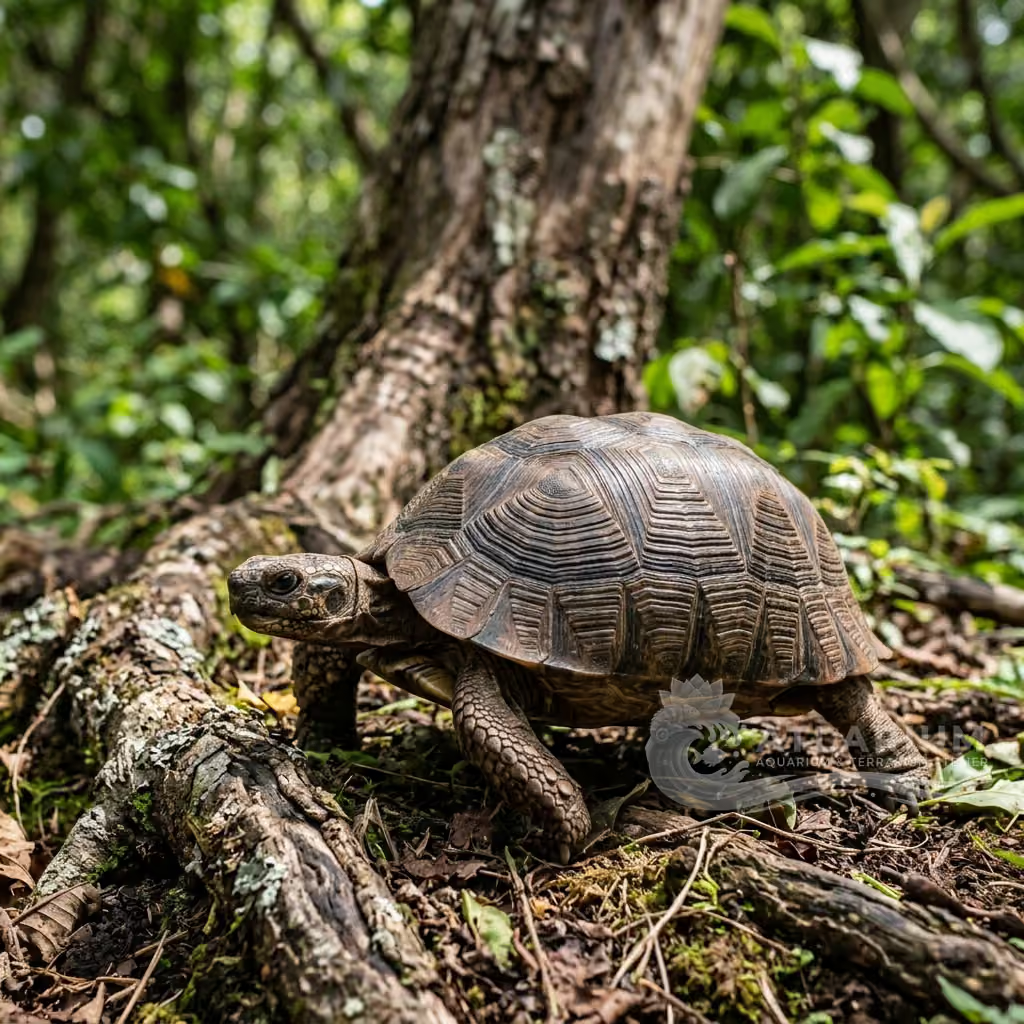
Bell's Hinge-Back Tortoise
Kinixys belliana
The 'Bell's Hinge-Back Tortoise'. A bizarre African living fossil (8 inches) unique in the world: the back of its carapace is broken by a cartilaginous 'hinge' that allows it to close the shell watertight over the tail and hind legs to block hyena bites. A humid savanna tortoise with a partly carnivorous diet (loves crawling snails).
Environment
Terrestrial
Humidity
60 - 85 %
Day temperature
24 - 28 °C
Ambient temperature
28 °C
Night temperature
24 °C
Basking spot
32 °C
Adult size
20 cm
Minimum enclosure
>= 400 L
UVB
Ferguson 3
UVI
1 - 2.6 UVI

Species description
Geographical Origin and Habitat: Humid savannas, flooded grasslands and hot scrublands of eastern and southern Africa. They prefer grassland edges and open forests where moisture levels are relatively high. They seek microclimates that offer protection from direct desert heat.
Taxonomy and Genetics: Family Testudinidae (Genus Kinixys). CITES Appendix B. It is the only terrestrial tortoise in the world that uses the hinge on the back (carapace) and not on the belly (plastron like Box Turtles). Almost all specimens on the market are tragic wild caught animals full of parasites and ticks planted in their eyes. They are members of the family Testudinidae, representing a specialized African tortoise branch. Genetic mapping has identified several distinct regional variants.
Behavior and Habits: Timid articulated aliens. In nature they hide all day under rotten logs. They come out only at dawn and dusk with the rain. If threatened, they pull in their head and join the bottom of their back downwards, literally closing themselves in a canine predator-proof hermetic shell. They are known to estivate during the hottest parts of the dry season to conserve water. During this period, they remain buried under dense leaf litter.
Morphology: Fallen egg shape (7-9 inches / 18-22 cm). Washed-out brown or pale yellow shell. The back of the armor is clearly separated by a slit, visible as a deep scar, which as adults becomes mobile. Protruding snout to probe the soft earth. Their hinge develops as they reach maturity, allowing them to close their shell completely. The coloration of the carapace provides excellent natural camouflage.

Care, breeding and tankmates
Terrarium Setup: MASSIVE HUMID TERRARIUMS (48x24x24h inches). They hate the very strong light of direct sun in mowed lawns. MANDATORY deep hiding places (half dark cork logs) and a thick layer of moss, sphagnum and cypress soil kept constantly humid. They love a large pool to walk in shallow water. Use a deep substrate of cypress mulch or topsoil mixed with peat moss to retain moisture. Provide hollow logs and flat rocks to create shelter.
Lighting and Heating: Mild basking at 89°F (32°C). Tropical warm ambient at 80-82°F (27-28°C). Night 75°F (24°C). UVB 5% radiation diffused forest style. Below 68°F (20°C) they die atrociously. They do not hibernate (They love the African summer dormancy/aestivation in the dark and dry). Provide a thermal gradient to allow the tortoise to select its preferred temperature. A daytime hot spot of 32-35°C (90-95°F) is recommended.
Humidity and Hydration: High-Foggy (60-85%). They love artificial warm showers to encourage them to drink and stretch their legs. They use wet mud to cool down. Maintain a damp area in the enclosure by adding moist sphagnum moss inside the hides. Daily spraying helps simulate their natural tropical rain cycles.
Feeding and Supplementation: SNAIL-EATING MONSTERS (Omnivores). African Kinixys are NOT strict herbivores. They eat lethal mushrooms, rotting fruit AND large quantities of snails (with the shell brutally crushed) giant African millipedes and slugs. A lettuce diet will kill them of starvation and malnutrition. Incorporate occasional animal protein like earthworms or snails to match their wild diet. Offer a wide variety of weeds, leafy greens, and mushrooms.
Compatibility: Very docile but hyper-sensitive. Handling not recommended. Males can clash, but the main problem is extreme stress from a poorly structured tank and the ingestion of wrong prey. Keep multiple females with a single male to distribute breeding interest and reduce stress. Avoid housing them with aggressive turtle species.
Health and Common Diseases: Mortality from ruthless importation. Almost all die within 3 months of purchase due to wild parasites and exploded kidneys due to lack of constant humidity in arid tanks created by inexpert owners (They need humidity and earthworms, not desert and hay). Ensure the shell remains clean and dry to prevent shell rot or fungal infections. Conduct regular visual inspections of their eyes and nasal passages.

Geographic origin and distribution
Humid savannas, flooded grasslands and hot scrublands of eastern and southern Africa. They prefer grassland edges and open forests where moisture levels are relatively high. They seek microclimates that offer protection from direct desert heat.
Origin
Africa and Madagascar

Reptile profile
- Diet
- Omnivore
- Bell's Hinge-Back Tortoises are unique omnivores that require a diverse and highly balanced dietary approach. In addition to a baseline of broadleaf weeds, fibrous greens, and fruits, they actively hunt for terrestrial snails, millipedes, and various insects in the wild. Captive care must account for this omnivory by routinely supplementing their plant-based diet with earthworms, slugs, or high-quality commercial omnivore pellets.
- Adult size
- 20 cm
- Lifestyle/Microhabitat
- Terrestrial
- This animal leads a terrestrial lifestyle, predominantly dwelling on the ground rather than climbing trees or spending time in the water. It traverses the forest floor, grasslands, or desert terrain in search of food, mates, and secure hiding spots beneath rocks, logs, or dense underbrush. In a terrarium setting, providing a large horizontal footprint is essential, along with a deep, appropriate substrate that allows for natural foraging and resting behaviors. While they may occasionally climb low-lying obstacles, their enclosure should be designed to maximize usable floor space.
- Activity cycle
- Diurnal
- This species exhibits a predominantly diurnal activity pattern, meaning it is most active during the daylight hours. Throughout the day, it is frequently observed exploring its enclosure, foraging for food, and actively seeking out basking spots to thermoregulate its body temperature. Providing appropriate full-spectrum lighting and adequate heat gradients during the day is critical to simulate its natural solar cycle. As evening approaches and temperatures drop, the animal will typically retreat to a secure hide or burrow to rest and conserve energy until the next morning.
- Sociality
- Solitary
- The hallmark feature of this species is the remarkable "hinge" located on the rear of its carapace, allowing it to close completely and protect its vulnerable hind limbs. They are somewhat secretive and crepuscular, emerging primarily at dawn and dusk when temperatures drop and humidity rises. To thrive in captivity, they require enclosures with deep, moisture-retaining substrates and ample low-lying hides to simulate their preferred underbrush.
- Reproduction
- Oviparous
- This oviparous species engages in seasonal breeding, usually triggered by the shift from dry to wet seasons in their native African savannas. After a successful mating period, a female will excavate a nest to lay a modest clutch of 2 to 6 eggs. Incubation requires specific temperature fluctuations mirroring their natural environment, usually taking upwards of four to six months before hatching.
- Handling tolerance
- Display only
- This animal is considered a display-only species, meaning it strongly dislikes being handled and becomes heavily stressed by human contact. They are either far too delicate to be handled safely or possess highly defensive traits that make interactions stressful and potentially harmful for both the animal and the keeper. Interaction should be strictly limited to visual observation through the enclosure glass, and physical handling should only occur during absolute emergencies or unavoidable health checkups. Appreciating their natural behaviors from a distance is the best approach to ensuring their well-being.
- Brumation
- Brumation is strictly optional for this species and is primarily utilized by experienced breeders to stimulate reproductive cycles. For standard husbandry and pet ownership, maintaining consistent, warm temperatures year-round is perfectly safe and often recommended to ensure the animal continues feeding and growing without interruption. If a keeper decides to induce a cooling period for breeding purposes, the temperature reductions must be executed gradually and systematically, ensuring the animal's digestive tract is completely empty before any substantial cooling begins.
- Molting
- Periodic
- Because this species naturally inhabits humid, tropical environments, successful shedding requires maintaining consistently elevated humidity levels within the enclosure. When the pre-shed cycle begins—indicated by dulled coloration and cloudy 'blue' eyes—the keeper must actively boost the ambient humidity by heavily misting the enclosure daily and ensuring the substrate remains damp but not saturated. A failure to provide this specialized high-humidity environment will likely result in a problematic 'stuck shed,' which can cause severe constriction injuries to the tail tip, toes, and eyes if not manually addressed.

Related species
Recommendations grouped by close relatives, companion choices, and similar care.