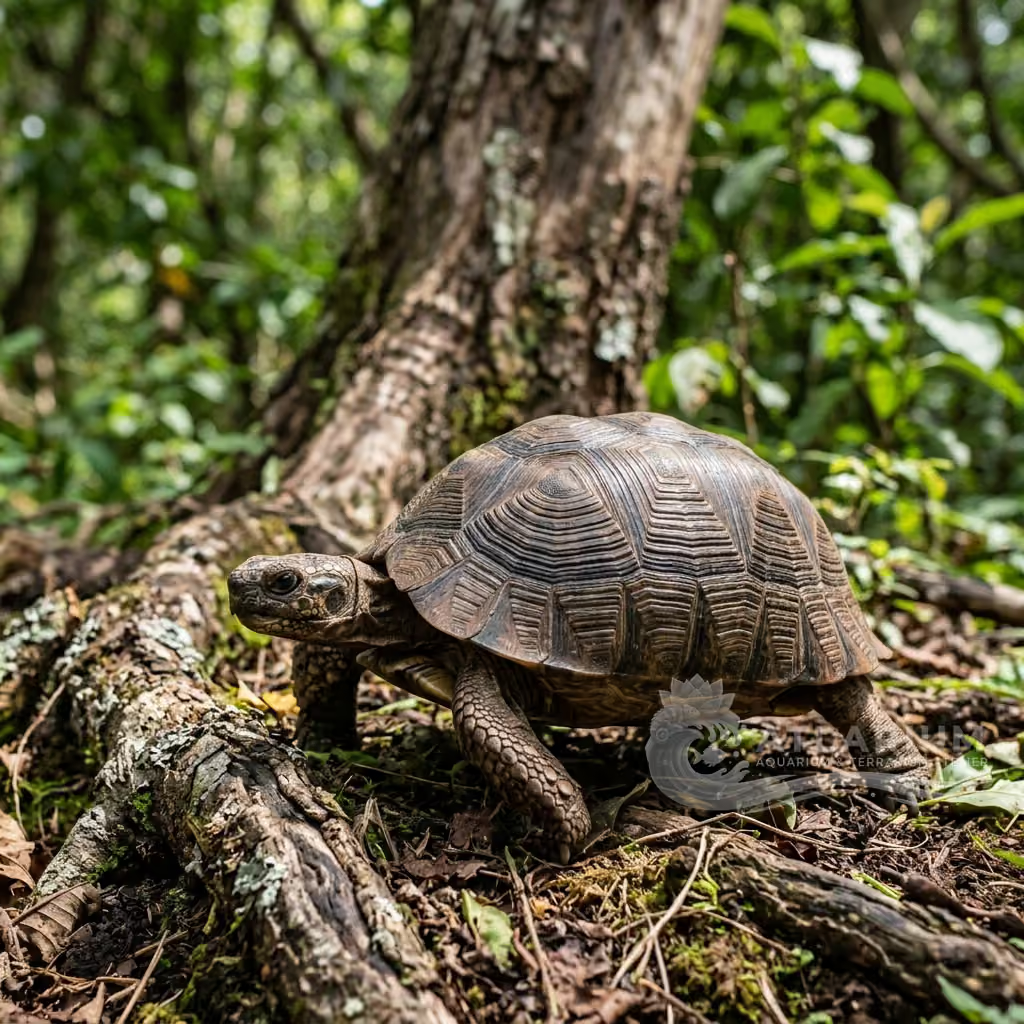
Asian brown tortoise
Manouria emys
Manouria emys (commonly known as Asian brown tortoise) is native to Southeast Asia (Indonesia, Malaysia, and Thailand), where it inhabits humid tropical rainforests, wet hilly regions, and near swamps.
Environment
Terrestrial
Humidity
70 - 90 %
Day temperature
18 - 28 °C
Ambient temperature
18 - 28 °C
Night temperature
18.5 - 20.5 °C
Basking spot
28 °C
Adult size
55 cm
Minimum enclosure
>= 1,500 L

Species description
Geographical Origin and Habitat: Manouria emys is native to the dense, humid tropical rainforests of Southeast Asia, with populations distributed across Indonesia (Sumatra and Borneo), Peninsular Malaysia, southern Thailand, and Myanmar. It primarily inhabits moist montane forest zones, thick undergrowth, and areas near freshwater streams, marshes, and swamps, where it frequently wallows in mud.
Taxonomy and Genetics: Belonging to the family Testudinidae, it is considered one of the most ancient and primitive evolutionary lineages among living tortoises. Two subspecies are recognized: *Manouria emys emys* (Asian Brown Tortoise) and *Manouria emys phayrei* (Burmese Brown Tortoise, which is the larger variant, reaching weights up to 37 kg).
Behavior and Habits: Primarily crepuscular and nocturnal, it avoids direct midday sunlight by sheltering under damp leaf litter. It exhibits semi-aquatic behaviors rare among tortoises. Females display unique maternal care, building large nesting mounds from organic debris and actively defending them from potential egg predators.
Morphology: This is the largest land tortoise species in Asia. It features a massive, dark brown, olive-green, or black carapace, heavily armored limbs covered in large spiny scales, and prominent tubercular spurs on its thighs. The head is large with a robust snout, suited for foraging through forest undergrowth.

Care, breeding and tankmates
Terrarium Setup: Due to their massive size, adults require spacious outdoor enclosures or large indoor pens of at least 1500 liters (or 4x3 meters of floor space per tortoise). The substrate must be soft, organic, and at least 30 cm deep, consisting of peat moss, cypress mulch, and damp leaf litter. A large, shallow water pool for complete soaking is essential.
Lighting and Heating: Provide moderate-intensity UVB lighting and a dedicated basking zone. Daytime ambient temperatures should range between 24 and 28 °C, with a localized basking spot at 32 °C. Nighttime temperatures should not drop below 20 °C. As forest dwellers, they require shaded areas to prevent overheating.
Humidity and Hydration: Maintain high relative humidity levels of 70% to 90% constantly. Regular misting once or twice daily is required, and the substrate should remain damp but not waterlogged. The soaking pool water must be replaced daily as these tortoises frequently defecate while bathing.
Feeding and Supplementation: Primarily herbivorous but highly opportunistic. Their diet should include broadleaf weeds, dark leafy greens (dandelion, endive), forest mushrooms, fallen fruits, and occasionally small invertebrates. Supplement the diet with calcium powder and vitamin D3 twice a week for growing juveniles.
Compatibility: Generally peaceful and can be housed in small groups if space permits, though adult males may display territorial aggression during the breeding season. Do not mix with species from arid environments or animals that could injure or stress this docile tortoise.
Health and Common Diseases: Highly susceptible to respiratory infections (pneumonia) if exposed to cold, dry drafts. Poor sanitation and waterlogged substrate can lead to shell rot (plastron infections) and skin fungus. Regularly inspect the shell integrity, eye clarity, and beak growth.

Geographic origin and distribution
Manouria emys is native to the dense, humid tropical rainforests of Southeast Asia, with populations distributed across Indonesia (Sumatra and Borneo), Peninsular Malaysia, southern Thailand, and Myanmar. It primarily inhabits moist montane forest zones, thick undergrowth, and areas near freshwater streams, marshes, and swamps, where it frequently wallows in mud.
Origin
South and Southeast AsiaEast Asia

Reptile profile
- Diet
- Herbivore
- The Asian Forest Tortoise is omnivorous, consuming a wide variety of plant material and occasional invertebrates. Their natural diet includes leafy greens, fallen fruits, bamboo shoots, and even carrion or worms when found. In captivity, they require a diverse diet of dark greens, vegetables, fruits, and an occasional source of animal protein. High dietary fiber is essential to maintain healthy digestion.
- Adult size
- 55 cm
- Lifestyle/Microhabitat
- Terrestrial
- These are large, heavy tortoises adapted to the damp, humid floors of Asian evergreen forests. They require massive enclosures with plenty of room to roam, dig, and bathe. High humidity and access to a large soaking tub are absolute necessities for their physical and mental health. They do not burrow deeply, preferring to push themselves under vegetation to hide.
- Activity cycle
- Diurnal
- Activity is highest during the early morning and late afternoon hours, especially following a rainstorm. They tend to rest during the hottest parts of the day, seeking shade under thick bushes or leaf litter. In captivity, their activity levels are strongly tied to feeding schedules and the availability of water for soaking. They remain moderately active year-round if kept warm.
- Sociality
- Solitary
- Asian Forest Tortoises are highly intelligent and often show distinct personalities in captivity. They are quite active and will readily explore their surroundings when they feel secure. While they can be sociable with keepers, males may fight aggressively during the breeding season. They are deeply attached to water and will often soak in shallow ponds for hours.
- Reproduction
- Nest builder
- This species exhibits unique maternal care not seen in most other tortoises. The female gathers a massive mound of leaf litter and soil to build an above-ground nest. She lays her clutch of up to 50 eggs inside and fiercely guards the mound against predators for several days. Incubation heat is partially generated by the composting vegetation within the nest mound.
- Handling tolerance
- Tolerant
- Due to their large size and significant weight, handling must be done carefully to avoid injury. Always lift them using two hands, supporting both the front and rear portions of the plastron. Many captive individuals become quite tame and will tolerate gentle scratching on their head or neck. However, excessive picking up should be avoided to prevent stress.
- Brumation
- Not required
- The Asian Forest Tortoise does not brumate in the wild and should not be subjected to brumation in captivity. They originate from tropical regions where temperatures remain consistently warm throughout the year. Exposing them to freezing temperatures or prolonged cold drafts can quickly lead to fatal respiratory infections. Consistent heating and high humidity must be provided uninterrupted.
- Molting
- Periodic
- Shedding is a slow, continuous process, often aided by the high humidity of their environment. Small flakes of skin will gradually fall away from the softer areas around the neck and legs. Regular soaking in their water tub is usually sufficient to resolve any stubborn patches of unshed skin. Careful observation is needed to ensure skin folds do not harbor fungal infections.

Related species
Recommendations grouped by close relatives, companion choices, and similar care.