Flat Rock Scorpion
Hadogenes troglodytes
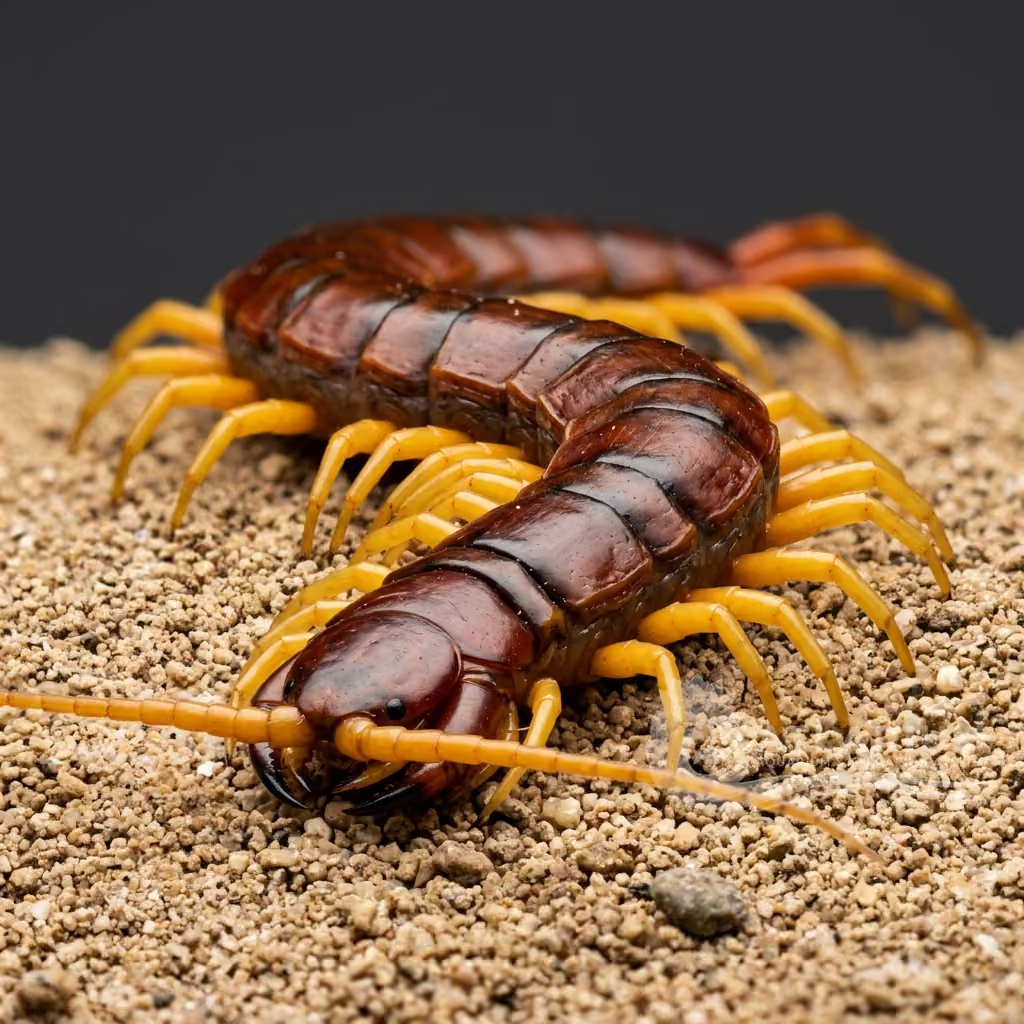
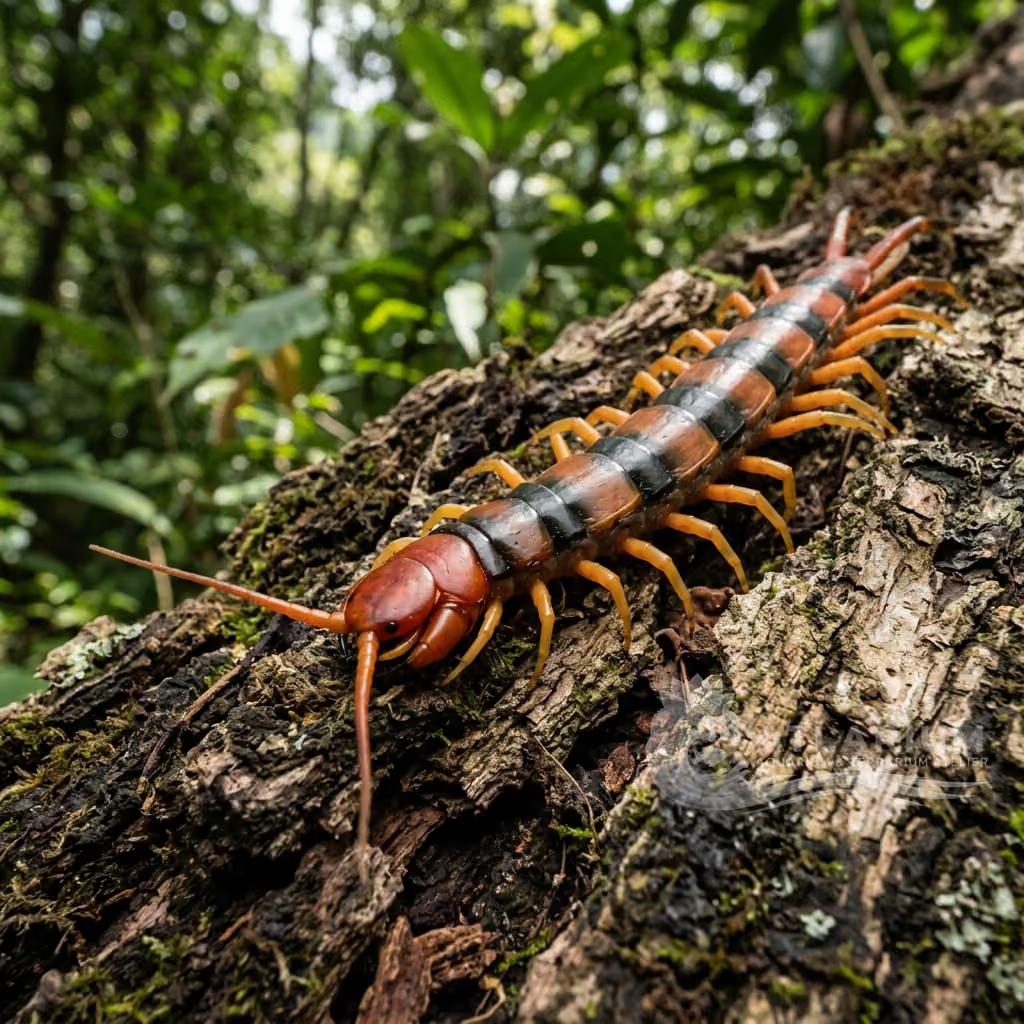
The Flat Rock Scorpion is a remarkably large, exceptionally docile arachnid from South Africa, instantly recognized by its highly compressed body shape evolved specifically for squeezing into crevices.
Environment
Terrestrial
Humidity
40 - 60 %
Ambient temperature
28 - 30 °C
Day temperature
28 °C
Night temperature
22 °C
Substrate depth
>= 4 cm

Species description
Geographical Origin and Habitat: Hadogenes troglodytes is native to southern Africa, including South Africa, Zimbabwe, and Botswana. It is strictly lithophilic, inhabiting narrow gaps between granite and sandstone boulders in dry bushveld areas.
Taxonomy and Genetics: A member of the Hormuridae family, described by Peters in 1861. Its genetic lineage shows extreme morphological specialization for crevice dwelling, resulting in a unique body plan that has changed little over millennia.
Behavior and Habits: Nocturnal and remarkably docile. They rarely sting, preferring to pinch weakly with their chelae if disturbed. They spend virtually all daylight hours wedged deeply inside rock crevices, waiting for night to hunt.
Morphology: Features a highly flattened cephalothorax and abdomen, allowing it to squeeze into crevices only millimeters wide. It is one of the longest scorpions, reaching up to 20 cm. Males have extremely long, thin tails compared to females.

Care, breeding and tankmates
Terrarium Setup: A horizontal enclosure of at least 40-50 liters is recommended. The setup must feature stacks of flat stones (such as slate) secured with silicone to prevent collapse. Provide a thin sand/soil substrate mix.
Lighting and Heating: Keep daytime temperatures at 28-30°C at the warm side and 24°C at the cool side using a side-mounted heat mat. Do not use under-tank heating as they dig to cool off. UVB lighting is unnecessary.
Humidity and Hydration: Maintain low humidity levels around 30-40%. Lightly spray a corner of the terrarium once a week. Place a very shallow water dish with pebbles inside to ensure the scorpion can drink without any danger of drowning.
Feeding and Supplementation: Feed gut-loaded crickets or small roaches once a week. Due to their extremely slow metabolic rate, they feed infrequently and can go months without food, especially when preparing to molt.
Compatibility: Best kept individually. While they are less aggressive than other scorpions, territorial issues and cannibalism can occur, especially when one individual is soft and vulnerable immediately after shedding its exoskeleton.
Health and Common Diseases: The most critical hazard is unstable rockwork that can crush the animal. Other risks include dehydration from lack of moisture and shedding failures if the enclosure is kept too dry during a molt.

Geographic origin and distribution
Hadogenes troglodytes is native to southern Africa, including South Africa, Zimbabwe, and Botswana. It is strictly lithophilic, inhabiting narrow gaps between granite and sandstone boulders in dry bushveld areas.
Origin
Africa and Madagascar

Terrestrial invertebrate profile
- Diet
- Carnivore
- The Flat Rock Scorpion is a nocturnal ambush predator that relies entirely on its massive, powerful pincers to capture prey. Because its venom is extremely weak, it primarily targets slow-moving insects and small arthropods that it can easily crush. In captivity, they are generally fed a diet of crickets, roaches, and mealworms, which they will wait patiently to ambush from the safety of a rocky crevice. They have a relatively slow metabolism and can survive for long periods without food if necessary.
- Adult size
- 20 cm
- Lifestyle/Microhabitat
- Terrestrial
- A highly specialized terrestrial species, its incredibly flat body is perfectly adapted to sliding between tight slabs of slate and rock.
- Activity cycle
- Nocturnal
- Strictly nocturnal, this scorpion hides in tight rock crevices during the day and patrols for insects under the cover of darkness.
- Sociality
- Solitary
- Flat Rock Scorpions are solitary arachnids that specifically inhabit very narrow, deep crevices in rocky outcroppings. While they may occasionally be found in proximity to others in the wild due to limited hiding spots, they are not truly social. In a captive terrarium, it is highly recommended to house them individually to prevent unnecessary stress and potential cannibalism. They demand an enclosure with heavily stacked slate or rocks to satisfy their instinct to wedge themselves tightly into tight spaces.
- Reproduction
- Viviparous
- Reproduction involves a complex, highly ritualized "promenade à deux," where the male grasps the female's pincers and guides her around the substrate. He seeks a smooth surface to deposit his spermatophore, then pulls the female over it to ensure fertilization. Unlike many egg-laying invertebrates, female scorpions give birth to live young after a lengthy gestation period. The tiny, pale scorplings climb onto their mother's back, where they remain safely guarded until they undergo their first molt.
- Venomous
- Yes
- Handling tolerance
- Display only
- Though their venom is remarkably mild, they are very prone to pinching with their large pedipalps. They are best kept as display pets.
- Brumation
- Not required
- No brumation is required, though they can tolerate a wide range of temperatures reflective of their arid, rocky environments.
- Molting
- Regular
- Molting occurs on perfectly dry substrate. In fact, high humidity can lead to deadly fungal infections; they derive moisture from prey.

Related species
Recommendations grouped by close relatives, companion choices, and similar care.