Schultze's Pit Viper
Trimeresurus schultzei
Trimeresurus schultzei (commonly known as Schultze's Pit Viper) is native to Palawan in the Philippines, where it inhabits lowland tropical rainforests and humid montane areas.
Environment
Terrestrial
Humidity
75 - 90 %
Day temperature
22 - 30 °C
Ambient temperature
22 - 30 °C
Night temperature
22 - 24 °C
Basking spot
30 °C
Adult size
80 cm
Minimum enclosure
>= 200 L

Species description
Geographical Origin and Habitat: *Trimeresurus schultzei* (Schultze's Pit Viper) is an arboreal reptile endemic to the island of Palawan and surrounding smaller islands in the Philippines. It inhabits pristine lowland tropical rainforests and wet montane woodlands, staying mostly in dense foliage near forest streams where atmospheric humidity remains high throughout the year.
Taxonomy and Genetics: Classified within the family Viperidae, subfamily Crotalinae (pit vipers). It is a highly venomous snake equipped with loreal heat-sensing pits located between the eye and nostril to detect warm-blooded prey in complete darkness. It is genetically and morphologically grouped with other Southeast Asian green pit vipers.
Behavior and Habits: Primarily a nocturnal, ambush predator that spends its day coiled and camouflaged in tree branches or shrubbery, becoming active at dusk. It is highly defensive; when threatened, it will vibrate its tail and strike rapidly. Handling this species is extremely dangerous due to its potent, hemotoxic venom.
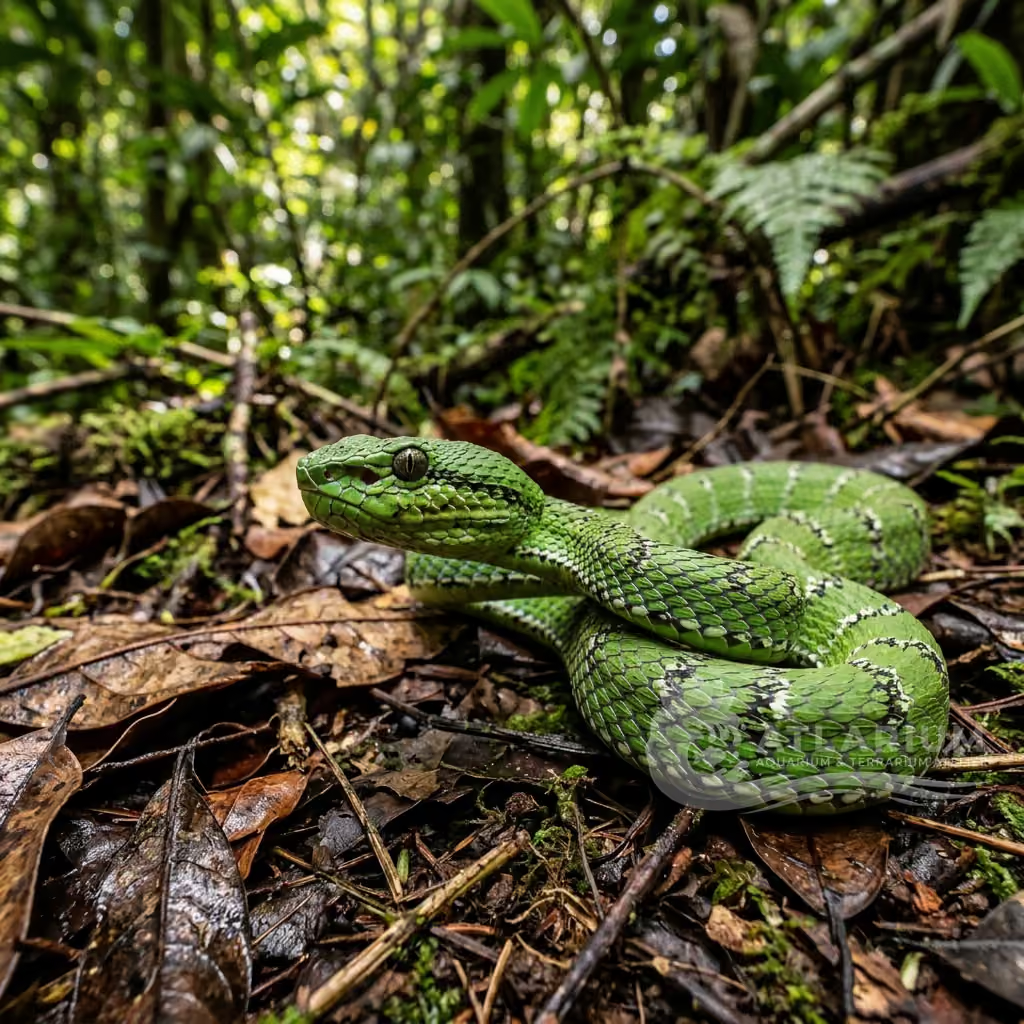
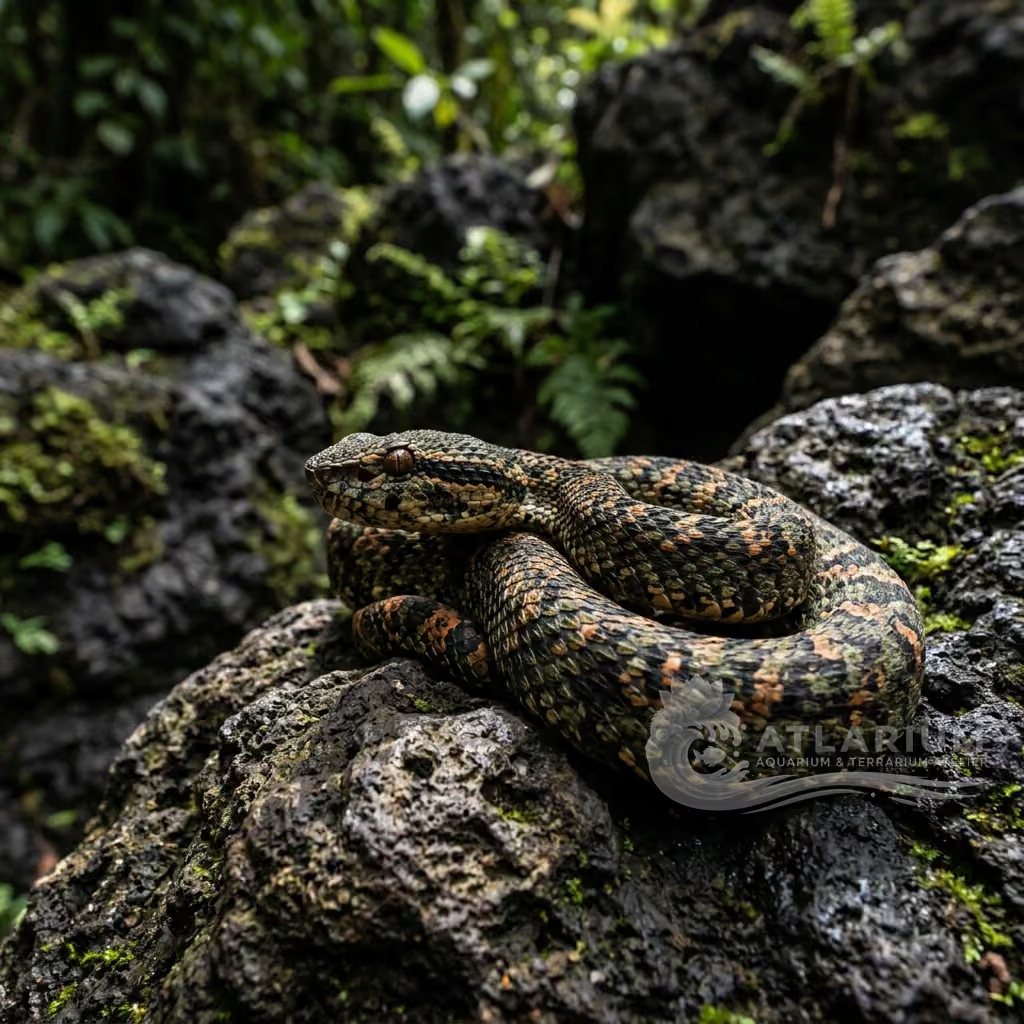
Morphology: A medium-small snake with an average total length of 60 to 80 cm. It possesses a distinct triangular head well-delineated from the neck, large eyes with vertical pupils, and a strong prehensile tail used to anchor itself to branches. Coloration consists of a bright green or yellowish-green background patterned with black or dark brown markings.

Care, breeding and tankmates
Terrarium Setup: Because this is a highly dangerous venomous species, it requires a vertical, escape-proof terrarium of at least 200 liters equipped with secure dual locks. Furnish the enclosure with numerous sturdy climbing branches and artificial or live plants to support its arboreal habits. Substrates like coconut husk or peat moss are ideal for holding moisture.
Lighting and Heating: A vertical temperature gradient must be established. Provide a basking zone at the top of the enclosure heated to 28 °C, while keeping the cooler lower areas around 24 °C. Nighttime temperatures should hover around 20-22 °C. Low-output UVB lighting is recommended to mimic the dappled sunlight of the forest canopy.
Humidity and Hydration: Maintain high humidity levels between 80% and 90%. Daily misting or the installation of an automatic misting system is essential. Pit vipers rarely drink from standing water bowls, preferring to lick droplets off leaves and enclosure walls; however, a shallow bowl of clean water should still be present.
Feeding and Supplementation: Feeds on small rodents, birds, and lizards in the wild. In captivity, it can be maintained on appropriately sized frozen-thawed mice, offered using long feeding tongs. Do not feed by hand. Supplement with calcium and vitamins once a month, dusting the prey before feeding.
Compatibility: Strictly solitary. Due to the risk of stress and cannibalism, individuals must be housed individually. Human contact should be minimized. Any cage maintenance must be performed using professional snake hooks, shifting boxes, and safety shields to prevent accidental bites.
Health and Common Diseases: Highly susceptible to respiratory infections (pneumonia) if the air flow is stagnant or if temperatures drop too low in a wet environment. Ensure proper cross-ventilation. Dehydration can lead to difficult sheds (dysecdysis). Veterinary treatment requires specialized facilities experienced in venomous reptile medicine.

Geographic origin and distribution
*Trimeresurus schultzei* (Schultze's Pit Viper) is an arboreal reptile endemic to the island of Palawan and surrounding smaller islands in the Philippines. It inhabits pristine lowland tropical rainforests and wet montane woodlands, staying mostly in dense foliage near forest streams where atmospheric humidity remains high throughout the year.
Origin
South and Southeast Asia

Reptile profile
- Diet
- Carnivore
- Schultze's pit viper primarily targets small rodents, birds, and an assortment of amphibians found in its lush forest habitat. It relies heavily on an ambush hunting strategy, maintaining a perfectly still posture while blended into the vegetation. Its specialized heat-sensitive pit organs enable it to detect the subtle thermal emissions of its warm-blooded prey, even in complete darkness. When a suitable meal approaches, it strikes with remarkable speed to inject its highly destructive hemotoxic venom.
- Adult size
- 80 cm
- Lifestyle/Microhabitat
- Arboreal
- Being predominantly arboreal, this pit viper spends its life in the canopy of trees, shrubs, and bamboo thickets. They possess a prehensile tail that aids in navigating branches and striking prey from elevated positions. The terrarium must be vertically oriented, equipped with numerous climbing branches and dense foliage to satisfy their climbing instincts.
- Activity cycle
- Nocturnal
- This species is primarily nocturnal, remaining hidden during the daylight hours to avoid extreme heat and predators. As dusk approaches, the Trimeresurus schultzei becomes active, emerging from its diurnal retreat to forage and hunt. Enclosure lighting should reflect a natural day-night cycle, but the snake will exhibit its most natural active behaviors after the lights go out.
- Sociality
- Solitary
- This elegantly patterned pit viper is strongly arboreal, spending the vast majority of its life draped over branches and vines in the mid-to-upper forest canopy. It is almost exclusively nocturnal, resting motionless during the daytime hours to avoid detection by visual predators like raptors. While it moves with slow, deliberate grace when navigating through the trees, it is capable of explosive bursts of speed when striking. It is generally timid but will aggressively stand its ground and bite repeatedly if cornered.
- Reproduction
- Viviparous
- As a live-bearing species, Schultze's pit viper retains its embryos internally until they are fully developed, avoiding the vulnerabilities associated with laying eggs. Pregnant females often congregate in slightly warmer, sunlit patches of the forest canopy to accelerate the gestation process. The mother eventually gives birth to a small litter of independent young that emerge complete with venom and fangs. These neonates receive no maternal care and must immediately begin hunting for survival.
- Handling tolerance
- Display only
- Due to its highly potent and medically significant venom, the Trimeresurus schultzei is strictly a display-only species. Under no circumstances should this snake be free-handled. All interactions, enclosure maintenance, and feeding must be performed using professional snake hooks, secure lockable terrariums, and strict safety protocols to prevent life-threatening envenomation.
- Brumation
- Not required
- Originating from relatively stable, warm climates, this species does not require a true winter brumation period. Maintaining consistent ambient temperatures year-round is ideal for their health. However, slight nocturnal temperature drops and seasonal changes in rainfall or humidity can be provided to mimic their native environment and stimulate natural behaviors.
- Molting
- Periodic
- Originating from highly humid tropical environments, this snake requires consistently elevated ambient humidity to shed its skin properly. Frequent daily misting or a rain system should be utilized when the snake goes into blue. A properly humidified enclosure prevents dysecdysis (abnormal shedding), which can lead to restricted blood flow or infection.

Related species
Recommendations grouped by close relatives, companion choices, and similar care.