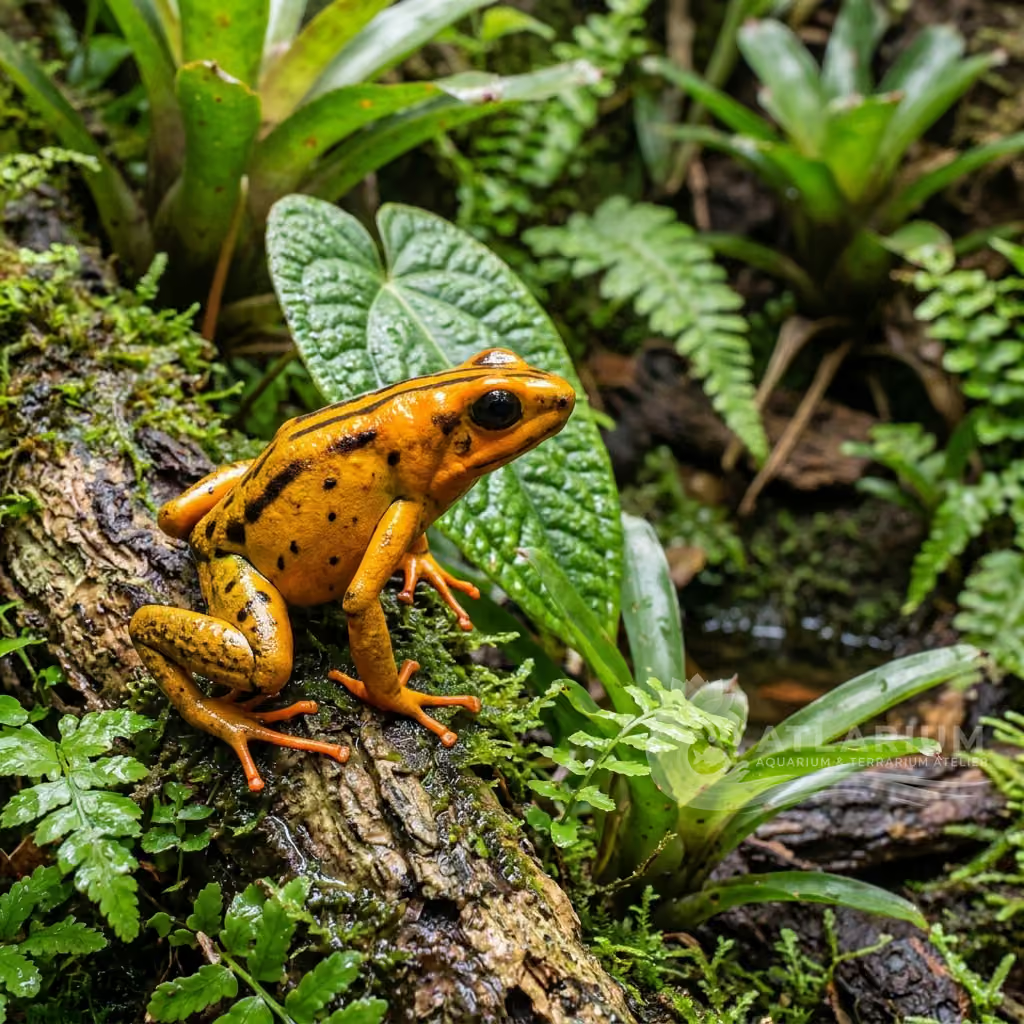
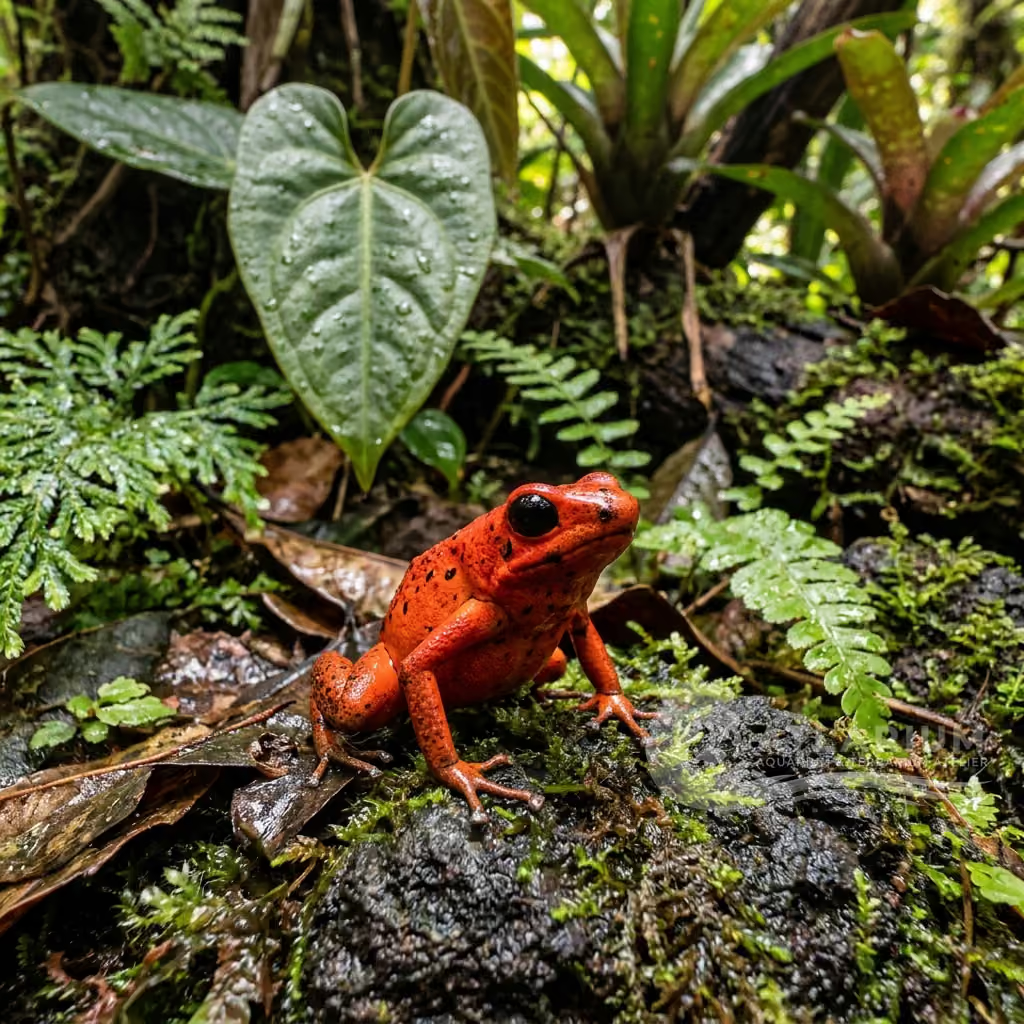
Sumatran pit viper
Trimeresurus sumatranus
A large, venomous Asian arboreal pit viper characterized by brilliant green coloration with black banding, strictly reserved for professional keepers.
Environment
Terrestrial
Humidity
75 - 90 %
Day temperature
23 - 27 °C
Ambient temperature
23 - 27 °C
Night temperature
19 - 21 °C
Basking spot
27 - 29 °C
Adult size
90 cm
Minimum enclosure
>= 200 L

Species description
Geographical Origin and Habitat: Trimeresurus sumatranus is native to Southeast Asia, specifically found on the islands of Sumatra, Nias, the Mentawai Islands, Borneo, and Peninsular Malaysia. It inhabits primary and secondary lowland and submontane rainforests, from sea level up to elevations of 1,200 meters. This strictly arboreal species spends its life in trees, shrubs, and bamboo thickets near clean forest streams.
Taxonomy and Genetics: Belonging to the family Viperidae, subfamily Crotalinae (pit vipers). It is scientifically known as Trimeresurus sumatranus, though some taxonomists refer to it under the genus Parias. Its genetics are adapted for specialized arboreal hunting using heat-sensing pits. No commercial color morphs exist due to the dangerous nature and restricted keeping of this species.
Behavior and Habits: An arboreal nocturnal predator. During the day, it remains completely stationary coiled on branches, blending with the foliage. It has a generally calm temperament but is capable of lightning-fast defensive strikes if disturbed. It possesses a highly potent hemotoxic and cytotoxic venom, requiring specialized safety protocols and professional tools.
Morphology: Features a broad, triangular head distinct from the neck, with large eyes and vertical pupils. Heat-sensing loreal pits are situated between the nostrils and eyes. The body is robust with heavily keeled scales and a strong prehensile tail used to secure its position on branches. Adults reach lengths of 100-140 cm, with females being significantly larger.

Care, breeding and tankmates
Terrarium Setup: Requires a large, vertically oriented terrarium (minimum 100x60x100 cm) to ensure a safe working distance during routine maintenance. The enclosure must feature multiple secured horizontal and vertical branches, dense foliage for cover, and elevated hide boxes. Use a moisture-retaining substrate such as organic soil, cypress mulch, or coconut husk.
Lighting and Heating: Provide a 12-hour light cycle using a 2-5% UVB bulb to maintain circadian rhythms. Heating must be provided from above using a ceramic heater or heat lamp enclosed in a protective mesh cage to prevent the snake from wrapping around it. Maintain a hot spot of 27-29°C, a cool zone of 23-24°C, and night drops to 21-22°C.
Humidity and Hydration: High humidity of 75-85% is essential and must be maintained through daily misting systems or manual spraying. Although a water dish should be kept on the substrate, these pit vipers rarely drink from standing water; instead, they drink droplets from leaves and branches after misting. Maintain good ventilation.
Feeding and Supplementation: In the wild, they prey on birds, rodents, and lizards. Captive specimens should be fed appropriately sized thawed mice or small rats using long safety tongs. Feed adults every 14-20 days. They have a slow metabolism and are prone to obesity in captivity. Never handle food items with bare hands to avoid transfer of scent.
Compatibility: Solitary animals that must be housed individually. Co-housing is dangerous and stressful. It should only be attempted by professional breeders during the breeding season under strict supervision to prevent aggressive encounters, stress, or feeding accidents. Always keep the enclosure securely locked.
Health and Common Diseases: Highly susceptible to respiratory infections (RI) if the terrarium is allowed to get too cold or has poor air circulation coupled with high humidity. Stuck sheds on the tail tip or eye caps can occur from low humidity. Due to their venomous nature, veterinary care must follow strict safety and containment protocols.

Geographic origin and distribution
Trimeresurus sumatranus is native to Southeast Asia, specifically found on the islands of Sumatra, Nias, the Mentawai Islands, Borneo, and Peninsular Malaysia. It inhabits primary and secondary lowland and submontane rainforests, from sea level up to elevations of 1,200 meters. This strictly arboreal species spends its life in trees, shrubs, and bamboo thickets near clean forest streams.
Origin
North AmericaSouth and Southeast Asia

Reptile profile
- Diet
- Carnivore
- These vipers are ambush predators that feed mainly on small mammals, frogs, and lizards in the wild. In captivity, they can usually be transitioned to a diet of appropriately sized rodents, such as mice or small rats. Feeding should occur every one to two weeks depending on the age and size of the snake.
- Adult size
- 90 cm
- Lifestyle/Microhabitat
- Arboreal
- Arboreal species spend the majority of their lives in trees and shrubs, requiring vertically oriented enclosures with climbing branches. Terrestrial species need ample floor space with hiding spots among the leaf litter. Both require specific temperature and humidity gradients to thrive.
- Activity cycle
- Nocturnal
- These snakes are primarily nocturnal or crepuscular, becoming most active during the evening and night. During the day, they often rest coiled on branches or concealed in vegetation. Their activity levels can increase significantly after a period of rain or during the breeding season.
- Sociality
- Solitary
- They are typically ambush hunters, relying on their camouflage to remain undetected by both prey and predators. When threatened, they may adopt a defensive posture, hiss, or strike rapidly. They are generally not aggressive but will defend themselves fiercely if provoked.
- Reproduction
- Viviparous
- Most of these species are viviparous, giving birth to live young after a gestation period of several months. The neonates are fully independent and venomous from birth. Breeding often requires a cooling period or specific environmental cues to simulate natural seasonal changes.
- Handling tolerance
- Display only
- Handling must be strictly avoided except when absolutely necessary for husbandry or medical reasons. Always use appropriate tools such as snake hooks or tongs to move the animal safely. These are highly venomous species, and a bite can result in severe medical consequences.
- Brumation
- Not required
- Depending on their natural range, some may undergo a mild winter cooling period to stimulate breeding. This is not a deep brumation but rather a slight drop in temperature accompanied by reduced feeding. Tropical species may not require any significant seasonal changes in captivity.
- Molting
- Periodic
- Shedding occurs periodically as the snake grows, heralded by the eyes turning a milky blue color. During this time, they should be left undisturbed and humidity should be slightly increased to facilitate a clean shed. A healthy snake will shed its skin in one complete, unbroken piece.

Related species
Recommendations grouped by close relatives, companion choices, and similar care.