McGregor's pit viper
Trimeresurus mcgregori
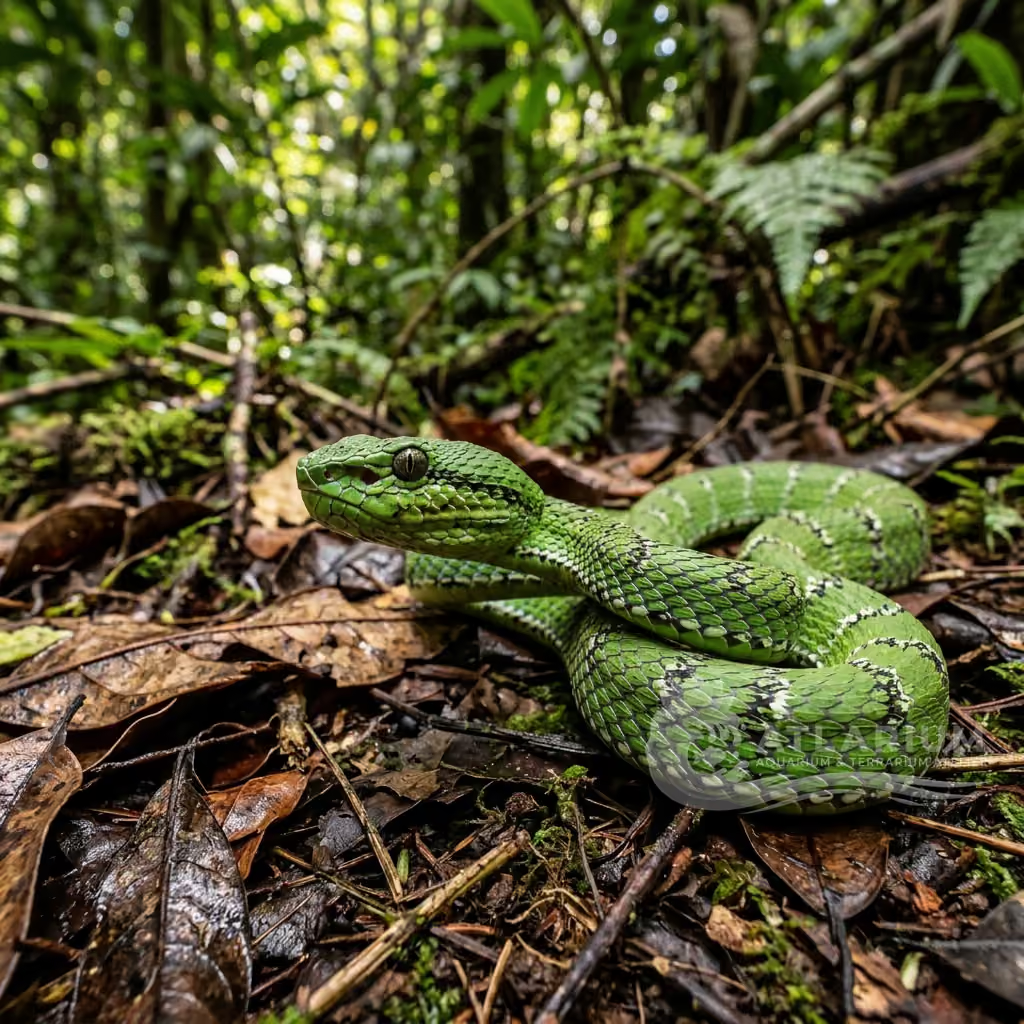
A notoriously venomous Asian arboreal pit viper, internationally famous among collectors for its stunning sulfur-yellow overall coloration and intense vertical pupiled eyes.
Environment
Terrestrial
Humidity
70 - 90 %
Day temperature
22 - 30 °C
Ambient temperature
22 - 30 °C
Night temperature
22 - 24 °C
Basking spot
28 - 29 °C
Adult size
70 cm
Minimum enclosure
>= 200 L

Species description
Geographical Origin and Habitat: Trimeresurus mcgregori is a venomous reptile endemic to the Batanes Islands, a small archipelago located in the northernmost part of the Philippines. It inhabits wet tropical lowland rainforests, dense woodlands, and shrubby mountain slopes. Being an obligate arboreal species, it spends nearly its entire life climbing among low branches, shrubs, and epiphyte clusters.
Taxonomy and Genetics: Belonging to the family Viperidae, subfamily Crotalinae (pit vipers), and the genus Trimeresurus. No subspecies are currently recognized, but genetic studies show a high degree of genetic stability within its restricted island habitat. It is highly valued in erpetology for its extraordinary natural color variations, though trade is strictly controlled.
Behavior and Habits: Primarily nocturnal and crepuscular. During the day, it remains coiled and motionless on branches or nestled within the leaves of epiphytic plants, relying on its camouflage. It is an ambush predator that uses its heat-sensing loreal pits to locate warm-blooded prey in the dark. It is capable of rapid, defensive strikes if threatened.
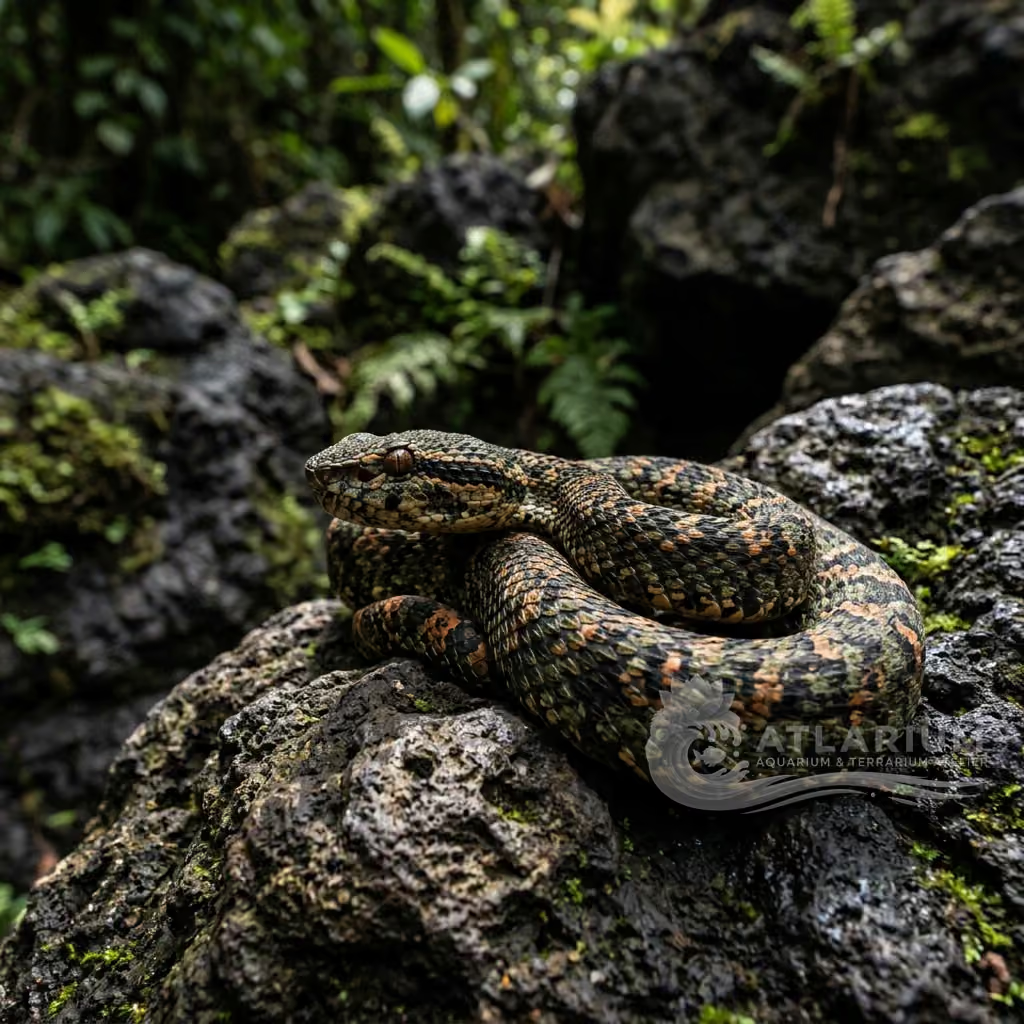
Morphology: Features a slender, prehensile tail adapted for anchoring securely to branches, and a moderately stout body. The head is distinctly triangular, well-defined from the neck, covered in small scales, and features eyes with vertical slit pupils. The coloration is highly polymorphic, with many individuals displaying a striking, solid sulfur-yellow or lemon-yellow hue, sometimes with faint green or black spots.

Care, breeding and tankmates
Terrarium Setup: Requires a vertically oriented terrarium (minimum 60x45x60 cm for an adult) equipped with a secure lock and key. The interior should feature a dense network of branches of varying diameters and broad-leafed plants (live or silk) to provide hiding spots. Use coconut fiber or sphagnum peat moss as a substrate to help maintain humidity.
Lighting and Heating: Provide a diurnal temperature gradient with a cool zone at 24-25 °C and a warm basking spot of 28-29 °C using protected overhead heating elements. At night, the temperature can safely drop to 20-21 °C. A low-output UVB bulb (2.0 or 5.0) is highly recommended to stimulate natural behaviors and regulate metabolic activity.
Humidity and Hydration: Requires high humidity levels of 70-80%. Mist the enclosure once or twice daily with purified water. These snakes rarely drink from ground-level water dishes; instead, they rely on licking water droplets from leaves and cage walls, making regular misting a vital part of their hydration routine.
Feeding and Supplementation: Feeds on small rodents, birds, frogs, and lizards in the wild. In captivity, they accept frozen-thawed mice offered strictly with long feeding tongs to prevent accidental bites. Feed juveniles every 7-10 days and adults every 14-20 days. Supplementation is not necessary if feeding high-quality rodents.
Compatibility: Must be housed individually. As a dangerously venomous species, handling must be minimized and performed only by experienced keepers using snake hooks, tongs, and secure shift boxes. Do not house with tankmates or allow contact with other pets or inexperienced individuals.
Health and Common Diseases: Susceptible to respiratory infections if humidity is high without adequate ventilation (ensure good cross-ventilation). Incomplete shedding (dysecdysis) occurs if the environment is too dry. Face rubbing against the screen or glass in search of escape can lead to snout abrasions, which can become infected.

Geographic origin and distribution
Trimeresurus mcgregori is a venomous reptile endemic to the Batanes Islands, a small archipelago located in the northernmost part of the Philippines. It inhabits wet tropical lowland rainforests, dense woodlands, and shrubby mountain slopes. Being an obligate arboreal species, it spends nearly its entire life climbing among low branches, shrubs, and epiphyte clusters.
Origin
South and Southeast Asia

Reptile profile
- Diet
- Carnivore
- McGregor's pit viper is a specialized predator that primarily consumes frogs, lizards, and small mammals endemic to its restricted island habitat. It is an ambush hunter that leverages its excellent camouflage to remain hidden while waiting for unwary animals to pass by. The heat-sensing pits located on its snout allow it to detect the thermal signatures of rodents with remarkable precision. Once the prey is within range, it executes a lightning-fast strike, injecting a dose of potent hemotoxic venom.
- Adult size
- 70 cm
- Lifestyle/Microhabitat
- Arboreal
- Being predominantly arboreal, this pit viper spends its life in the canopy of trees, shrubs, and bamboo thickets. They possess a prehensile tail that aids in navigating branches and striking prey from elevated positions. The terrarium must be vertically oriented, equipped with numerous climbing branches and dense foliage to satisfy their climbing instincts.
- Activity cycle
- Nocturnal
- This species is primarily nocturnal, remaining hidden during the daylight hours to avoid extreme heat and predators. As dusk approaches, the Trimeresurus mcgregori becomes active, emerging from its diurnal retreat to forage and hunt. Enclosure lighting should reflect a natural day-night cycle, but the snake will exhibit its most natural active behaviors after the lights go out.
- Sociality
- Gregarious
- Endemic to the small islands of the Batanes group in the Philippines, McGregor's pit viper is a largely arboreal and nocturnal snake. It spends daylight hours resting quietly coiled in the branches of small trees and shrubs, effectively disappearing against the green backdrop. At night, it becomes an active, alert predator, meticulously exploring the canopy or dropping to lower vegetation to hunt. Though generally placid if left undisturbed, it will coil and strike defensively if it feels threatened.
- Reproduction
- Viviparous
- This species reproduces viviparously, giving birth to a modest litter of live young after a prolonged gestation period. The gravid females will often seek out warmer, sun-exposed microhabitats to elevate their body temperatures and facilitate the development of their embryos. Upon birth, the neonates are entirely self-sufficient and already possess the striking green and white markings typical of the species. They must immediately begin hunting small invertebrates and amphibians to ensure their survival.
- Handling tolerance
- Display only
- Due to its highly potent and medically significant venom, the Trimeresurus mcgregori is strictly a display-only species. Under no circumstances should this snake be free-handled. All interactions, enclosure maintenance, and feeding must be performed using professional snake hooks, secure lockable terrariums, and strict safety protocols to prevent life-threatening envenomation.
- Brumation
- Not required
- Originating from relatively stable, warm climates, this species does not require a true winter brumation period. Maintaining consistent ambient temperatures year-round is ideal for their health. However, slight nocturnal temperature drops and seasonal changes in rainfall or humidity can be provided to mimic their native environment and stimulate natural behaviors.
- Molting
- Periodic
- Originating from highly humid tropical environments, this snake requires consistently elevated ambient humidity to shed its skin properly. Frequent daily misting or a rain system should be utilized when the snake goes into blue. A properly humidified enclosure prevents dysecdysis (abnormal shedding), which can lead to restricted blood flow or infection.

Related species
Recommendations grouped by close relatives, companion choices, and similar care.