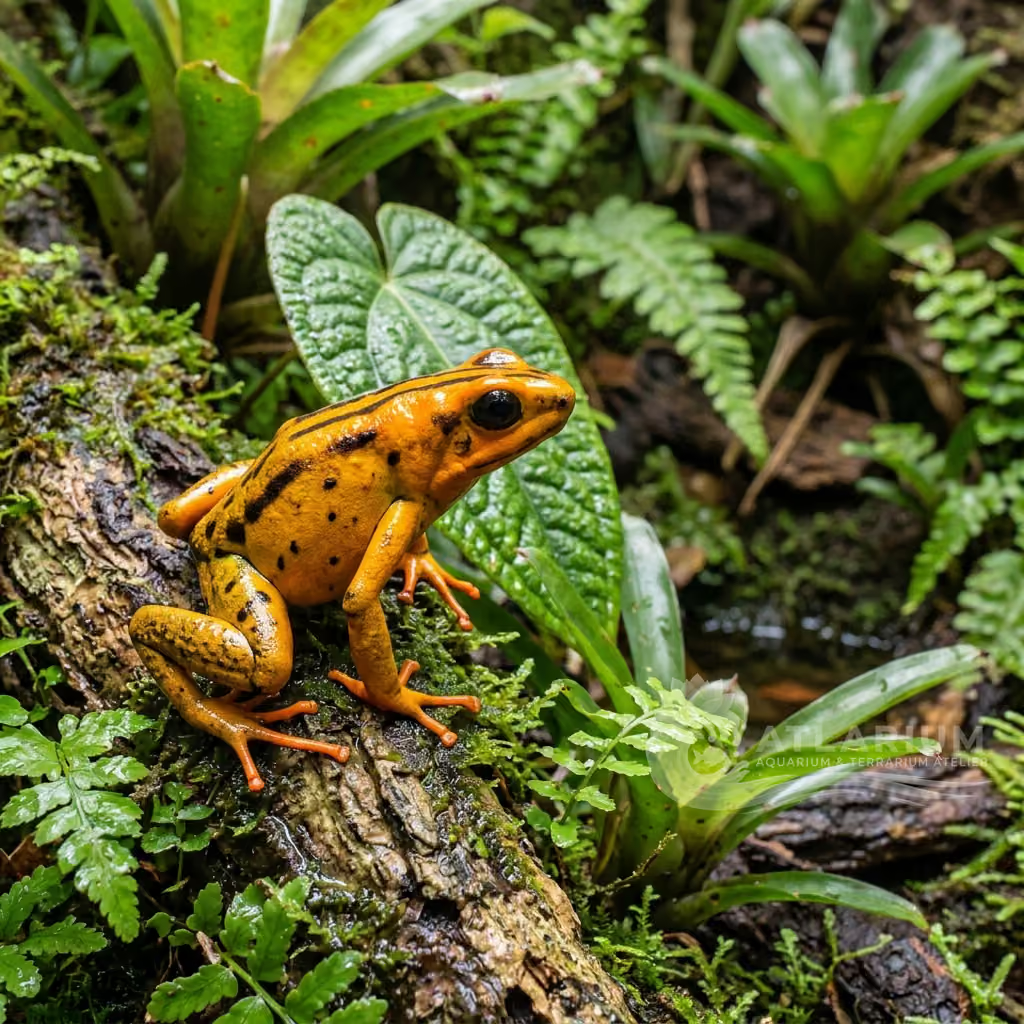
Vietnamese Mossy Frog
Theloderma corticale
Admire the Vietnamese Mossy Frog, an arboreal master of camouflage that perfectly mimics wet moss. This nocturnal wonder thrives in cool, tall paludariums with abundant water and cork bark hides.
Environment
Terrestrial
Humidity
70 - 90 %
Day temperature
18 - 24 °C
Night temperature
15 - 18 °C
Ambient temperature
18 - 24 °C
Minimum enclosure
>= 80 L
UVB
Ferguson 1
UVI
0 - 0.7 UVI

Species description
Geographical Origin and Habitat: Native to northern Vietnam, and possibly neighboring areas of China and Laos. They inhabit wet, submontane evergreen forests and karst limestone cliffs, living in moss-covered caves and water-filled rock cavities.
Taxonomy and Genetics: Belonging to the family Pixicephalidae or Rhacophoridae (subfamily Rhacophorinae). Highly prized in captivity for its unique appearance.
Behavior and Habits: Strictly nocturnal and semi-arboreal. They spend the day motionless on mossy rocks or floating at the water's surface. When threatened, they roll into a tight ball and play dead (thanatosis) to blend in.
Morphology: Reaches 7–9 cm in length. Females are significantly larger and bulkier than males. Males develop nuptial pads on their thumbs and produce soft, melodic calls at night.

Care, breeding and tankmates
Terrarium Setup: A tall, vertical paludarium (minimum 45x45x60 cm) is required, featuring a shallow water section (5–10 cm deep) at the bottom. Decorate with moss-covered cork bark backgrounds, rough climbing branches, and live tropical plants.
Lighting and Heating: Keep temperatures cool, ideally between 20 and 24°C during the day, dropping to 16–18°C at night. Temperatures above 26°C are hazardous. Provide low-intensity, indirect lighting and a 2–5% UVB source.
Humidity and Hydration: Maintain high humidity levels of 80–95%. Mist the enclosure daily with dechlorinated water. The water section must be kept clean with a filter or frequent water changes.
Feeding and Supplementation: Insectivorous. Feed on crickets, roaches, and locusts. Dust all prey with a high-quality calcium and D3 supplement twice a week.
Compatibility: Highly peaceful and social. Can be housed in small groups of similarly sized individuals in a spacious paludarium.
Health and Common Diseases: Very sensitive to heat stress. Poor water quality leads to rapid bacterial skin infections. Handle only when strictly necessary, using wet, powder-free gloves.

Geographic origin and distribution
Native to northern Vietnam, and possibly neighboring areas of China and Laos. They inhabit wet, submontane evergreen forests and karst limestone cliffs, living in moss-covered caves and water-filled rock cavities.
Origin
South and Southeast AsiaEast Asia

Amphibian profile
- Diet
- Insectivore
- The diet of Theloderma corticale must be carefully managed to ensure optimal health and longevity. In its natural habitat, Theloderma corticale typically consumes a variety of specific prey items or plant matter. Captive specimens require a similarly balanced intake, often supplemented with essential vitamins and calcium. It is important to offer food that is appropriately sized to avoid choking or digestive issues. Regular monitoring of their feeding response helps in identifying any potential health problems early.
- Life expectancy
- 10-15 years
- Adult size
- 8.5 cm
- Lifestyle/Microhabitat
- Semi-aquatic
- The lifestyle of Theloderma corticale varies greatly depending on whether they are terrestrial, arboreal, aquatic, or semi-aquatic. Designing an enclosure that accommodates their specific mode of living is essential for their physical and mental health. This includes providing the right substrate, climbing branches, or water features as needed. A proper setup allows Theloderma corticale to exercise, hide, and thermoregulate effectively. Understanding their lifestyle choices helps in creating a thriving captive environment.
- Activity cycle
- Nocturnal
- The activity pattern of Theloderma corticale typically dictates when they feed, explore, and rest. Depending on their biology, they may be predominantly active during the day, night, or twilight hours. Replicating appropriate lighting and temperature cycles is crucial for maintaining their natural rhythm. Disruptions to this schedule can lead to stress and a decline in the health of Theloderma corticale. Keepers should try to interact with them during their most active periods to minimize disturbance.
- Sociality
- Solitary
- The behavior of Theloderma corticale is deeply influenced by its natural instincts and environment. These creatures exhibit unique social and territorial behaviors that must be respected in captivity. Providing a habitat that mimics their wild surroundings can greatly reduce stress and encourage natural activities. Theloderma corticale may show specific defensive or communicative displays when interacting with its environment. Observing these behaviors is key to understanding their overall well-being and comfort.
- Reproduction
- Oviparous
- Reproduction in Theloderma corticale requires specific environmental triggers such as temperature and humidity changes. Breeding these animals in captivity can be challenging and often demands a dedicated setup. Once successful mating occurs, careful attention must be given to the incubation of eggs or the care of live young. The offspring of Theloderma corticale are usually fragile and require highly specific conditions to thrive. Keepers must thoroughly research their reproductive cycle to achieve positive breeding results.
- Toxicity
- Harmless
- Unlike many brightly colored amphibians, the Vietnamese mossy frog is completely non-toxic and relies entirely on camouflage for protection. They lack the potent alkaloid skin secretions found in poison dart frogs or the irritating toxins of some toads. However, because their skin is highly permeable to absorb moisture and oxygen, human handlers must be incredibly cautious. Oils, salts, or soap residues from human hands can be absorbed through their skin and cause severe harm.
- Life stage
- Metamorphosis
- The mossy frog's life cycle features an egg stage, a fully aquatic tadpole stage, and a semi-aquatic adult phase. The large eggs hatch into robust tadpoles that feed on algae and organic detritus within their small, enclosed water pools. After several months of growth, they undergo a complete metamorphosis, rapidly developing their characteristic bumpy, moss-like skin texture. The newly metamorphosed froglets then emerge to begin their lives as stealthy, insect-eating climbers.
- Handling tolerance
- Display only
- They should never be handled unless absolutely necessary. Their skin is extremely delicate, and their primary defense mechanism is to curl into a tight, motionless ball.
- Brumation
- They do not require brumation but prefer slightly cooler, very humid environments (65-75°F) year-round, simulating the cool, flooded caves of their natural habitat.
- Molting
- Periodic
- Shedding happens frequently and entirely unnoticed, as they stretch and consume their own skin. Pristine water quality and very high humidity are vital to prevent bacterial skin infections.

Related species
Recommendations grouped by close relatives, companion choices, and similar care.