Yellow Mantella
Mantella crocea
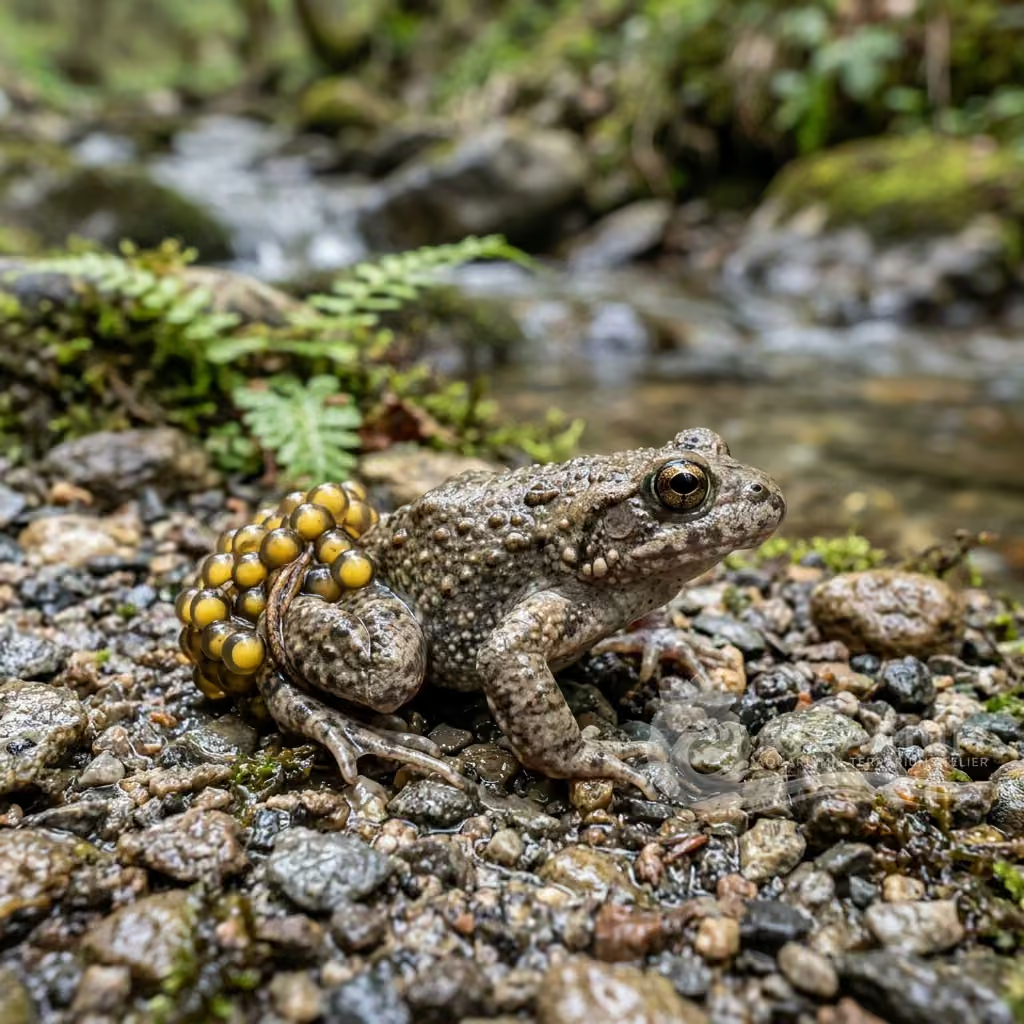
Yellow Mantella. An endangered Malagasy frog featuring a saffron-yellow dorsum with black-mottled flanks. Requires cool temperatures and humid forest setups.
Environment
Terrestrial
Humidity
80 - 90 %
Day temperature
19 - 22 °C
Night temperature
16 - 18 °C
Ambient temperature
19 - 22 °C
Minimum enclosure
>= 45 L

Species description
Geographical Origin and Habitat: Endemic to the swampy highland forests of east-central Madagascar. Terrestrial, dwelling in damp leaf litter and moss. This small amphibian inhabits montane rainforests and high-altitude swampy areas of eastern Madagascar.
Taxonomy and Genetics: Family Mantellidae. Commonly known as the Yellow Mantella or Saffron Mantella. The species name crocea refers to its saffron-yellow coloration. Endangered due to habitat destruction. Its systematics show that it produces toxic skin alkaloids as a defense mechanism, derived from its native diet of ants.
Behavior and Habits: Diurnal and terrestrial. Shy and active, hiding at the slightest disturbance. Males emit soft clicking calls. Diurnal and terrestrial behavior; highly active in the morning when it explores the damp leaf litter for tiny prey.
Morphology: Small size of 2-2.5 cm. Saffron-yellow or orange dorsum with black or dark brown flanks. Underparts are dark with pale spots. Females are larger and plumper. Its morphology is characterized by a bright yellow-orange coloration that serves as an aposematic warning to predators.

Care, breeding and tankmates
Terrarium Setup: Horizontal bioactive terrarium (minimum 60x45x45 cm). Provide a deep drainage layer, damp soil, leaf litter, and live moss. Provide low cork bark hides and seed pods. Dislike high climbing. The terrarium must be heavily planted with moisture-loving plants like ferns and bromeliads, with a damp sphagnum moss substrate.
Lighting and Heating: Highland species requiring cool temperatures (19-22°C). Temperatures above 25°C are fatal. Night drop to 16-18°C. Low 5% UVB is vital. Requires cool temperatures between 18°C and 24°C, strictly avoiding summer overheating which can quickly prove fatal.
Humidity and Hydration: Maintain high humidity (80-90%) with ventilation. Mist daily with dechlorinated water. Avoid stagnant wet setups. Maintain constant humidity levels between 80% and 95% via daily misting with dechlorinated or reverse osmosis water.
Feeding and Supplementation: Feed flightless fruit flies (Drosophila melanogaster), springtails, and micro crickets. Dust prey with calcium and D3/multivitamins three times a week. Feed exclusively on tiny live insects such as fruit flies, springtails, pinhead crickets, and aphids dusted with vitamins.
Compatibility: Very peaceful in groups. Harmless territorial behavior. Keep in species-specific tanks. Peaceful species that can be housed in small single-species groups, provided ample space and multiple hiding areas are available.
Health and Common Diseases: Highly prone to heat stroke. Never handle with bare hands. Stagnant air leads to fatal red-leg disease. Highly sensitive to fungal infections such as chytridiomycosis and toxic conditions arising from waste build-up in the substrate.

Geographic origin and distribution
Endemic to the swampy highland forests of east-central Madagascar. Terrestrial, dwelling in damp leaf litter and moss. This small amphibian inhabits montane rainforests and high-altitude swampy areas of eastern Madagascar.
Origin
Africa and MadagascarEurope, Mediterranean, and West Asia

Amphibian profile
- Diet
- Insectivore
- Mantella crocea is primarily an insectivore, feeding on a wide variety of small terrestrial invertebrates in its natural habitat. Their diet consists heavily of ants, termites, fruit flies, and small spiders that they hunt on the forest floor. In captivity, they thrive on a varied diet of dusted fruit flies, springtails, and pinhead crickets. It is crucial to supplement their feeder insects with calcium and multivitamins to prevent nutritional deficiencies.
- Life expectancy
- 5-10 years
- Adult size
- 2.5 cm
- Lifestyle/Microhabitat
- Terrestrial
- Mantella crocea is a terrestrial frog that predominantly inhabits the leaf litter of humid, high-altitude forest floors in eastern Madagascar. They are not strong climbers and rarely ascend beyond low vegetation or fallen logs. Their lifestyle revolves around navigating the dense, moist undergrowth to hunt micro-invertebrates and seek shelter. A suitable captive environment must replicate this with high humidity and abundant ground cover.
- Activity cycle
- Diurnal
- This species is strictly diurnal, meaning they are most active during the daylight hours. Their activity peaks during the early morning and late afternoon when the humidity is high and temperatures are moderate. During the hottest parts of the day, they may seek refuge under damp leaves or logs to prevent desiccation. Their daylight activity makes them excellent display animals in well-planted terrariums.
- Sociality
- Solitary
- Mantella crocea is an active and relatively bold species, often seen foraging openly on the forest floor during the day. They use their bright warning coloration, known as aposematism, to deter potential predators by signaling toxicity derived from their natural diet. Males are highly territorial and will vocalize with distinct chirps or clicks to attract females and ward off rival males. They spend much of their time exploring the leaf litter in search of food.
- Reproduction
- Oviparous
- Reproduction in this species typically aligns with the rainy season in their native Madagascan habitat. Females lay small clutches of eggs in damp, hidden locations such as under leaf litter or inside rotting logs, rather than directly in water. Once the eggs hatch, heavy rains wash the emerging tadpoles into nearby temporary pools or slow-moving streams. The tadpoles then develop aquatically until they undergo metamorphosis into tiny froglets.
- Toxicity
- Harmless
- Wild Yellow Mantellas possess toxic skin secretions, specifically lipophilic alkaloids, that effectively repel most predators. These chemical defenses are entirely diet-derived, sequestered from the specific toxic ants and mites they consume. In captivity, a lack of access to these toxic dietary precursors means the frogs remain completely harmless.
- Life stage
- Metamorphosis
- The terrestrial eggs incubate for around two weeks in high humidity before heavy rains trigger hatching. The tadpoles require an aquatic environment to feed on algae and detritus, developing rapidly in warm water. Metamorphosis is generally completed within 6 to 8 weeks, resulting in tiny froglets that leave the water immediately.
- Handling tolerance
- Display only
- The Yellow Mantella is considered a display-only species. Their delicate skin is highly permeable and easily damaged by the natural oils, salts, and chemicals on human hands. Handling induces severe stress and should be strictly avoided except during essential health checks or enclosure transfers.
- Brumation
- The Yellow Mantella originates from relatively stable tropical or subtropical environments and does not undergo a true brumation. They require consistently warm and stable temperatures year-round to maintain proper digestion, metabolic activity, and overall immune health.
- Molting
- Periodic
- High ambient humidity (typically 70-90%) is critical for the Yellow Mantella. Like most amphibians, they routinely shed their outer layer of skin and rely on moisture to prevent it from sticking or restricting movement. They often consume the shed skin for nutrient recycling.

Related species
Recommendations grouped by close relatives, companion choices, and similar care.