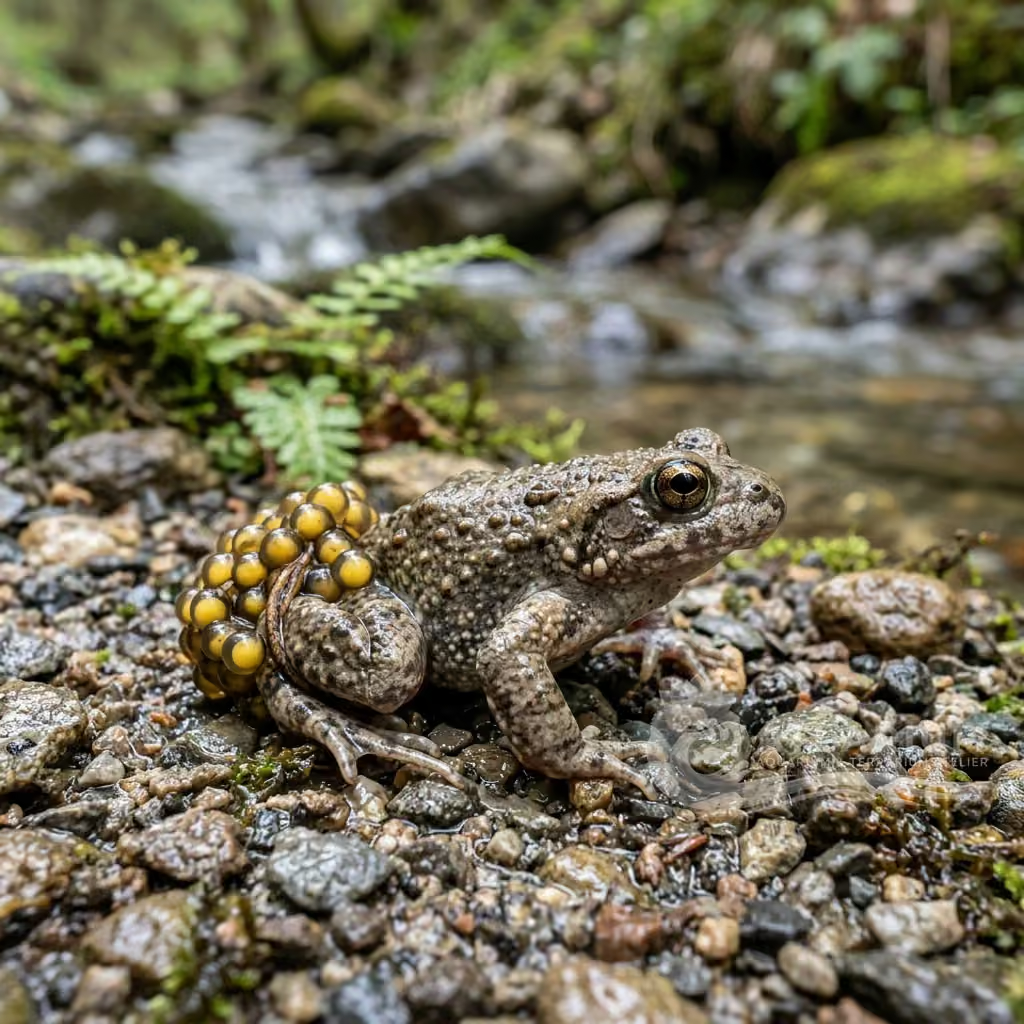
Yellow-bellied Toad
Bombina variegata
The European Yellow-bellied Toad is a semi-aquatic amphibian with a muddy back and a striking sulfur-yellow belly. It features unique heart-shaped pupils and displays the famous Unkenreflex defense.
Water Temperature
15 - 24 °C
pH Value
6.5 - 7.5
Environment
Freshwater / Semi-aquatic
Humidity
60 - 80 %
Day temperature
20 - 25 °C
Night temperature
15 - 20 °C
UVB
Ferguson 1
UVI
0 - 0.7 UVI

Species description
Geographical Origin and Habitat: Semi-aquatic species endemic to the hilly, mountainous, and humid deciduous forests of central and southern Europe. It inhabits temporary muddy pools, slow streams, and small ponds.
Taxonomy and Genetics: Family Bombinatoridae. Commonly known as the Yellow-bellied Toad. A strictly protected species in Europe. Considered a morphologically primitive anuran.
Behavior and Habits: Diurnal and nocturnal. Mostly aquatic, they spend much of their time floating at the surface of pools. When threatened, they exhibit the "Unkenreflex," arching their back and limbs to display their bright yellow warning belly. Males produce a soft, musical call.
Morphology: Small, flattened, warty body reaching 4-5 cm in length. The dorsal area is a camouflaged muddy brown or dark olive-grey with sharp, cornified warts. The belly is a contrasting pattern of bright yellow or orange with dark grey or black marbling. Pupils are heart-shaped. Females are larger.

Care, breeding and tankmates
Terrarium Setup: Requires a paludarium or horizontal aqua-terrarium (minimum 60x45x30 cm). Provide 70% water area (10-15 cm deep) and 30% terrestrial area with moist soil or sphagnum moss. Include cork bark and flat stones.
Lighting and Heating: Prefers cool, temperate conditions. Keep temperatures between 18-22°C during the day, dropping to 14-16°C at night. In winter, they require a cold brumation period at 4-8°C. Provide 5% UVB lighting.
Humidity and Hydration: Semi-aquatic species requiring high humidity (80-90%). Good ventilation is vital to prevent bacterial skin infections. Use dechlorinated water; perform regular partial water changes.
Feeding and Supplementation: Voracious insectivore. Feeds on small crickets, earthworms, and insect larvae. Dust prey with calcium and vitamin D3 supplements twice a week.
Compatibility: Very peaceful and highly compatible within their own species. Can be kept in small groups. Do not house with much smaller amphibians, as they may be eaten.
Health and Common Diseases: Possesses skin glands that secrete bufotoxins when stressed, which can be highly irritating to eyes and mucus membranes; wash hands thoroughly. Keep water clean to prevent Red Leg disease.

Geographic origin and distribution
Semi-aquatic species endemic to the hilly, mountainous, and humid deciduous forests of central and southern Europe. It inhabits temporary muddy pools, slow streams, and small ponds.
Origin
Europe, Mediterranean, and West Asia

Amphibian profile
- Diet
- Insectivore
- The Yellow-bellied Toad consumes a wide array of aquatic and terrestrial invertebrates, including worms, beetles, flies, and mosquito larvae. They ambush prey both in the water and on the muddy banks of their habitats. In captivity, they readily accept crickets, earthworms, and waxworms, provided they are sized correctly and dusted with supplements.
- Life expectancy
- 20-29 years
- Adult size
- 5.5 cm
- Lifestyle/Microhabitat
- Semi-aquatic
- This species is semi-aquatic, requiring an environment that balances both land and shallow water habitats. They thrive in dynamic, temporary wetlands and often colonize newly formed puddles quickly. A proper terrarium must feature a significant, shallow water section and a damp terrestrial area with ample hiding spots.
- Activity cycle
- Diurnal
- They are diurnal and highly active during the day, especially when the weather is warm and overcast. They spend hours floating at the water's surface, basking and waiting for insects to fall in. During the night, they may venture further from the water to hunt among the damp vegetation.
- Sociality
- Solitary
- These toads are highly aquatic but will actively explore the surrounding land during rainy or humid weather. Their most famous behavior is the 'unken reflex,' where they arch their backs and limbs to display their warning colors. They are quite social and can often be found congregating in large numbers in suitable puddles.
- Reproduction
- Oviparous
- Breeding extends over the spring and summer months, often occurring in very small, temporary bodies of water like tire ruts. Males lack a vocal sac but produce a soft, rhythmic call to attract females to the breeding site. Females lay small clusters of eggs repeatedly throughout the season, attaching them to vegetation or the pond bottom.
- Toxicity
- Toxic
- They possess specialized skin glands that produce toxic peptides designed to deter predators. When severely threatened, they perform a defensive posture revealing their bright yellow undersides as a warning. While not typically dangerous to humans, the toxins can irritate the eyes and mucous membranes, necessitating thorough hand washing after handling.
- Life stage
- Metamorphosis
- Starting as aquatic eggs attached to submerged plants, they develop into tadpoles that graze on algae. Metamorphosis occurs quickly, allowing them to leave temporary puddles before they dry up completely. The small juveniles possess the characteristic warty skin and soon develop the bright yellow aposematic belly patterns of adults.
- Handling tolerance
- Display only
- Handling should be kept to a minimum to avoid stressing the toad and to protect its highly permeable skin. If handling is required, hands must be washed and left wet, or moistened powder-free gloves should be used. Extreme caution is needed to avoid transferring their mild skin toxins to your face or eyes.
- Brumation
- Required
- In their natural European habitat, they undergo a complete brumation during the cold winter months. They seek out frost-free hiding places under rocks, logs, or deep in the mud to survive freezing temperatures. To breed them successfully in captivity, a period of artificial cooling is generally required to mimic this winter rest.
- Molting
- Regular
- Yellow-bellied Toads shed their skin regularly, a process driven by continuous growth and the need to shed parasites. The shedding process takes place in the water, where the toad uses its limbs to peel the skin away. Like most amphibians, they eat the shed skin immediately to avoid wasting the energetic resources it contains.

Related species
Recommendations grouped by close relatives, companion choices, and similar care.