Spiny Bush Viper
Atheris hispida
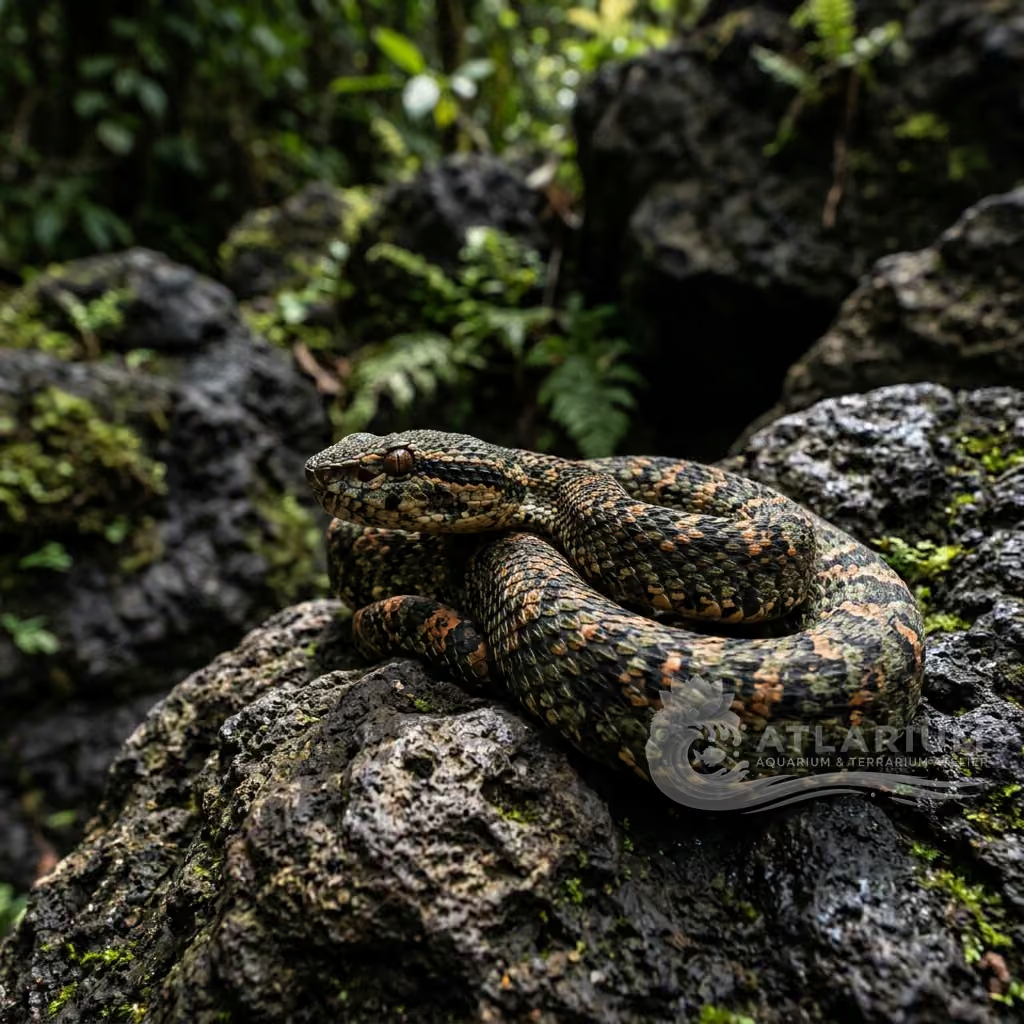
An extraordinary and highly venomous Central African arboreal viper, renowned worldwide for its aggressively shaggy, bristly appearance caused by intensely elongated scales.
Environment
Terrestrial
Humidity
65 - 85 %
Day temperature
21 - 25 °C
Ambient temperature
21 - 25 °C
Night temperature
17 - 19 °C
Basking spot
27 °C
Adult size
60 cm
Minimum enclosure
>= 120 L

Species description
Geographical Origin and Habitat: Atheris hispida is native to the montane rainforests of Central Africa, with populations in the Democratic Republic of the Congo, southwestern Uganda, and western Kenya. It inhabits humid, high-rainfall areas, including papyrus swamps, forest edges, and low-growing shrubs, usually at elevations of 1,200 to 2,400 meters.
Taxonomy and Genetics: A member of the family Viperidae and the genus Atheris. Commonly known as the Spiny or Rough-scaled Bush Viper due to its distinctive scale structure. Geographically isolated populations exist across Central African highlands. No subspecies are currently recognized, but it represents a highly specialized morphotype.
Behavior and Habits: Nocturnal and arboreal. During the day, it often basks openly on flowers, reeds, or low branches, relying on its bristly camouflage to blend in with moss and lichens. It is an ambush predator that feeds on small vertebrates. It possesses a potent hemotoxic venom. It is generally placid but strikes rapidly if cornered.
Morphology: Adults measure 50-60 cm in length, with males being longer and more slender. Its defining characteristic is its extremely elongated, pointed dorsal scales that curve outward, creating a shaggy, spiny, or hairy appearance. Coloration ranges from yellowish-green and olive to dark brown.

Care, breeding and tankmates
Terrarium Setup: A vertical terrarium of at least 60x40x60 cm with a secure locking system is mandatory. Furnish the enclosure with thin climbing branches, reeds, and dense foliage (live or artificial) to allow for climbing and basking. Use a moisture-retaining substrate such as cypress mulch or coco coir.
Lighting and Heating: Prefers moderate temperatures. Daytime temperatures should be 23-26°C, with a localized basking spot of 29°C using a protected overhead heat lamp. Nighttime temperatures should drop to 18-20°C. Provide a low-output UVB light (2.0 or 5.0) on a 10-hour daily cycle.
Humidity and Hydration: Maintain high humidity levels between 75% and 85%. Mist the enclosure daily with clean, warm water, preferably in the evening. Since they drink droplets off foliage rather than from a water bowl, daily spraying is vital. Ensure adequate cross-ventilation to prevent stagnant air.
Feeding and Supplementation: Carnivorous. In the wild, they feed on frogs, lizards, and small mammals. Captive specimens can be difficult to feed and may require scenting. Offer appropriately sized frozen-thawed mice using long feeding tongs. Dust prey with calcium and vitamins once a month.
Compatibility: Strictly solitary. Do not house together. The venom is medically significant and dangerous. Keep the terrarium locked and clearly labeled. Use proper snake hooks and handling tools for maintenance. Never attempt to handle this species by hand.
Health and Common Diseases: Wild-caught specimens are prone to stress-induced anorexia and parasite overload. Susceptible to respiratory infections if ventilation is inadequate, and skin infections if the substrate remains waterlogged. Consult a veterinarian specializing in venomous reptiles.

Geographic origin and distribution
Atheris hispida is native to the montane rainforests of Central Africa, with populations in the Democratic Republic of the Congo, southwestern Uganda, and western Kenya. It inhabits humid, high-rainfall areas, including papyrus swamps, forest edges, and low-growing shrubs, usually at elevations of 1,200 to 2,400 meters.
Origin
Cosmopolitan or introducedAfrica and Madagascar

Reptile profile
- Diet
- Carnivore
- These vipers are ambush predators that feed mainly on small mammals, frogs, and lizards in the wild. In captivity, they can usually be transitioned to a diet of appropriately sized rodents, such as mice or small rats. Feeding should occur every one to two weeks depending on the age and size of the snake.
- Adult size
- 60 cm
- Lifestyle/Microhabitat
- Arboreal
- Arboreal species spend the majority of their lives in trees and shrubs, requiring vertically oriented enclosures with climbing branches. Terrestrial species need ample floor space with hiding spots among the leaf litter. Both require specific temperature and humidity gradients to thrive.
- Activity cycle
- Nocturnal
- These snakes are primarily nocturnal or crepuscular, becoming most active during the evening and night. During the day, they often rest coiled on branches or concealed in vegetation. Their activity levels can increase significantly after a period of rain or during the breeding season.
- Sociality
- Solitary
- They are typically ambush hunters, relying on their camouflage to remain undetected by both prey and predators. When threatened, they may adopt a defensive posture, hiss, or strike rapidly. They are generally not aggressive but will defend themselves fiercely if provoked.
- Reproduction
- Viviparous
- Most of these species are viviparous, giving birth to live young after a gestation period of several months. The neonates are fully independent and venomous from birth. Breeding often requires a cooling period or specific environmental cues to simulate natural seasonal changes.
- Handling tolerance
- Display only
- Handling must be strictly avoided except when absolutely necessary for husbandry or medical reasons. Always use appropriate tools such as snake hooks or tongs to move the animal safely. These are highly venomous species, and a bite can result in severe medical consequences.
- Brumation
- Not required
- Depending on their natural range, some may undergo a mild winter cooling period to stimulate breeding. This is not a deep brumation but rather a slight drop in temperature accompanied by reduced feeding. Tropical species may not require any significant seasonal changes in captivity.
- Molting
- Periodic
- Shedding occurs periodically as the snake grows, heralded by the eyes turning a milky blue color. During this time, they should be left undisturbed and humidity should be slightly increased to facilitate a clean shed. A healthy snake will shed its skin in one complete, unbroken piece.

Related species
Recommendations grouped by close relatives, companion choices, and similar care.