Picado's jumping pitviper
Atropoides picadoi
An incredibly heavy-bodied Central American venomous pitviper. It is widely respected and named primarily for its exceptionally powerful, explosive, and dangerous strike.
Environment
Terrestrial
Humidity
75 - 90 %
Day temperature
19 - 23 °C
Ambient temperature
19 - 23 °C
Night temperature
15 - 17 °C
Basking spot
25 °C
Adult size
90 cm
Minimum enclosure
>= 180 L

Species description
Geographical Origin and Habitat: Picado's jumping pitviper is a venomous snake endemic to the mountainous regions of Costa Rica and western Panama. It inhabits humid premontane and lower montane forests, at elevations ranging from 500 to 1500 meters. It is terrestrial, living among leaf litter, fallen logs, and low vegetation.
Taxonomy and Genetics: Belonging to the family Viperidae and subfamily Crotalinae (pitvipers). The genus Atropoides (often referred to as Metlapilcoatlus in recent taxonomy) is distinguished by extremely stocky bodies and specialized evolutionary adaptations for terrestrial life in Neotropical cloud forests.
Behavior and Habits: It is a nocturnal and crepuscular ambush predator. Commonly known as the jumping pitviper due to its powerful, lunging strike, which can sometimes lift its body off the ground. During the day, it remains concealed under rotting logs, rock piles, or deep leaf litter to avoid predators.
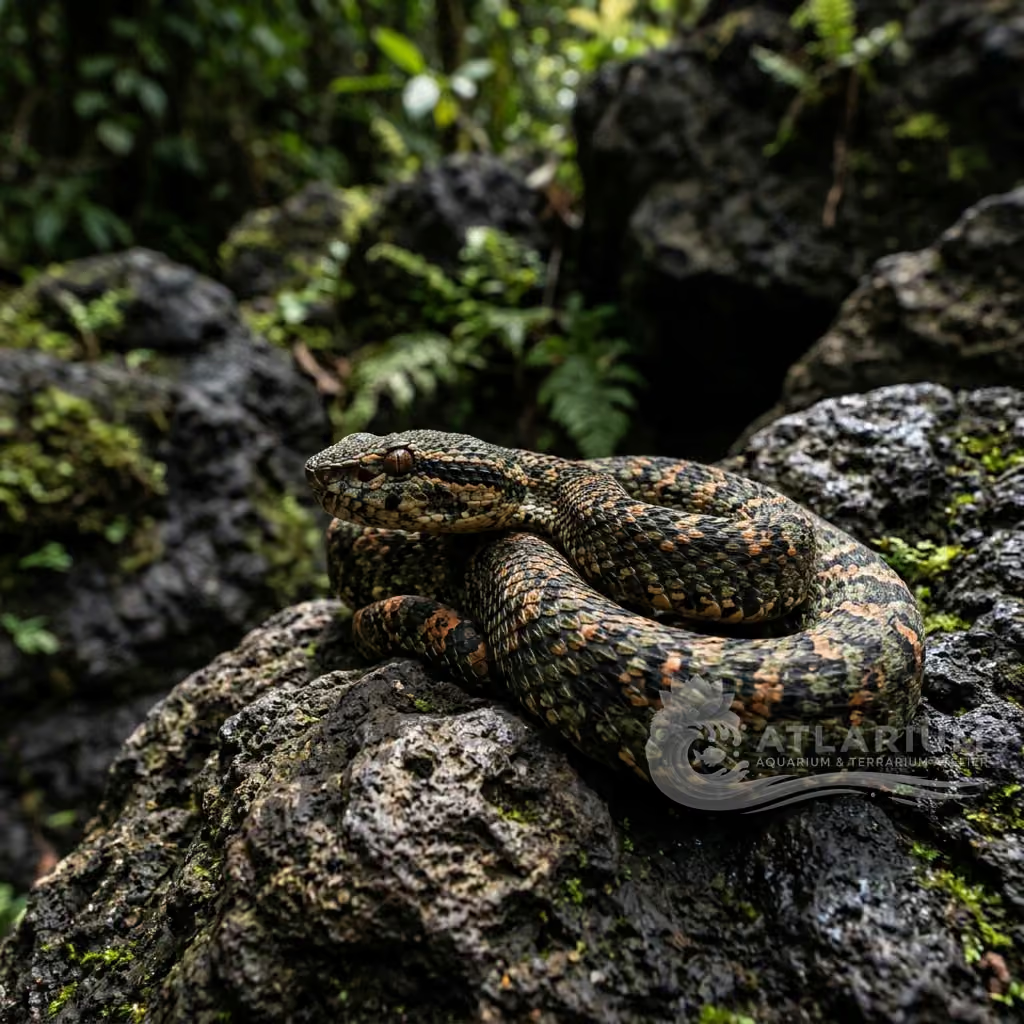
Morphology: Features a short, thick, and highly muscular body with a wide, triangular head distinct from the neck. Adults typically range from 75 to 100 centimeters in length. The coloration consists of a brown, gray, or tan background pattern with dark rhomboidal blotches that provide excellent camouflage.

Care, breeding and tankmates
Terrarium Setup: As a venomous and heavy-bodied snake, it must be housed in a highly secure, escape-proof terrarium with a lock, measuring at least 100x50x50 cm. The substrate should consist of a mix of peat moss and coco coir covered with leaf litter. Provide heavy, stable hide boxes on the bottom to prevent tipping.
Lighting and Heating: Keep daytime temperatures between 24°C and 26°C, with a localized basking area of 28°C using a protected overhead heat source. Night temperatures should drop to 20-22°C. Lighting should be low to moderate, avoiding high-intensity bulbs that could cause stress to this nocturnal viper.
Humidity and Hydration: High humidity of 70% to 85% is required to mimic its cloud forest habitat. Mist the enclosure regularly with water to keep the substrate damp but not waterlogged. A heavy, shallow water dish must be available at all times for drinking and soaking, and cleaned regularly.
Feeding and Supplementation: In captivity, they feed on appropriately sized rodents like mice and rats. Because they have a slow metabolism, adults should only be fed once every 10 to 14 days to prevent obesity. Supplementation is generally not required if fed whole, healthy rodents.
Compatibility: Strictly solitary. They must be housed individually. Co-housing will cause significant stress and raises the risk of accidental bites during feeding. Handling must be kept to an absolute minimum and performed only by experienced keepers using professional snake hooks and safety protocols.
Health and Common Diseases: Prone to respiratory infections if the air becomes stagnant and overly wet without proper ventilation. Poor shedding (dysecdysis) can happen if humidity drops too low. Because this is a venomous species, all health checks must be conducted using extreme caution and specialized tools.

Geographic origin and distribution
Picado's jumping pitviper is a venomous snake endemic to the mountainous regions of Costa Rica and western Panama. It inhabits humid premontane and lower montane forests, at elevations ranging from 500 to 1500 meters. It is terrestrial, living among leaf litter, fallen logs, and low vegetation.
Origin
Central America and Caribbean

Reptile profile
- Diet
- Carnivore
- Picado's jumping pitviper sustains itself on a varied diet of small mammals, orthopterans, lizards, and frogs found on the forest floor. It is a stout, heavy-bodied snake that relies on camouflage to ambush its prey as it wanders through the leaf litter. Using its highly sensitive facial pits, it can detect the body heat of rodents even in complete darkness. Once the prey is close enough, it launches a powerful, explosive strike to deliver its highly effective venom.
- Adult size
- 90 cm
- Lifestyle/Microhabitat
- Terrestrial
- A terrestrial to semi-terrestrial snake, it typically dwells on the forest floor, utilizing leaf litter, root systems, and low-lying vegetation for camouflage and ambush hunting. While they may occasionally ascend low shrubs, their enclosure should prioritize maximum floor space with abundant terrestrial hideouts to foster a sense of security.
- Activity cycle
- Nocturnal
- This species is primarily nocturnal, remaining hidden during the daylight hours to avoid extreme heat and predators. As dusk approaches, the Atropoides picadoi becomes active, emerging from its diurnal retreat to forage and hunt. Enclosure lighting should reflect a natural day-night cycle, but the snake will exhibit its most natural active behaviors after the lights go out.
- Sociality
- Solitary
- It is a terrestrial species known for its remarkable ability to launch itself forward during a strike, which gives it the common name "jumping pitviper." It spends most of its time hidden beneath logs, root tangles, or thick leaf litter in wet premontane forests. While generally sluggish and cryptic by day, it becomes an active forager or highly alert ambush predator at night. When confronted, it may gape its mouth and flatten its body before delivering a forceful defensive strike.
- Reproduction
- Viviparous
- This pitviper is live-bearing (viviparous), which is advantageous in its humid, high-elevation Central American habitats where egg incubation would be difficult. Females typically give birth to small litters of large, fully developed neonates during the rainy season. The young emerge capable of inflicting a venomous bite from day one and begin actively hunting soon after their first shed. There is no parental investment beyond the energy required for gestation.
- Handling tolerance
- Display only
- Due to its highly potent and medically significant venom, the Atropoides picadoi is strictly a display-only species. Under no circumstances should this snake be free-handled. All interactions, enclosure maintenance, and feeding must be performed using professional snake hooks, secure lockable terrariums, and strict safety protocols to prevent life-threatening envenomation.
- Brumation
- Not required
- Originating from relatively stable, warm climates, this species does not require a true winter brumation period. Maintaining consistent ambient temperatures year-round is ideal for their health. However, slight nocturnal temperature drops and seasonal changes in rainfall or humidity can be provided to mimic their native environment and stimulate natural behaviors.
- Molting
- Periodic
- Originating from highly humid tropical environments, this snake requires consistently elevated ambient humidity to shed its skin properly. Frequent daily misting or a rain system should be utilized when the snake goes into blue. A properly humidified enclosure prevents dysecdysis (abnormal shedding), which can lead to restricted blood flow or infection.

Related species
Recommendations grouped by close relatives, companion choices, and similar care.