Fea's viper
Azemiops feae
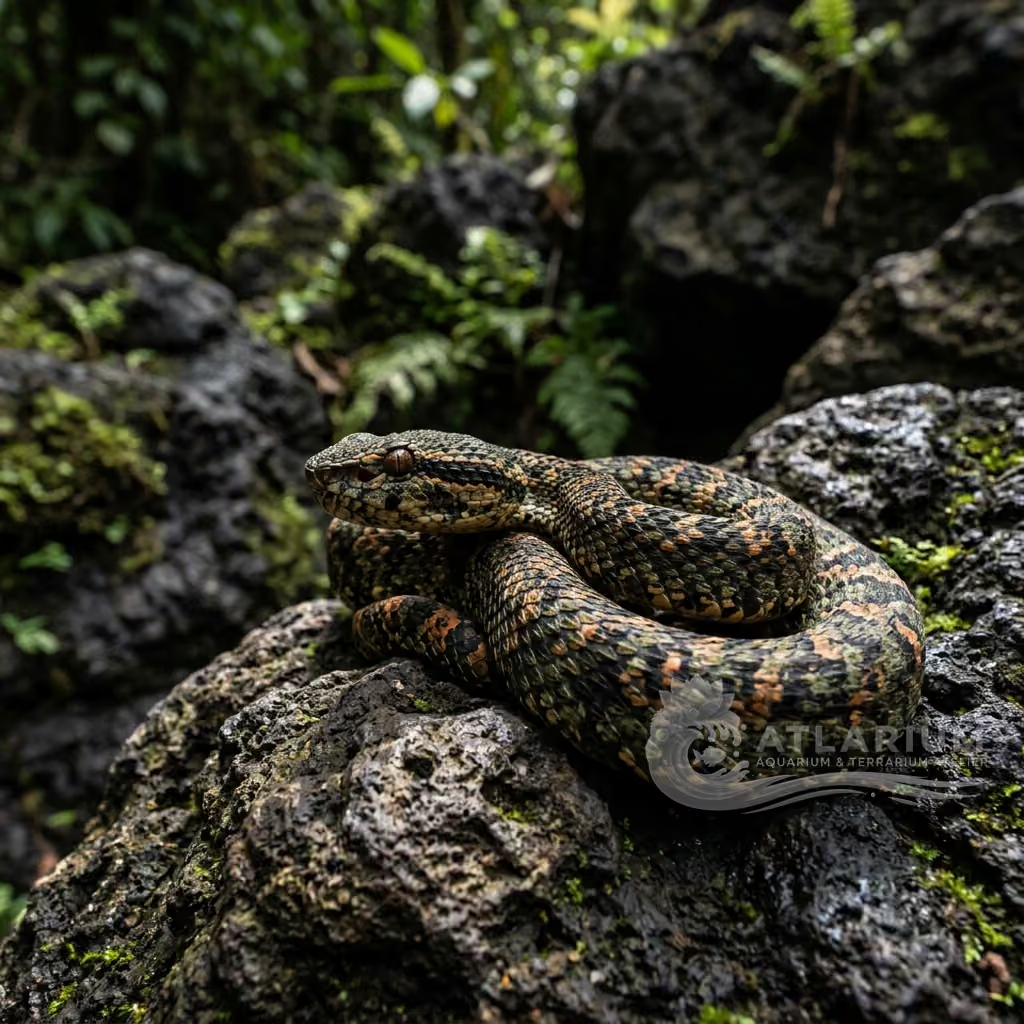
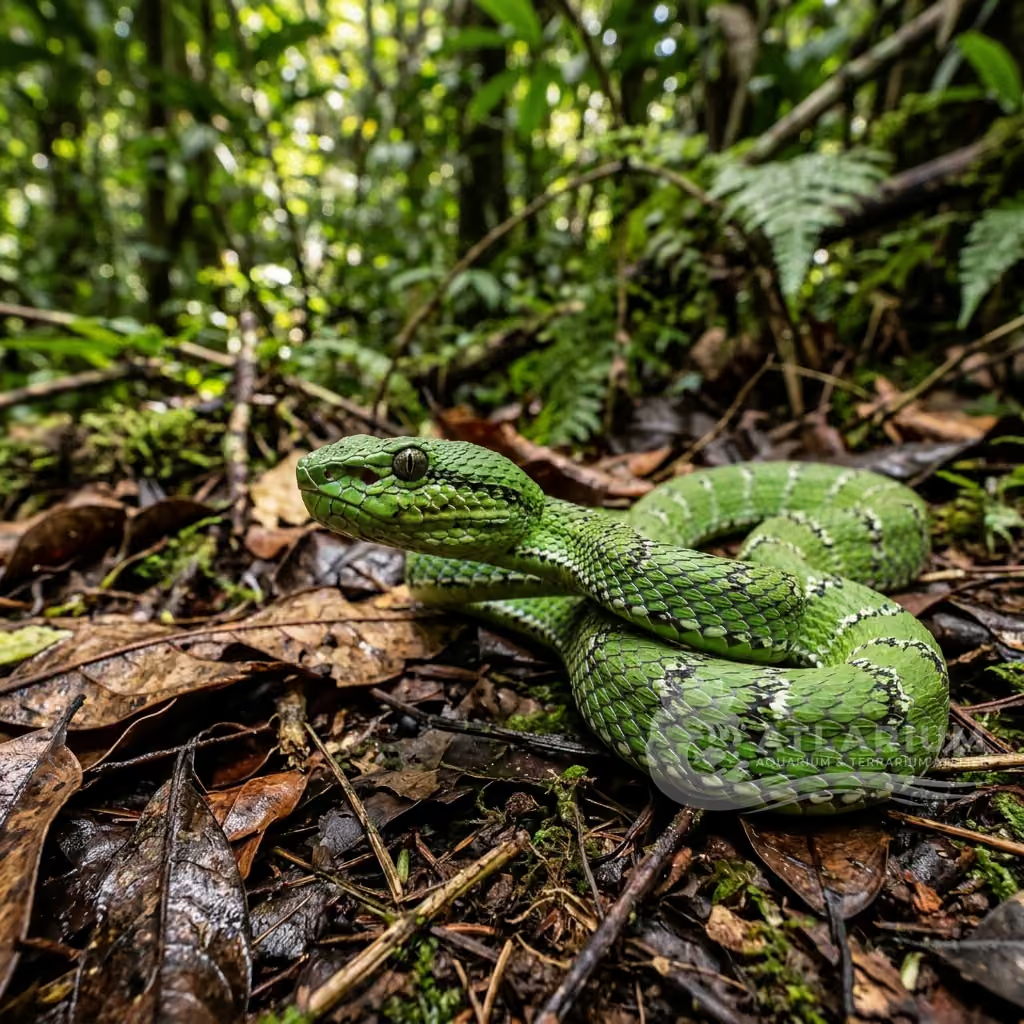
One of the most primitive viper species in the world, recognizable by its large head scales and dark body marked with thin orange-yellow transverse bands.
Environment
Terrestrial
Humidity
80 - 100 %
Day temperature
16 - 20 °C
Ambient temperature
16 - 20 °C
Night temperature
14 - 16 °C
Basking spot
22 °C
Adult size
75 cm
Minimum enclosure
>= 150 L
Brumation temperature
8 - 12 °C

Species description
Geographical Origin and Habitat: Azemiops feae is native to the mountainous regions of Southeast Asia, primarily found in southern China (Sichuan, Yunnan, Guizhou provinces), northern Myanmar, northern Vietnam, and northern Laos. It inhabits high-altitude montane rain forests, bamboo groves, and coniferous woodlands at elevations ranging from 600 to 2200 meters above sea level, where it occupies cool, damp microhabitats under rocks, logs, or deep within leaf litter.
Taxonomy and Genetics: Belongs to the class Reptilia, order Squamata, suborder Serpentes, family Viperidae, subfamily Azemiopinae, and genus Azemiops. It is considered one of the most primitive living vipers, representing an evolutionary bridge between typical vipers (Viperinae) and pit vipers (Crotalinae) due to its lack of heat-sensing pits and specific cranial bone structures. Recently, a second species, Azemiops kharini, was split from this taxon.
Behavior and Habits: Exhibits predominantly nocturnal and crepuscular habits. It leads a highly secretive, terrestrial lifestyle, hiding during the day under forest floor debris. This species is specialized for cool mountain climates and remains active at temperatures that would cause torpor in most other tropical snakes. When threatened, it flattens its body to appear larger, performs rapid defensive strikes, and emits warning hisses.
Morphology: Features a unique morphology for a viper, with an oval head covered in large, symmetrical plates resembling colubrids or elapids, rather than the small, fragmented scales of typical vipers. The body is robust but cylindrical. The dorsal color is dark blue-grey or blackish, broken by thin, widely spaced orange-yellow transverse bands. The head is bright yellow-orange with two dark longitudinal markings. Average length is 60-80 cm.

Care, breeding and tankmates
Terrarium Setup: Requires a horizontal terrarium of at least 80x50x40 cm for a single adult. The enclosure must mimic a cool montane forest floor: incorporate thick live mosses, ferns, hollow cork logs, and stable flat rocks to provide multiple dark, tight hides. The substrate should consist of a damp mix of peat moss, coconut coir, and sphagnum moss, with a depth of 5-8 cm to retain moisture.
Lighting and Heating: Because it is a high-altitude species adapted to cold environments, heating must be managed with extreme caution. Basking temperature should not exceed 22-24 °C on the warm side, while the cool side must remain around 18-20 °C, with a nighttime drop to 14-16 °C. Constant temperatures above 26-28 °C are lethal. Provide low-intensity LED lighting and a shaded 2% or 5% UVB tube.
Humidity and Hydration: Humidity must be kept exceptionally high, between 75% and 85% at all times. Mist the enclosure regularly with cool, declorinated water to keep the substrate damp but not swampy. Excellent cross-ventilation is vital to prevent stagnant air, which can cause mold and bacterial skin rot. Keep a low, wide water bowl filled with fresh water on the cool side.
Feeding and Supplementation: In the wild, they feed on small forest rodents, shrews, and occasionally amphibians. In captivity, they accept small mice. Feed them using long tongs for safety, as this is a venomous species. Due to their slow metabolism in cool temperatures, feed them once every 14-20 days. No supplements are required if feeding high-quality whole rodents.
Compatibility: Strictly solitary and venomous. Must be housed individually in a highly secure escape-proof enclosure with reliable locks. Handling must be avoided entirely, and any relocation must be performed only using professional snake hooks and containment tubes by experienced keepers. Never keep with other animals.
Health and Common Diseases: Infamously difficult to maintain in captivity long-term, with a very high sensitivity to stress and pathogens. Primary health issues include blister disease and scale rot from wet substrate, respiratory infections from stagnant air, kidney failure from dehydration, and heavy endoparasite loads in wild-caught specimens, requiring veterinary treatment.

Geographic origin and distribution
Azemiops feae is native to the mountainous regions of Southeast Asia, primarily found in southern China (Sichuan, Yunnan, Guizhou provinces), northern Myanmar, northern Vietnam, and northern Laos. It inhabits high-altitude montane rain forests, bamboo groves, and coniferous woodlands at elevations ranging from 600 to 2200 meters above sea level, where it occupies cool, damp microhabitats under rocks, logs, or deep within leaf litter.
Origin
South and Southeast AsiaEast Asia

Reptile profile
- Diet
- Carnivore
- These vipers are ambush predators that feed mainly on small mammals, frogs, and lizards in the wild. In captivity, they can usually be transitioned to a diet of appropriately sized rodents, such as mice or small rats. Feeding should occur every one to two weeks depending on the age and size of the snake.
- Adult size
- 75 cm
- Lifestyle/Microhabitat
- Terrestrial
- Arboreal species spend the majority of their lives in trees and shrubs, requiring vertically oriented enclosures with climbing branches. Terrestrial species need ample floor space with hiding spots among the leaf litter. Both require specific temperature and humidity gradients to thrive.
- Activity cycle
- Crepuscular
- These snakes are primarily nocturnal or crepuscular, becoming most active during the evening and night. During the day, they often rest coiled on branches or concealed in vegetation. Their activity levels can increase significantly after a period of rain or during the breeding season.
- Sociality
- Solitary
- They are typically ambush hunters, relying on their camouflage to remain undetected by both prey and predators. When threatened, they may adopt a defensive posture, hiss, or strike rapidly. They are generally not aggressive but will defend themselves fiercely if provoked.
- Reproduction
- Oviparous
- Most of these species are viviparous, giving birth to live young after a gestation period of several months. The neonates are fully independent and venomous from birth. Breeding often requires a cooling period or specific environmental cues to simulate natural seasonal changes.
- Handling tolerance
- Expert only
- Handling must be strictly avoided except when absolutely necessary for husbandry or medical reasons. Always use appropriate tools such as snake hooks or tongs to move the animal safely. These are highly venomous species, and a bite can result in severe medical consequences.
- Brumation
- Required
- Depending on their natural range, some may undergo a mild winter cooling period to stimulate breeding. This is not a deep brumation but rather a slight drop in temperature accompanied by reduced feeding. Tropical species may not require any significant seasonal changes in captivity.
- Molting
- Periodic
- Shedding occurs periodically as the snake grows, heralded by the eyes turning a milky blue color. During this time, they should be left undisturbed and humidity should be slightly increased to facilitate a clean shed. A healthy snake will shed its skin in one complete, unbroken piece.

Related species
Recommendations grouped by close relatives, companion choices, and similar care.