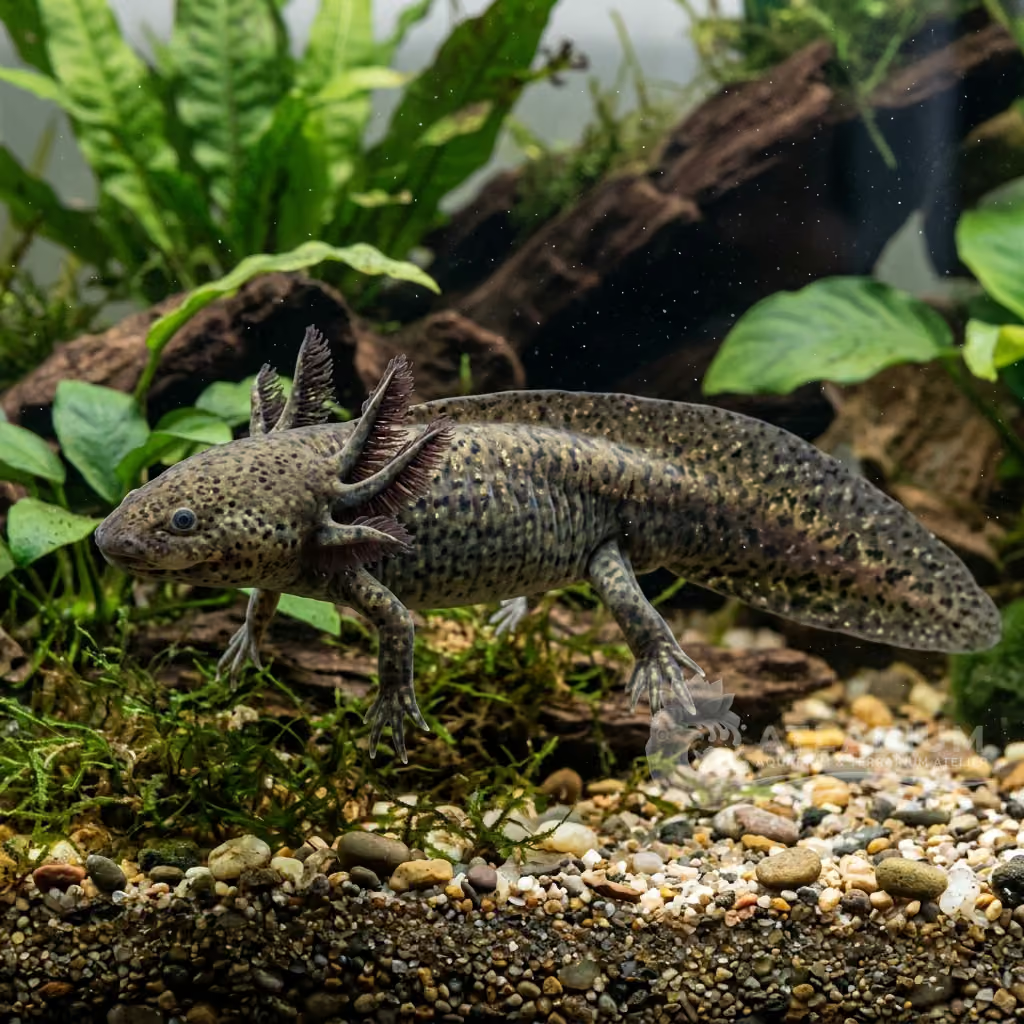
Greater Siren
Siren lacertina
The greater siren is a massive, eel-like aquatic amphibian reaching nearly a meter long. Known to aestivate during droughts, it demands a 300L tank, heavily planted with a soft mud or sand substrate.
Water Temperature
18 - 26 °C
pH Value
6.5 - 7.5
Environment
Freshwater
Humidity
100 %
Day temperature
22 °C
Night temperature
18 °C
Ambient temperature
22 °C
Minimum enclosure
>= 45 L

Species description
Geographical Origin and Habitat: Endemic to the slow-flowing blackwater rivers, swamps, sluggish drainage canals, and turbid lakes of the southeastern United States, ranging from Virginia to Florida. As one of North America's largest amphibians, it inhabits deep, muddy waters, seeking shelter among submerged cypress roots.
Taxonomy and Genetics: A massive, eel-like neotenic salamander reaching lengths of 60 to 100 cm. It is characterized by a smooth, scaleless body covered in a thick layer of protective mucus, three pairs of reddish external gills behind a broad head, and a complete absence of hind limbs. Its small forelimbs are located just behind the gill branches.
Behavior and Habits: Primarily nocturnal and secretive, spending the day buried in thick mud or under debris. At night, it becomes an active predator, using suction feeding to capture prey. During severe droughts, it can secrete a cocoon of mucus and aestivate in the mud for several years.
Morphology: Minimal external sexual dimorphism is present. Mature females are generally larger and more robust when carrying eggs, while males may exhibit slight differences in head width during the breeding season.

Care, breeding and tankmates
Terrarium Setup: Requires a very large aquarium (minimum 120-150 cm in length, 300+ liters). The tank must be filled with deep water (30-40 cm) and the substrate must consist of fine sand or smooth mud. Gravel is strictly prohibited as it will be swallowed, leading to fatal impaction. A heavy, secure lid is mandatory as they are powerful escape artists.
Lighting and Heating: Prefers cool to moderate water temperatures between 18°C and 24°C. Water temperatures above 28°C can be fatal. Provide low-intensity aquarium lighting and ensure a stable environment, ideally in a cool room or basement.
Humidity and Hydration: Fully aquatic. High water quality is essential; use declorinated tap water or a mix with reverse osmosis water. Massive weekly water changes of 40-50% and a heavy-duty canister filter are necessary to manage their waste output.
Feeding and Supplementation: A voracious carnivore. Feed on whole defrosted fish, large earthworms, freshwater shrimp, and insects. They feed primarily by suction. Take care to avoid overfeeding, as they are prone to obesity.
Compatibility: Solitary and highly territorial. They will attempt to swallow any tankmate that fits in their mouth. House individually, as even two adults can fight and injure each other's gills.
Health and Common Diseases: Highly sensitive to ammonia spikes and elevated temperatures. Poor water hygiene can lead to bloating, skin necrosis, or the loss of their external gill branches. Avoid handling with bare hands to protect their sensitive skin.

Geographic origin and distribution
Endemic to the slow-flowing blackwater rivers, swamps, sluggish drainage canals, and turbid lakes of the southeastern United States, ranging from Virginia to Florida. As one of North America's largest amphibians, it inhabits deep, muddy waters, seeking shelter among submerged cypress roots.
Origin
Tropical oceans and reefsNorth America

Amphibian profile
- Diet
- Omnivore
- The diet of Siren lacertina consists primarily of appropriately sized prey items found in its natural habitat. In captivity, they should be offered a varied selection of live insects, worms, or small invertebrates to ensure nutritional balance. It is important to gut-load the feeder insects and occasionally dust them with high-quality calcium and vitamin supplements. Monitoring their food intake helps prevent obesity and maintains optimal health. Fresh water must always be available to aid in digestion.
- Life expectancy
- 25-30 years
- Adult size
- 97 cm
- Lifestyle/Microhabitat
- Aquatic
- Siren lacertina leads a specialized lifestyle adapted to the specific niches of its ecosystem, whether that involves climbing, burrowing, or swimming. Its daily routine is a delicate balance of thermoregulation, seeking out hydration, and avoiding predators. In a captive environment, replicating these microhabitats—such as providing ample climbing branches or deep substrate—is crucial for their well-being. They generally thrive when left undisturbed to carry out their natural routines. A proper setup dramatically improves their lifespan and overall vitality.
- Activity cycle
- Nocturnal
- The activity pattern of Siren lacertina is heavily influenced by the specific light cycle and ambient temperatures of its native range. It may be primarily diurnal, nocturnal, or crepuscular, meaning its peak activity times align with the safest and most optimal conditions for survival. During these active periods, they can be seen exploring, hunting, or patrolling their territory. Careful regulation of the enclosure's lighting and heating schedules will help maintain these natural circadian rhythms. Disruptions to this pattern can cause significant stress or lethargy.
- Sociality
- Solitary
- Siren lacertina is known for its fascinating and unique behavioral traits that reflect its evolutionary adaptations. Observers may notice periods of active foraging interspersed with long spells of resting or hiding. They interact with their environment carefully, using their specialized senses to navigate and detect both prey and potential threats. While some individuals can be quite shy and reclusive, others may exhibit bold and curious behavior when comfortable in their enclosure. Providing a complex habitat with plenty of enrichment is essential for expressing natural behaviors.
- Reproduction
- Oviparous
- Reproduction for Siren lacertina typically follows a seasonal pattern, often triggered by specific environmental changes such as temperature or humidity fluctuations. Mating behaviors can include complex courtship displays or specific vocalizations to attract a partner. After successful mating, the female will carefully deposit eggs or give birth, depending on the reproductive strategy of the species. Incubation or gestation periods require stable, precise conditions to ensure the healthy development of the offspring. Breeders must pay close attention to providing the right nesting environment.
- Toxicity
- Harmless
- Greater Sirens do not produce venom or highly toxic skin secretions for defense. Their primary defense mechanism is their elusive nature and the ability to rapidly swim or burrow away from danger. They do, however, possess a strong bite that can be painful if they are carelessly handled.
- Life stage
- Adult only
- They exhibit paedomorphism, permanently retaining gills and a lack of hind limbs throughout their lives. Despite reaching impressive sizes of up to 38 inches, they never undergo a traditional metamorphosis into a terrestrial form. They spend their entire long lives as aquatic, eel-like amphibians.
- Handling tolerance
- Expert only
- Requires experience to handle, mostly for enclosure maintenance. They are incredibly strong, muscular, and coated in slime, making them prone to injury if dropped.
- Brumation
- Known to aestivate during extreme dry spells by burrowing deep into mud. They tolerate significant temperature drops during winter.
- Molting
- Regular
- Molts occur entirely in an aquatic setting. The shed skin often drifts off in the water column as a sheer, translucent film.

Related species
Recommendations grouped by close relatives, companion choices, and similar care.