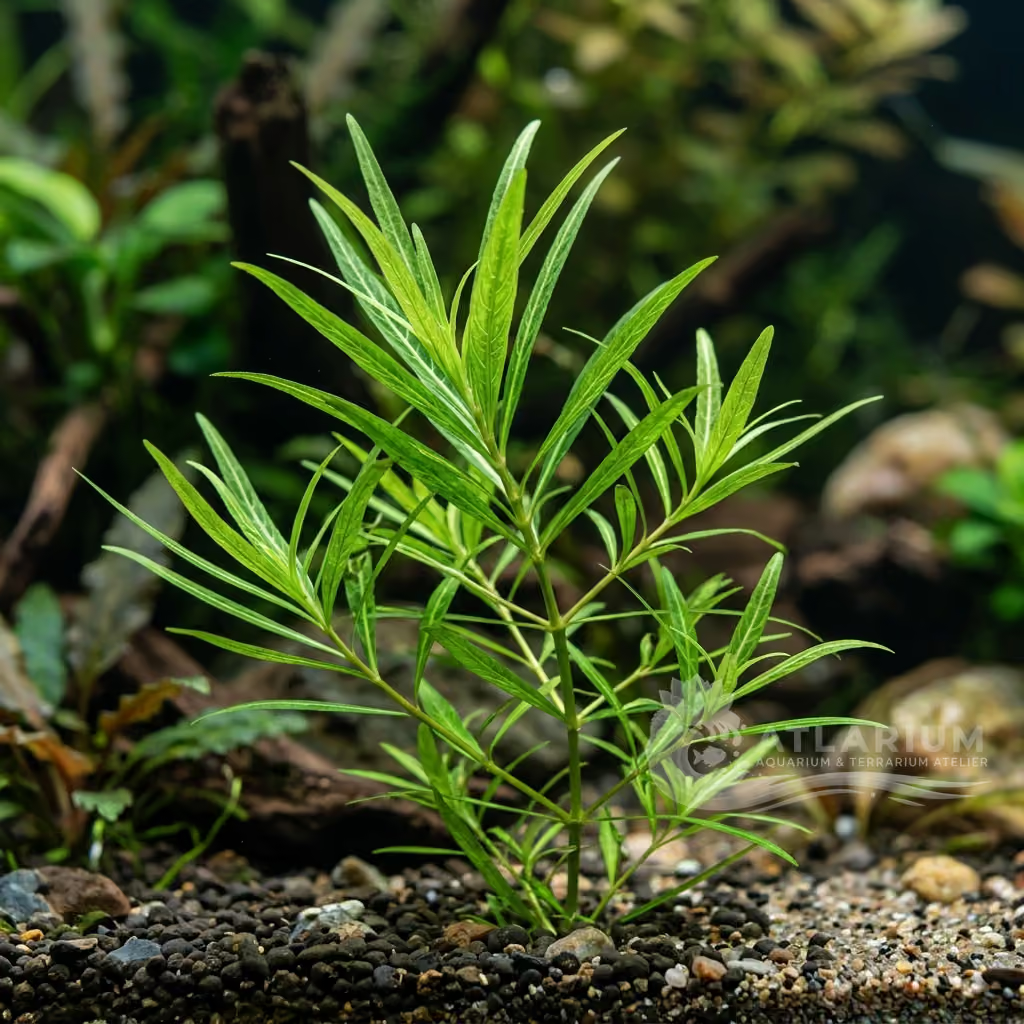
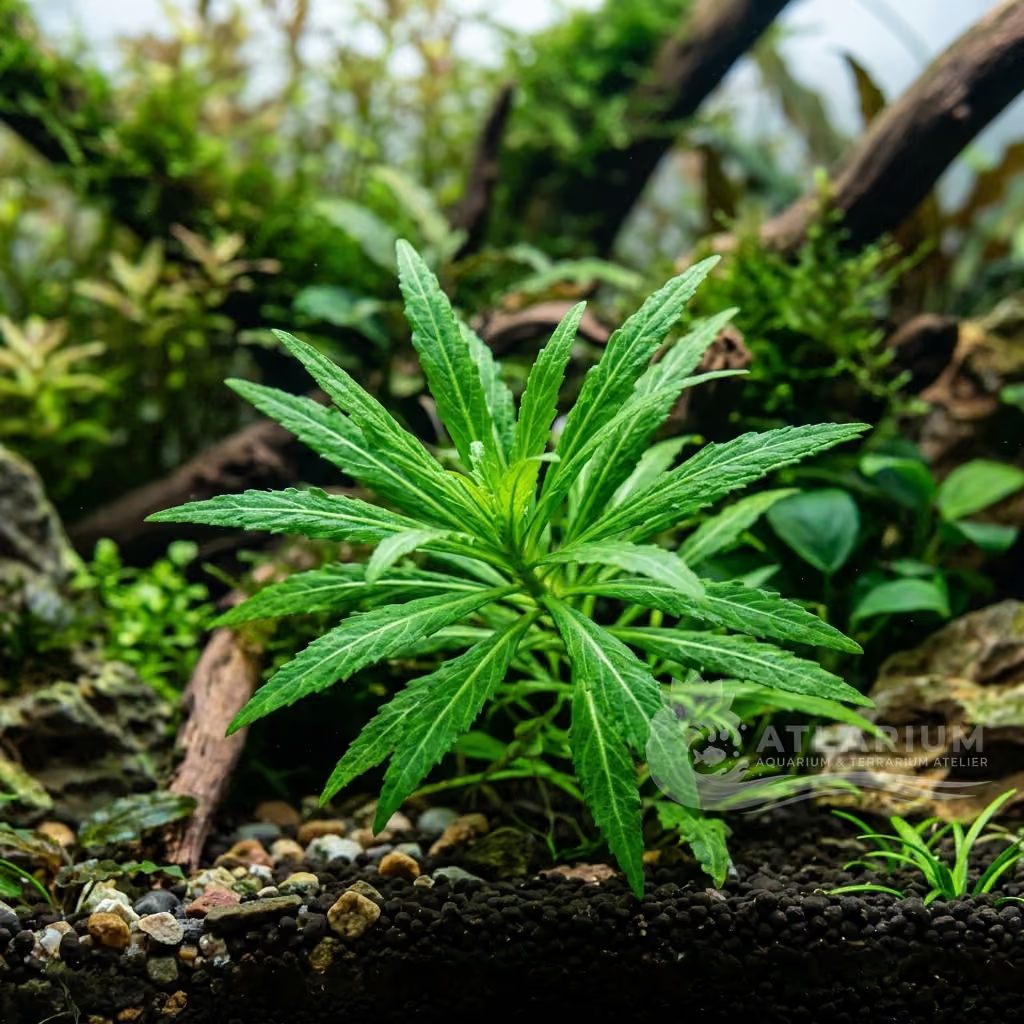
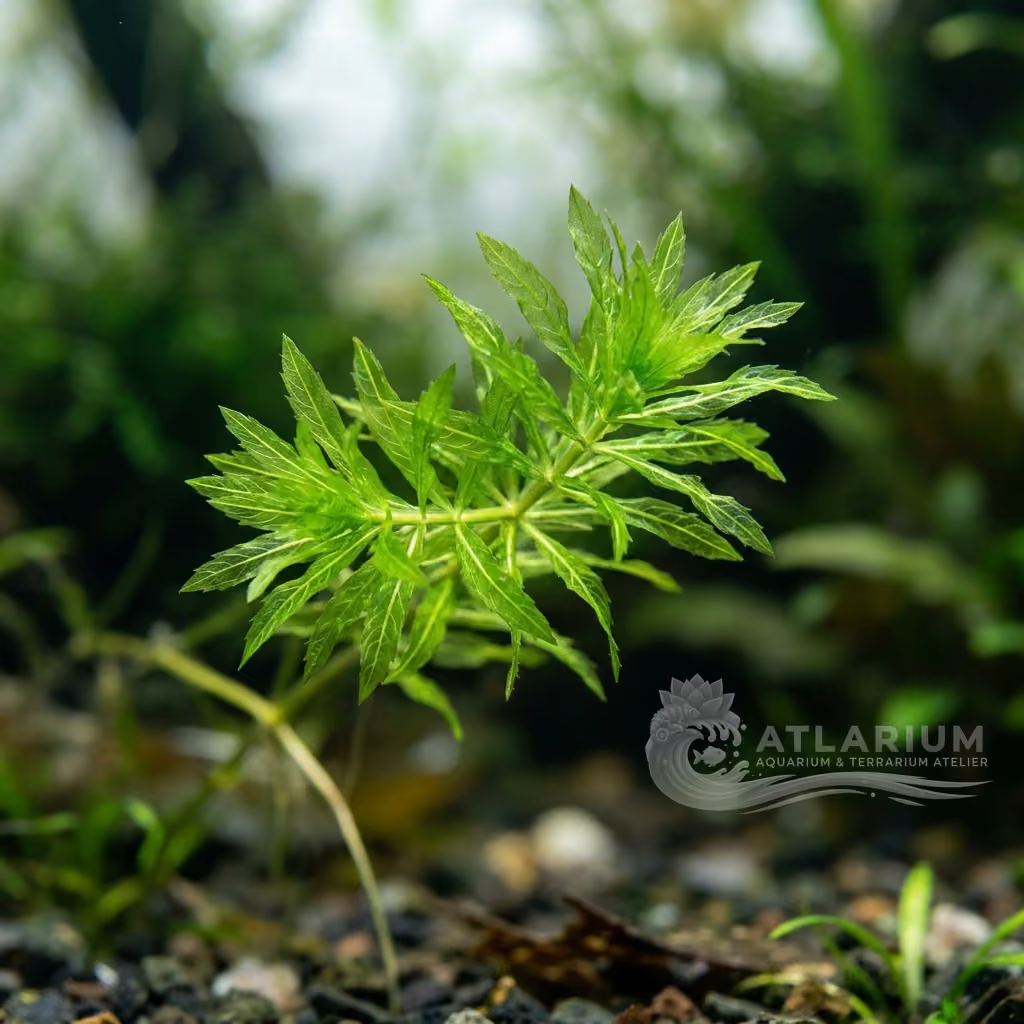
Micranthemum tweediei
Micranthemum tweedei
Micranthemum tweediei, widely known as 'Monte Carlo', is a highly sought-after foreground plant that forms a lush, dense carpet in aquariums. Its medium growth rate makes it manageable for aquascapers aiming for a pristine, manicured look.
Water Temperature
20 - 28 °C
pH Value
5 - 7
Water type
Freshwater
Light
Medium to High
CO2
High
Expected height
3 cm
Expected width
15 cm
KH
2 - 12 dKH

Species description
Geographical Origin and Habitat: Micranthemum tweediei originates from South America, specifically found in the riverine regions of Brazil and Argentina. In its natural habitat, it typically thrives submerged or semi-submerged along the banks of clear, slow-moving rivers and streams. This adaptability to both emersed and submersed conditions highlights its resilience and versatility in an aquarium environment.
Taxonomy & Genetics: A member of the Linderniaceae family, Micranthemum tweediei shares kinship with several other popular aquatic plants. This botanical classification distinguishes it from the often-compared Hemianthus callitrichoides 'Cuba', despite both being commonly used for carpeting purposes. Recent taxonomic revisions have helped clarify its position within the Micranthemum genus.
Physical Structure: This plant is characterized by its creeping growth habit and tiny, round to slightly oval leaves, typically measuring only 0.5-1 cm in diameter. Its slender, flexible stems branch laterally, producing new shoots and adventitious roots that anchor firmly into the substrate. This structure allows it to rapidly form a dense, compact carpet across the aquarium floor.
Color & Texture: Micranthemum tweediei boasts a vibrant, almost emerald-green coloration, which creates an appealing visual contrast within the aquascape. Its glossy leaves and compact arrangement give the carpet a uniform and velvety texture. Under intense lighting, the leaves may develop slightly lighter or golden hues, indicating vigorous photosynthesis.

Care, breeding and tankmates
Lighting & CO2: For optimal growth and to encourage a dense carpeting effect, Micranthemum tweediei requires medium to high lighting intensity. An 8-10 hour photoperiod is recommended, and supplemental CO2 injection is almost essential to achieve its full growth potential and to help deter algae growth. Without adequate CO2, its growth will be significantly slower and less robust.
Nutrition & Substrate: This plant is a heavy feeder, benefiting immensely from a nutrient-rich substrate containing clay and essential trace elements. Consistent
Water Chemistry: Micranthemum tweediei thrives in water temperatures ranging from 20 to 28 °C, a slightly acidic to neutral pH (5.0-7.0), and carbonate hardness (KH) between 2.0 and 12.0. Maintaining stable parameters is vital, as significant fluctuations can cause stress to the plant. Clean, well-oxygenated water is preferred to support its healthy growth.
Space Management & Placement: As a foreground plant, Micranthemum tweediei is perfectly suited for creating a uniform green carpet that covers the substrate. It should be planted in small clumps spaced closely together to encourage rapid carpet formation. Initially providing adequate space around each clump can help prevent competition for light and nutrients until the carpet establishes itself.
Pruning: Regular pruning is paramount to maintain the density and compactness of the carpet. As the carpet grows too thick, lower portions may receive less light and decay, leading to brown patches. Trimming the top portion of the carpet with sharp scissors encourages more lateral growth and promotes renewed vitality throughout the mat.
Risks & Diseases: While generally robust, Micranthemum tweediei can be susceptible to algal outbreaks, especially under conditions of nutrient imbalance or excessive lighting without adequate CO2. Nutrient deficiencies can manifest as yellowing or shrinking leaves, while poor water circulation can lead to debris accumulation and localized issues within the carpet.

Geographic origin and distribution
Micranthemum tweediei originates from South America, specifically found in the riverine regions of Brazil and Argentina. In its natural habitat, it typically thrives submerged or semi-submerged along the banks of clear, slow-moving rivers and streams. This adaptability to both emersed and submersed conditions highlights its resilience and versatility in an aquarium environment.
Origin
Amazon, Orinoco, and GuianasExtra-Amazon South America

Plant profile
- Placement
- Foreground
- It is an exceptional foreground plant, widely used to create a dense, vibrant green carpet across the aquarium floor. It is also remarkably effective when planted atop hardscape, where its stems will gracefully drape down like a hanging garden. Its small leaf size makes it ideal for adding scale to both large setups and nano tanks.
- Botanical form
- runner
- Characterized by very small, bright green, round to slightly ovate leaves growing densely along creeping stems. It naturally forms an intricate, tightly woven mat that hugs the contours of the substrate. Despite its delicate appearance above the soil, it develops a robust and extensive root system.
- Growth
- Medium
- Under ideal conditions—high light, CO2, and rich nutrients—it exhibits a moderately fast growth rate. It is generally considered easier and slightly faster to establish than Hemianthus callitrichoides. Regular and sometimes aggressive trimming is required to keep the carpet thin enough that light reaches the bottom layers, preventing uprooting.
- Substrate
- High
- A fine, soft, and nutrient-rich aqua soil is the preferred substrate, allowing the delicate roots to establish a strong hold. The plant spreads via creeping stems that root at the nodes, making a yielding substrate critical for a dense carpet. While gravel can be used, the plant will struggle to root effectively, and spreading will be noticeably impeded.
- Column fertilization
- Recommended
- Consistent liquid dosing is important, as the extensive leaf surface area of the carpet absorbs a significant portion of its nutritional needs from the water. Good circulation is necessary to deliver these nutrients evenly and wash away detritus from within the dense mat. Regular potassium additions help keep the foliage healthy and vigorous.
- Root fertilization
- Recommended
- Substrate feeding is crucial for fueling the continuous outward expansion of its runner network. A high-quality aqua soil provides the perfect nutrient reservoir for its roots. As the tank matures, using root tabs injected directly under the carpet can sustain its growth and prevent localized die-offs.
- Trimming
- Occasional
- Trimming should be done regularly to keep the carpet thin and firmly rooted. If the mat grows too thick, the lower portions may die from lack of light, leading to detachment. Use curved scissors for an even, horizontal cut.
- Propagation
- Cuttings
- Propagation is achieved effortlessly by dividing the plant into small clumps and planting them strategically across the desired area. The stems will quickly send out runners that interlock and form a continuous carpet. Trimmings cut from the top of the carpet can simply be pushed back into the substrate to grow.
- Sensitivity
- Moderate
- It can be prone to algae growth on its small leaves if the aquarium is unbalanced. It requires stable water parameters and may melt if subjected to sudden changes. Good water circulation is essential to keep the carpet free of detritus.
- Layout role
- Foreground
- Its primary function is to form a beautiful, vibrant green carpet in the foreground. It softens the hardscape edges and creates a cohesive look. It is often used in Iwagumi layouts to simulate a grassy meadow.

Related species
Recommendations grouped by close relatives, companion choices, and similar care.