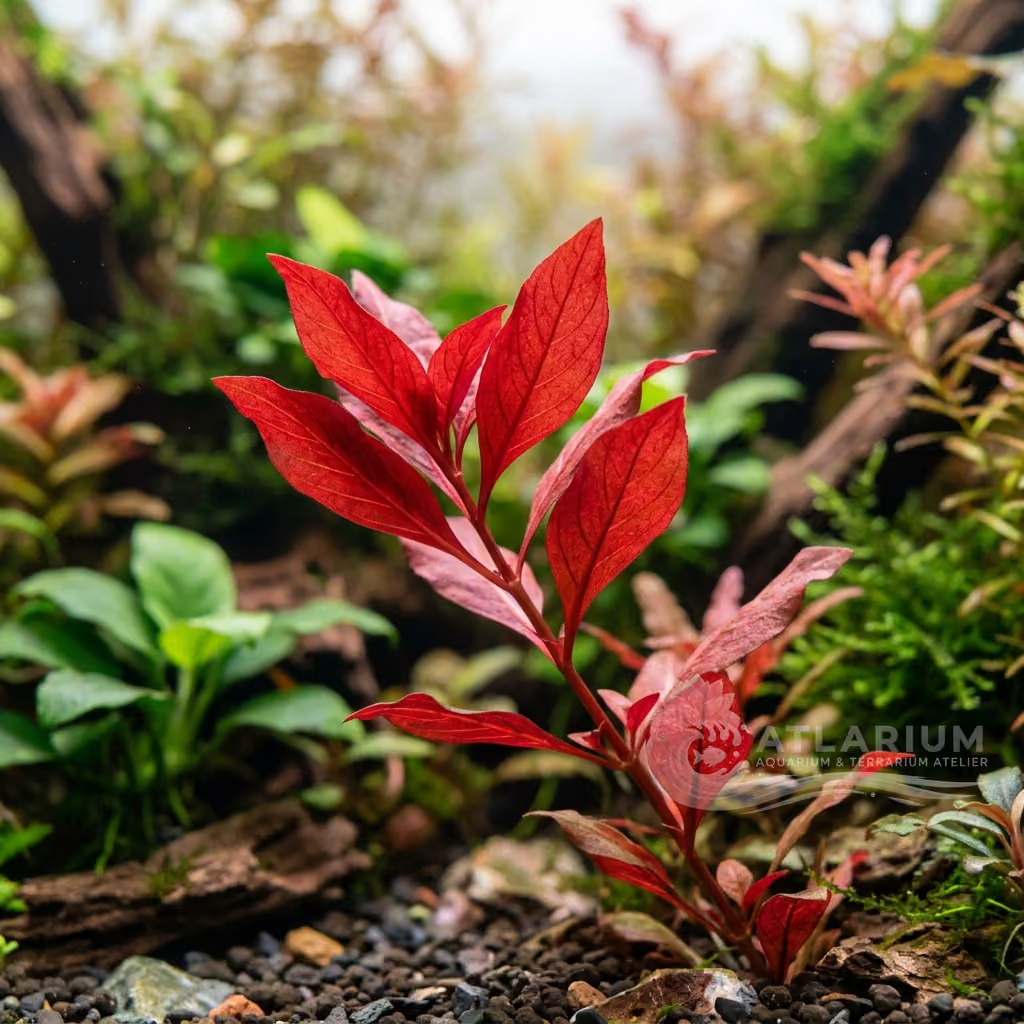
Hemianthus sp. "Amano Pearl Grass"
Hemianthus sp. "Amano Pearl Grass"
A highly demanding cultivation strain popularized by Takashi Amano. Needs blinding light and massive CO2 to flatten out and exhibit stunning oxygen pearling.
Water Temperature
5 - 30 °C
pH Value
5 - 7.5
Water type
Freshwater
Light
Da media ad alta
CO2
Medium
Expected height
2 cm
GH
4 - 6 dGH
KH
1 - 4 dKH

Species description
Geographical Origin and Habitat: Not being definitively scientifically classified, the so-called *Hemianthus* sp. "Amano Pearl Grass" (frequently but erroneously labeled in the past as the true *Hemianthus micranthemoides*, originating from Cuba or neighboring areas) is a botanical cultivation strain made famous by the master Takashi Amano. It is presumed that its ancestral habitat is the warm, shallow fresh or brackish water pools of Central America and the Caribbean, similar to the habitats of *Hemianthus callitrichoides*.
Taxonomy & Genetics: It belongs to the Linderniaceae family, genus *Hemianthus*. It differs markedly from the genetic *H. glomeratus*: while *glomeratus* has leaves in whorls of 3 or 4 units per node, the true "Amano Pearl Grass" (like the rare *H. micranthemoides*) generates leaf blades strictly opposite in pairs (only 2 leaves per node). This genetic trait radically alters its branching pattern and the overall appearance of the canopy.
Physical Structure: The stems are extremely thin, thread-like, and very fragile, transparent under harsh light. The architecture is caulescent, with the peculiarity of elegantly arching towards the ground and then rising again. The leaves are tiny (1-2 millimeters), oval or weakly spatulate, devoid of serrations, opposite on the nodes. It produces countless lateral shoots and adventitious capillary roots, forming felts or soft carpets rather than tall bushes.
Color & Texture: Blinding, almost phosphorescent light green color, sometimes translucent (hence the name "Pearl Grass"). Under massive CO2 injection during intense photosynthesis, every tiny terminal leaf produces a bubble of pure oxygen that remains trapped there: the expanse of seedlings literally covers itself in brilliant diamonds (pearling), offering a unique and breathtaking visual texture.

Care, breeding and tankmates
Lighting & CO2: A demanding and aristocratic plant. It refuses the shade. To keep it flattened to the ground and trigger the fabulous pearling phenomenon, it requires blinding lights (PAR > 80-100). Faint light will cause a upward elongation and lethal thinning of the stems. Carbon dioxide pumped in massive doses (approaching 30 mg/l) is its essential fuel: without it, it will languish miserably in a few weeks.
Nutrition & Substrate: Extremely greedy for nitrogen (in the form of nitrates or ammonium). It must be rooted in excellent, fertile, and very fine-grained Japanese allophane soil (powder soil), from which it draws its vital nourishment, combined with constant, complete water column fertilization. Nutritional deficiencies manifest as white apices that immediately halt development.
Water Chemistry: It desires excellent water. It is essential to use soft and acidic water (pH 6.0 - 6.8, KH 1-4, GH 4-6) in perfect Iwagumi style. Temperatures above 27-28°C or excessively hard calcareous waters will stunt its growth until the cellular leaves dissolve. It is sensitive to accumulated pollutants, making osmotic water changes mandatory.
Space Management & Placement: The undisputed star of the absolute foreground in premium aquariums. To plant it, you don't stick the stems vertically, but bury small bunches arranged horizontally under a thin veil of soil: the lateral nodes will shoot upwards, producing a dense, creeping lawn. Alternatively, it can be tied to driftwood where it will creep, behaving like a hanging epiphyte.
Pruning: Delicate and meticulous maintenance. Because its tiny stems are as fragile as glass, very sharp wave scissors must be used. It is thinned out by shaving the entire cushion to 1-2 centimeters from the ground. Avoiding regular pruning will inevitably lead the mass to rise and suffocate its own base, which will detach from the bottom due to anoxic rot.
Risks & Diseases: It is very delicate. It hates digging fish (Corydoras, Loricariids) that uproot its thin stems with laughable ease before they root. The mortal risk is cyanobacteria and filamentous algae that worm their way between the dense internodes, asphyxiating it. Essential prevention involves grazing shrimp (Neocaridinas), Otocinclus, and a gentle but pervasive water flow.

Geographic origin and distribution
Not being definitively scientifically classified, the so-called *Hemianthus* sp. "Amano Pearl Grass" (frequently but erroneously labeled in the past as the true *Hemianthus micranthemoides*, originating from Cuba or neighboring areas) is a botanical cultivation strain made famous by the master Takashi Amano. It is presumed that its ancestral habitat is the warm, shallow fresh or brackish water pools of Central America and the Caribbean, similar to the habitats of *Hemianthus callitrichoides*.
Origin
Selective breeding and cultivarsCentral America and Caribbean

Plant profile
- Placement
- Foreground
- It is most frequently utilized in the midground to background of aquascapes, depending on the tank size. In nano tanks, it serves as an excellent background plant that creates a dense, soft green curtain. In larger setups, it is often kept trimmed as a midground bush to create a gentle transition between hardscape and taller plants.
- Botanical form
- Stem
- It exhibits thin, delicate stems adorned with very small, bright green leaves that tend to curl slightly downward. The foliage is densely packed, giving the plant a highly textured, almost fluffy appearance when viewed from a distance. Its growth habit can be somewhat unruly, sending shoots out in various directions.
- Growth
- Fast
- This particular species is known for its vigorous growth rate, particularly when provided with strong lighting and CO2 supplementation. It can quickly overtake smaller, slower-growing plants if left unchecked. Regular maintenance is necessary to keep its rapid spread under control and maintain a manicured appearance.
- Substrate
- High
- Hemianthus sp. "Amano Pearl Grass" demands a high-quality, nutrient-rich aqua soil to achieve its maximum growth potential and characteristic vibrant appearance. Its delicate roots require a fine-grained substrate that allows for easy penetration and strong anchoring. A substrate depth of at least 5 cm is recommended to support its intensive nutrient uptake from the bottom. Without adequate substrate nutrition, this demanding plant may struggle to form the lush, compact growth for which it is prized.
- Column fertilization
- Required
- Because of its fine leaves and rapid growth, it heavily relies on nutrients dissolved in the water column. A daily dosing schedule of liquid fertilizers provides a stable supply and prevents the plant from exhausting the available nutrients. Good circulation is important to ensure these nutrients reach the dense inner parts of the bush.
- Root fertilization
- Recommended
- A nutrient-rich aquasoil provides an excellent foundation and supports vigorous root growth, which in turn fuels the fast stem development. While it can survive in inert substrates with adequate water column fertilization, root tabs will significantly enhance its robustness. A strong root system is essential to support the dense upper growth.
- Trimming
- Regular
- Frequent trimming is essential not only to maintain its shape but also to ensure light penetrates to the lower sections of the plant. If the top becomes too dense, the bottom leaves will suffer from lack of light and eventually melt away. It responds well to being trimmed down to a few inches, quickly bouncing back with new shoots.
- Propagation
- Cuttings
- Propagation is very easy and involves taking cuttings from the top portion of healthy stems. These cuttings can be planted directly into the substrate using aquascaping tweezers, where they will quickly take root. Even a single stem can be the starting point for a large, dense bush over time.
- Sensitivity
- HIGH
- It is quite sensitive to poor water circulation, which can cause debris to accumulate in its fine leaves and promote algae growth. Sudden changes in CO2 levels or water parameters can lead to rapid melting. Consistent maintenance and a stable environment are key to keeping this plant looking its best.
- Layout role
- Foreground, Epiphyte, Nano, accent, group
- It is a staple in nature aquariums for creating soft, rolling textures and bright green accents. Its delicate form provides an excellent contrast to heavier rocks, wood, or broad-leaved plants. It is also an ideal habitat for small fish and shrimp, offering them protection and a place to forage.

Image gallery
Licensed images linked to the species or, when marked, to the closest representative taxon.

Related species
Recommendations grouped by close relatives, companion choices, and similar care.