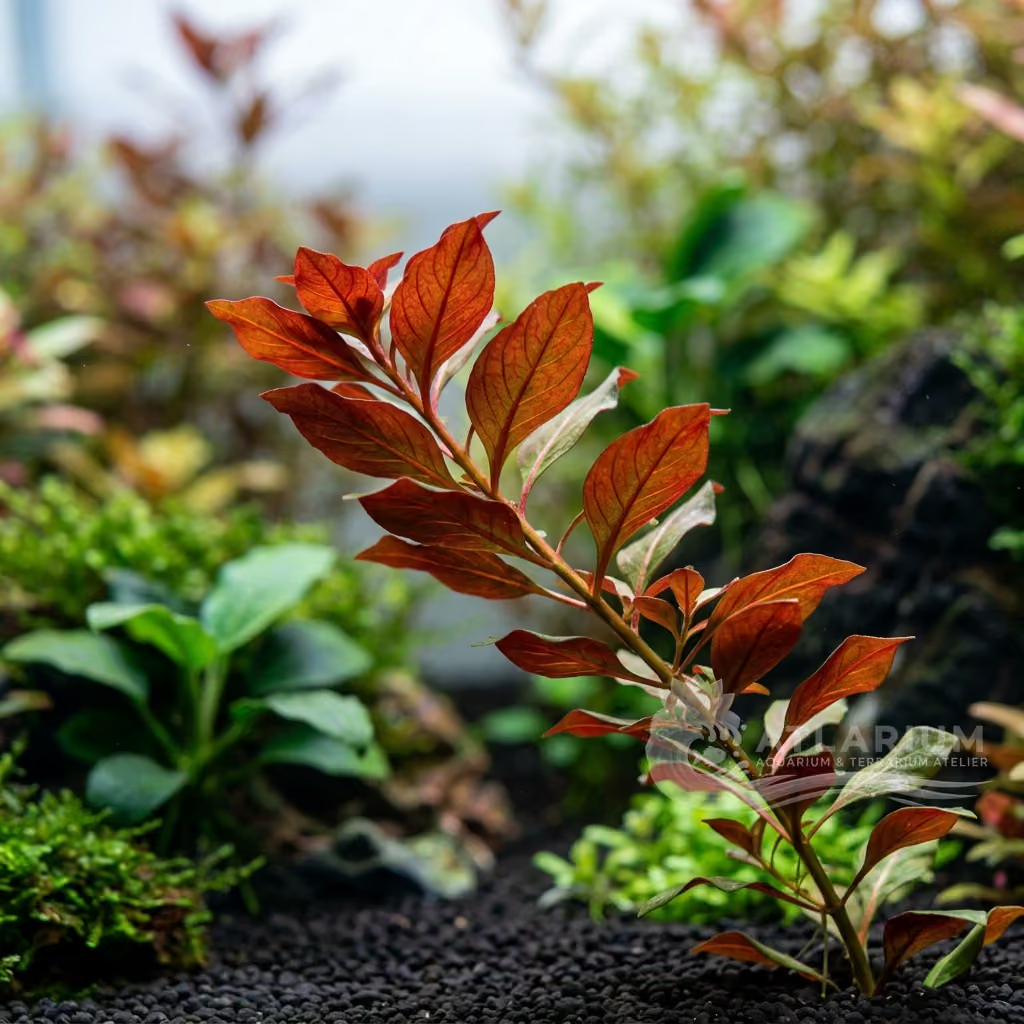
Hemianthus sp. "Göttingen"
Hemianthus sp. "Göttingen"
Hemianthus sp. 'Göttingen': a tiny stem plant for the midground with a medium growth rate. Ideal for creating dense, shapeable bushes in nano aquariums.
Water Temperature
20 - 28 °C
pH Value
5 - 7.5
Water type
Freshwater
Light
Medium - High
CO2
Medium - High
GH
0 - 20 dGH
KH
0 - 14 dKH

Species description
Geographical Origin and Habitat: Hemianthus sp. "Göttingen" is a horticultural selection or local variety of a species native to North and Central America. It grows in humid wetland environments, lake banks, and exposed muddy areas, showing a strong ability to colonize moist soils through a dense network of creeping stems.
Taxonomy & Genetics: It belongs to the Linderniaceae family and is closely related to Hemianthus micranthemoides (Pearl Grass). It is likely named "Göttingen" after the German city or botanical garden where it was isolated or propagated. Genetically, it retains tiny leaves and a very dense submerged bushy growth habit.
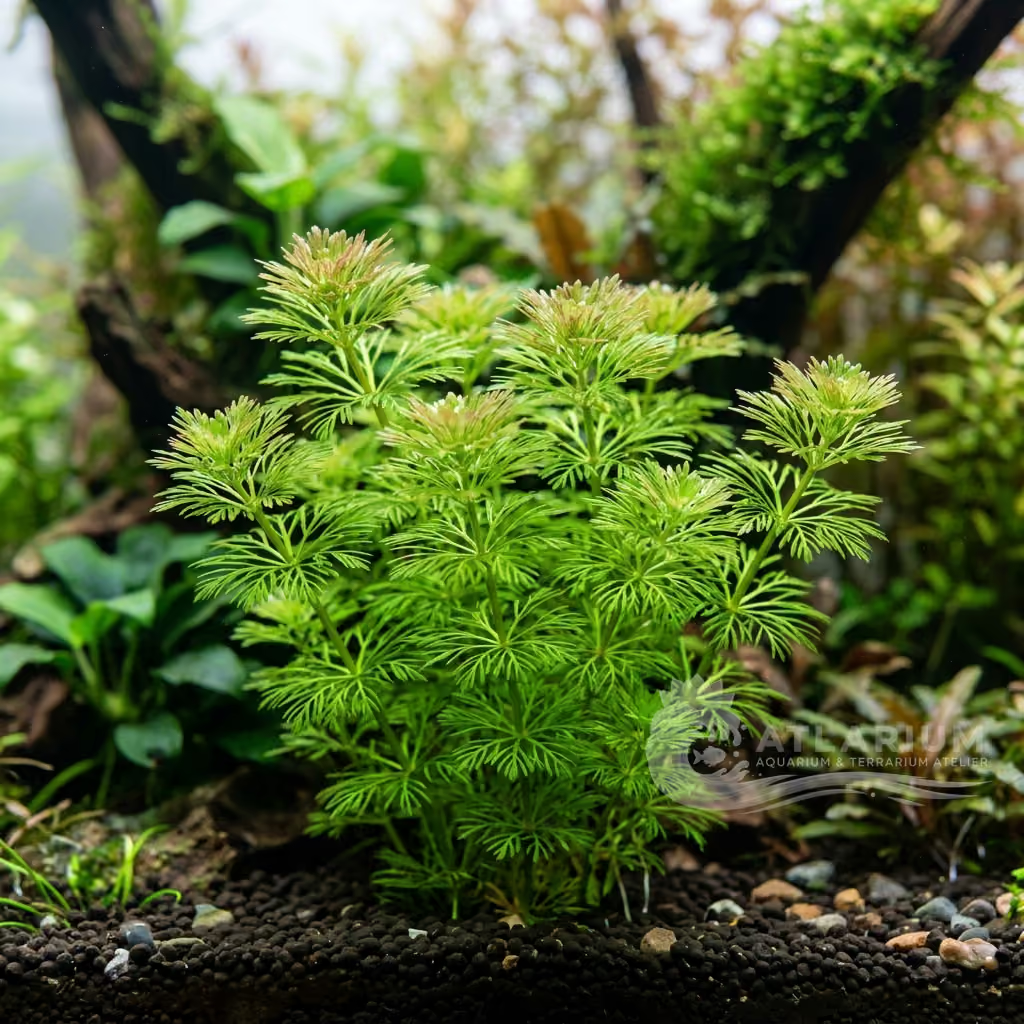
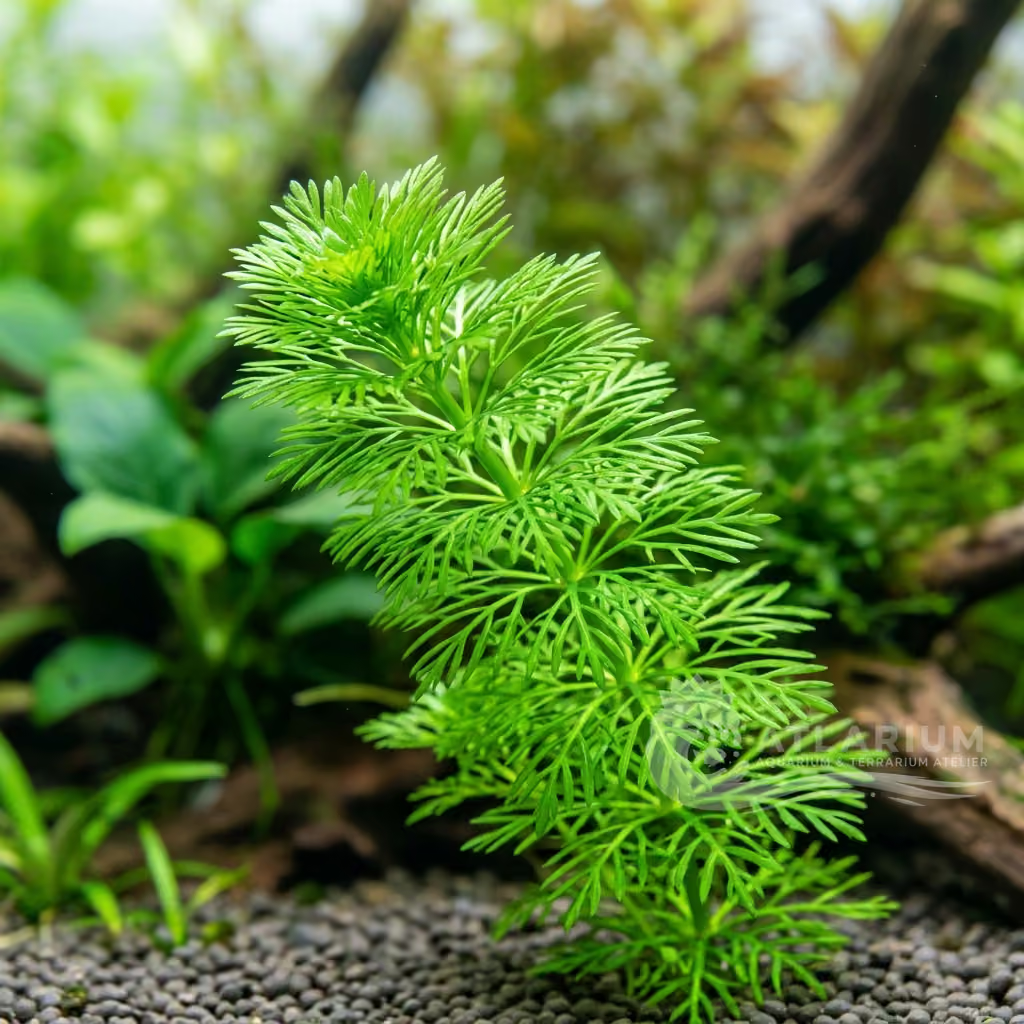
Physical Structure: It features very fine, branched stems growing erect or slightly arched. The leaves are microscopic, lanceolate, and arranged in whorls of three or four along the main stem. The overall structure is extremely dense, resembling a miniature version of a stem forest.
Color & Texture: The color is a bright, luminous light apple green. The visual texture is exceptionally fine, soft, and spongy, ideal for Dutch-style or natural aquascapes where one wishes to shape rounded bushes or small hedges through continuous trimming.

Care, breeding and tankmates
Lighting & CO2: Requires moderate to intense lighting; with low light, the stems tend to thin out and grow untidily upwards. CO2 is highly recommended to stimulate thick, dense growth, preventing the decay of the lower stems.
Nutrition & Substrate: A fine fertile substrate provides the essential nutrients for initial root development. The plant responds very well to liquid fertilization in the
Water Chemistry: Adapts well to a pH between 6.0 and 7.5 and soft to moderately hard water. The optimal temperature is between 18 and 28 °C; too high temperatures in the absence of CO2 can lead to the degradation of the tiny leaves.
Space Management & Placement: Perfect for the midground or foreground in larger aquariums, or as a background in nano aquariums. It should be planted by inserting small groups of stems close to each other to promote the rapid formation of a single hedge.
Pruning: Tolerates drastic and frequent pruning; it can be shaped with sharp scissors like a garden boxwood. Constant pruning stimulates the production of countless lateral shoots, making the plant barrier incredibly thick and compact.
Risks & Diseases: The main risk is the rotting of the stems at the base if the bush becomes too dense and impenetrable to light. Furthermore, the tiny leaves can be suffocated by filamentous algae or cyanobacteria in case of poor water movement.

Geographic origin and distribution
Hemianthus sp. "Göttingen" is a horticultural selection or local variety of a species native to North and Central America. It grows in humid wetland environments, lake banks, and exposed muddy areas, showing a strong ability to colonize moist soils through a dense network of creeping stems.
Origin
Selective breeding and cultivarsCentral America and CaribbeanNorth America

Plant profile
- Placement
- Midground
- This plant is extremely versatile and can be planted in the foreground, midground, or background depending entirely on how it is trimmed. In smaller aquariums, it works wonderfully as a dense background stem. In larger setups, it is often sculpted into rounded bushes in the midground to provide structural transitions.
- Botanical form
- Stem
- It features small, rounded to slightly elongated bright green leaves that grow thickly along the stems. Its stems are somewhat sturdier than other Hemianthus varieties, allowing it to grow quite tall if left unpruned. When trimmed aggressively, it branches profusely, creating a very tight, compact cushion of foliage.
- Growth
- Medium
- It boasts a fast growth rate, especially under high lighting and with added CO2. This rapid growth makes it an excellent choice for quickly establishing plant mass in new aquariums to outcompete algae. However, this also means it requires dedicated, regular pruning to maintain its intended shape and prevent overgrowth.
- Substrate
- Medium
- Hemianthus sp. "Göttingen" thrives best in a nutrient-rich aqua soil that provides a steady supply of essential elements to its developing root system. The substrate should be relatively fine to allow the plant's delicate roots to anchor securely and spread evenly. A depth of 4-6 cm is ideal, giving the plant enough room to establish a solid base for its creeping or bushy growth. While it can survive in inert substrates, the addition of root capsules is necessary to maintain its health and vibrant coloration.
- Column fertilization
- Required
- Liquid fertilization is the most effective way to deliver nutrients to this plant, as its numerous small leaves efficiently absorb elements directly from the water column. A comprehensive fertilizer containing trace elements prevents the leaves from becoming pale or transparent. Dosing should be matched to its fast growth rate to prevent nutrient depletion.
- Root fertilization
- Recommended
- While water column nutrients are primary, it does develop a significant root system. Planting it in a nutrient-rich active substrate like aquasoil provides a buffer of nutrients and supports a strong foundation. In older setups, supplementing the substrate with root tabs can help rejuvenate growth if it begins to slow down.
- Trimming
- Regular
- Trimming is a necessary part of keeping Hemianthus sp. 'Göttingen'. It tolerates severe pruning exceptionally well and will quickly bounce back with multiple new shoots from each cut stem. Regular shaping with curved scissors is required to maintain compact bushes and prevent the lower stems from rotting due to light deprivation.
- Propagation
- Cuttings
- Propagation is straightforward and highly productive. Simply cut the tops off healthy stems and push them into the substrate; they will root within a few days. The original cut stem will also branch and continue growing, making it very easy to multiply this plant rapidly.
- Sensitivity
- Moderate
- It is generally hardy but can suffer if light levels drop too low, causing it to become leggy and lose its lower leaves. Poor water circulation can lead to detritus buildup within its dense growth, which may trigger localized algae outbreaks. It appreciates stable water parameters and can melt if conditions shift drastically.
- Layout role
- Midground, Foreground, Nano, Background, group, accent
- It acts as a superb filler and structural plant in aquascaping. Its bright green, fine-textured foliage provides a striking contrast against dark hardscape materials and red plants. It is particularly useful for creating the illusion of miniature landscapes or serving as a safe haven for shrimp and small fish.

Related species
Recommendations grouped by close relatives, companion choices, and similar care.