

Encyclopaedia
Marine Betta (Comet)
Calloplesiops altivelis
The Marine Betta is a stunning, slow-moving predator with massive, star-speckled fins. Shy by nature, it demands a spacious reef aquarium with deep, dark caves to feel secure.
Share
Check out Marine Betta (Comet) on Atlarium
24 - 27 °C
8.1 - 8.4
Freshwater
Bottom and middle
20 cm
300 L
>= 1
20 - 30 dGH
10 - 15 dKH
400 - 600 ppm
625 - 938 uS/cm
Species description
Care, breeding and tankmates
Geographic Origin and Distribution
Origin
Fish profile
- Temperament
- Semi-aggressive
- Diet
- Omnivore
- Life expectancy
- 10-15 years
- Sex ratio
- Solitary
- Feeding frequency
- Twice daily
- Bioload
- Medium
- Flow
- Stagnant
- Jump risk
- No
- Reproduction
- Oviparous
- Compatibility & tankmates
- The Marine Betta is highly compatible with medium to large, peaceful tankmates that will not outcompete it for food or harass it. Suitable companions include larger wrasses, tangs, angelfish, and peaceful bottom dwellers like gobies or blennies. They must not be housed with small, bite-sized fish (such as small neon gobies or micro-chromis) or ornamental shrimps (like sexy shrimp or peppermint shrimp), as these will be viewed as prey. Conversely, aggressive tankmates like large damselfish or triggerfish should be avoided, as they will cause the Marine Betta to remain permanently hidden.
- Tank level
- Middle/Bottom
Window to the official scientific data of the species
Scientific Parameters & Models
- Trophic level
- 4 ± 0.65 se
- Resilience
- Medium (1.4 - 4.4 years)
- Phylogenetic uniqueness (PD50)
- 0.75
- Bayesian Length-Weight
- a = 0.01995, b = 3.01
Image gallery
Licensed images linked to the species or, when marked, to the closest representative taxon.
Related species
Recommendations grouped by close relatives, companion choices, and similar care.
Variants and close relatives
Same atlas type, nearby scientific identity, genus, or family.


Recommended companions
Compatible cards from coherent ecosystems with matching parameters.
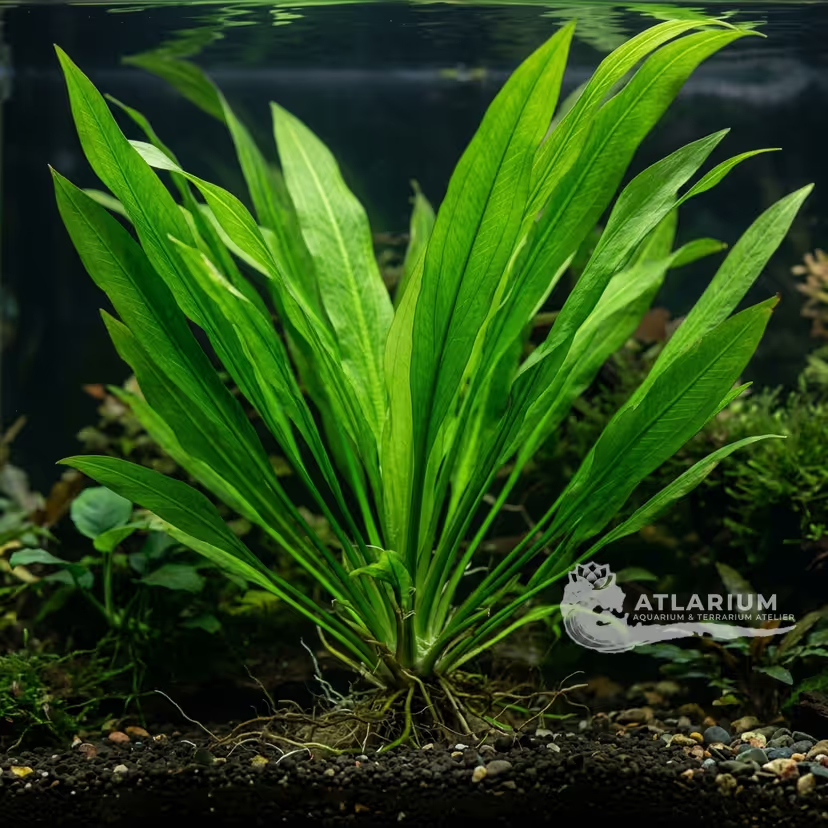
Amazon Sword
Aquarius grisebachii

Anubias barteri var. nana 'Round Leaf'
Anubias barteri var. nana 'Round Leaf'

Anubias congensis
Anubias congensis

Anubias gigantea
Anubias gigantea

Anubias lanceolata
Anubias lanceolata
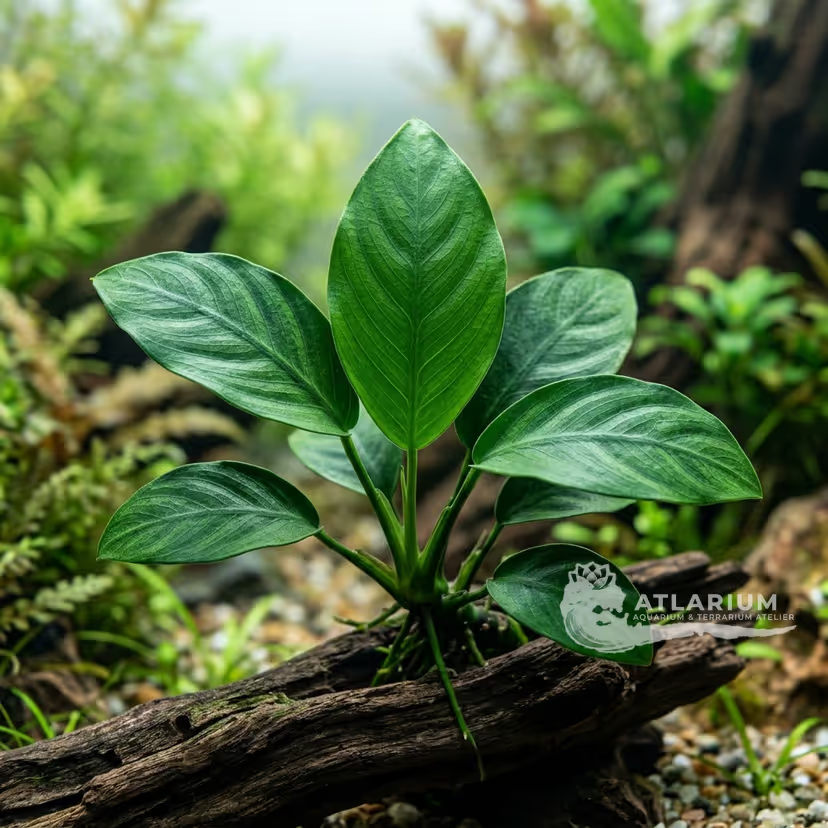
Anubias minima
Anubias minima

Arrowhead Anubias
Anubias hastifolia
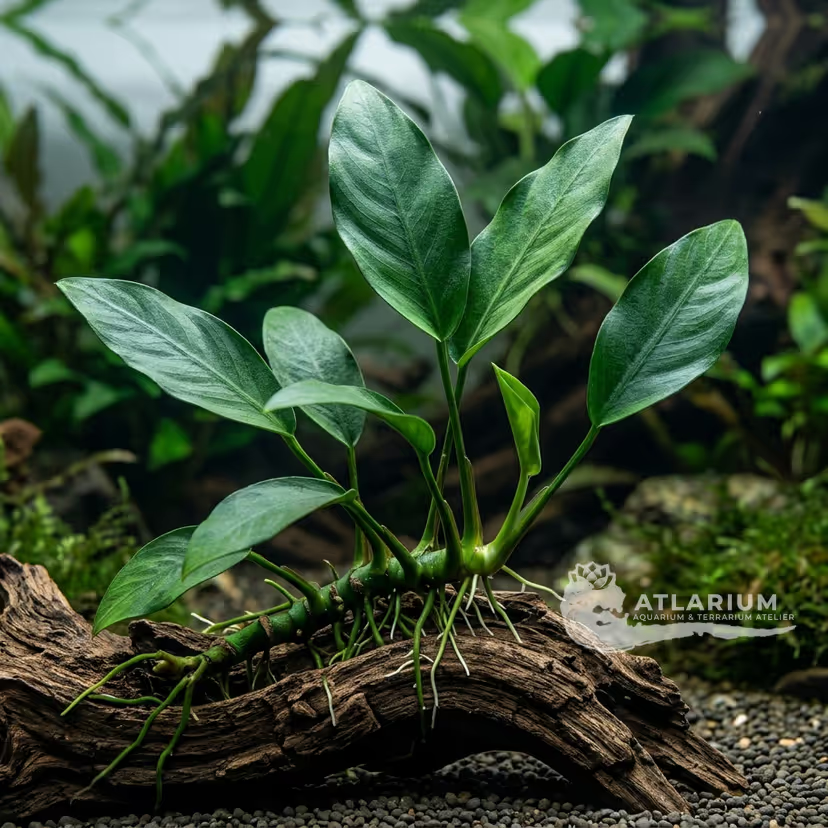
Anubias
Anubias barteri

Anubias nana
Anubias barteri var. nana

Aegagropila linnaei
Aegagropila linnaei

Ammannia latifolia
Ammannia latifolia

Ammannia sp. 'Bonsai'
Ammannia sp. 'Bonsai'

Bucephalandra motleyana "Braun-rot narrow"
Bucephalandra motleyana "Braun-rot narrow"

Bucephalandra motleyana "Braun-rot" ("Serimbu")
Bucephalandra motleyana "Braun-rot" ("Serimbu")

Bucephalandra motleyana "Kapit"
Bucephalandra motleyana "Kapit"

Bucephalandra motleyana "Pancuraji"
Bucephalandra motleyana "Pancuraji"
Similar care
Cards with similar requirements, difficulty, habitat, and husbandry profile.
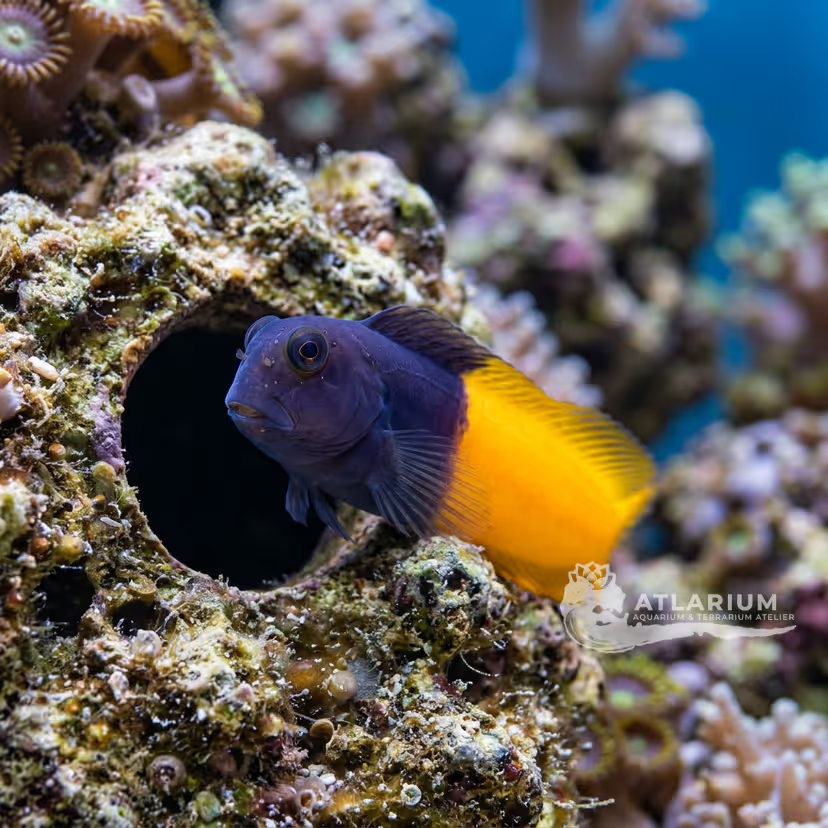
Bicolor Blenny
Ecsenius bicolor

Blue Acara
Andinoacara pulcher
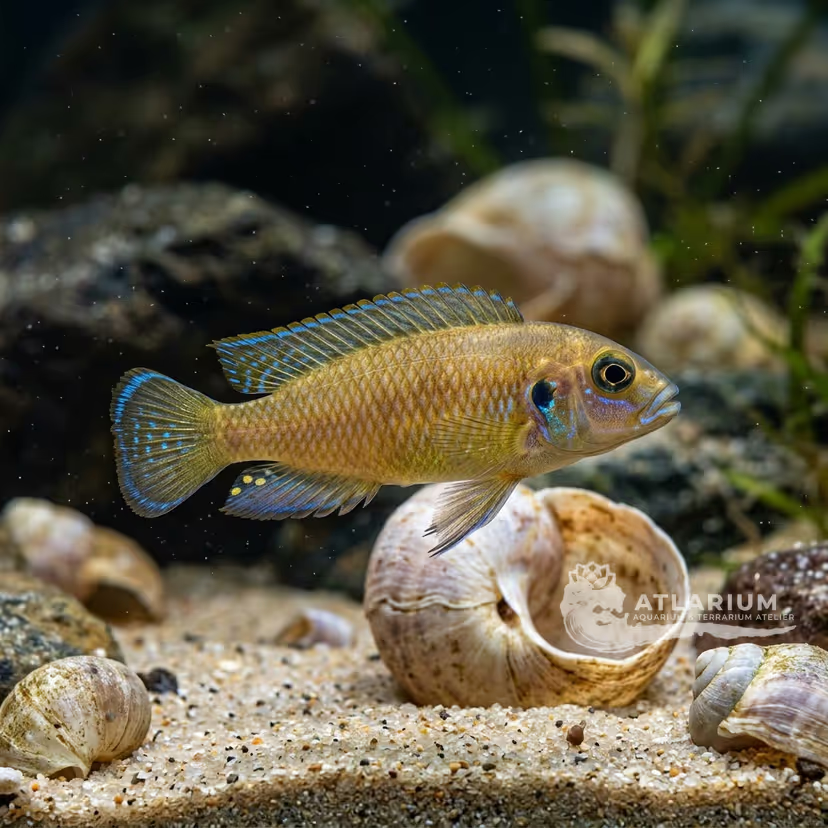
Ocellated Shell-dweller (L. ocellatus)
Lamprologus ocellatus

Amazon Cichlasoma (Cichlasoma amazonarum)
Cichlasoma amazonarum

Common Bristlenose Pleco
Ancistrus cf. cirrhosus
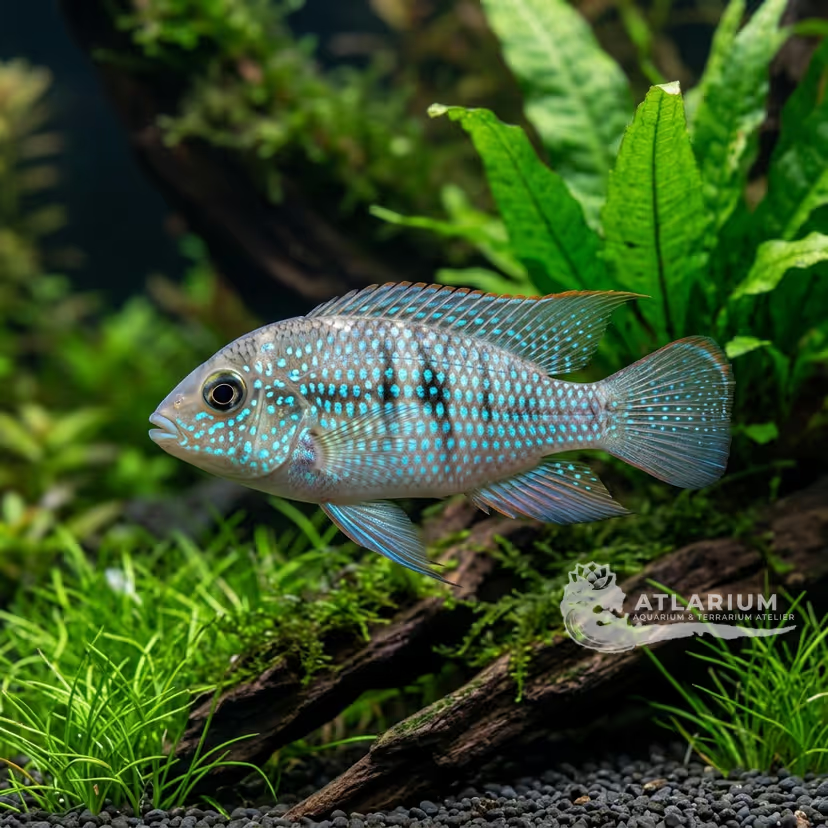
African Butterfly Cichlid
Anomalochromis thomasi

Yellow Dwarf Cichlid (Yellow Convict)
Amatitlania nanolutea

T-Bar Cichlid (Sajica)
Amatitlania sajica

Java Barb
Systomus rubripinnis

Bolivian Ram
Mikrogeophagus altispinosus
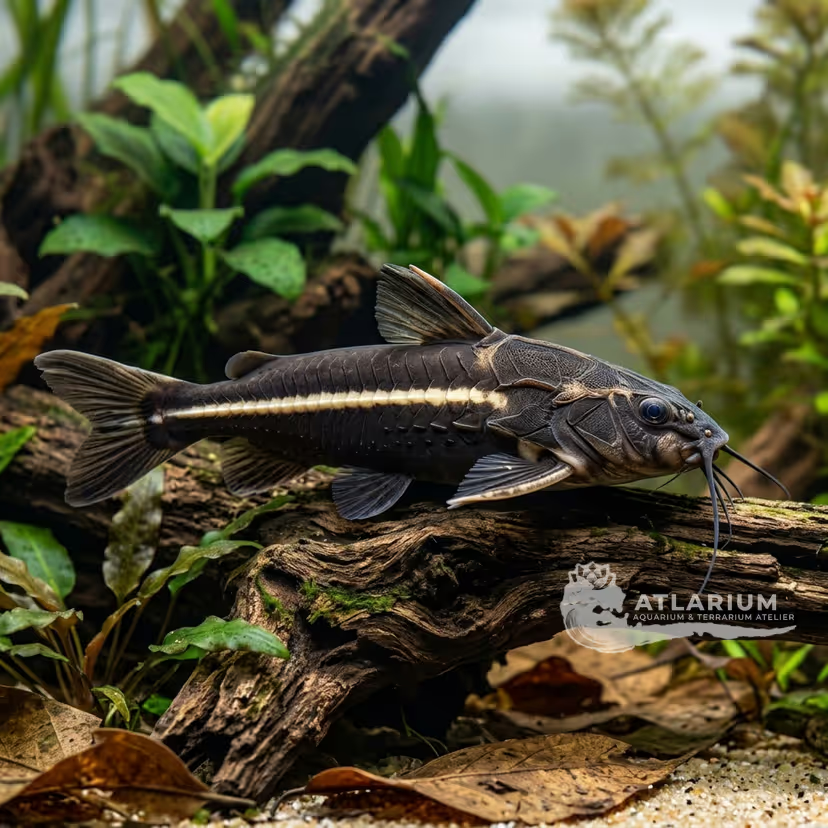
Costatus Striped Raphael
Platydoras costatus

Red-eye Krobia
Krobia xinguensis

Nicaragua Cichlid (Macaw Cichlid)
Hypsophrys nicaraguensis

Kadango Red Fin
Copadichromis borleyi
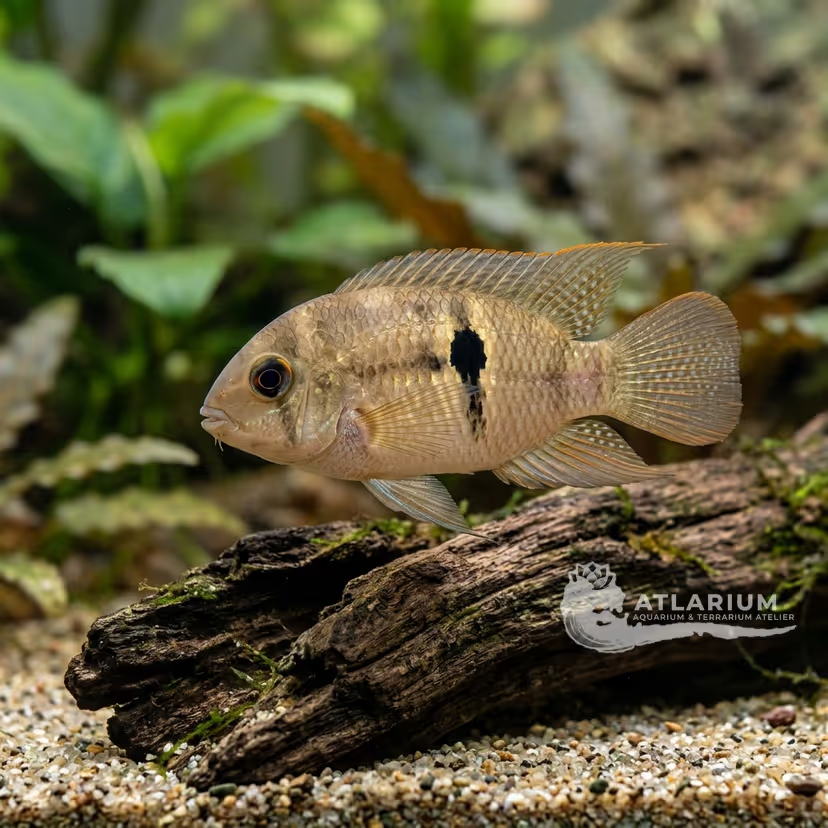
Keyhole cichlid
Cleithracara maronii

Clown Squeaker
Synodontis decorus