Echinodorus 'Harbich'
Echinodorus 'Harbich'
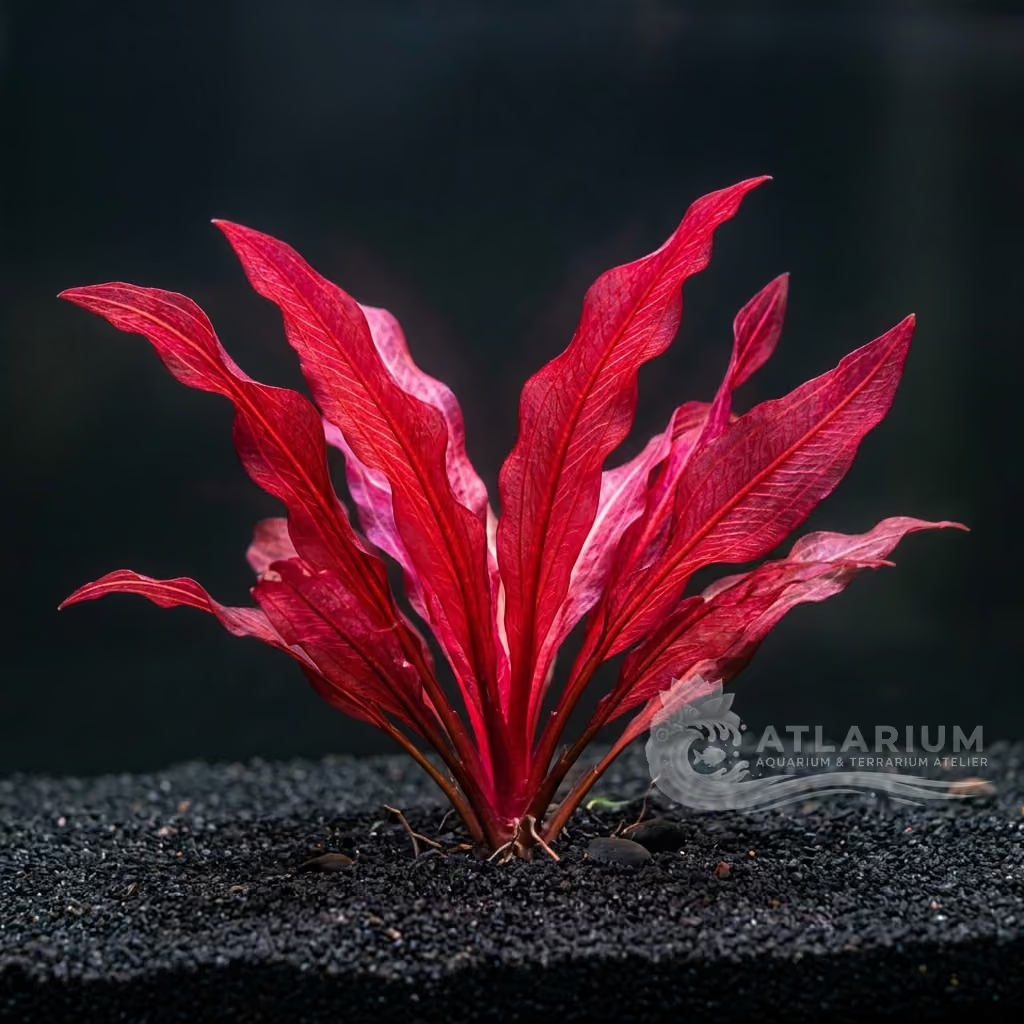
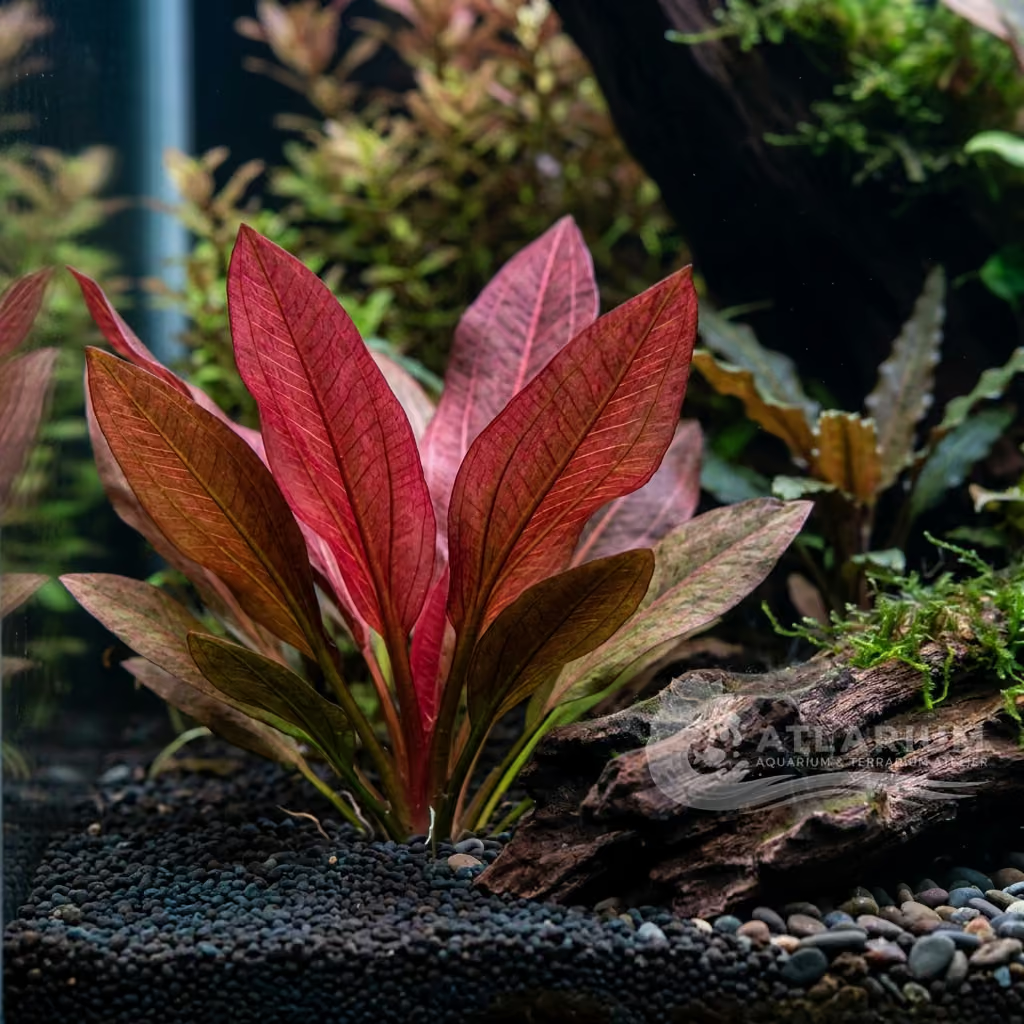
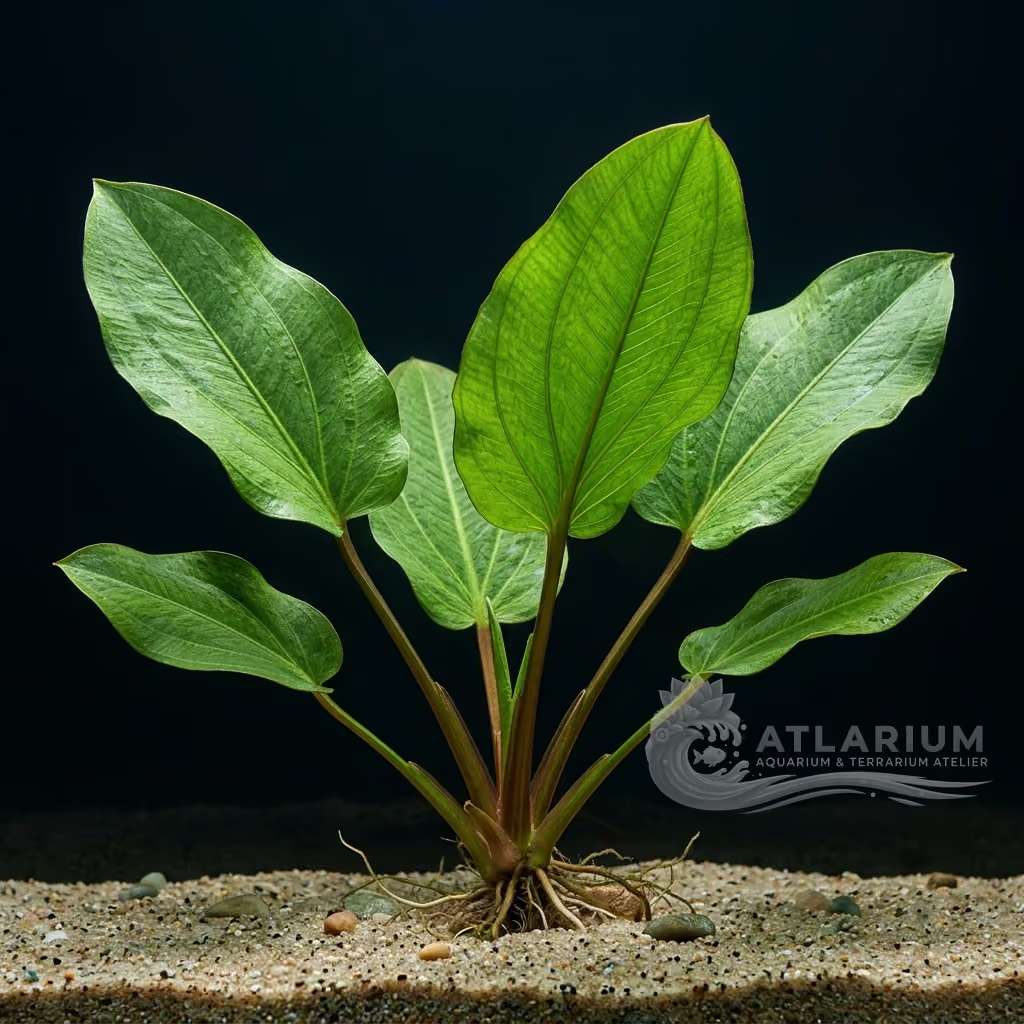
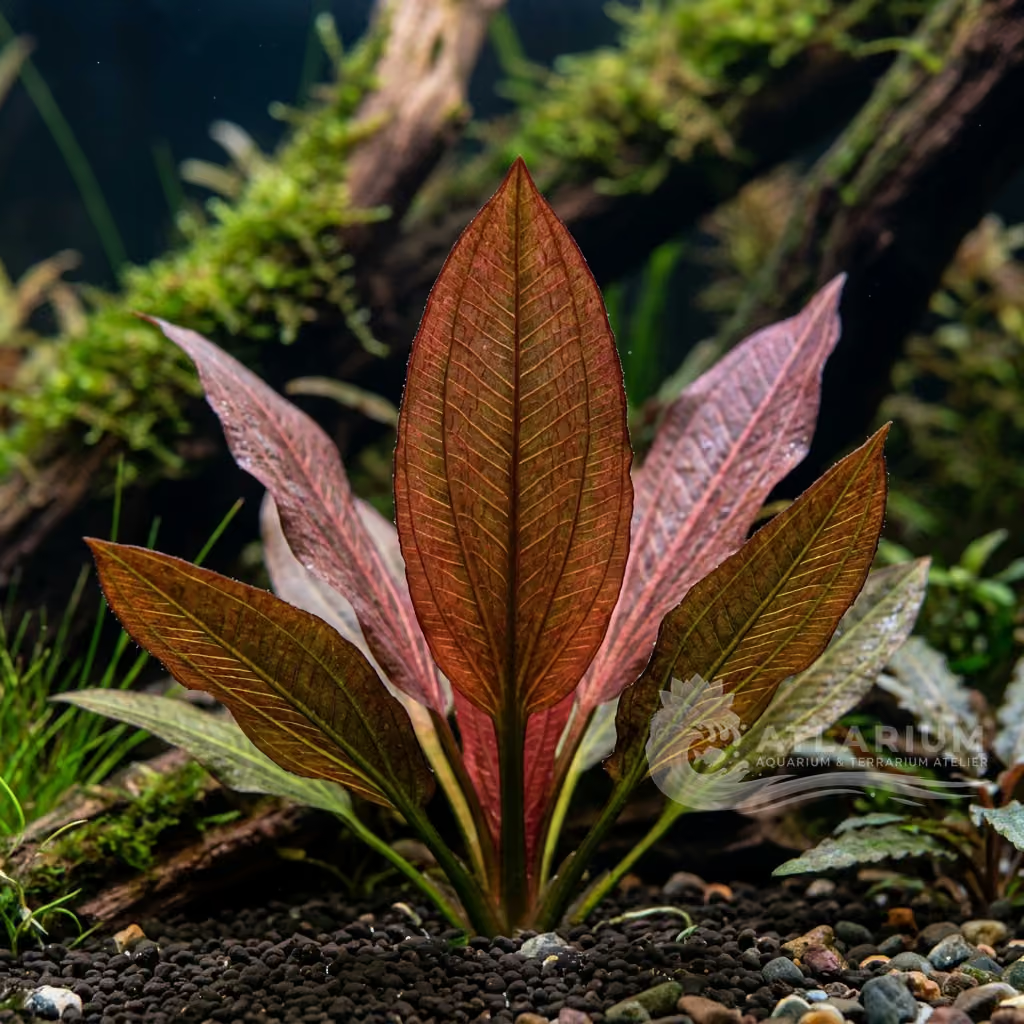
Echinodorus 'Harbich' is a rock-solid, highly adaptable hybrid displaying rigidly rounded, stiff leaves that form a beautifully disciplined, impenetrable rosette.
Water Temperature
20 - 28 °C
pH Value
6 - 8
Water type
Freshwater
Light
Medium
CO2
Low
Expected height
25 cm
Expected width
20 cm
GH
4 - 20 dGH
KH
0 - 21 dKH

Species description
Geographical Origin and Habitat: This highly specific botanical cultivar does not exist in nature. Echinodorus "Harbich" (often sold as Harbich Red or Harbich Green) is a deeply stabilized, classic commercial hybrid created specifically for the aquarium trade. It was meticulously crossbred from wild South American Amazon Sword stock to produce a heavily rounded, incredibly tough, and very slow-growing centerpiece. In the aquarium, it behaves precisely like its wild ancestors, acting as an indestructible, deeply rooted amphibious rosette plant perfectly adapted to submerged conditions.
Taxonomy & Genetics: Scientifically classified within the Alismataceae family, "Harbich" is a beloved, old-school cultivar globally famed for its "spatulate" (spoon-shaped) leaves. Taxonomically, it is a complex hybrid. Genetically, it inherited the bulletproof survival traits of standard Amazon Swords, but completely suppressed the genetic markers for extreme vertical gigantism. Its true defining genetic feature is a severe mutation that forces the leaves to grow exceptionally round, wide, and thick, creating a massive, highly disciplined, and incredibly dense rosette.
Physical Structure: The architectural structure of the "Harbich" sword is aggressively compact, violently rigid, and fiercely disciplined. It is a true rosette plant completely lacking vertical stems. The foundation is a massive, incredibly thick, tuberous subterranean rhizome that deploys an aggressive, deep-reaching white root system. The leaves erupt tightly from the crown on incredibly stiff, thick petioles. The foliage is the defining structural feature: strictly spatulate to perfectly round (spoon-like), staying medium-sized (20-30 cm), and unbelievably thick.
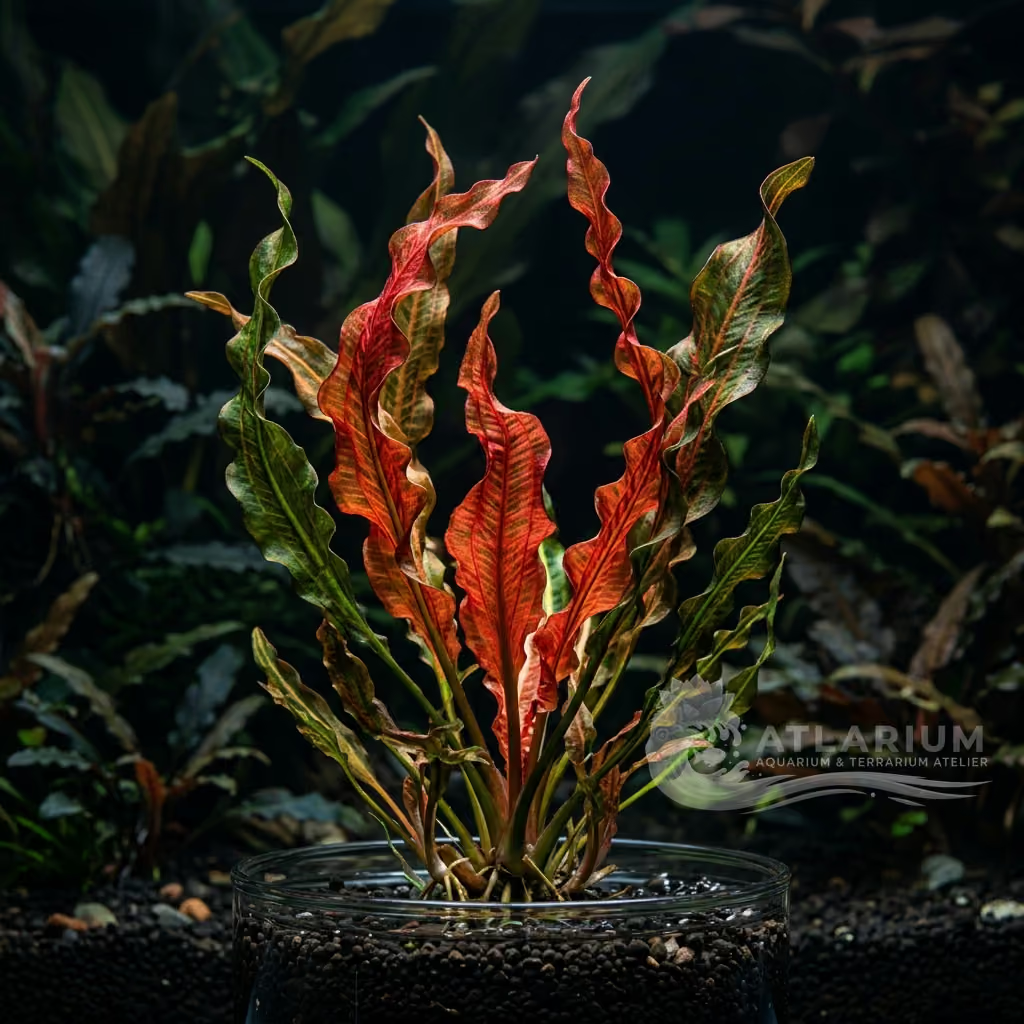
Color & Texture: The coloration is distinctly pure, solid, and incredibly robust. Grown submerged under intense lighting, the massive, spoon-like leaves are a solid, glowing, deep apple-green. Certain specific "Harbich Red" variants may produce a dark reddish-bronze hue on the newest leaves, but they eventually fade to solid green. Crucially, it completely lacks the chaotic spots of newer hybrids. The texture is intensely rigid, extremely leathery, and perfectly smooth, completely lacking any dimples or ruffled edges, feeling exactly like a heavy plastic spoon.

Care, breeding and tankmates
Lighting & CO2: It is an incredibly resilient, bulletproof hybrid perfectly suited for beginner, low-tech aquariums. It will effortlessly survive and maintain its incredibly dense shape in heavily shaded environments, making it ideal for low-light tanks. To unlock its intensely compact, rounded rosette shape and force its deeply saturated green colors, medium LED lighting is recommended. Pressurized CO2 is absolutely unnecessary for its survival, but will moderately accelerate its traditionally very slow, disciplined growth rate.
Nutrition & Substrate: As a highly specialized, dense Amazon Sword, the "Harbich" is an absolute, obligate root feeder. Its massive root system strictly demands a very deep (minimum 5 cm / 2 inches), heavily nutrient-dense substrate. It absolutely demands premium aquasoil or a mature gravel bed heavily enriched with iron and macro-nutrient root tabs directly beneath the massive tuber to fuel the production of its incredibly thick leaves. If starved of root nutrients, the dense, spoon-like green leaves will quickly turn pale yellow and dissolve.
Water Chemistry: Originating from highly stabilized nursery conditions, it is practically invincible regarding standard water parameters. It thrives effortlessly in heated tropical aquariums (22-28°C) and is exceptionally adaptable, comfortably tolerating both extremely soft, highly acidic blackwater and rock-hard, highly alkaline tap water (pH 6.0 - 8.0). The single most critical environmental requirement is absolute chemical stability. It drastically prefers stable, unchanging parameters over perfectly optimized ones. It demands moderate water flow to keep it clean.
Space Management & Placement: Due to its deliberately compact, slow-growing nature (rarely exceeding 20-30 cm in height), intensely rigid, perfectly round (spoon-like) leaves, "Harbich" is an elite, indestructible midground centerpiece for small to medium aquariums. It MUST be planted as a singular focal point directly in the midground. Because it grows as a highly disciplined, dense rosette, it provides a perfectly organized visual anchor that will absolutely never violently overgrow the tank or aggressively shadow other surrounding plants.
Pruning: Pruning is an infrequent, simple, and highly necessary procedure due to its slow, disciplined growth. Never attempt to trim a rigid, round leaf in half; the cut edge will instantly turn black, rot, and destroy the aesthetic. To prune dead, yellowing, or algae-covered older outer leaves, you must reach deep down into the absolute base of the dense rosette and cleanly snap or slice the incredibly stiff petiole directly at the crown. It rarely spreads via runners; instead, it slowly forms an impenetrable, single-crowned anchor.
Risks & Diseases: The absolute greatest threat to the "Harbich" sword is Green Spot Algae (GSA) and nutrient starvation. Because the highly rigid, smooth, spoon-like leaves live for years and grow extremely slowly, they act as massive landing pads for devastating Green Spot Algae if phosphate levels drop or light is too intense without adequate CO2. Once GSA aggressively spots the tough leaves, it is physically impossible to clean off and ruins the smooth green aesthetic. The second risk is nutrient starvation.

Geographic origin and distribution
This highly specific botanical cultivar does not exist in nature. Echinodorus "Harbich" (often sold as Harbich Red or Harbich Green) is a deeply stabilized, classic commercial hybrid created specifically for the aquarium trade. It was meticulously crossbred from wild South American Amazon Sword stock to produce a heavily rounded, incredibly tough, and very slow-growing centerpiece. In the aquarium, it behaves precisely like its wild ancestors, acting as an indestructible, deeply rooted amphibious rosette plant perfectly adapted to submerged conditions.
Origin
Selective breeding and cultivarsAmazon, Orinoco, and GuianasExtra-Amazon South America

Plant profile
- Placement
- Midground
- With its relatively compact and rounded form, 'Harbich' is an excellent choice for midground placement in most aquariums. It forms a neat, bushy rosette that doesn't quickly overgrow its space, making it a reliable focal point. In smaller tanks, it can serve effectively as a background plant, provided it doesn't shade out smaller foreground species.
- Botanical form
- Rosette
- This cultivar is distinguished by its compact, rounded rosette growth habit. The leaves are typically broader and rounder than many other Echinodorus varieties, often exhibiting a somewhat heart-shaped base. The foliage is a consistent, bright green, and the overall plant maintains a sturdy, bushy appearance that adds excellent texture to an aquascape.
- Growth
- Very slow
- The growth rate of 'Harbich' is generally moderate. Under favorable conditions, including good lighting and nutrient availability, it produces new leaves steadily, maintaining a full and attractive appearance. In lower-tech setups, the growth rate slows, but the plant remains durable and easy to manage with infrequent pruning.
- Substrate
- High
- A nutrient-rich substrate is vital for the optimal growth of 'Harbich'. It possesses a strong root system that relies heavily on substrate-bound nutrients. Planting in specialized aquarium soil or a gravel substrate enriched with root tabs provides the necessary foundation for healthy development. A deep substrate allows for secure anchoring.
- Column fertilization
- Recommended
- While primarily a root feeder, 'Harbich' benefits from regular column fertilization. A comprehensive liquid fertilizer ensures that trace elements and micronutrients are readily available in the water column, supporting overall plant health and vibrant leaf coloration. This is especially helpful in densely planted tanks.
- Root fertilization
- Required
- Consistent root fertilization is crucial for sustained health. The periodic addition of high-quality root tabs placed deep into the substrate near the root mass provides a localized, steady supply of essential nutrients. This targeted feeding strategy directly supports the plant's robust root system and promotes vigorous foliar growth.
- Trimming
- Occasional
- Pruning is rarely necessary but involves removing the oldest, outermost leaves if they become severely damaged or heavily coated with algae. Cut these leaves cleanly at their base. The plant’s tough leaves often resist decay, so manual removal of damaged foliage is important.
- Propagation
- Rhizome division
- Propagation is readily achieved through the separation of adventitious plantlets that develop on runners extending from the parent plant. Once these plantlets form their own root systems, they can be detached and planted. Division of a mature, established rhizome is also a viable method for propagation.
- Sensitivity
- LOW
- It is an extremely resilient and forgiving plant, tolerating a wide range of water parameters and low light. However, its slow-growing, broad leaves are magnets for Green Spot Algae in high-light, low-CO2 environments. It requires the crown to be planted above the soil line.
- Layout role
- Midground
- Its stiff, rounded leaves provide a unique structural element in the midground, contrasting beautifully with grassy or fine-leaved plants. The tough foliage makes it highly compatible with herbivorous or boisterous fish, like cichlids, which usually ignore it. It serves as a sturdy, long-lasting anchor in nature aquariums.

Image gallery
Licensed images linked to the species or, when marked, to the closest representative taxon.

Related species
Recommendations grouped by close relatives, companion choices, and similar care.