Demon Eartheater
Satanoperca daemon
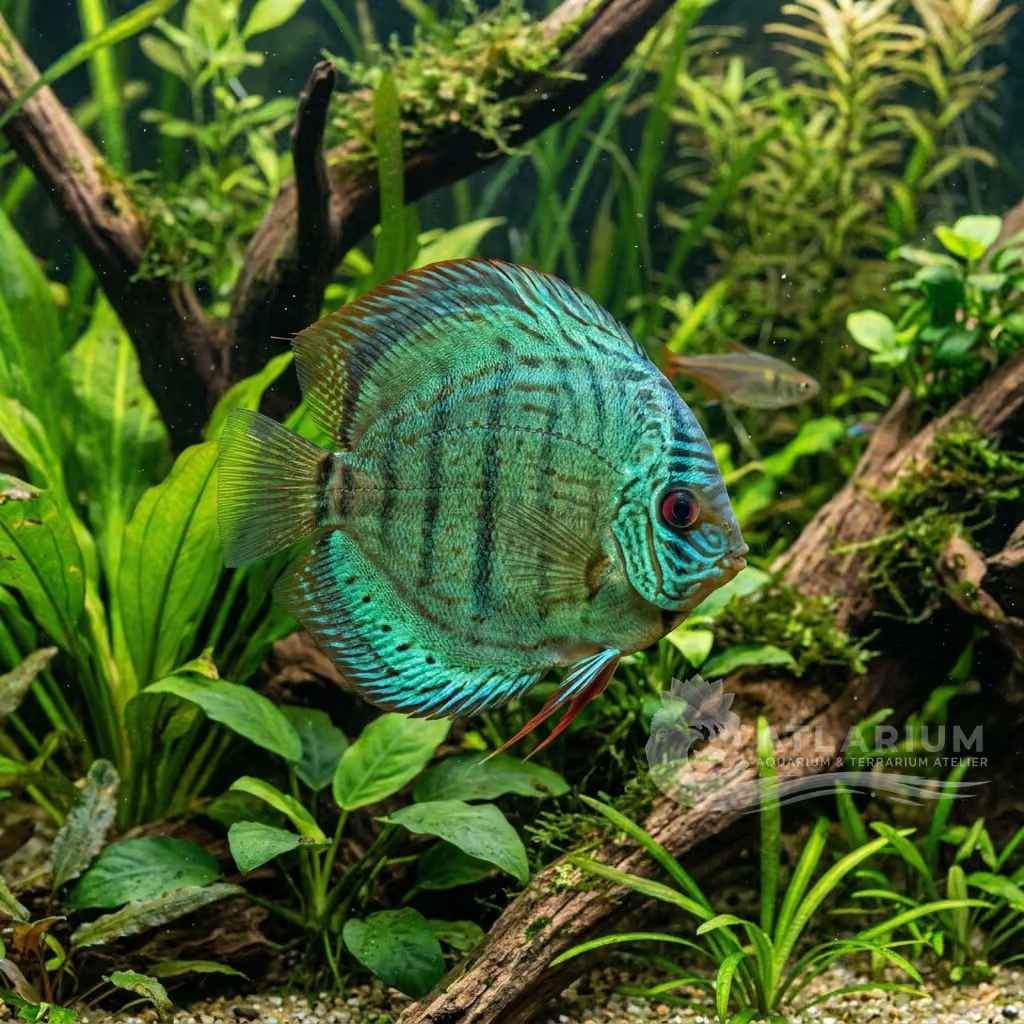
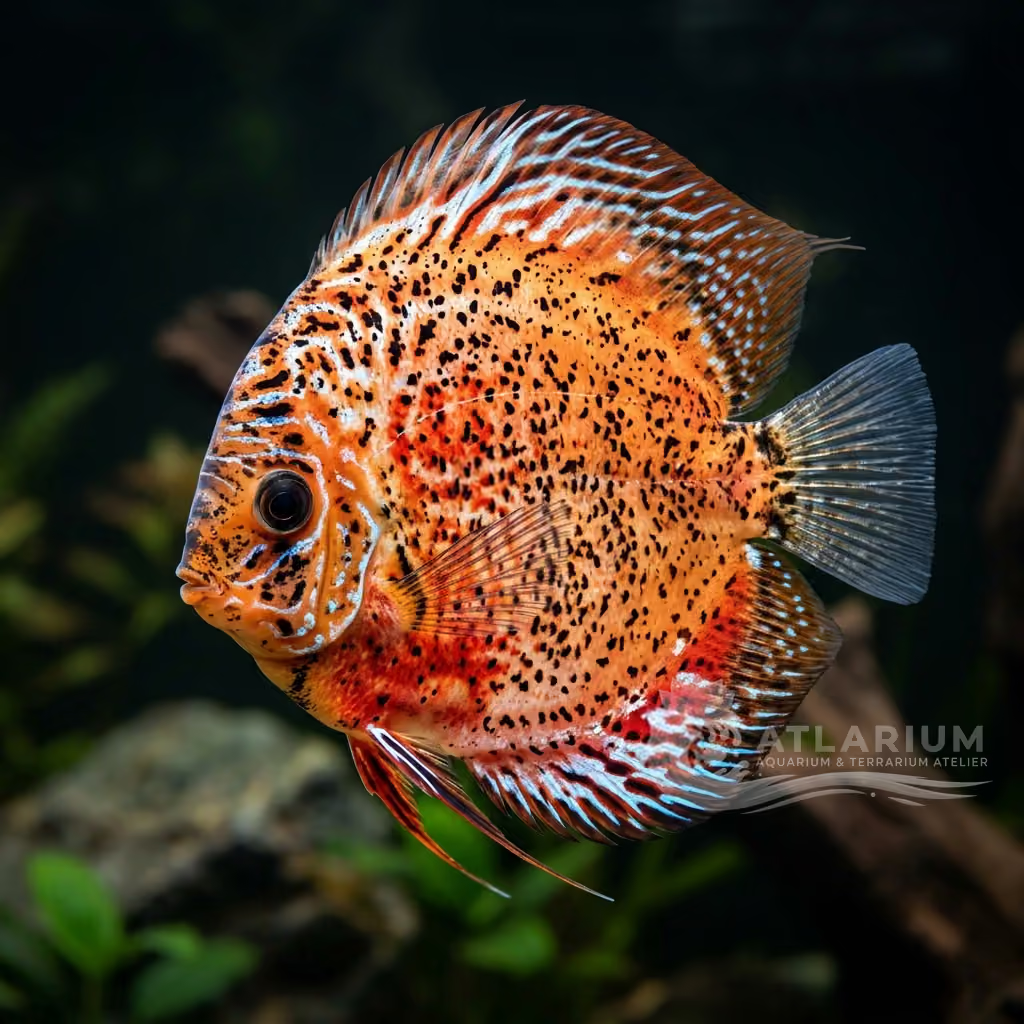
Magnificent but very delicate South American eartheater cichlid (25 cm). Shows off bright long filaments and three distinct spots on the side. Tirelessly sifts fine sand. Sensitive to diseases.
Water Temperature
27 - 30 °C
pH Value
4.5 - 6.5
Water type
Freshwater
Tank level
Bottom
Adult size
25 cm
Minimum tank volume
>= 300 L
Minimum group
6
GH
0 - 5 dGH
KH
1 - 2 dKH
TDS
10 - 95 ppm
Conductivity
16 - 148 uS/cm

Species description
Geographical Origin and Habitat: Resident species of the very hot dark and sandy waters of the upper Rio Negro and Orinoco basins between Brazil and Colombia. Aggregates in large schools on the bare sandy shallows at the edges of flooded forests, away from turbulent currents.
Taxonomy and Morphology: Icon of the Satanoperca genus (frightening compound name for a placid species). Large geophagine cichlid: males over 25 cm (10 inches). It features an unusually long and drooping snout, 'horse-like', imposing lips modified for suction, an eye placed very high and a slender but very high torpedo body. The pectoral fins brush the sandy bottom acting as scanning poles.
Social Behavior: False name, opposite nature. It is a highly gregarious eartheater, extremely peaceful, fearful and docile. It must strictly be kept in tight schools of at least 6 individuals; they isolate or stress mortally if kept single or in pairs. They spend their lives raising clouds of sand from the ground spitting it from the gills like industrial sieves.
Coloration and Sexual Dimorphism: Stunning alien beauty. The base silvery body takes on bright iridescent emerald-blue flashes if hygienic conditions are supreme. Takes its name (Daemon/Demon) from the unmistakable pattern of two neat and round black spots on the sides of the body (like two bullet holes) and a majestic and infernal third blackest spot ('ocellus') with a vibrant ring of fiery red fire located at the root of the powerful caudal fin. Immense dorsal fins falling into red ribbons. No obvious dimorphism between the sexes.

Care, breeding and tankmates
Aquarium Setup: Demands respect, for its enormous sensitivity: the tank (minimum two meters / 80 inches or 600-800 liters / 150-200 Gal) MUST have the ground composed only and exclusively of a THICK LAYER OF VERY SOFT IMMACULATE SAND in which the beast must engulf almost the entire head. No sharp rocks or gravel: mouth abrasions are fatal in 100% of cases. Dark shade from huge woody stumps lowered from the surface. Discarded plants (they will be uprooted by sand sifting).
Diet and Feeding: They eat tiny and frequent doses. Discard floating food and thick dry flakes. They impose sinking tablets, soft granules, huge bloodworms that must be defrosted and flooded on the bottom, in addition to tons of frozen live Brine Shrimp to the sieve. They are slow: a greedy roommate will not let them feed.
Water Quality: INFURIATING ACHILLES HEEL. Not for beginners. Ultra-sensitive species. Hates nitrates and bacteria. Filtration must be titanic without hesitating absurd currents. Requires true 'Blackwaters': pH between lethal acid (4.5) and 6.5 maximum and demineralized hardnesses (GH 0-5). Temperatures trigger digestive heart attacks if cold (Mandatory stationary 28-30°C / 82-86°F from Discus tank).
Compatibility and Cohabitation: Elite, exhibition model. Jewels of an immense community alongside the sensitive and shy classic schooling Discus and Amazonian motoro stingrays, with cardinal tetras and spherical armored corydoras of large warm sizes. Absolutely BANNED territorial or frantic fish: dies from intimidation of fatigue if teased by Severum, Aequidens, not to mention the lethal boastful South American butchers.
Aquarium Breeding: Species that lays embedded in deep sand holes in the aquarium. Delayed mouthbrooders only for the final phase; very rare broods with fry wrapped by the mother arrive completely in captivity due to complications from lethal pollutants that decimates offspring in hours.
Risks and Diseases: Staggering 95% mortality rate within 3 years for the neotropical disease 'Exophthalmos', rotting bloody labial ulcers or the terrible 'hole in the head disease' outbreaks for old aquariums or serious non-compliance with scorching temperature and pure suitable soft bottom for rest.

Geographic origin and distribution
Resident species of the very hot dark and sandy waters of the upper Rio Negro and Orinoco basins between Brazil and Colombia. Aggregates in large schools on the bare sandy shallows at the edges of flooded forests, away from turbulent currents.
Origin
Tropical oceans and reefsAmazon, Orinoco, and Guianas

Fish profile
- Temperament
- Semi-aggressive
- They have a peaceful and calm temperament compared to other cichlids. They can be somewhat easily stressed by aggressive tankmates. They display fascinating social interactions within their own group.
- Diet
- Omnivore
- They are specialized benthophagous feeders that sift substrate for food. Feed sinking pellets, frozen bloodworms, and earthworms. A sandy substrate is mandatory to prevent damage to their gills.
- Life expectancy
- 5-8 years
- Adult size
- 25 cm
- Sex ratio
- Group
- They are highly social and should be kept in groups of 5 to 8. Keeping them in groups reduces shyness and distributes mild aggression. A balanced sex ratio naturally forms in a good sized group.
- Feeding frequency
- Twice daily
- Offer multiple small feedings throughout the day. This closely mimics their natural continuous sifting behavior. Ensure food reaches the bottom for them to find.
- Bioload
- High
- This large eartheater produces a very high bioload. Exceptional biological filtration and massive, frequent water changes are required. They are extremely sensitive to elevated nitrates and poor water quality.
- Flow
- Stagnant
- They prefer gentle to moderate flow. Extremely turbulent water should be avoided. The tank should feature calm areas where they can sift peacefully.
- Jump risk
- Yes
- There is a moderate jump risk. A secure lid is recommended, especially when the lights turn off. Sudden shadows can easily startle them.
- Reproduction
- Oviparous
- Breeding is difficult as they are delayed mouthbrooders. They lay eggs on the substrate before taking larvae into their mouths. Very soft, acidic water is usually required to trigger spawning.
- Compatibility & tankmates
- Peaceful
- They are generally peaceful towards other species but can be mildly territorial. Keep with peaceful, similarly sized South American cichlids or characins. Very small fish might be eaten, though they are not highly predatory.
- Tank level
- Bottom
- They spend almost all their time at the bottom level of the aquarium. They constantly sift the sand for edible morsels. They occasionally rise to the middle level during feeding.

Scientific Parameters & Models
FishBase
Window to the official scientific data of the species
FishBase v25.04Data synced on: 06/15/2026
- Trophic level
- 3.1 ± 0.4 se
- Resilience
- High (less than 15 months)
- Phylogenetic uniqueness (PD50)
- 0.5039
- Bayesian Length-Weight
- a = 0.02399, b = 3.01
- VulnerabilityLow vulnerability (16 / 100)

Related species
Recommendations grouped by close relatives, companion choices, and similar care.