Senegal Bichir
Polypterus senegalus
A smaller, hardy bichir with a prehistoric look, lung-breathing behavior, and a curious bottom-roaming personality. It still needs a long covered aquarium, soft sand, and tankmates too large to swallow.
Water Temperature
25 - 29 °C
pH Value
6.5 - 7.5
Water type
Freshwater
Tank level
Bottom
Adult size
30 cm
Minimum tank volume
>= 300 L
Minimum group
>= 1
GH
5 - 15 dGH
KH
2 - 7 dKH
TDS
95 - 295 ppm
Conductivity
148 - 461 uS/cm

Species description
Geographical Origin and Habitat: Widely distributed through slow rivers, floodplains, marshes, and muddy backwaters across West and Central Africa, including the Senegal, Nile, Gambia, and Niger systems. It is adapted to warm, oxygen-poor shallows where surfacing for air is part of normal life.
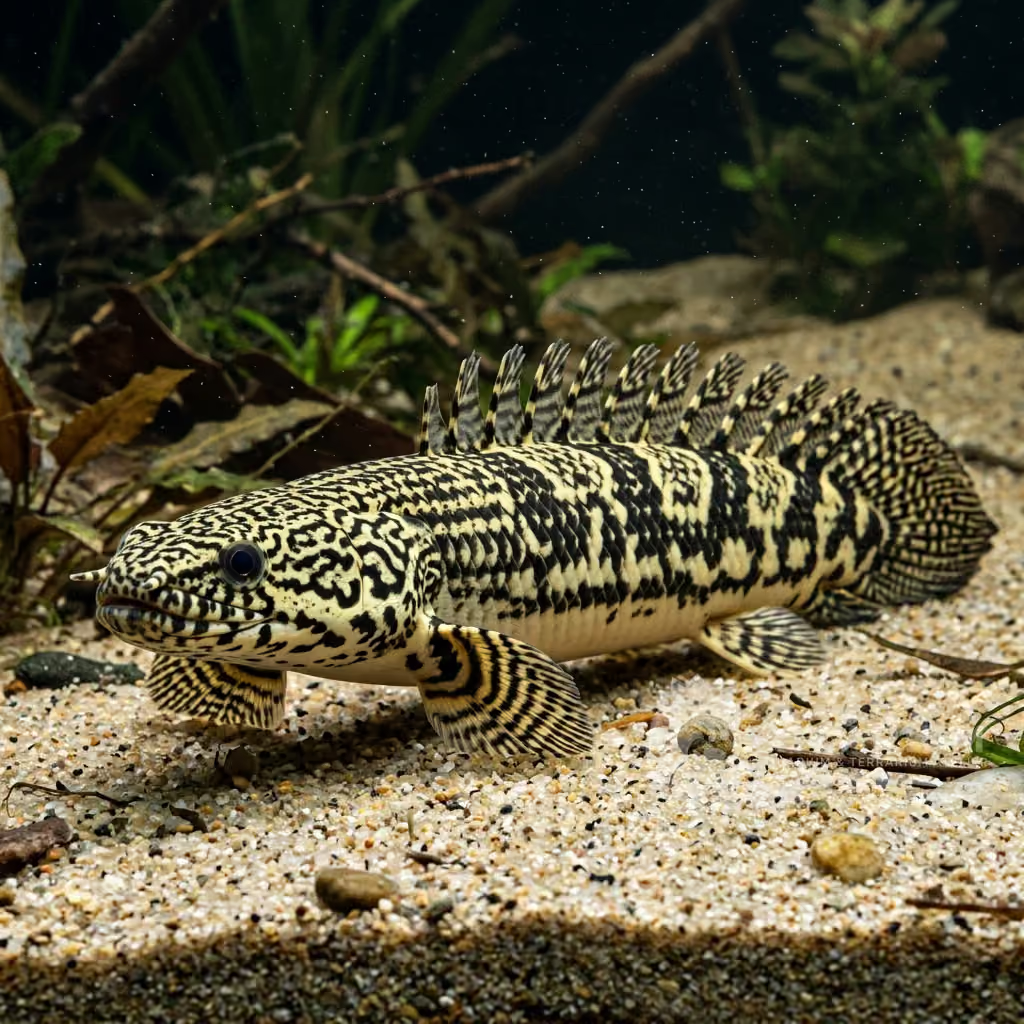
Taxonomy and Morphology: A member of the ancient Polypteridae. Adults usually reach about 25-30 cm, with an elongated armored body, ganoid scales, separate dorsal finlets, fleshy pectoral fins, and a modified swim bladder used like a primitive lung.
Social Behavior: Generally one of the more active and approachable bichirs. It spends much of its time exploring the bottom by smell and touch, and may rest with other bichirs if space and hiding places are abundant. It is not aggressive in the cichlid sense, but it is a nocturnal predator that will eat any fish small enough to fit in its mouth.
Coloration and Sexual Dimorphism: Wild-type fish are plain grey, olive, or brown with a pale underside; albino forms are common in the trade. Mature males develop a broader, thicker anal fin, while females remain fuller-bodied with a narrower anal fin.

Care, breeding and tankmates
Aquarium Setup: Use a long aquarium, ideally 120 cm or more, with a tight, weighted lid and a clear air gap above the water. Fine sand is strongly preferred because bichirs lunge and nose through the substrate while feeding. Provide large caves, driftwood, shaded areas, and calm zones.
Diet and Feeding: Carnivorous. Offer sinking predator pellets, earthworms, thawed shrimp, mussel, krill, and pieces of lean fish. Avoid feeder fish and mammal or bird meat, which raise disease and nutrition risks.
Water Quality: Keep warm, stable water around 24-28°C with pH roughly 6.5-7.8. It is hardy, but heavy protein feeding means strong filtration and regular water changes are still essential.
Compatibility and Cohabitation: Best with robust, peaceful fish that are too large to swallow. Avoid tiny tetras, small catfish, shrimp, and fin-nipping tankmates. Do not house with plecos or other suction-feeding fish that may rasp the bichir skin at night.
Aquarium Breeding: Rare in aquariums but possible in mature, spacious systems with dense spawning mops or plants. Eggs are scattered and adults should be removed if breeding is attempted.
Risks and Diseases: Escapes through tiny lid gaps, drowning if denied access to atmospheric air, intestinal injury from coarse gravel, and starvation or competition if fast tankmates take all food before it reaches the bottom.

Geographic origin and distribution
Widely distributed through slow rivers, floodplains, marshes, and muddy backwaters across West and Central Africa, including the Senegal, Nile, Gambia, and Niger systems. It is adapted to warm, oxygen-poor shallows where surfacing for air is part of normal life.
Origin
Africa and Madagascar

Fish profile
- Temperament
- Semi-aggressive
- Senegal Bichirs possess a remarkably calm and sedentary temperament, often resting completely still for highly extended periods. They are non-aggressive toward fish too large to swallow, relying heavily on ambush tactics rather than active pursuit. Their tranquil demeanor makes them an absolutely excellent addition to a peaceful predator or large community setup.
- Diet
- Omnivore
- As a nocturnal carnivore, the Senegal Bichir thrives on a varied diet of meaty foods such as bloodworms, earthworms, and chopped seafood. High-quality sinking carnivore pellets can serve as a reliable staple in their regular diet. Providing diverse protein sources is absolutely crucial for long-term health and preventing severe nutritional deficiencies.
- Life expectancy
- 10-15 years
- Adult size
- 30 cm
- Sex ratio
- Group
- Sexing is generally determined by examining the anal fin, which is noticeably wider and significantly thicker in mature males. When keeping a group, there are no strict sex ratio requirements as they are largely non-aggressive towards conspecifics. Providing adequate hiding spaces is ultimately more important than managing specific male-to-female ratios.
- Feeding frequency
- Twice daily
- Young Senegal Bichirs highly benefit from daily feedings to actively support their relatively fast early growth rates. Mature adults require feeding only two to three times per week due to a slower metabolism. Monitoring food intake is extremely important to prevent overfeeding and subsequent degradation of water quality.
- Bioload
- High
- The Senegal Bichir produces a moderate to high bioload due to its heavily carnivorous diet and overall mass. Appropriate biological filtration and a consistent water change schedule are strictly essential to maintain low nitrate levels. Aquarists must ensure mechanical filtration is robust enough to handle the larger solid waste produced.
- Flow
- Stagnant
- Originating from the slow-moving rivers and floodplains of Africa, they strongly prefer calm or very gently flowing water. Strong currents can be quite stressful and interfere with their biological need to regularly surface for air. Strategic placement of driftwood and rocks can help break up any strong flow from filtration returns.
- Jump risk
- Yes
- The Senegal Bichir is notoriously prone to escaping aquariums through incredibly small, often overlooked gaps. A tightly fitting, heavy lid is an absolute necessity to prevent highly fatal jumping or slithering incidents. Any small openings around heater cords or external filter pipes must be securely sealed.
- Reproduction
- Oviparous
- Breeding in captivity is somewhat uncommon and typically requires specific environmental triggers like temperature drops simulating rainfall. The female heavily scatters sticky eggs among dense vegetation, which should be removed post-spawning to avoid immediate predation. Raising the fry requires highly dedicated care, frequent water changes, and a continuous supply of live micro-foods.
- Compatibility & tankmates
- Peaceful
- This species is peaceful towards similarly sized or larger tank mates but is a highly capable predator of small, slender fish. It can be successfully kept with medium to large cichlids, robust characins, and larger armored catfish. Aggressive fin-nipping species should be completely avoided as they may severely damage the bichir's delicate fins.
- Tank level
- Bottom
- This species is primarily a bottom-dweller, spending the vast majority of its time resting on the substrate or slowly navigating through plants. Due to their rudimentary lungs, they must regularly swim to the water surface to actively gulp atmospheric oxygen. An aquarium with a large, wide footprint is significantly more beneficial than a tall, deep tank.

Scientific Parameters & Models
FishBase
Window to the official scientific data of the species
FishBase v25.04Data synced on: 06/15/2026
- Trophic level
- 3.5 ± 0.2 se
- Resilience
- Low (4.5 - 14 years)
- Phylogenetic uniqueness (PD50)
- 0.5003
- Bayesian Length-Weight
- a = 0.00447, b = 2.99
- VulnerabilityModerate to high vulnerability (54 / 100)

Related species
Recommendations grouped by close relatives, companion choices, and similar care.