Banded Rainbowfish
Melanotaenia trifasciata
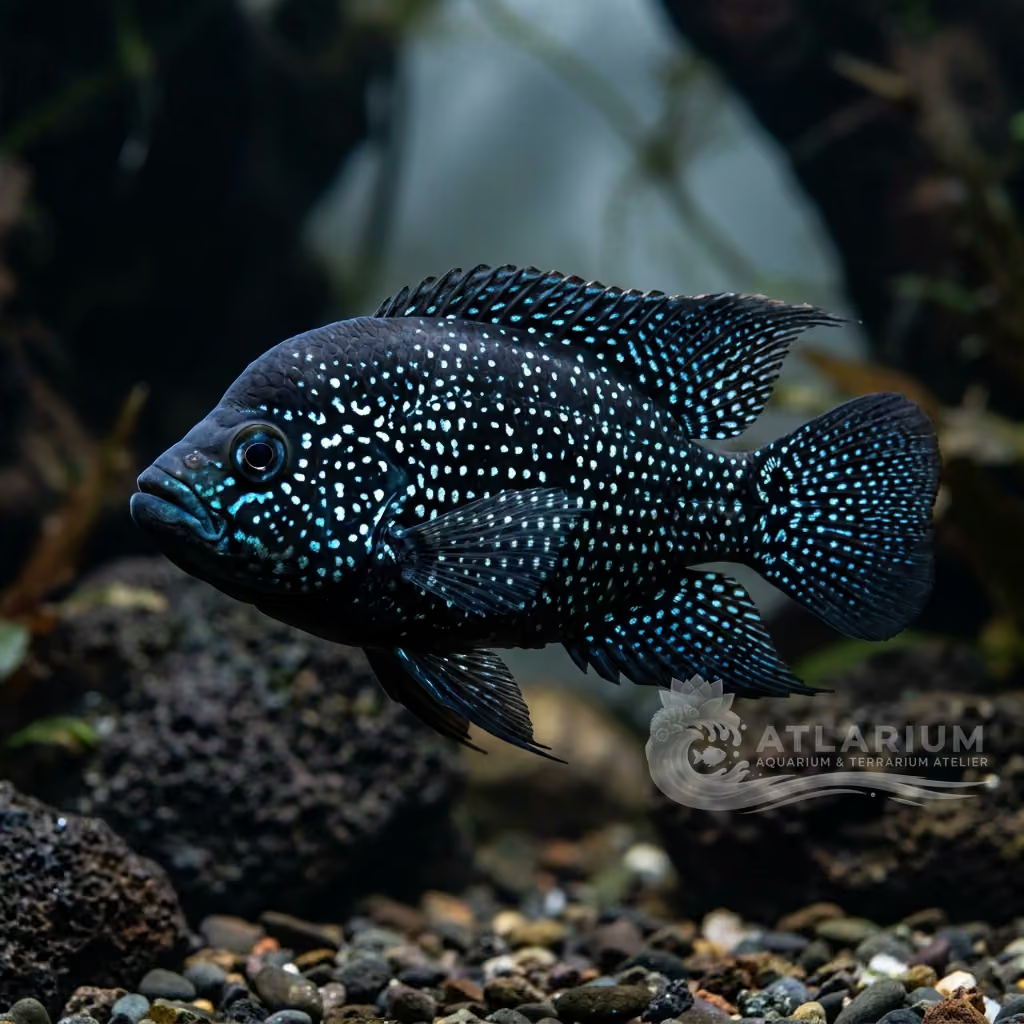
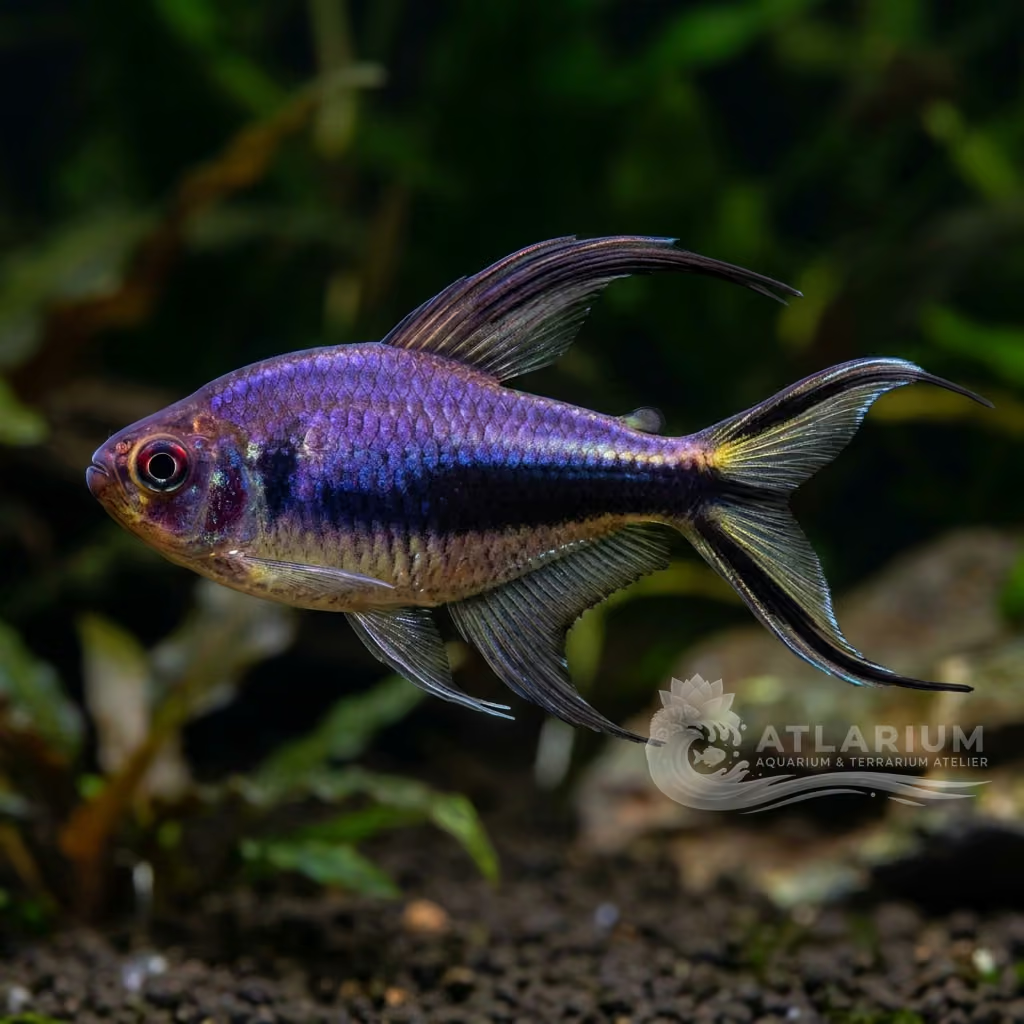
The majestic 'Banded Rainbowfish' (15 cm). A colossal Australian with hyperactive and powerful swimming. Famous for the incredible chromatic diversity among the various river populations (morphs). Being a voracious and fast devourer, it is not suitable for aquariums with slow or timid fish, which would be left to starve.
Water Temperature
24 - 30 °C
pH Value
6.5 - 8
Water type
Freshwater
Tank level
Bottom and middle
Adult size
15 cm
Minimum tank volume
>= 180 L
Minimum group
>= 1
GH
5 - 15 dGH
KH
2 - 7 dKH
TDS
95 - 295 ppm
Conductivity
148 - 461 uS/cm

Species description
Geographical Origin and Habitat: Widely distributed in Northern Australia, including Arnhem Land and the Cape York Peninsula. Thrives in crystalline streams with strong current, wide rivers and even isolated lagoons (billabongs). Their habitat is often exposed to the scorching Australian sun, favoring the explosion of algae and peripheral aquatic vegetation fluffy.
Taxonomy and Morphology: Classic representative of the Melanotaenia genus (Melanotaeniidae). It presents an imposing size for the family: an extremely deep and laterally compressed rhomboidal body, with a massive curved back (can reach 15 cm / 6 inches and exceed 10 years of life). Large amazing eyes and a terminal mouth for hunting insects on the surface.
Social Behavior: "The Billabong Runners". Obligate schooling fish (minimum 6-8 specimens, ideal male/female ratio). The dominant males are hyperactive sadistics fluffy: they engage in continuous and exhausting threat and courtship displays, showing off dazzling colors and raising their dorsal and anal fins, darting from one end of the tank to the other majestic lethal. Totally diurnal and peaceful, but their frenzy is stressful for calm species.
Coloration and Sexual Dimorphism: The Chameleon Rainbow. The distinctive trait (which gives the name trifasciata) is the showy unbroken black or dark blue band along the lateral line. The basic coloration varies atrociously depending on the river of origin (e.g. Goyder River: blood red fire sadistically beautiful; Running Creek: emerald green and orange). Adult males have huge backs (kyphosis), fluorescent colors and the most marked lateral band. Females are more slender and pale fluffy.

Care, breeding and tankmates
Aquarium Setup: FishBase describes Melanotaenia trifasciata mainly in small streams and waterholes with clear to moderately turbid water, over rocky or gravel bottoms or in well-vegetated areas, frequently around submerged logs and branches.
Feeding and Diet: No feeding fact is added because no positive fact for this chapter is cited above.
Water Quality: FishBase’s Environment section reports freshwater, benthopelagic, tropical conditions with pH 7.0–8.0, dH 9–19, and 25–30 °C. Its Biology section separately reports occurrence at 22–30 °C and pH 5.2–7.0; this recovery does not infer a reconciled aquarium range.
Compatibility and Coexistence: No compatibility fact is added because no positive fact for this chapter is cited above.
Aquarium Breeding: FishBase records distinct pairing.
Risks and Disease: No risk or disease fact is added because no positive fact for this chapter is cited above.

Geographic origin and distribution
Widely distributed in Northern Australia, including Arnhem Land and the Cape York Peninsula. Thrives in crystalline streams with strong current, wide rivers and even isolated lagoons (billabongs). Their habitat is often exposed to the scorching Australian sun, favoring the explosion of algae and peripheral aquatic vegetation fluffy.
Origin
Selective breeding and cultivarsAustralia, New Guinea, and OceaniaTropical oceans and reefs

Fish profile
- Temperament
- Semi-aggressive
- Their temperament is generally peaceful. Males frequently spar playfully without causing harm. They add dynamic energy to community tanks.
- Diet
- Omnivore
- They are naturally omnivorous. They readily accept flakes and small frozen foods. A varied diet enhances their vibrant colors.
- Life expectancy
- 5-8 years
- Adult size
- 15 cm
- Sex ratio
- Harem
- Keep one male to multiple females. This significantly reduces male harassment. Multiple males can coexist in larger aquariums.
- Feeding frequency
- Twice daily
- Feed small portions twice a day. They consume food rapidly from the surface. Avoid overfeeding to maintain water quality.
- Bioload
- Medium
- They produce a moderate bioload. Efficient filtration is needed for their active lifestyle. Regular water changes maintain pristine conditions.
- Flow
- Stagnant
- They appreciate moderate to strong flow. This simulates their native river habitats. Good circulation is highly beneficial.
- Jump risk
- Yes
- There is a very high jump risk. A tight-fitting lid is absolutely essential. Many are lost to open tanks.
- Reproduction
- Oviparous
- They are prolific egg scatterers. Parents will eat eggs if not removed. Fry require extremely small initial foods.
- Compatibility & tankmates
- Peaceful
- They are peaceful but highly active. Avoid housing with slow or timid species. They thrive with other energetic fish.
- Tank level
- Middle/Bottom
- They swim in the middle and upper levels. They require plenty of open swimming space. Perimeter plants provide security.

Scientific Parameters & Models
FishBase
Window to the official scientific data of the species
FishBase v25.04Data synced on: 06/15/2026
- Trophic level
- 2.9 ± 0.3 se
- Resilience
- Medium (1.4 - 4.4 years)
- Phylogenetic uniqueness (PD50)
- 0.5
- Bayesian Length-Weight
- a = 0.01122, b = 3.04
- VulnerabilityLow vulnerability (10 / 100)

Related species
Recommendations grouped by close relatives, companion choices, and similar care.