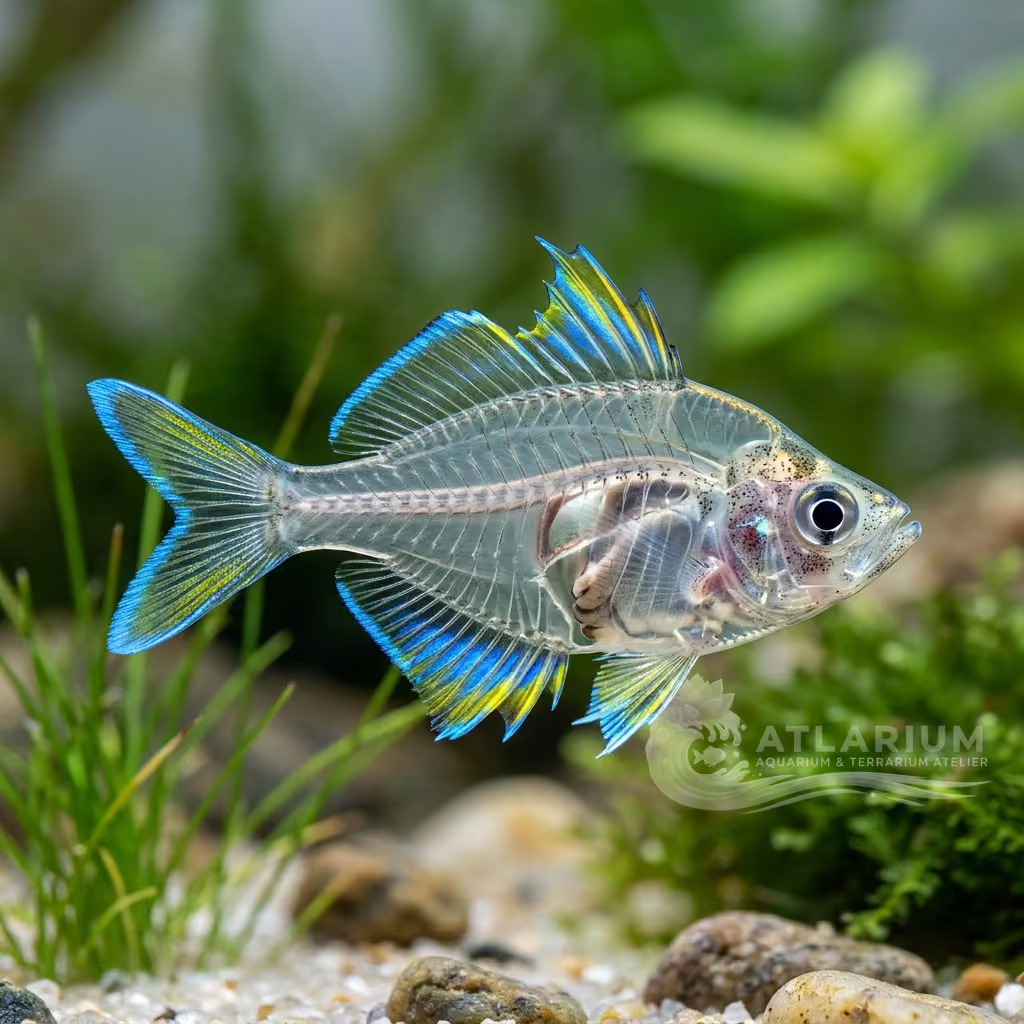
Papua rainbowfish
Melanotaenia papuae
A peaceful, active rainbowfish from southern Papua New Guinea, with the typically silver-green body that lights up with yellow, orange and blue reflections in mature males. Like all Melanotaenia, it is a tireless swimmer that needs long tanks with open space. In schools of 6–8+ the males' courtship displays transform the aquarium into a spectacle of light and movement. Adaptable to a wide parameter range. Classic genus breeding: egg-scatterer on mops or fine-leaved plants.
Water Temperature
24 - 29 °C
pH Value
7 - 8
Water type
Freshwater
Tank level
Middle
Adult size
8 cm
Minimum tank volume
>= 120 L
Minimum group
>= 6
GH
10 - 20 dGH
KH
5 - 10 dKH
TDS
200 - 400 ppm
Conductivity
313 - 625 uS/cm

Species description
Geographical Origin and Habitat: Endemic exclusively to a highly restricted geographical zone surrounding the capital city of Port Moresby in Papua New Guinea. Melanotaenia papuae (universally known as the Papuan Rainbowfish) natively colonizes heavily shaded, sluggish, and clear rainforest streams, tranquil tributaries, and small, isolated coastal river systems. These specific micro-habitats are characterized by dense, overhanging jungle canopies that deeply shade the water, massive beds of submerged aquatic vegetation, and stable, warm, slightly alkaline water.
Taxonomy and Morphology: Scientifically classified within the Melanotaeniidae family (the true Rainbowfishes), it is a spectacular, deeply robust, and medium-sized schooling fish. Morphologically, fully mature adults reach roughly 6.0 to 8.0 centimeters (2.4-3.1 inches) in length, making them slightly smaller and more compact than the massive Boeseman's Rainbowfish. It possesses a classic, highly compressed, distinctively "torpedo-shaped" body profile. Its defining anatomical features are a steeply sloping forehead and the signature deeply split, twin dorsal fin.
Social Behavior: They are exceptionally peaceful, incredibly active, and absolutely obligate shoaling fish. They strictly MUST be kept in a sizable group (absolute minimum 6, but 10-15+ is vastly superior to alleviate shyness and observe their social dynamics). In the aquarium, they possess boundless energy, spending their entire day relentlessly darting, chasing, and playfully weaving through the middle and upper levels of the water column. Dominant males are intensely competitive, constantly engaging in spectacular lateral sparring displays.
Coloration and Sexual Dimorphism: Sexual dimorphism is spectacular and instantly obvious. Mature males are the undisputed focal point: their base body color is a glowing, intensely reflective metallic olive-green or deep turquoise. Their absolute defining feature is a series of thick, bold, brilliantly saturated fiery-orange or blood-red horizontal stripes running the entire length of their flanks, bordered by stark black lines. The fins of mature males become heavily flushed with deep red. Females are significantly smaller, possess a flatter back, and exhibit a vastly duller, pale silvery-yellow coloration.

Care, breeding and tankmates
Aquarium Setup: The aquarium architecture MUST flawlessly accommodate their energetic swimming speed while replicating a heavily shaded Papuan stream. A minimum 120-liter (30-gallon) tank (at least 90 cm / 3 feet long) is required. The tank MUST feature significant, unobstructed horizontal swimming lanes across the upper levels. However, unlike some open-water Rainbowfish, they heavily prefer heavily planted tanks; robust background plants (like Vallisneria) and floating vegetation to diffuse the lighting are highly recommended. A heavy, perfectly fitted lid is absolutely mandatory to prevent leaping.
Diet and Feeding: They are highly active, voracious omnivores that forage aggressively in the mid-water column and at the surface. Because they swim relentlessly, they possess high metabolic rates and require frequent feeding. They will frantically consume almost anything offered: high-quality floating flakes and micro-pellets. To maintain their spectacular red and green striping, you MUST provide heavy daily offerings of live or frozen meaty foods (bloodworms, Daphnia, Artemia) combined with heavy plant-based offerings (spirulina flakes, blanched spinach).
Water Quality: Originating from the coastal rainforest streams of Papua New Guinea, they demand highly stable, immaculate water conditions. They thrive in warm tropical temperatures (24-28°C / 75-82°F). Crucially, they require moderately hard, slightly alkaline water (GH 8-15) and a neutral to slightly alkaline pH (7.0 - 8.0). They possess absolute zero tolerance for dissolved organic waste; massive, rigorous weekly water changes are absolutely mandatory to prevent bacterial infections. Moderate water flow is highly appreciated to simulate a sluggish jungle stream.
Compatibility and Cohabitation: Compatibility is excellent, provided tankmates are peaceful and can tolerate their hyper-active behavior. They are the perfect centerpiece schooling fish for a dedicated, moderately hard-water community biotope. Excellent companions include other similarly-sized Rainbowfish species, fast-swimming Barbs, robust Tetras, and robust bottom-dwellers like large Corydoras or smaller Plecos. They MUST NEVER be housed with slow-moving, delicate, or long-finned fish (like Angelfish or Betta fish), as the Rainbowfish's frantic, relentless activity will severely stress them.
Aquarium Breeding: Breeding is incredibly common, highly rewarding, and frequently happens by accident. They are prolific, continuous egg-scatterers that provide zero parental care. Breeding is triggered by heavy conditioning and a cool water change. A frantically colored dominant male will aggressively display, flashing an intensely bright "spawning stripe" down his forehead, driving the female into dense, fine-leaved mosses or spawning mops, where she releases adhesive eggs. The adults will relentlessly eat the eggs; the spawning medium MUST be moved to a separate tank.
Risks and Diseases: The absolute greatest physical risk is severe stress and physical injury from being confined in a tank that is too short; they will literally crash into the glass or suffer stunting if they cannot swim in long, open lanes (90+ cm). The second major risk is lethal leaping; they are notoriously explosive jumpers and will easily launch themselves out of the tank through the smallest gaps if the lid is not 100% secure. Finally, attempting to house them in extremely soft, highly acidic Amazonian blackwater will result in severe osmotic stress.

Geographic origin and distribution
Endemic exclusively to a highly restricted geographical zone surrounding the capital city of Port Moresby in Papua New Guinea. Melanotaenia papuae (universally known as the Papuan Rainbowfish) natively colonizes heavily shaded, sluggish, and clear rainforest streams, tranquil tributaries, and small, isolated coastal river systems. These specific micro-habitats are characterized by dense, overhanging jungle canopies that deeply shade the water, massive beds of submerged aquatic vegetation, and stable, warm, slightly alkaline water.
Origin
Africa and MadagascarAustralia, New Guinea, and Oceania

Fish profile
- Temperament
- Peaceful
- Their temperament is generally peaceful. Males frequently spar playfully without causing harm. They add dynamic energy to community tanks.
- Diet
- Omnivore
- They are naturally omnivorous. They readily accept flakes and small frozen foods. A varied diet enhances their vibrant colors.
- Life expectancy
- 4-5 years
- Adult size
- 8 cm
- Sex ratio
- Harem
- Keep one male to multiple females. This significantly reduces male harassment. Multiple males can coexist in larger aquariums.
- Feeding frequency
- Twice daily
- Feed small portions twice a day. They consume food rapidly from the surface. Avoid overfeeding to maintain water quality.
- Bioload
- Medium
- They produce a moderate bioload. Efficient filtration is needed for their active lifestyle. Regular water changes maintain pristine conditions.
- Flow
- Strong
- They appreciate moderate to strong flow. This simulates their native river habitats. Good circulation is highly beneficial.
- Jump risk
- Yes
- There is a very high jump risk. A tight-fitting lid is absolutely essential. Many are lost to open tanks.
- Reproduction
- Oviparous
- They are prolific egg scatterers. Parents will eat eggs if not removed. Fry require extremely small initial foods.
- Compatibility & tankmates
- Community
- They are peaceful but highly active. Avoid housing with slow or timid species. They thrive with other energetic fish.
- Tank level
- Middle
- They swim in the middle and upper levels. They require plenty of open swimming space. Perimeter plants provide security.

Scientific Parameters & Models
FishBase
Window to the official scientific data of the species
FishBase v25.04Data synced on: 06/15/2026
- Trophic level
- 2.9 ± 0.4 se
- Resilience
- High (less than 15 months)
- Phylogenetic uniqueness (PD50)
- 0.5
- Bayesian Length-Weight
- a = 0.00389, b = 3.12
- VulnerabilityLow vulnerability (10 / 100)

Related species
Recommendations grouped by close relatives, companion choices, and similar care.