Lagenandra meeboldii "Rot" ("Red")
Lagenandra meeboldii "Rot" ("Red")
A highly sought-after variant of L. meeboldii boasting striking red to purple foliage. It demands moderate to high lighting and a nutrient-dense substrate to fully express its intense coloration.
Water Temperature
12 - 28 °C
pH Value
6 - 7.5
Water type
Freshwater
Light
Medium - High
CO2
Low - High
Expected height
20 cm
Expected width
30 cm
GH
4 - 15 dGH
KH
0 - 14 dKH

Species description
Geographical Origin and Habitat: Lagenandra meeboldii is native to the southwestern regions of India, particularly the warm states of Karnataka and Kerala. It populates the sandy and muddy banks of shaded rivers in the tropical rainforest. It is accustomed to strong seasonal variations, growing emersed during the dry season and submerged under the strong monsoon currents.
Taxonomy & Genetics: It belongs to the family Araceae and is closely related to the genus Cryptocoryne. The 'Rot' ('Red') cultivar has been stabilized for its characteristic concentration of red pigments (anthocyanins) in submerged leaves. The genetics of the plant determine a slow but solid growth, resistant to physical changes.
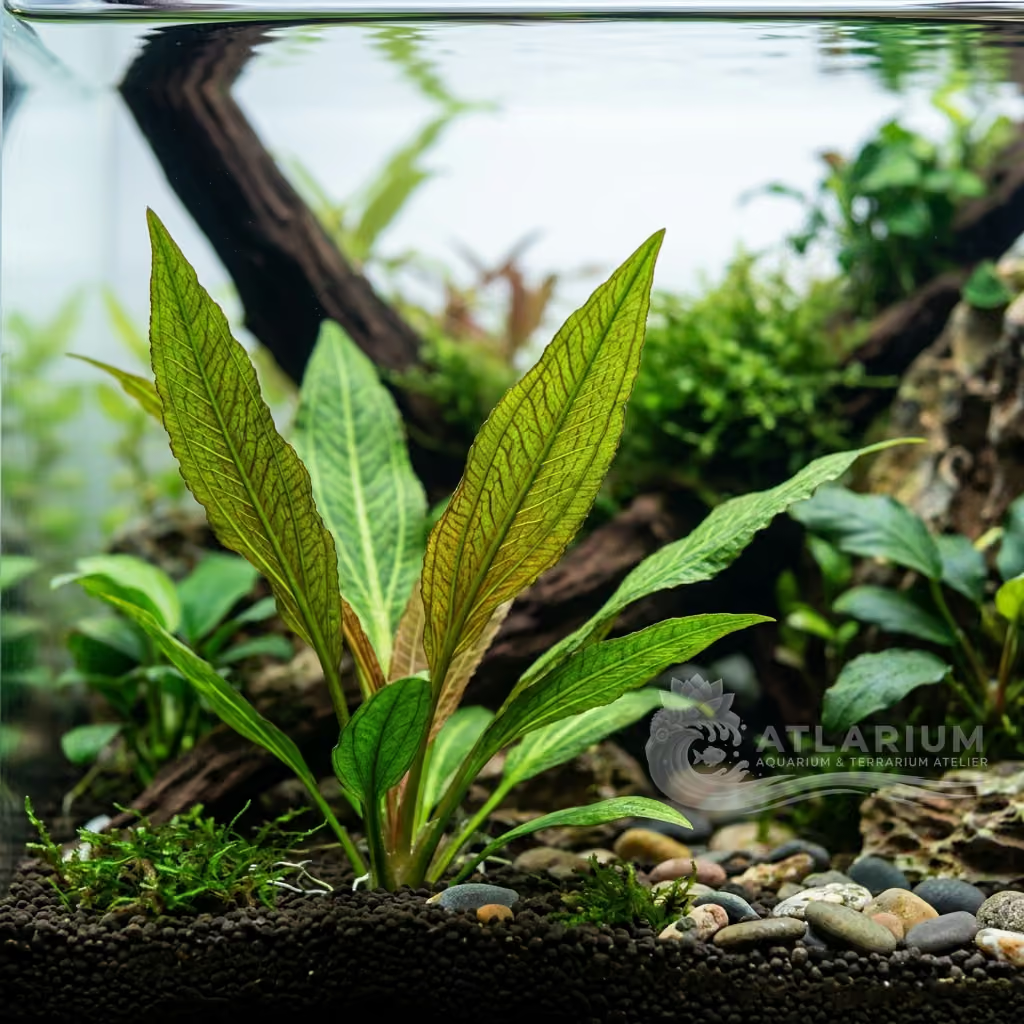
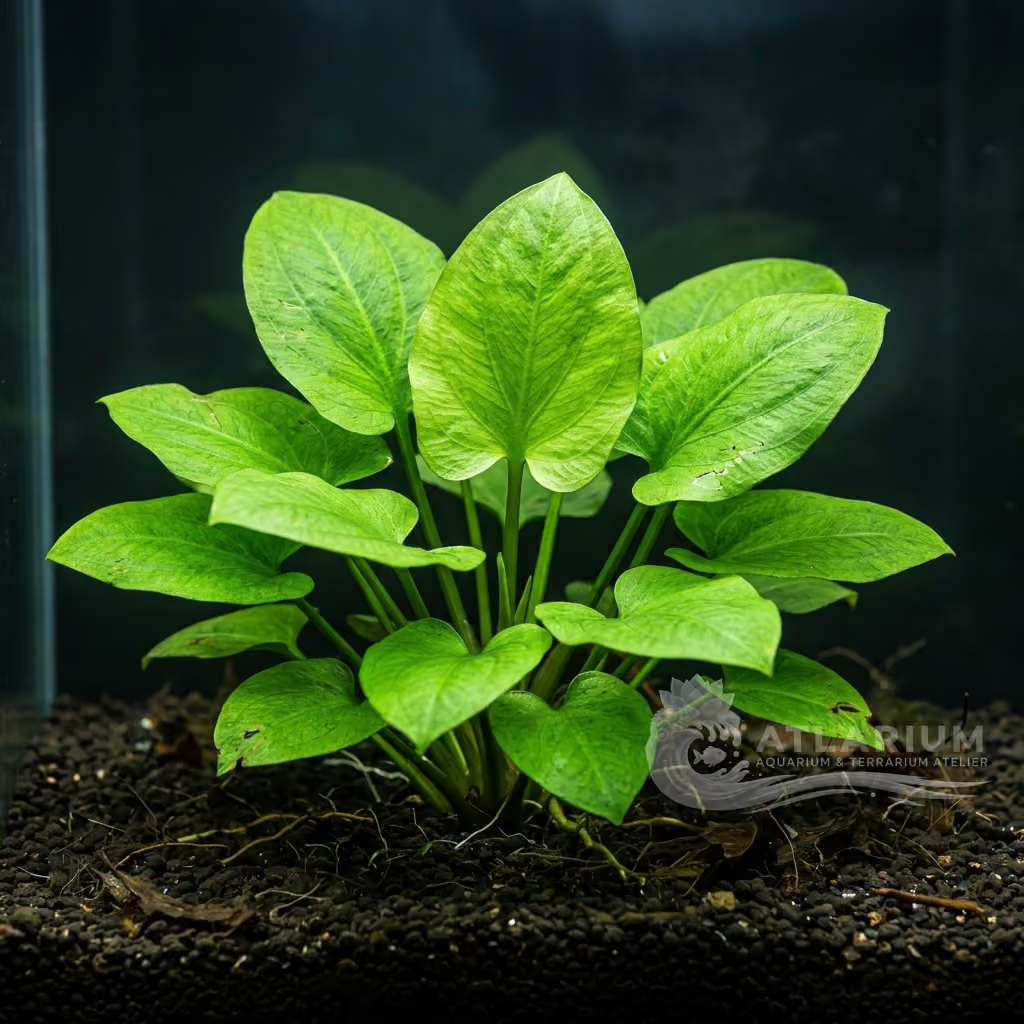
Physical Structure: It develops a compact rosette of oval leaves branching from a robust and knotty creeping rhizome. The leaves feature long, elastic petioles and a slightly elongated leaf blade with gracefully wavy margins. The height in the tank is around 20 centimeters, while the width can reach 30 centimeters.
Color & Texture: It offers an extraordinary coloration ranging from olive green to copper and intense purple-red, especially on young leaves at the center of the rosette. The texture is leathery, thick, and rough, with well-defined veins. The consistency of the leaves makes them resistant to most herbivorous fish.

Care, breeding and tankmates
Lighting & CO2: Requires medium to strong lighting to develop and maintain the bright red coloration. Under weak light, the leaves tend to turn green. CO2 is not mandatory but accelerates growth and promotes the development of new fleshy leaves.
Nutrition & Substrate: Requires a fertile and nutrient-rich substrate to feed its extensive root system. It is recommended to insert fertilizer tabs rich in iron and phosphates near the base of the plant to encourage red coloration and stimulate the rhizome.
Water Chemistry: Tolerates temperatures between 12°C and 28°C, pH from 6.0 to 7.5, and carbon hardness (KH) between 0 and 14 dKH. It prefers clean, well-filtered water with a slow to moderate water flow.
Space Management & Placement: Its optimal placement is in the midground of the aquarium or as a focal plant. As it expands significantly in width, it must be positioned leaving adequate space from neighboring plants to avoid shading them.
Pruning: Pruning consists of removing older, damaged, or yellowed outer leaves by cutting them at the base of the petiole near the rhizome. This operation stimulates the rosette to produce new leaves and prevents debris accumulation at the base.
Risks & Diseases: Like Cryptocoryne, it can undergo leaf decomposition in case of drastic chemical changes in the water (melt). It is essential not to completely bury the rhizome in the substrate to prevent the plant from rotting.

Geographic origin and distribution
Lagenandra meeboldii is native to the southwestern regions of India, particularly the warm states of Karnataka and Kerala. It populates the sandy and muddy banks of shaded rivers in the tropical rainforest. It is accustomed to strong seasonal variations, growing emersed during the dry season and submerged under the strong monsoon currents.
Origin
South and Southeast Asia

Plant profile
- Placement
- Midground
- It is an exceptional midground plant that serves as a beautiful focal point. Because its leaves can grow quite large and broad, it needs adequate spacing so it doesn't shade neighboring carpeting plants. It looks particularly stunning when positioned against light green stem plants or pale rocks.
- Botanical form
- Rosette
- This variety features broad, robust leaves that emerge from a thick, creeping rhizome. The foliage has a rich, earthy red to brownish hue, often with distinct, slightly ruffled margins. The contrast between the dark leaves and lighter veins adds an interesting textural element.
- Growth
- Slow
- Like most Lagenandra species, it exhibits a slow growth rate. It takes time to acclimate to a new aquarium before pushing out new leaves. However, this slow growth makes it very easy to manage, requiring almost no regular pruning.
- Substrate
- High
- Lagenandra meeboldii "Rot" thrives best in an enriched substrate environment, preferring a base of nutrient-packed aqua soil to support its vibrant red leaves. The plant develops a strong network of roots that aggressively seek out nutrients buried within the soil layers. The fleshy rhizome should remain exposed above the substrate line to avoid decay, while providing a deep enough layer of soil for the roots to establish a firm hold.
- Column fertilization
- Recommended
- While it is a heavy root feeder, supplemental liquid fertilization benefits the plant's overall health and color. Regular dosing of potassium and micronutrients in the water column ensures the leaves develop properly without pinholes. It is recommended to maintain a complete and balanced fertilizer regime.
- Root fertilization
- Required
- Root fertilization is vital for the optimal growth of Lagenandra meeboldii 'Red'. A nutrient-packed aquasoil or the frequent use of root tabs will encourage the development of a massive root system and larger, healthier leaves. The plant draws the majority of its essential macronutrients directly from the substrate.
- Trimming
- Occasional
- Trimming is generally limited to the occasional removal of old, deteriorating, or algae-covered leaves. Use sharp scissors to cut the petiole as close to the rhizome as possible without damaging the rhizome itself. Avoid disturbing the root system once the plant is established.
- Propagation
- Division
- Propagation is straightforward and is achieved by dividing the mature rhizome. Carefully cut the rhizome into sections, ensuring each piece has healthy leaves and attached roots. Plant the divisions so that the rhizome remains above the substrate to prevent rot.
- Sensitivity
- Moderate
- It can be prone to melting if subjected to sudden changes in water parameters, temperature, or lighting, similar to Cryptocoryne species. Maintaining stable conditions is key to keeping the plant healthy long-term. It prefers moderate to high lighting to display its deepest red colors.
- Layout role
- accent, Midground
- Its primary role is providing a strong, dark-colored focal point in the midground. The reddish-brown leaves break up the monotony of green plants and add depth to the aquascape. It is an excellent choice for Nature Aquarium layouts looking for natural, earthy tones.

Related species
Recommendations grouped by close relatives, companion choices, and similar care.