Ophiopogon japonicus
Ophiopogon japonicus
Ophiopogon japonicus is an ornamental plant frequently sold for aquariums, despite being a terrestrial or semi-aquatic species. Characterized by a medium growth rate, it is typically placed in the midground where its appearance resembles a dense green lawn.
Water Temperature
20 - 28 °C
pH Value
6 - 7.5
Water type
Freshwater
Light
Medium - High
CO2
Medium - High
KH
2 - 12 dKH

Species description
Geographical Origin and Habitat: Ophiopogon japonicus, commonly known as Mondo Grass or Dwarf Lilyturf, originates from East Asia, specifically countries such as China, Japan, and Korea. In its natural habitat, it thrives in moist, well-drained soils found in shady forests, along woodland edges, or nestled among rocks. This preference for filtered light and consistently damp, yet not waterlogged, conditions underscores its terrestrial to semi-aquatic nature.
Taxonomy & Genetics: Ophiopogon japonicus is classified within the Asparagaceae family, a taxonomic placement that distinguishes it from older classifications under Liliaceae or Ruscaceae. This modern classification reflects a deeper understanding of its genetic relationships and morphological similarities to other species within the asparagus family. Its genetic makeup is primarily adapted for a terrestrial or marshy existence, possessing physiological characteristics unsuitable for prolonged, fully submerged growth, despite its frequent mislabeling for aquarium use.
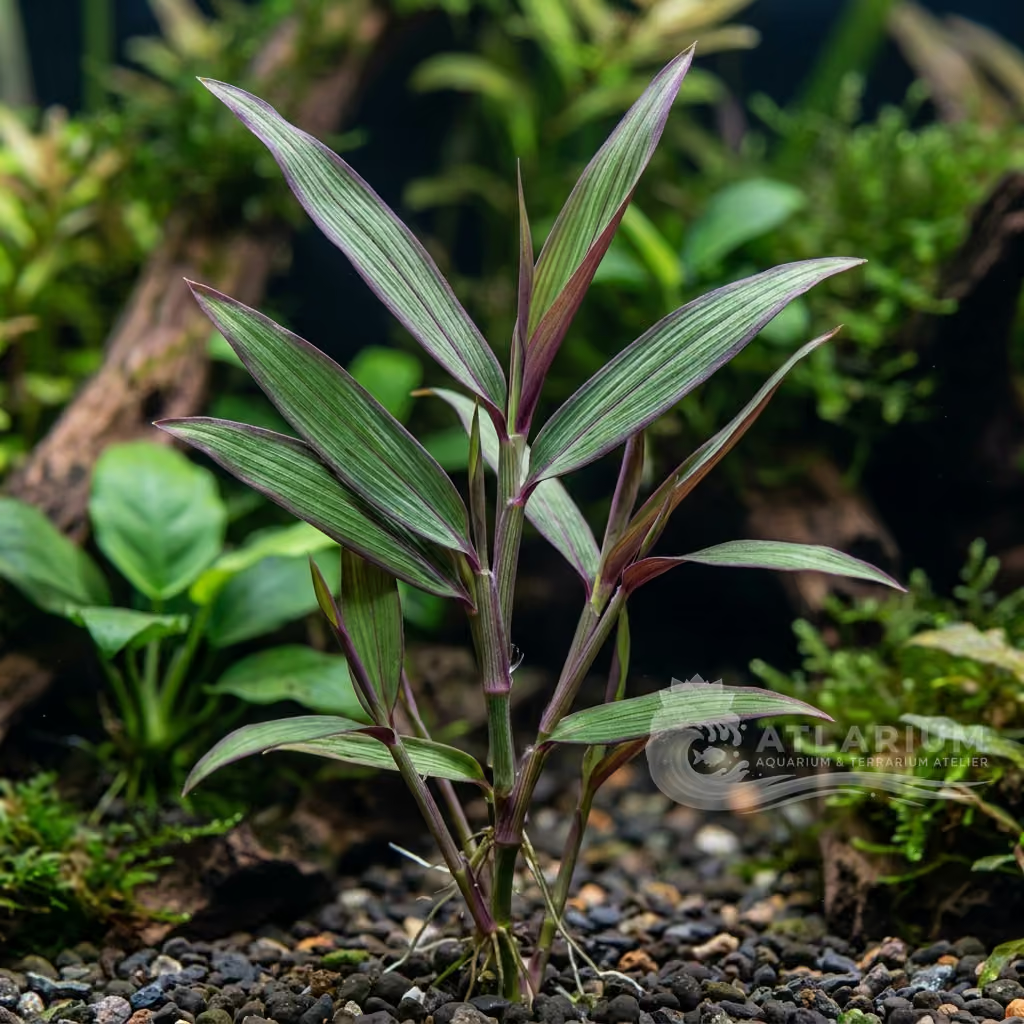
Physical Structure: This plant exhibits a clumping, grass-like growth habit, forming dense mats of slender, arching leaves. These leaves emerge from an underground rhizome, which serves as the plant's primary storage and vegetative propagation structure. Each individual "blade" is actually part of a short stem segment with fibrous, fleshy roots that firmly anchor the plant to its substrate in its natural environment, contributing to its robust nature.
Color & Texture: The foliage of Ophiopogon japonicus is characterized by a deep, dark green hue, often with a subtle glossy finish that enhances its visual appeal. Its texture is distinctly leathery and firm to the touch, a stark contrast to the typically softer and more delicate leaves of true aquatic plants. These physical attributes, while aesthetically pleasing, are further indicators of its terrestrial nature, designed to withstand atmospheric exposure rather than facilitate efficient gas exchange underwater.

Care, breeding and tankmates
Lighting & CO2: In its natural terrestrial or marshy environment, Ophiopogon japonicus thrives under medium to low light conditions, preferring partial or filtered shade. While it may tolerate medium light in an aquarium, it is crucial to understand that intense lighting will not improve its long-term submerged growth, but might instead accelerate its decline. CO2 supplementation is not a critical factor for this plant when submerged, as its physiology is not optimized for aquatic carbon dioxide assimilation, and any benefits would be minimal or nonexistent given its non-aquatic nature.
Nutrition & Substrate: For Ophiopogon japonicus, a nutrient-rich substrate is vital in its terrestrial habitat, where it absorbs nutrients through its fibrous root system. In an aquarium, while it can be planted in fertilized substrates, its ability to absorb and utilize dissolved nutrients from the
Water Chemistry: This plant exhibits tolerance to a broad range of aquarium water parameters, including temperatures between 20-28°C, pH 6.0-7.5, and KH 2-12, reflecting a general hardiness in its terrestrial form. However, these values are more indicative of its overall environmental tolerance rather than specific requirements for submerged growth. Regardless of water chemistry, the predominant factor for the success or failure of Ophiopogon japonicus in an aquarium remains its inability to adapt long-term to fully submerged life, inevitably leading to root and leaf rot.
Space Management & Placement: Although frequently recommended for midground placement in aquariums due to its stature and clumping appearance, it is crucial to acknowledge its non-aquatic nature. Its positioning in an aquarium should be considered temporary or ideally within a paludarium, where its foliage can remain emersed above the waterline, providing suitable living conditions. In a fully submerged setup, the plant will not expand or thrive like a true aquatic species, limiting its role to a short-term decorative element.
Pruning: Pruning Ophiopogon japonicus, when utilized in an aquarium, is primarily limited to the removal of yellowing or rotting leaves that inevitably appear due to its inability to live submerged. This practice serves more to maintain temporary aesthetics and prevent the accumulation of decaying organic matter, rather than stimulating healthy new growth. In its natural environment or emersed conditions, pruning is performed to control shape and encourage denser, more uniform growth.
Risks & Diseases: The primary risk for Ophiopogon japonicus in an aquarium is its inevitable decomposition when kept fully submerged. It is not susceptible to common aquatic plant diseases but rather undergoes a slow physiological decline that leads to root and leaf rot. This process is a natural reaction to its lack of adaptation to the aquatic environment, not a pathological disease, and manifests as yellowing, softening, and disintegration of plant tissues.

Geographic origin and distribution
Ophiopogon japonicus, commonly known as Mondo Grass or Dwarf Lilyturf, originates from East Asia, specifically countries such as China, Japan, and Korea. In its natural habitat, it thrives in moist, well-drained soils found in shady forests, along woodland edges, or nestled among rocks. This preference for filtered light and consistently damp, yet not waterlogged, conditions underscores its terrestrial to semi-aquatic nature.
Origin
East Asia

Plant profile
- Placement
- Midground
- If placed in an aquarium, it should only be considered a temporary display in the foreground. It truly thrives when planted at the water's edge or in the terrestrial section of a vivarium. Fully submerging it long-term leads to inevitable decay.
- Botanical form
- Rosette
- It features stiff, dark green, grass-like leaves growing in a dense rosette. The leaves curve downwards and have a slightly leathery texture that resists immediate rotting underwater. The root system is thick and fleshy, adapted for terrestrial life.
- Growth
- Medium
- The growth rate of Ophiopogon japonicus is exceptionally slow, even under ideal terrestrial conditions. When submerged, its growth effectively halts as it struggles with the flooded environment. In emersed setups, it slowly sends out stolons.
- Substrate
- Low
- Ophiopogon japonicus, commonly known as dwarf mondo grass, is not a true aquatic plant but can be grown in terrariums or temporarily submerged. It thrives in a well-draining, moderately fertile soil or a simple sand and gravel mixture that prevents root rot. The plant develops a robust, fibrous root system that requires a substrate depth of at least 4 to 6 centimeters to anchor properly and slowly draw in available nutrients.
- Column fertilization
- None
- Liquid fertilization is not recommended if the plant is submerged, as it cannot utilize nutrients from the water efficiently. Dosing will likely only benefit algae settling on its slow-growing leaves. Generally, it relies much more on root uptake.
- Root fertilization
- None
- Root feeding is the primary method of nutrient uptake for Ophiopogon japonicus. When grown in soil or marginal areas, it benefits from a nutrient-rich substrate. The fleshy roots are highly efficient at extracting minerals from the soil.
- Trimming
- Occasional
- Trimming is rarely necessary due to its extremely slow growth habit. If leaves become damaged or yellowed, they can be carefully trimmed off at the base. Simply remove decaying matter to keep the clump tidy.
- Propagation
- Rhizome division
- Propagation is primarily achieved through the division of mature clumps. The plant naturally produces underground stolons that develop into small daughter plants. These can be separated using sharp scissors, ensuring roots are attached.
- Sensitivity
- HIGH
- The greatest sensitivity of Ophiopogon japonicus is to prolonged submersion; it will eventually drown if kept underwater permanently. It requires a terrestrial or marshy environment for long-term survival. It is remarkably resistant to common terrarium pests.
- Layout role
- Midground, paludarium, accent
- In paludariums, it acts as a robust foreground or border plant adding a natural, wild appearance. Its dark structural leaves provide excellent contrast to softer emersed plants. It is excellent for stabilizing soil on sloped areas of a terrarium.

Related species
Recommendations grouped by close relatives, companion choices, and similar care.