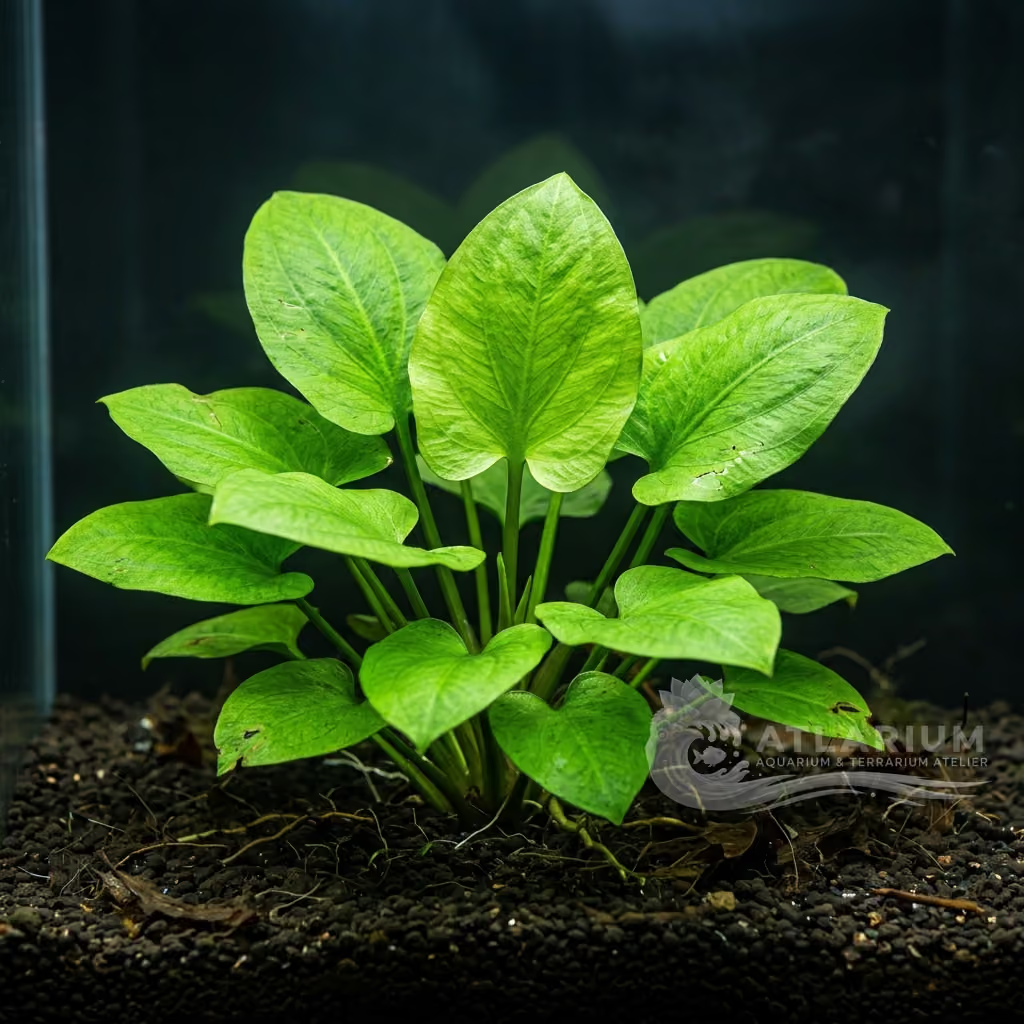
Green Meebold's Lagenandra (Lagenandra meeboldii "Grün")
Lagenandra meeboldii "Grün" ("Green")
An endemic rhizomatous plant from India, featuring broad, slightly undulated green leaves. A slow grower, it requires a nutrient-rich substrate but thrives gracefully in low to medium light.
Water Temperature
12 - 28 °C
pH Value
6 - 7.5
Water type
Freshwater
Light
Medium - High
CO2
Low - High
Expected height
50 cm
Expected width
45 cm
GH
4 - 15 dGH
KH
0 - 14 dKH

Species description
Geographical Origin and Habitat: Lagenandra meeboldii 'Grün' (or 'Green') is native to the southern regions of India, particularly the state of Karnataka, along the forest streams of the Western Ghats. It grows as a marginal plant in shaded areas, subject to partial or total submersion during the summer monsoons. Its native habitat features moist clay soils rich in organic matter under dense tropical forest canopies.
Taxonomy & Genetics: It belongs to the Araceae family and the genus Lagenandra, which is closely related to the genus Cryptocoryne. It differs from Cryptocoryne primarily in inflorescence structure (spathe) and leaf vernation (young leaves are rolled inward, involute, in Lagenandra, whereas they are rolled lengthwise, convolute, in Cryptocoryne). The 'Grün' variety genetically maintains its green
Color & Texture: ation even under high light levels.
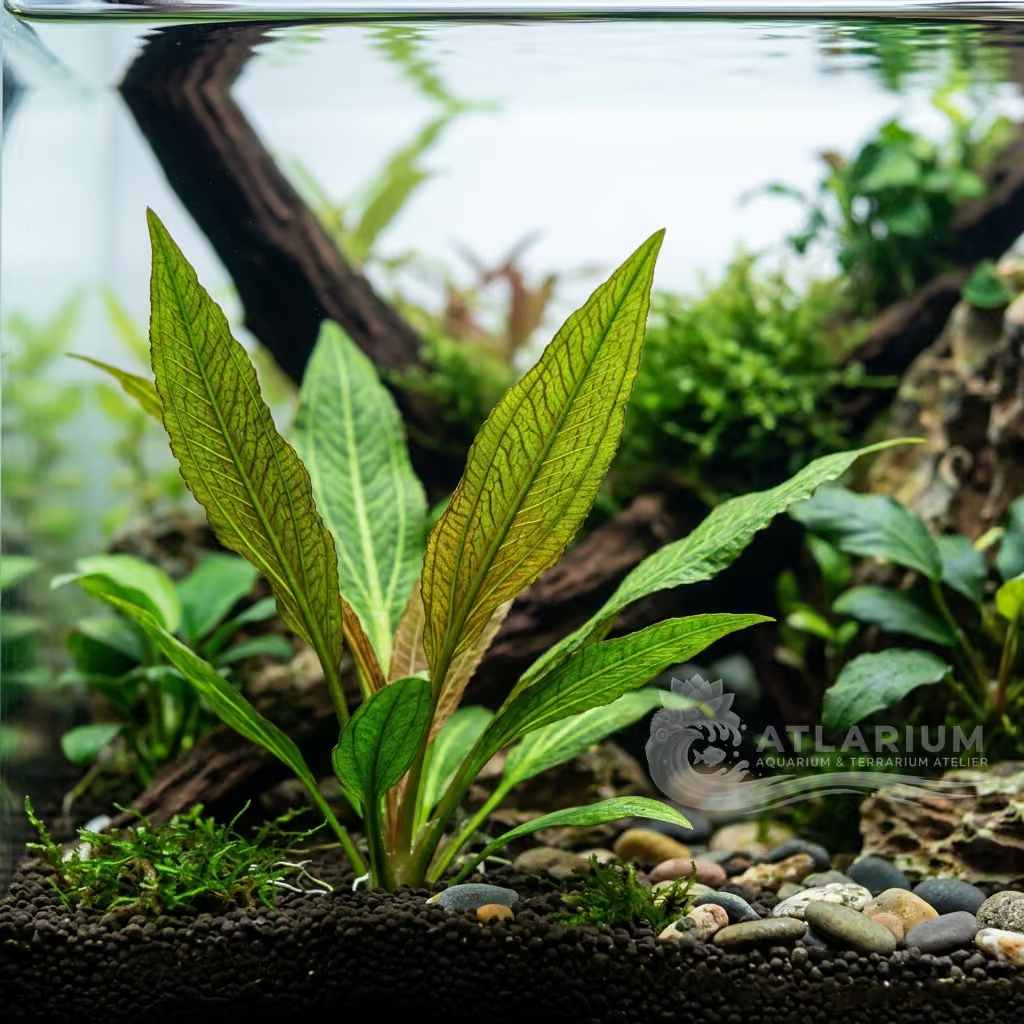
Physical Structure: The plant features a thick, creeping rhizome from which a rosette of ovate-lanceolate leaves on long petioles develops. The leaves have slightly wavy margins. The root system is exceptionally strong, deep, and fibrous, adapted for anchoring in heavy soils and absorbing nutrients directly from the substrate.
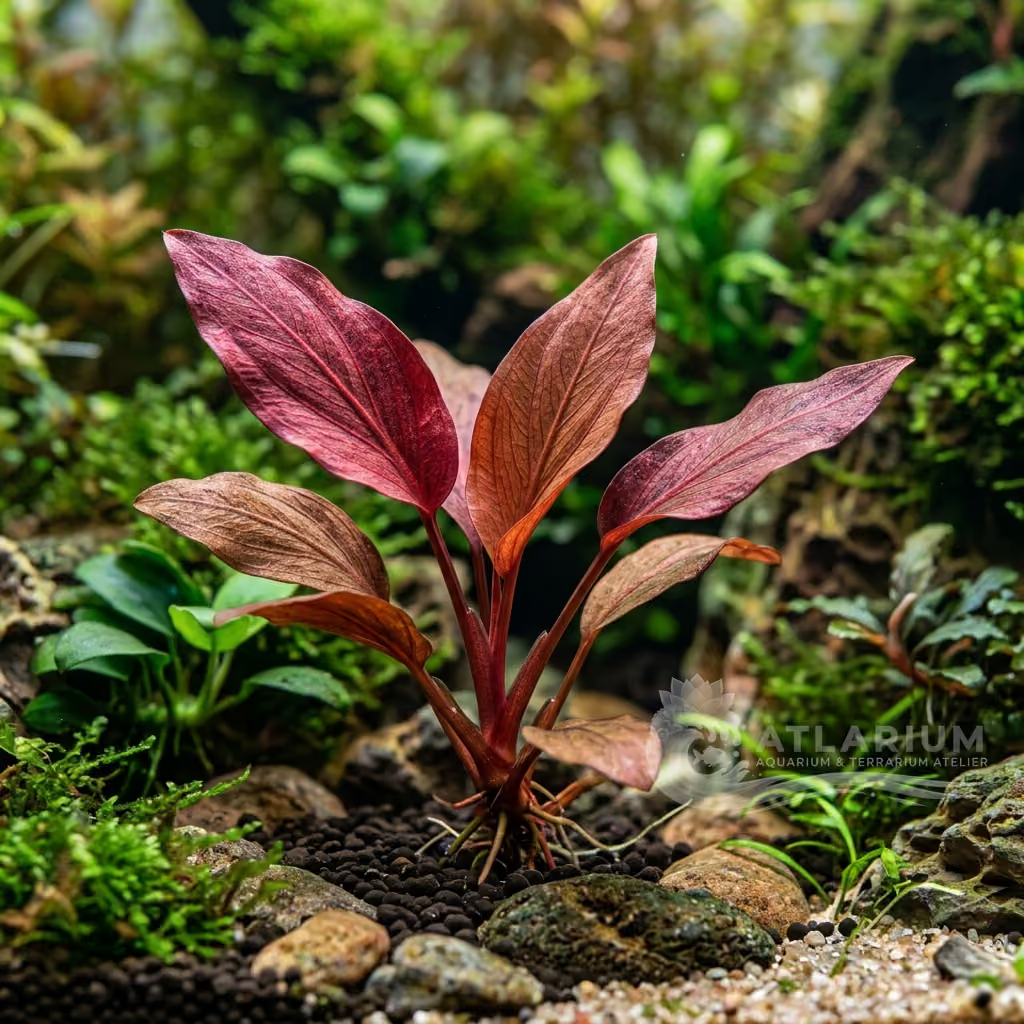
Color & Texture: Unlike the red or pink varieties of the species, Lagenandra meeboldii 'Grün' has bright green leaves that shade into olive or forest green as they mature. The leaf blade is thick, leathery, and slightly rough to the touch, with a waxy sheen that makes it highly resistant to herbivorous fish and snails.

Care, breeding and tankmates
Lighting & CO2: This plant tolerates a wide range of light, from moderate to high. Under higher light intensity, it maintains a more compact size and produces broader leaves. CO2 injection is not strictly necessary for its survival, but it promotes steadier growth, stronger leaf stems, and shorter adaptation times.
Nutrition & Substrate: Being a heavy root-feeder, it requires a rich, fertile substrate. An active soil or the periodic placement of fertilizer capsules containing iron and macronutrients near the roots is highly recommended. Liquid column fertilization is helpful for supplying micronutrients but is secondary to root fertilization.
Water Chemistry: It prefers soft to moderately hard water, with an optimal pH of 6.0 to 7.5. It tolerates a broad temperature range (12 to 28 °C), making it suitable for unheated or temperate setups as well. Stable water conditions and regular water changes prevent leaf loss due to chemical stress.
Space Management & Placement: Because it can reach heights of 40-50 cm, Lagenandra meeboldii 'Grün' should be placed in the background or midground of medium to large aquariums. Its slow but steady growth must be accounted for, leaving ample space around it so its large leaves do not shade out smaller plants.
Pruning: Pruning is straightforward and occasional, limited to removing old or damaged leaves by cutting the petiole close to the rhizome base with sharp scissors. Avoid cutting the main rhizome unless you intend to divide the plant for propagation.
Risks & Diseases: While very hardy, it can suffer from 'Cryptocoryne melt' (rapid loss of leaves) if there are sudden changes in water chemistry or lighting. If this occurs, do not discard the rhizome; if it remains firm, it will produce new leaves within a few weeks once conditions stabilize.

Geographic origin and distribution
Lagenandra meeboldii 'Grün' (or 'Green') is native to the southern regions of India, particularly the state of Karnataka, along the forest streams of the Western Ghats. It grows as a marginal plant in shaded areas, subject to partial or total submersion during the summer monsoons. Its native habitat features moist clay soils rich in organic matter under dense tropical forest canopies.
Origin
South and Southeast Asia

Plant profile
- Placement
- Background
- This beautiful aroid is perfect for the midground of an aquascape, functioning as a strong focal point. Because it can grow quite broad, it needs sufficient horizontal space so it doesn't overshadow smaller foreground plants. It works wonderfully when planted near hardscape bases like rocks or driftwood.
- Botanical form
- Rosette
- The 'Green' variety features large, ovate leaves that arise directly from a creeping, thick rhizome. The leaves have a rich, solid green coloration, often with a slightly rippled or wavy margin. It has a robust, sturdy appearance that adds a sense of maturity and stability to the layout.
- Growth
- Slow
- It is generally a slow-growing plant, typical of many aroids in the aquarium hobby. Its slow pace makes it a low-maintenance choice, requiring infrequent pruning. However, patience is required, as it may take several weeks to acclimate and produce new leaves after planting.
- Substrate
- High
- Lagenandra meeboldii "Grün" is a robust plant that requires a nutrient-rich substrate, such as high-quality aqua soil, to support its thick rhizome and extensive root system. The roots draw significant nutrients from the substrate to fuel its broad leaves and maintain vibrant green coloration. The rhizome should be placed firmly on top of the substrate or only partially buried to prevent rot, allowing the roots to penetrate deeply into the soil layers below.
- Column fertilization
- Optional
- While not heavily reliant on the water column, consistent dosing of liquid fertilizers promotes overall vitality. Potassium and micronutrients should be present in the water to support healthy leaf development and prevent pinholes. Column dosing complements its primary root feeding mechanism.
- Root fertilization
- Required
- A nutrient-rich substrate or the targeted use of root tabs is highly recommended for Lagenandra species. They develop extensive root systems that aggressively seek out nutrients in the soil. Providing a fertile bed will result in larger, healthier leaves and a stronger rhizome.
- Trimming
- Occasional
- Trimming primarily involves the removal of old, yellowing, or damaged leaves. Cut the leaf stem as close to the main rhizome as possible using sharp aquascaping scissors to prevent rotting tissue from affecting the plant. Avoid cutting or damaging the main rhizome during routine maintenance.
- Propagation
- Division
- Propagation is achieved by dividing the rhizome once the plant has matured and developed side shoots. Ensure that each cut piece of the rhizome has several healthy leaves and a good portion of roots attached. Plant the divided pieces carefully, making sure not to bury the rhizome completely.
- Sensitivity
- Moderate
- It is generally quite hardy and adaptable to a variety of water parameters. However, like Cryptocorynes, it can be susceptible to 'melt' if subjected to sudden, drastic changes in water chemistry, temperature, or lighting. Stability is key to keeping it thriving long-term.
- Layout role
- Background
- It acts as an excellent standalone specimen plant or a strong midground focal point. Its broad, solid green leaves provide a necessary resting place for the eyes among finely textured stem plants. It helps transition the layout smoothly from the foreground to taller background elements.

Related species
Recommendations grouped by close relatives, companion choices, and similar care.