Floscopa cf. scandens
Floscopa cf. scandens
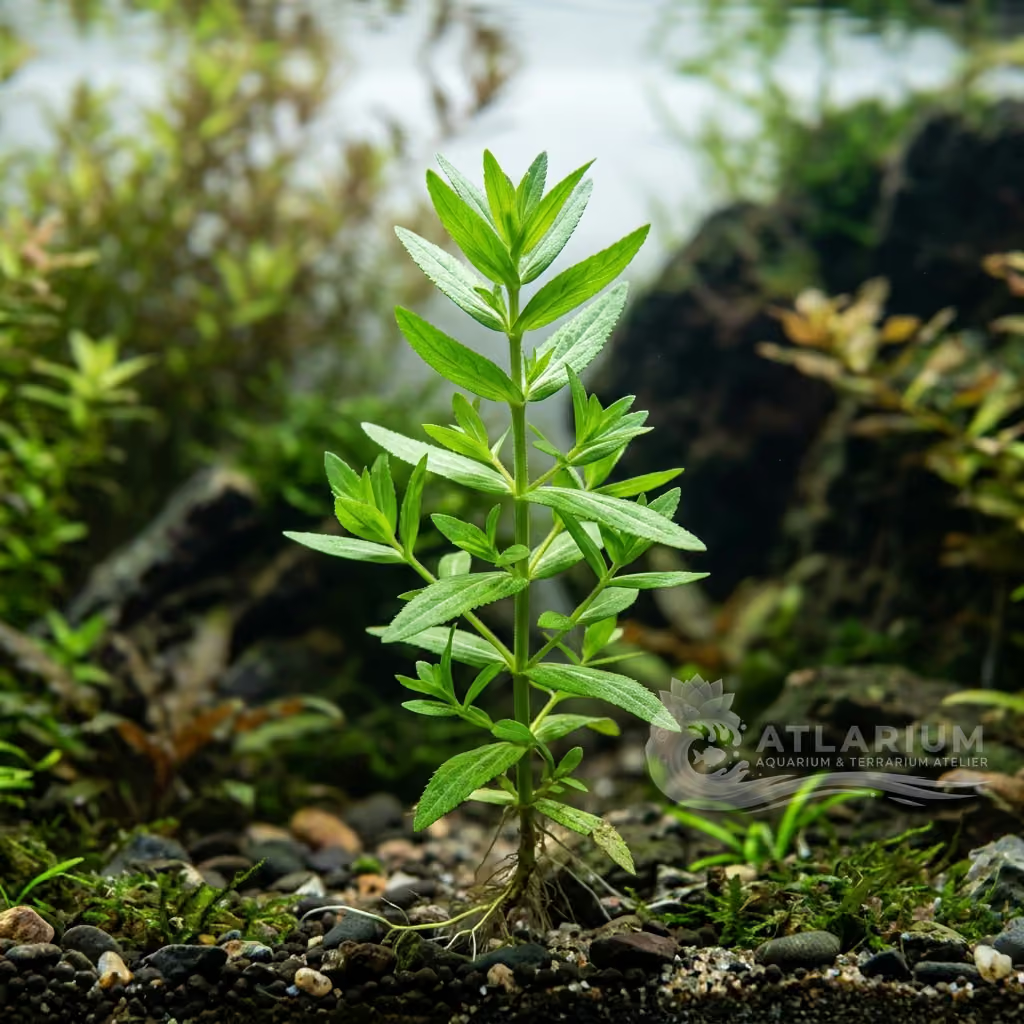
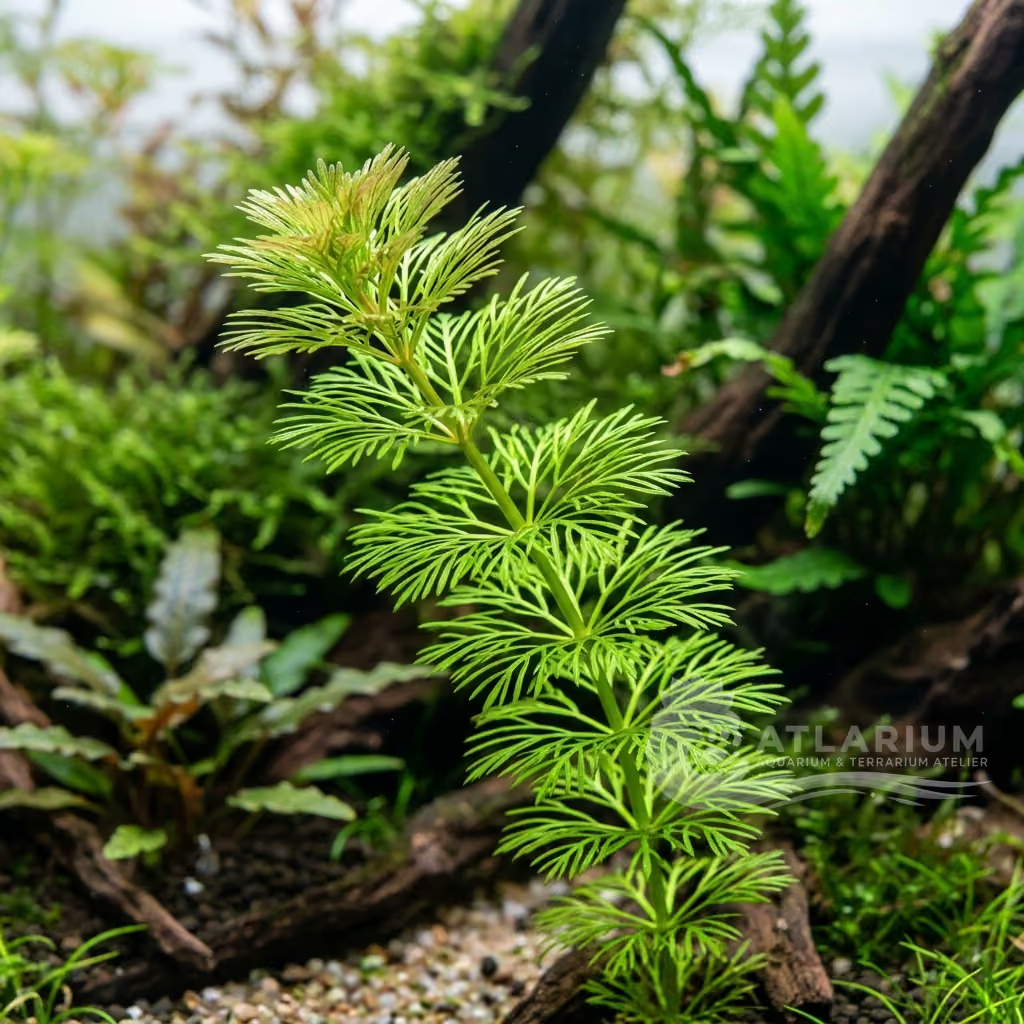
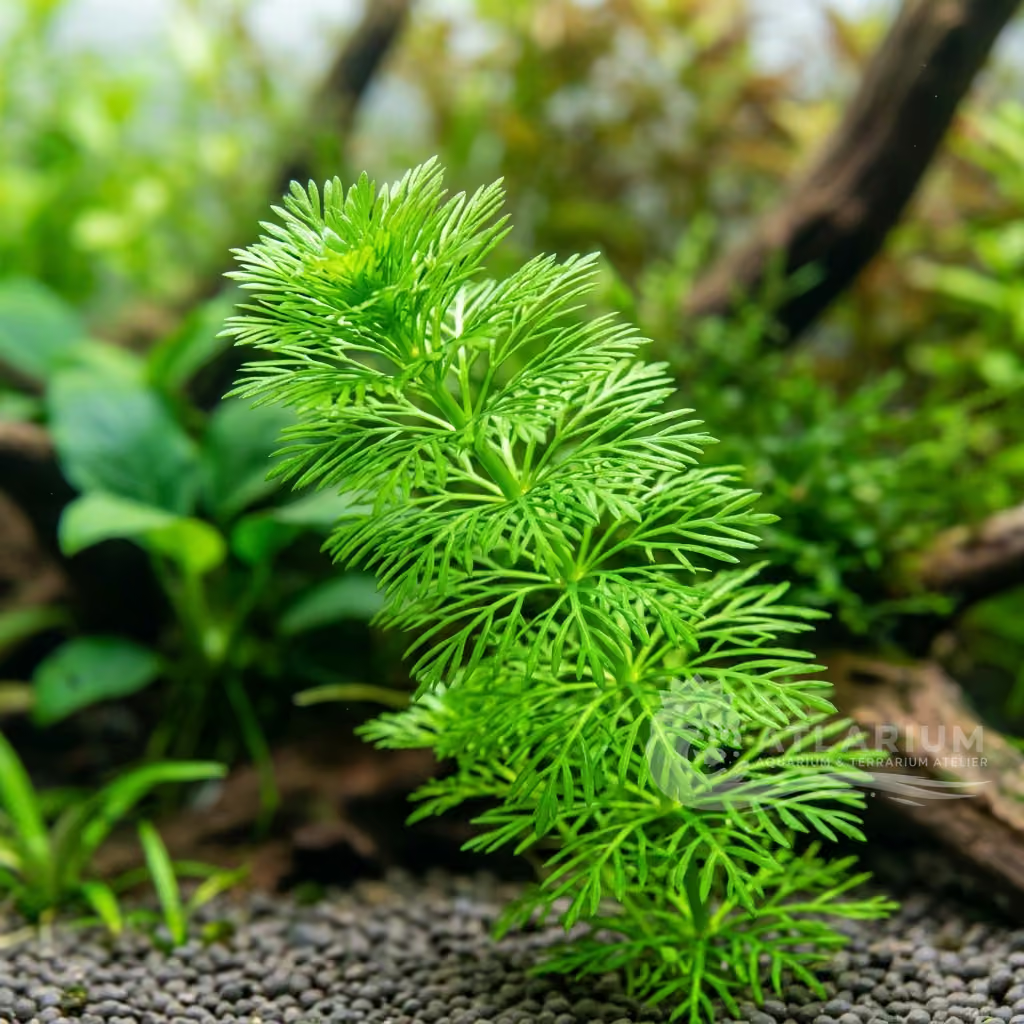
Unique marsh plant with bamboo-like sturdy stems and lanceolate leaves. Ideal for adding geometric structure to backgrounds and paludariums. Requires good light.
Water Temperature
18 - 30 °C
pH Value
5 - 7.5
Water type
Freshwater
Light
Medium - High
CO2
Low
Expected height
50 cm
Expected width
16 cm
GH
2 - 15 dGH
KH
0 - 10 dKH

Species description
Geographical Origin and Habitat: Native to the tropical areas of Asia and Australia. It grows in extremely wet environments such as swamps, muddy riverbanks, and flooded forests. It behaves as a marsh plant, capable of living submerged for long periods during seasonal floods or emerging to flower.
Taxonomy & Genetics: Belongs to the Commelinaceae family and the genus Floscopa. The abbreviation 'cf.' (confer) indicates that the species is closely related to Floscopa scandens, but has minor morphological variations that require further genetic and taxonomic study for definitive classification.
Physical Structure: Features erect, sturdy, and knobby stems that resemble the structure of tiny bamboo or reeds. The leaves are arranged alternately along the stem, lanceolate in shape, slightly rough to the touch, and clasp the stem at the base with a leaf sheath.
Color & Texture: Bright olive green or deep forest green, with reddish or purplish shades on the nodes and stems when grown under strong lighting. The texture is rough and solid, giving the aquarium layout a very distinct geometric and linear structure.

Care, breeding and tankmates
Lighting & CO2: Requires medium-high to intense lighting. In low-light conditions, the internodes stretch excessively and the lower stem loses structural integrity. CO2 injection is highly recommended to promote thick stems and healthy submerged leaves.
Nutrition & Substrate: Balanced nutrient demand: absorbs both through the substrate (prefers rich, fertilized soil or root tabs) and through the leaves via constant liquid fertilization containing macro and micronutrients.
Water Chemistry: Prefers soft to moderately hard water (KH 0-10) and a slightly acidic to neutral pH (5.0-7.5). Tolerates warm temperatures from 18 to 30°C. Needs good water flow to prevent stagnant pockets.
Space Management & Placement: Ideal for the background or the back of the midground. Due to its rigid, vertical growth, it is excellent as a focal point or to create vertical barriers that hide equipment. It also performs exceptionally well in paludariums where it easily grows emersed.
Pruning: Pruning is done by cutting the main stem just above a node. The cut portion can be replanted, while the original stem will develop two or more lateral shoots, making the plant bushier.
Risks & Diseases: Can suffer from stem rot at the base if the substrate is too compact and lacks oxygen circulation. Older leaves tend to turn yellow and drop if there is a nitrogen or potassium deficiency.

Geographic origin and distribution
Native to the tropical areas of Asia and Australia. It grows in extremely wet environments such as swamps, muddy riverbanks, and flooded forests. It behaves as a marsh plant, capable of living submerged for long periods during seasonal floods or emerging to flower.
Origin
South and Southeast AsiaAustralia, New Guinea, and Oceania

Plant profile
- Placement
- Midground
- Due to its upright and somewhat robust growth habit, it is best suited for the midground or background of the aquarium. It can be planted in dense groups to create a striking, bushy green focal point. Regular trimming is necessary to prevent it from reaching the surface too quickly and shading out other plants. Its strong vertical lines contrast beautifully with low-growing, broad-leaf foreground plants.
- Botanical form
- Stem
- This plant features thick, upright stems adorned with alternating, lanceolate to elliptic leaves. The foliage is typically a vibrant, light to medium green, providing a fresh and lush appearance. It grows vertically towards the light, and its stems can become quite sturdy as it matures. Under strong lighting, the top shoots may sometimes develop a slight reddish or brownish tint.
- Growth
- Medium
- Under optimal conditions with high light, CO2, and abundant nutrients, it exhibits a relatively fast growth rate. In low-tech setups, its growth slows down significantly and the internodes may become elongated and sparse. Frequent pruning encourages side shoots, leading to a denser and more bush-like appearance over time. When left to its own devices, it can quickly breach the water surface.
- Substrate
- High
- It develops a strong root system and benefits greatly from a nutrient-rich aquarium soil. While it can survive in inert substrates like plain sand or gravel, its growth will be stunted unless heavily supplemented with root tabs. An active substrate helps buffer the water and provides a steady release of nutrients directly to the root zone. Ensuring a deep enough substrate layer is crucial to anchor its thick stems securely.
- Column fertilization
- Recommended
- Regular liquid column fertilization is highly recommended to keep the foliage healthy and vibrant. It readily absorbs nutrients through its leaves, making a comprehensive liquid fertilizer a very effective feeding method. Maintaining balanced levels of potassium and trace elements in the water column prevents pinholes and yellowing of older leaves. Daily or bi-weekly dosing schedules work best to keep nutrient levels stable.
- Root fertilization
- None
- While it draws heavily from the water column, supplementing the roots with fertilizer tabs can yield exceptional growth results. Root fertilization is particularly crucial if the plant is grown in an inert substrate without built-in nutrients. Providing a rich base ensures the stems remain thick and the lower leaves are retained longer. Nutrient-rich soils usually provide enough root sustenance for the first several months.
- Trimming
- Occasional
- Trim the tops aggressively to encourage lateral side shoots and a bushier appearance. Replant the healthy trimmed tops to propagate the plant. Avoid letting it shade itself, which leads to lower leaf loss.
- Propagation
- Cuttings
- Propagation is easily achieved by taking stem cuttings and replanting them into the substrate. Cut healthy top shoots about 4-6 inches long and plant them slightly apart to ensure adequate light reaches the lower leaves. The original stem will typically produce multiple side shoots from the cut node, leading to bushier growth. Rooting occurs quickly within a few days when conditions are favorable.
- Sensitivity
- Moderate
- It can quickly lose its lower leaves if shading occurs or if light is insufficient. It is also sensitive to sudden drops in macronutrients, particularly nitrates. Stable conditions and strong light are required to keep the lower stems leafy.
- Layout role
- Midground, Background, accent, paludarium
- Its unique bamboo-like appearance provides excellent texture contrast against more common aquatic plants. It forms beautiful, structured thickets that draw the eye upward. It is perfect for Dutch-style aquascapes or structured nature layouts.

Related species
Recommendations grouped by close relatives, companion choices, and similar care.