Red-striped Sand Goby
Trigma gobioland
The Red-striped Sand Goby is an elusive marine species prized for its distinct red markings. It requires meticulous husbandry, thriving in serene, mature environments with specialized sandy substrates.
Water Temperature
22 - 27 °C
pH Value
8 - 8.4
Water type
Marine
Tank level
Bottom
Adult size
4 cm
Minimum tank volume
>= 40 L
Minimum group
>= 1
KH
8 - 12 dKH

Species description
Geographical Origin and Habitat: Trigma gobioland (Red-striped Sand Goby) is native to the warm tropical waters of the Indo-Pacific region. It primarily inhabits shallow coastal lagoons, sheltered bays, and fine sand beds situated near coral reefs, rubble fields, or seagrass meadows at depths of 1 to 12 meters.
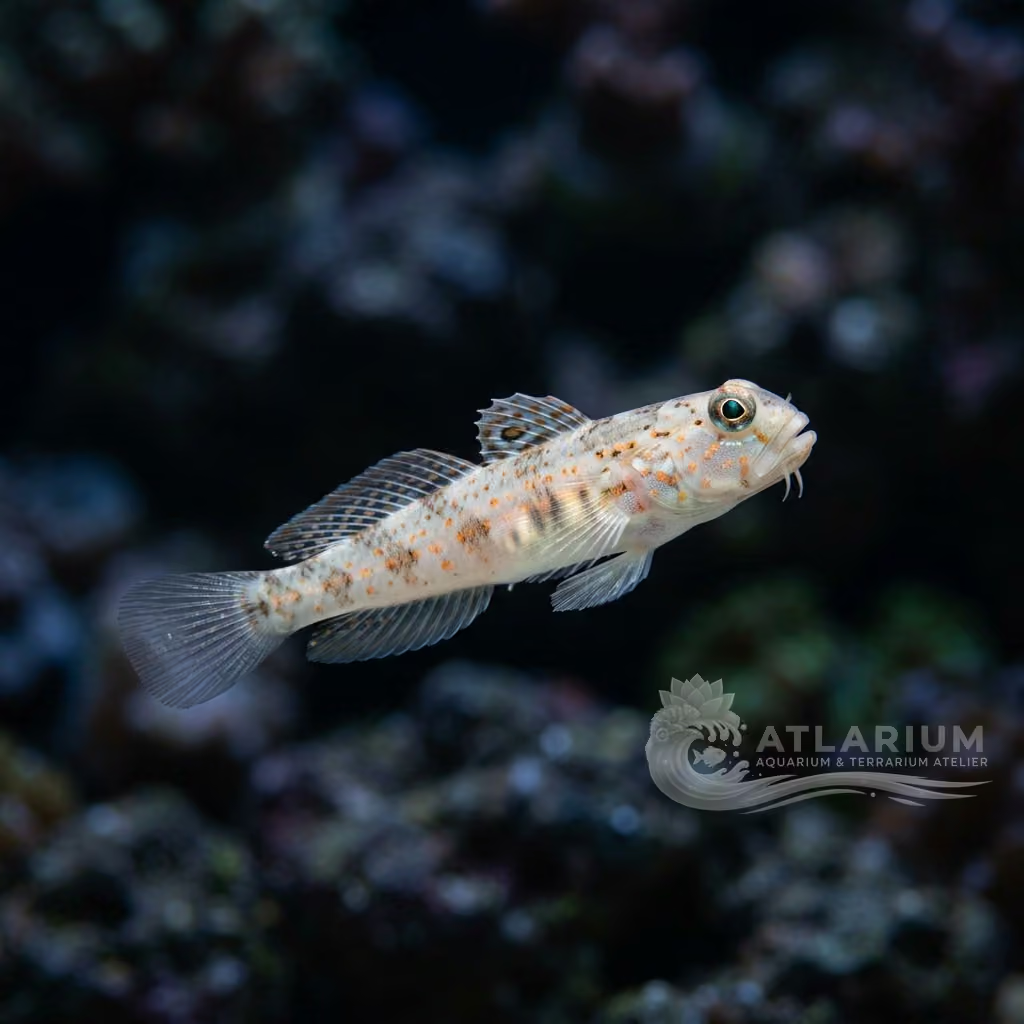
Taxonomy and Morphology: This species belongs to the family Gobiidae. It features an elongated, cylindrical body that is slightly compressed posteriorly, typical of small benthic marine gobies. It reaches a maximum adult size of approximately 4 cm. Its eyes are large, protruding, and rotatable, positioned on top of its head.
Social Behavior: It is an extremely peaceful, shy, and docile species. It spends almost all of its time resting on the sandy substrate or low-lying rocks, constantly scanning the water column above. It shows no aggression toward other fish species or invertebrates in the aquarium.
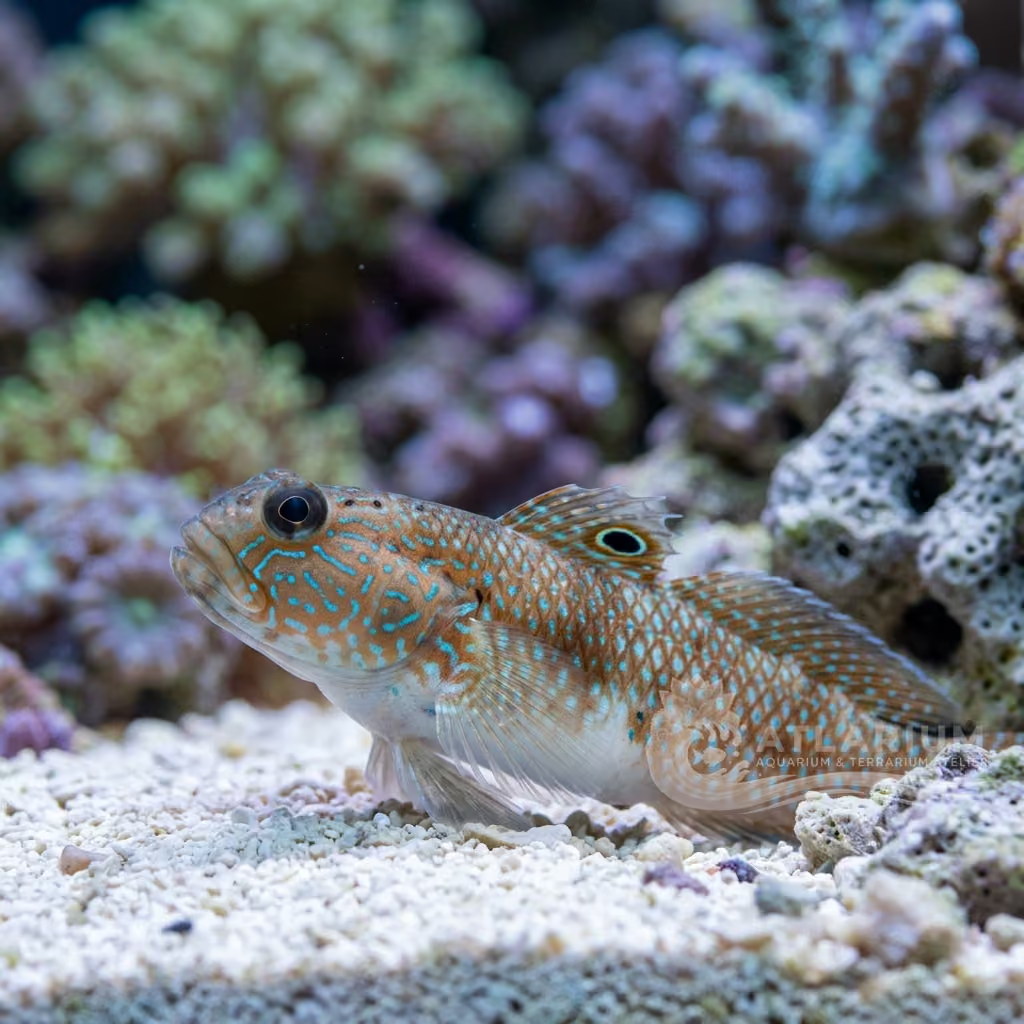
Coloration and Sexual Dimorphism: The body displays a translucent cream or silvery background coloration, marked by distinct bright red or orange longitudinal stripes running along the flanks. The fins are mostly translucent. There is no prominent external sexual dimorphism visible in captive specimens.

Care, breeding and tankmates
Aquarium Setup: Requires a tank of at least 40 liters (10 gallons), making it highly suitable for nano-reef setups. The bottom must be covered with a bed of fine sand (at least 2-3 cm deep) to replicate its sandy biotope. Provide small rock caves or shell fragments for shelter. Avoid strong, direct water currents.
Diet and Feeding: Primarily carnivorous and detritivorous. In captivity, it should be fed very fine frozen foods such as baby brine shrimp, copepods, rotifers, and small mysis. It will also accept high-quality micro-granule dry foods. Feed once or twice daily near the bottom of the tank.
Water Quality: Maintain stable marine parameters: temperature 22-27 °C, pH 8.0-8.4, and specific gravity at SG 1.020-1.025. It requires efficient biological filtration to prevent any accumulation of ammonia and nitrites, as this small bottom fish is highly sensitive to substrate pollution.
Compatibility and Cohabitation: 100% reef safe and non-threatening to corals or small ornamental invertebrates. It can be housed with other small, peaceful fish such as micro-gobies, pipefish, or peaceful blennies. Avoid keeping it with large, aggressive, or predatory bottom fish that may harass or eat it.
Aquarium Breeding: Breeding in home aquariums is not well-documented due to the extreme difficulty in rearing the microscopic pelagic larvae, which require specialized, continuous cultures of live zooplankton for their initial feeding stages.
Risks and Diseases: Due to its tiny size, the main risk is the fish being sucked into powerheads, wavemakers, or overflow drains. Fitting intakes with protective screens is highly recommended. It is sensitive to copper treatments and can contract bacterial skin infections if the substrate is dirty.

Geographic Origin and Distribution
Trigma gobioland (Red-striped Sand Goby) is native to the warm tropical waters of the Indo-Pacific region. It primarily inhabits shallow coastal lagoons, sheltered bays, and fine sand beds situated near coral reefs, rubble fields, or seagrass meadows at depths of 1 to 12 meters.
Origin
Tropical oceans and reefs

Fish profile
- Temperament
- Peaceful
- Known for its exceptionally calm demeanor, The Gobioland trig is an ideal candidate for a relaxed community aquarium. They rarely bother other fish and often retreat to safety rather than engage in any form of conflict. Their gentle nature means they can easily be outcompeted for food by faster, more boisterous species.
- Diet
- Carnivore
- As a strict carnivore, The Gobioland trig requires a diet rich in protein to thrive and maintain its natural behaviors. They should be fed a varied selection of live or high-quality frozen foods, such as mysis shrimp, chopped earthworms, and daphnia. Dry foods can be offered, but they should only form a small part of a primarily meaty diet.
- Life expectancy
- 1-3 years
- The lifespan of the Red-striped Sand Goby in the aquarium typically ranges from 1 to 3 years under stable husbandry. As a small benthic marine goby, it has a naturally short lifespan even in the wild. To optimize their lifespan in captivity, efficient biological filtration and highly stable water parameters are essential.
- Adult size
- 4 cm
- This profile records an adult size of 4 cm. Use it to size the permanent habitat and choose compatible furnishings and cohabitants.
- Sex ratio
- Group
- Males and females of The Gobioland trig are nearly identical in appearance, making visual sexing extremely challenging outside of the breeding season. During spawning, females may appear slightly plumper, while males might develop slightly more intense coloration or specific breeding tubes. When keeping a group, a balanced mix is natural, though purchasing a larger group and letting pairs form organically is the best approach.
- Feeding frequency
- Twice daily
- To maintain optimal digestion, The Gobioland trig should be fed small meals once or twice a day. It is important to only offer as much food as they can consume entirely within two to three minutes. Overfeeding can lead to severe water quality issues and potentially fatal digestive blockages.
- Bioload
- The Gobioland trig produces a relatively low biological load due to its small size and efficient metabolism. However, maintaining excellent water quality through regular maintenance is still fundamentally necessary. A well-established biological filter will easily handle the minimal waste produced by a group of these fish.
- Flow
- Strong
- The Gobioland trig thrives in environments with fast-moving, highly oxygenated water, mimicking the rapids and hill streams of their natural habitat. Strong powerheads or a specialized manifold system should be used to create a unidirectional current. Without adequate water movement, they may become lethargic and more susceptible to respiratory distress.
- Jump risk
- Yes
- This species generally stays in the middle to lower levels of the water column and poses a very low risk of jumping. While they rarely breach the surface, startling them with sudden movements or lights out could potentially cause erratic swimming. Nevertheless, a standard aquarium lid is usually more than sufficient to keep them safely contained.
- Reproduction
- Not bred in captivity
- The Gobioland trig prefers to spawn in secluded, enclosed spaces such as rocky caves, PVC pipes, or overturned flower pots. The female deposits her eggs on the ceiling or walls of the cave, after which the male assumes the sole responsibility of guarding them. He will aggressively defend the cave entrance and fan the eggs with his pectoral fins until the fry become fully independent.
- Compatibility & tankmates
- Peaceful
- This species is generally very peaceful and makes an excellent addition to a community aquarium. They get along perfectly with other similarly sized, non-aggressive species that share similar water requirements. It is best to avoid keeping them with overly boisterous or large fin-nipping tank mates that might cause them stress.
- Tank level
- Bottom
- As a dedicated bottom-dweller, The Gobioland trig spends its entire life interacting with the aquarium substrate and lower hardscape. They rely heavily on a soft, sandy bottom to prevent damage to their delicate bellies and barbels as they forage. They will almost never be seen swimming in the open mid-water unless severely stressed or panicked.

Image gallery
Licensed images linked to the species or, when marked, to the closest representative taxon.

Related species
Recommendations grouped by close relatives, companion choices, and similar care.