Encyclopaedia

FishMarineAdvanced
©AI Generated·Proprietary

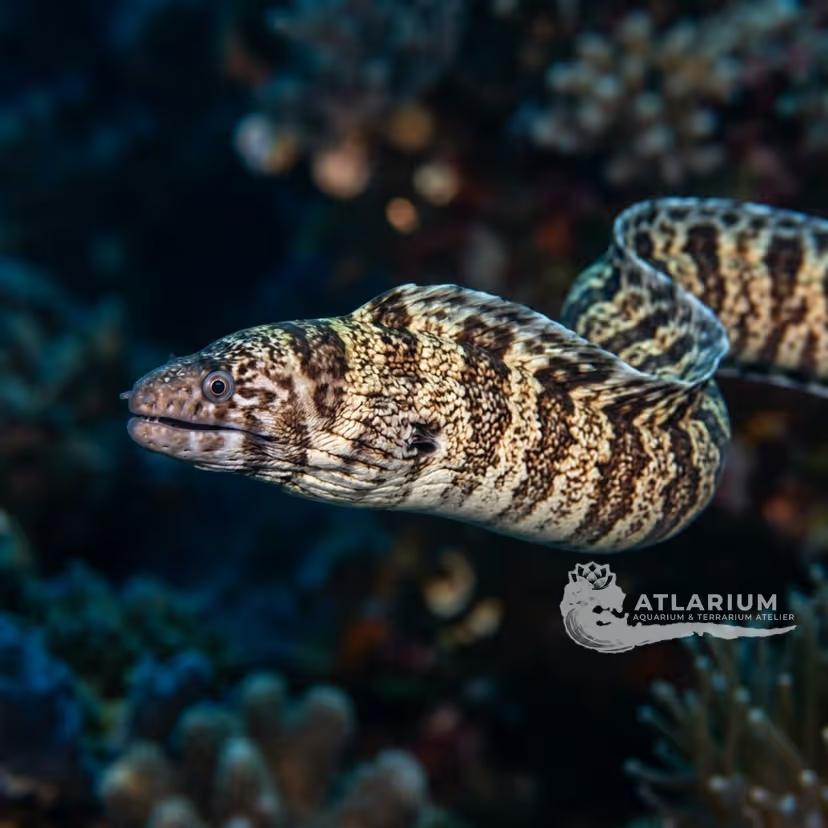
Ribbon Eel

Rhinomuraena quaesita

The ribbon eel is an elegant, incredibly long predator noted for drastic color changes across its lifespan. It requires deep sand beds or buried PVC pipes for secure burrowing and an escape-proof lid.

Taxonomy
Class:Actinopteri
Order:Anguilliformes
Family:Muraenidae
Subfamily:Muraeninae
Genus:Rhinomuraena
Species:Rhinomuraena quaesita

Share

Check out Ribbon Eel on Atlarium

PracticeRecognition quizzesPhotos, names, origins, and puzzles to review Atlas species.Open quizzes
Water Temperature

23 - 27 °C

pH Value

8.1 - 8.4

Water type

Marine

Tank level

Bottom

Adult size

100 cm

Minimum tank volume

300 L

Minimum group

>= 1

Species description

Geographical Origin and Habitat: Native to the Indo-Pacific, where it lives on sandy slopes and muddy bottoms near reefs, often burrowing deep into the substrate. Found throughout the Indo-Pacific, this species inhabits sand-covered lagoons and coastal reef slopes, often burying its long body in the substrate.
Taxonomy and Morphology: Classified under the Muraenidae family. It features a ribbon-like, extremely slender body and unique leaf-like nasal appendages. A member of the Muraenidae family, it is easily recognized by its extremely slender, ribbon-like body and fan-like nasal extensions.
Social Behavior: Shy and generally peaceful towards non-prey tankmates. It spends its time buried in the sand with only its head poking out, mouth open to breathe. Shy and reclusive, it remains anchored in its burrow during the day, opening its mouth constantly to pump water over its gills for respiration.
Coloration and Sexual Dimorphism: A protandric hermaphrodite. Juveniles are black, males are bright electric blue with yellow fins, and females turn completely yellow. Exhibits protandrous hermaphroditism, shifting from black juveniles to blue adult males, and finally to bright yellow spawning females.

Care, breeding and tankmates

Aquarium Setup: Requires a tank of at least 75 gallons with a deep sand bed (3-4 inches) or buried PVC pipes to provide secure artificial burrows. A tightly secured aquarium lid is mandatory, as this eel can escape through the smallest openings. Provide buried PVC pipes for shelter.
Diet and Feeding: Notoriously difficult to feed. Initial feeding requires live feeder shrimp or small fish, which can slowly be transitioned to frozen silversides. Feeding is the greatest challenge; start with live feeder fish or ghost shrimp, slowly transitioning to frozen silversides using feeding tongs.
Water Quality: Demands pristine, highly filtered water. Keep temperature at 23-27°C, pH at 8.1-8.4, specific gravity at 1.023-1.025, and run a powerful skimmer. Requires high-capacity filtration to manage biological waste, alongside moderate flow and regular water maintenance schedules.
Compatibility and Cohabitation: Safe with medium to large peaceful fish. Small fish or shrimp are potential prey. Aggressive tankmates will cause it to stop eating. Avoid keeping with small fish or ornamental shrimp, which are natural prey. Suitable for tanks with large, non-aggressive fish.
Aquarium Breeding: Unrecorded in home aquariums due to their complex sex changes, pelagic spawning habits, and sensitive larvae. Captive breeding has not been documented, as their unique sexual transition and pelagic larval stages require open ocean dynamics.
Risks and Diseases: An extreme risk of starvation due to food refusal. Exceptional escape capability; the tank must be completely escape-proof with a locked lid. High risk of starvation due to stress-induced fasting. Minimize changes to the tank decoration and provide dim, stress-free lighting.

Geographic Origin and Distribution

Native to the Indo-Pacific, where it lives on sandy slopes and muddy bottoms near reefs, often burrowing deep into the substrate. Found throughout the Indo-Pacific, this species inhabits sand-covered lagoons and coastal reef slopes, often burying its long body in the substrate.

Origin

Tropical oceans and reefsNorth America

Fish profile

Temperament
Semi-aggressive
Despite its fearsome appearance, it actually possesses a surprisingly shy and easily intimidated temperament. It is frequently outcompeted for food by aggressive tank mates and requires a very tranquil environment. Once successfully established, it becomes a fascinating and graceful observer of the aquarium.
Diet
Omnivore
This species can be notoriously difficult to feed and often requires live food, such as ghost shrimp or small fish, to trigger a feeding response. Once acclimated, they can be slowly transitioned to frozen silversides or strips of raw fish. Patience and persistence are absolutely necessary when weaning them onto frozen diets.
Sex ratio
Pair
This species is a protandrous hermaphrodite, radically changing its striking coloration as it matures from juvenile to male, and eventually to female. They are best kept alone, as their behavior toward conspecifics in a confined tank is often completely unpredictable. Forced pairing attempts frequently result in severe injury to the weaker individual.
Feeding frequency
Twice daily
They generally do best when offered food two to three times per week, depending on meal size. Frequent small feedings can sometimes be used to transition them onto frozen foods. Once established, regular but infrequent large meals will keep them perfectly healthy.
Bioload
The bioload for this species is moderately high, requiring a well-established filtration system. Oversized protein skimmers and frequent mechanical filter cleaning are recommended. Regular and substantial water changes are crucial to keep the water parameters completely stable.
Flow
Stagnant
A moderate, varied water flow perfectly simulates its natural reef environment. The flow should be strong enough to keep detritus suspended, but not so strong that the fish struggles to swim. Random, alternating currents are particularly appreciated.
Reproduction
Oviparous
Reproduction in this species involves the release of massive amounts of gametes into the pelagic zone. Their complex lifecycle involves an extended leptocephalus larval stage that drifts in the ocean for months. Because of this monumental biological hurdle, captive breeding has never been successfully documented.
Compatibility & tankmates
Generally peaceful towards medium and large tank mates, it primarily poses a threat to very small fish. It works well in a specialized predator tank or a community of peaceful, larger species. Despite its predatory nature, it is quite shy and easily intimidated by overly aggressive companions.
Tank level
Bottom
It requires a deep, fine sandy substrate where it can burrow securely and create stable homes. It typically remains anchored in its burrow at the bottom of the tank, extending its body outwards to catch passing food. Without a proper sandbed and PVC pipes for structural support, it will become chronically stressed.

Window to the official scientific data of the species

Data synced on: 06/15/2026

Scientific Parameters & Models

Trophic level
3.5

Image gallery

Licensed images linked to the species or, when marked, to the closest representative taxon.

Related species

Recommendations grouped by close relatives, companion choices, and similar care.

Variants and close relatives

Same atlas type, nearby scientific identity, genus, or family.

Recommended companions

Compatible cards from coherent ecosystems with matching parameters.

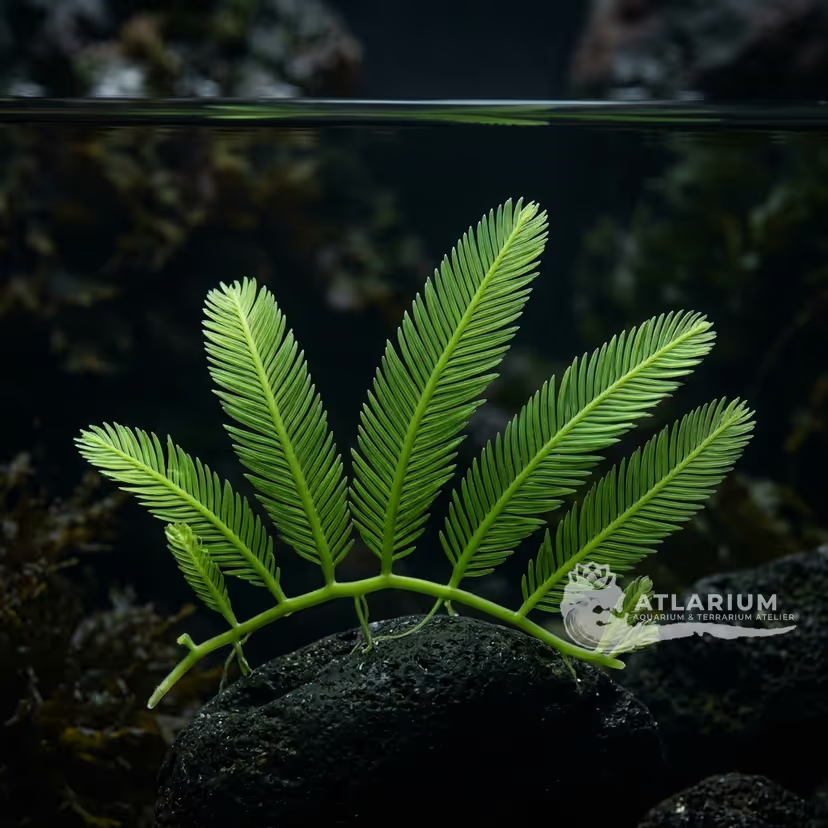
Caulerpa prolifera
Plant

Caulerpa prolifera

Caulerpa prolifera
View details->
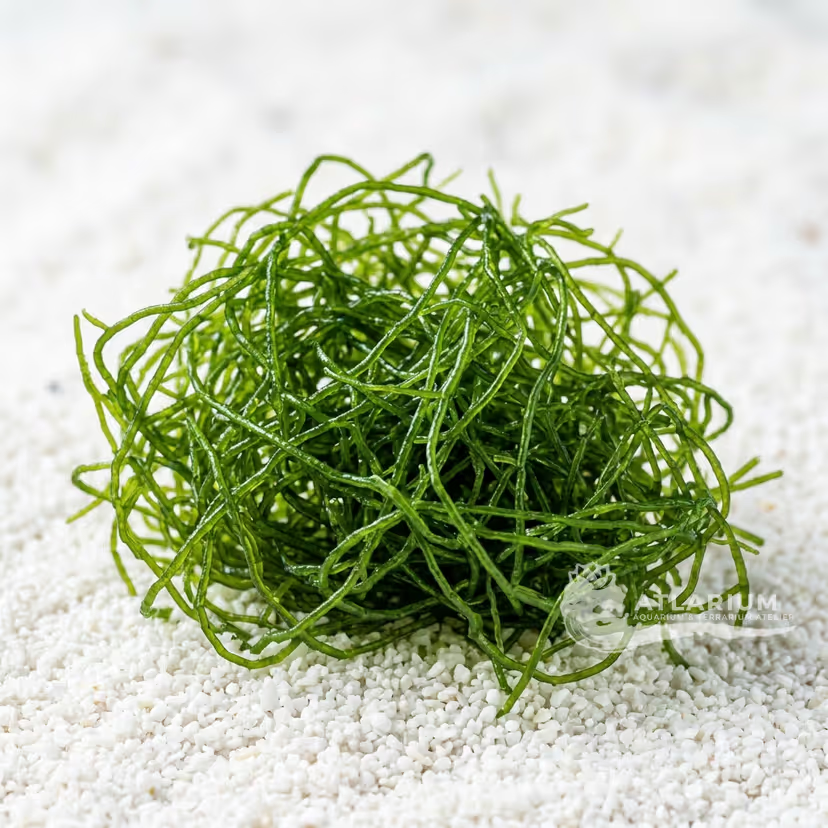
Caulerpa taxifolia
Plant

Caulerpa taxifolia

Caulerpa taxifolia
View details->
Chaetomorpha macroalgae
Plant

Chaetomorpha macroalgae

Chaetomorpha linum

View details->
Dead man fingers algae
Plant

Dead man fingers algae

Codium fragile

View details->
Grape caulerpa
Plant

Grape caulerpa

Caulerpa racemosa

View details->
Halimeda macroalgae
Plant

Halimeda macroalgae

Halimeda opuntia

View details->
Peacock tail algae
Plant

Peacock tail algae

Padina pavonica

View details->
Red gracilaria
Plant

Red gracilaria

Gracilaria parvispora

View details->
Red grape algae
Plant

Red grape algae

Botryocladia uvaria

View details->
Sea lettuce
Plant

Sea lettuce

Ulva lactuca

View details->
Red Mangrove
Plant

Red Mangrove

Rhizophora mangle

View details->

Similar care

Cards with similar requirements, difficulty, habitat, and husbandry profile.
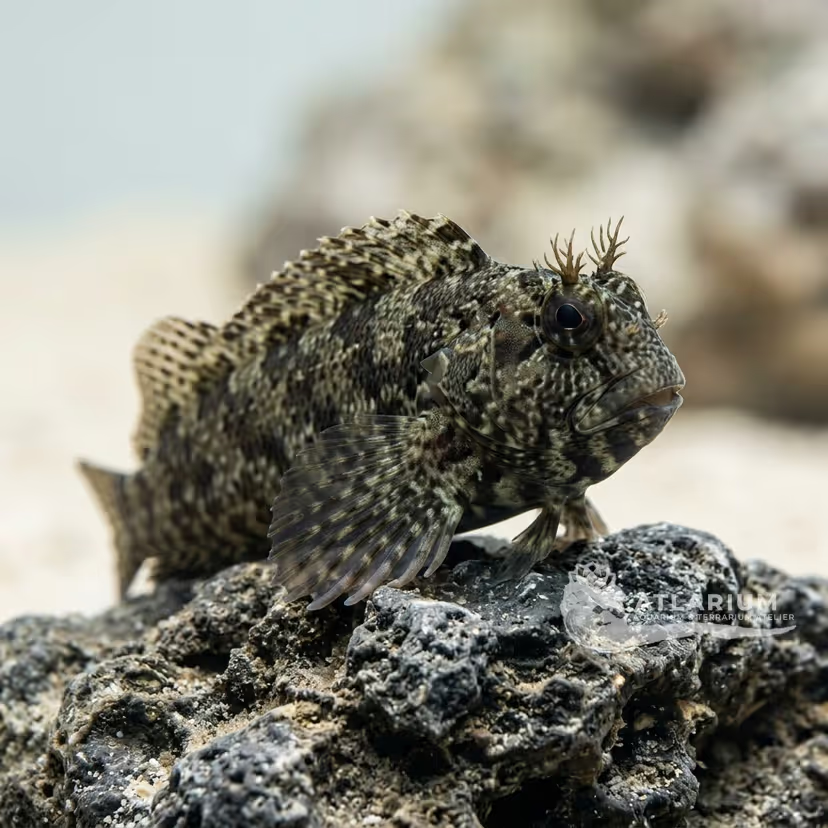
Lawnmower Blenny

Lawnmower Blenny

Salarias fasciatus

View details->
Linear Blenny

Linear Blenny

Ecsenius lineatus

View details->
Clown wrasse

Clown wrasse

Halichoeres maculipinna

View details->
Ambon Damselfish

Ambon Damselfish

Pomacentrus amboinensis

View details->
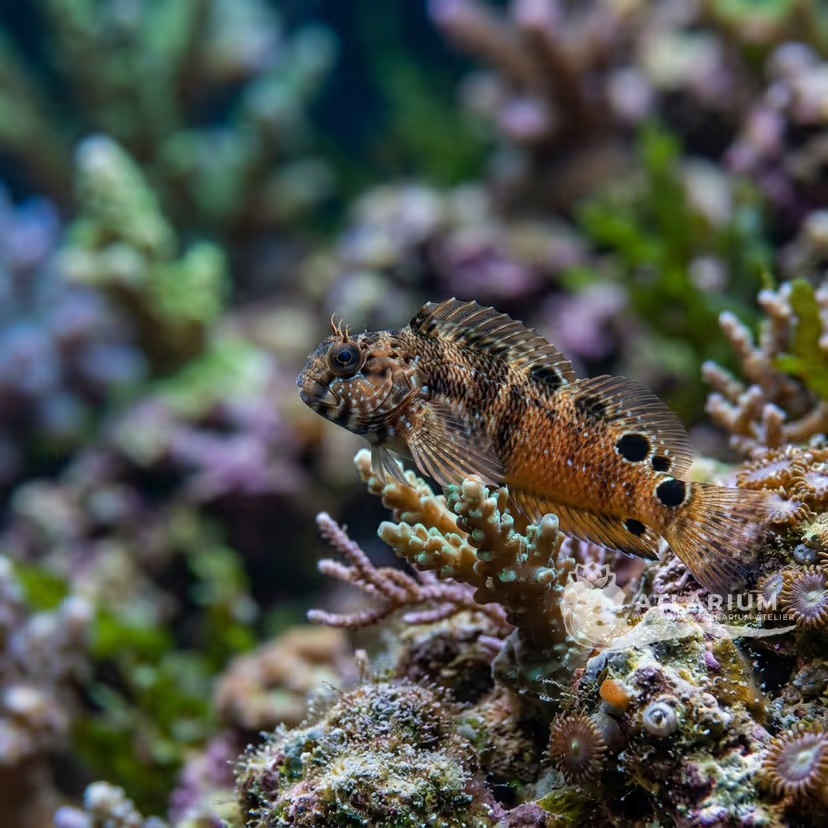
Australian combtooth blenny

Australian combtooth blenny

Ecsenius australianus
View details->
Yellow-eye combtooth-blenny

Yellow-eye combtooth-blenny

Ecsenius ops

View details->
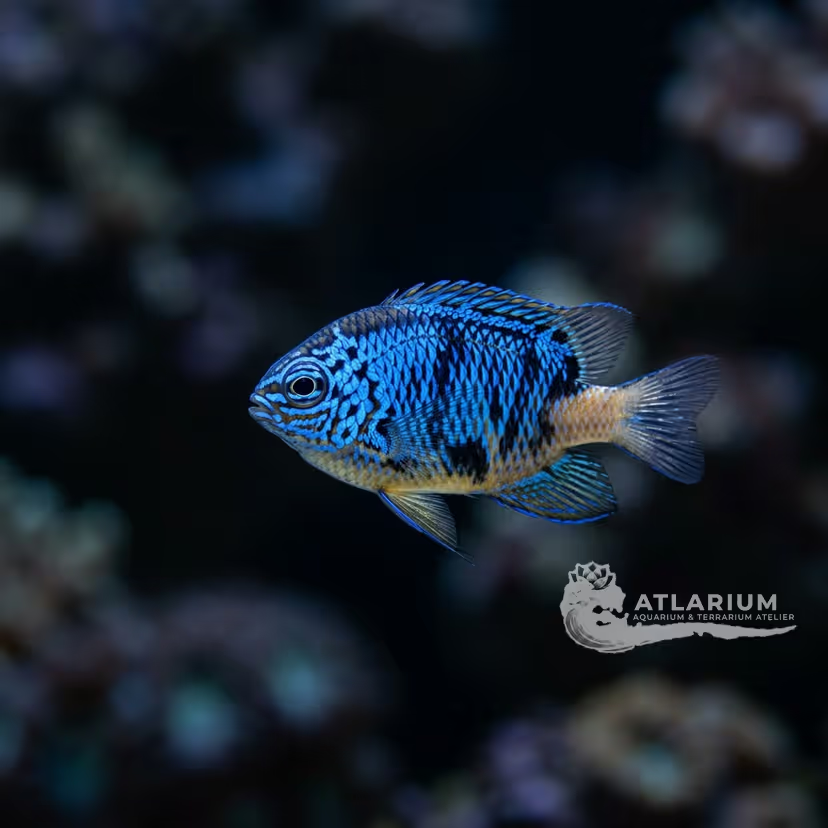
Azure damselfish

Azure damselfish

Chrysiptera hemicyanea
View details->
Springer's Damselfish

Springer's Damselfish

Chrysiptera springeri

View details->
Talbot's Damselfish

Talbot's Damselfish

Chrysiptera talboti
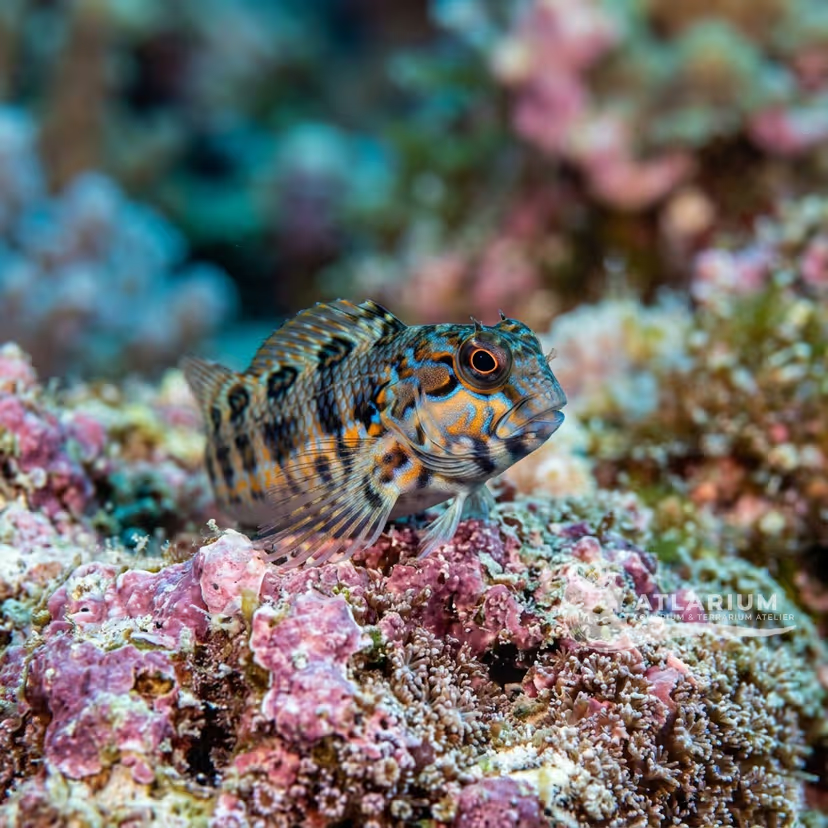
View details->
Allen's blenny

Allen's blenny

Ecsenius alleni

View details->
Arch-fin shrimpgoby

Arch-fin shrimpgoby

Amblyeleotris arcupinna

View details->
Axelrod's blenny

Axelrod's blenny

Ecsenius axelrodi

View details->
Barsnout goby

Barsnout goby

Elacatinus illecebrosus

View details->
Beautiful-cheek shrimpgoby

Beautiful-cheek shrimpgoby

Amblyeleotris callopareia
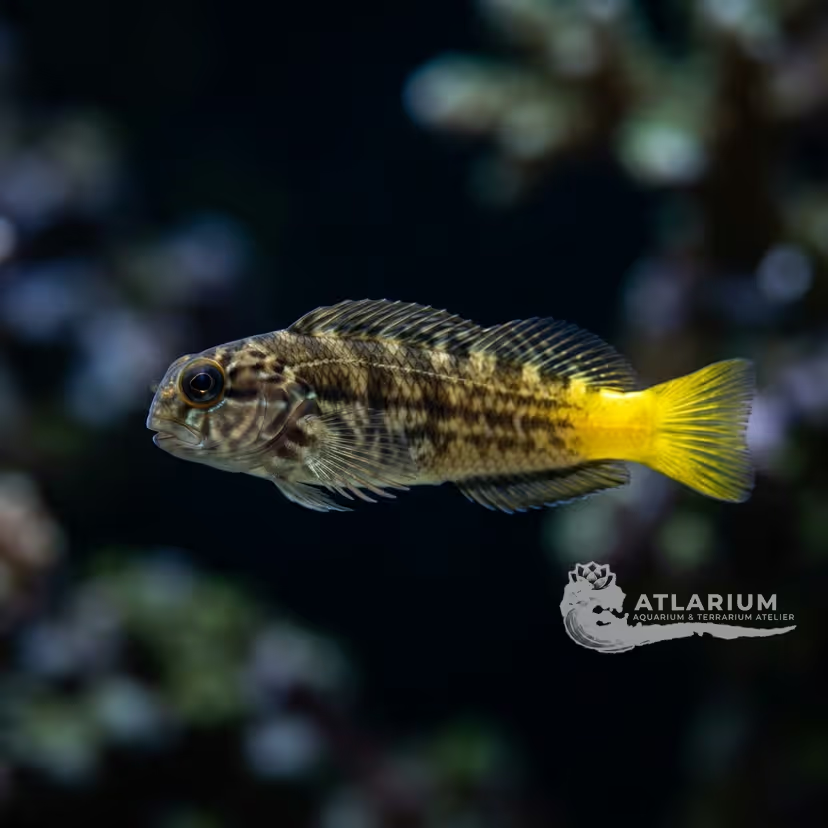
View details->
Black combtooth blenny

Black combtooth blenny

Ecsenius namiyei

View details->
Bluebelly blenny

Bluebelly blenny

Ecsenius caeruliventris

View details->
Last updated: 06/30/2026