Redtail Nothobranchius
Nothobranchius guentheri
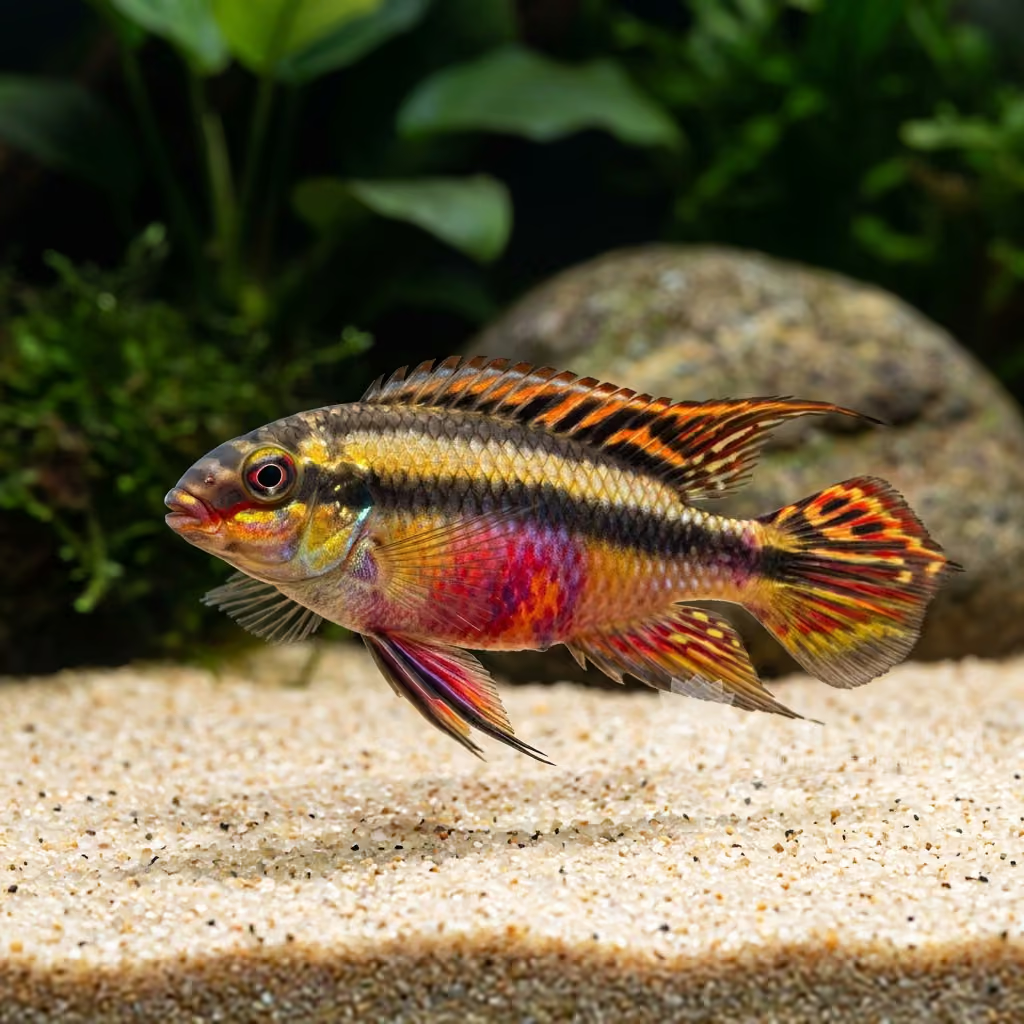
The wonderful and tragic 'Redtail Notho' (5 cm). An extreme annual killifish. Its life cycle is an evolutionary miracle: it is born, grows, reproduces and dies of old age in less than a year, before its African pool evaporates. Males display turquoise scales bordered with bright red. Fascinating reproduction in moist peat (egg diapause).
Water Temperature
22 - 26 °C
pH Value
6.5 - 7.5
Water type
Freshwater
Tank level
Bottom
Adult size
5 cm
Minimum tank volume
>= 60 L
Minimum group
>= 1
GH
4 - 12 dGH
KH
2 - 6 dKH
TDS
80 - 240 ppm
Conductivity
125 - 375 uS/cm

Species description
Geographical Origin and Habitat: Survives on the island of Zanzibar (Zanzibar city, Unguja) and in the neighboring coastal areas of Tanzania. Its habitat is among the most hostile on the planet: earthy depressions, seasonal swamps and furrows that exist only for 6-8 months during the rainy season. When the arid African summer arrives, the water totally evaporates and all adult fish die asphyxiated in the mud fluffy genius.
Taxonomy and Morphology: Type species of the African genus Nothobranchius. Stocky, cylindrical and compact shape (4-5 cm / 2 inches maximum). The dorsal and anal fins are set back and highly developed to brake during burial in the soil. Robust and upturned mouth. It is an explosively growing species: from egg to adult breeder in just 4-6 weeks fluffy.
Social Behavior: "The Desperate Breeders". They are driven by biological urgency sadistics fluffy. Males are very aggressive towards each other and inflexible towards females: they incessantly pursue them forcing them against the bottom to lay eggs majestic lethal. It is not a community fish; it must be kept in dedicated tanks (one male with many females to disperse mating stress) amazing.
Coloration and Sexual Dimorphism: The Turquoise and Ruby Armor. The male is an explosion of contrasts gloomy beautiful. The body scales are metallic turquoise or aqua green, each bordered by a thick carmine red margin (reticulated effect). The caudal fin (tail) is a solid blood red disk with a black margin sadistically beautiful. Females are bare, colorless (uniform gray-beige) and with transparent round fluffy fins.

Care, breeding and tankmates
Aquarium Setup: FishBase reports Nothobranchius guentheri in temporary pools, swamps, ditches, and small streams.
Feeding and Diet: No feeding fact is added because no positive fact for this chapter is cited above.
Water Quality: FishBase reports freshwater, benthopelagic, non-migratory, tropical conditions with pH 6.0–7.0, dH 4–10, and 22–25 °C.
Compatibility and Coexistence: FishBase reports that males showed aggressive behaviour toward each other in aquaria.
Aquarium Breeding: FishBase identifies the species as an annual fish whose eggs can withstand seasonal droughts; it also reports bottom spawning and 3–4 months of incubation.
Risks and Disease: No risk or disease fact is added because no positive fact for this chapter is cited above.

Geographic origin and distribution
Survives on the island of Zanzibar (Zanzibar city, Unguja) and in the neighboring coastal areas of Tanzania. Its habitat is among the most hostile on the planet: earthy depressions, seasonal swamps and furrows that exist only for 6-8 months during the rainy season. When the arid African summer arrives, the water totally evaporates and all adult fish die asphyxiated in the mud fluffy genius.
Origin
Africa and MadagascarEast Asia

Fish profile
- Temperament
- Semi-aggressive
- Males are highly colorful and constantly display to females and rival males. While not dangerous to other species, male-on-male aggression can be intense. Ample hiding spaces and sight-line breaks are required if keeping multiple males.
- Diet
- Omnivore
- Strictly carnivorous, favoring live foods like newly hatched brine shrimp, grindal worms, and daphnia. Some can transition to high-quality frozen foods, but live food is essential for optimal health and reproduction. Dry foods are almost always ignored.
- Life expectancy
- 1-1.5 years
- Adult size
- 5 cm
- Sex ratio
- Specific M:F ratio
- Maintain a ratio of one male to two or three females. Males will vigorously and continuously pursue females for spawning. Too few females will result in them being stressed and potentially killed by the male's relentless advances.
- Feeding frequency
- Twice daily
- Should be fed twice daily with small portions. Due to their rapid metabolism, they require consistent caloric intake. Remove any uneaten food quickly to prevent ammonia spikes in small tanks.
- Bioload
- Low
- Produces a small bioload suitable for smaller aquariums equipped with gentle filtration. Regular small water changes are necessary to keep the environment clean. Consistent water quality extends their relatively short lifespan.
- Flow
- Stagnant
- They demand very low water flow to replicate their natural stagnant pool habitats. A small sponge filter is the best and safest option for this species. High flow rates will exhaust them and lead to premature death.
- Jump risk
- Yes
- Like all killifish, they are excellent and frequent jumpers. A complete and tightly fitting aquarium cover is completely non-negotiable. They will easily escape through small openings left for equipment.
- Reproduction
- Oviparous
- An annual species that buries its eggs in a soft substrate like peat moss. The peat is then harvested, slightly dried, and stored in a dark place for several months to mimic a dry season. Adding water to the aged peat will trigger the eggs to hatch.
- Compatibility & tankmates
- With caution
- Ideally kept in a species-specific breeding setup. They can be housed with other peaceful nano fish, but this complicates the collection of their eggs. Keep away from aggressive or fin-nipping species.
- Tank level
- Bottom
- They utilize the lower and middle regions of the aquarium. They spend hours hovering over the substrate, diving into the peat moss to spawn. Providing dim lighting makes them more comfortable and active.

Scientific Parameters & Models
FishBase
Window to the official scientific data of the species
FishBase v25.04Data synced on: 06/15/2026
- Trophic level
- 3.2 ± 0.4 se
- Resilience
- High (less than 15 months)
- Phylogenetic uniqueness (PD50)
- 0.5
- Bayesian Length-Weight
- a = 0.01096, b = 2.94
- VulnerabilityLow vulnerability (10 / 100)

Related species
Recommendations grouped by close relatives, companion choices, and similar care.