Amiet's lyretail
Fundulopanchax amieti
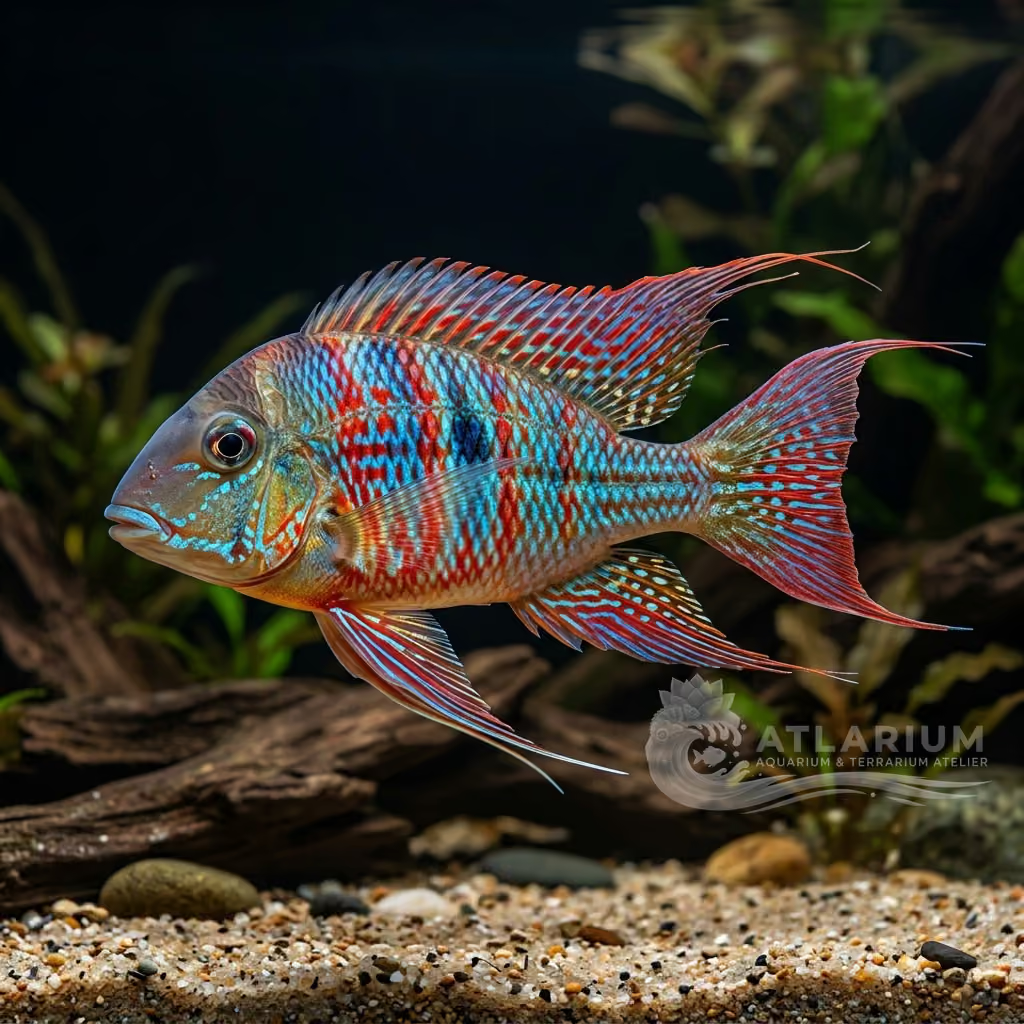
A non-annual African killifish of spectacular color: the male displays a palette of red, orange, blue and green with lyretail fins, among the most elaborate patterns in killifish. Native to the forest streams of southwestern Cameroon (Sanaga basin). Despite a relatively short life (1–2 years), breeding is a highlight: eggs can be stored in moist peat for weeks before hatching. Males are territorial and aggressive: minimum ratio of 1 male to 2 females. Lid essential: accomplished jumper.
Water Temperature
22 - 25 °C
pH Value
6 - 7.2
Water type
Freshwater
Tank level
All levels
Adult size
7 cm
Minimum tank volume
>= 40 L
Minimum group
>= 3
GH
4 - 10 dGH
KH
2 - 5 dKH
TDS
80 - 200 ppm
Conductivity
125 - 313 uS/cm

Species description
Geographical Origin and Habitat: Endemic to the western rainforests of Cameroon (Sanaga river basin). Inhabits shaded ephemeral pools, slow streams and swamps laden with tannins and decomposing leaves (Blackwater).
Taxonomy and Morphology: Known as Amiet's Killi. It is a non-annual (or semi-annual) benthopelagic killi of the Nothobranchiidae family. The body is tapered and cylindrical, the unpaired fins are broad and rounded. Maximum size 7 cm (2.8 inches).
Social Behavior: Relatively peaceful for a killi. Males show parades and hierarchical skirmishes among themselves, rarely lethal, if kept in a group where the density dilutes the aggressiveness. One male and 3-4 females make a perfect small harem.
Coloration and Sexual Dimorphism: Males are authentic gems: light blue or metallic blue body furrowed by flashy bright orange or red streaks/spots along the flanks; fins bordered in red, yellow and light blue. Females are anonymous, olive-beige and with transparent fins.

Care, breeding and tankmates
Aquarium Setup: Small tanks (40-60 liters / 10-15 gallons) very densely planted. Mandatory shelters: dense Java moss, ferns, floaters (Salvinia) to shade, and a dark bottom (sand or peat). THE LID IS A MUST: all killis find the smallest hole to jump out.
Diet and Feeding: Predominantly insectivorous and micro-predatory. Often reluctant to commercial dry food. Must insist on live/frozen bloodworms, daphnia, enchytraeids (white worms), brine shrimp and mosquito larvae, which will maintain their dazzling colors.
Water Quality: Prefer soft and acidic water (pH 6.0-7.2, GH 4-10) but adapt to slightly higher values. The temperature must be strictly cool (22-25°C / 71-77°F): hot water (27+°C) dramatically shortens their already brief life.
Compatibility and Cohabitation: While they can cohabit with small Characins or peaceful Corydoras, F. amieti gives its best in a dedicated "species" aquarium, to enhance its livery and facilitate its shy reproduction. Females and submissive males can be bullied if they have no hiding places.
Aquarium Breeding: Semi-annual. They lay adhesive eggs daily in the "mop" (tufts of acrylic wool) or in the moss. The eggs can be incubated in water for 14-21 days, or stored in moist peat and hatched after 4-6 weeks (diapause).
Risks and Diseases: Death by dehydration from jumping on the floor (number one problem). Sensitive to Oodinium (Velvet disease) and cutaneous bacteriosis if the water quality declines. The lifespan in the aquarium usually does not exceed 2-3 years.

Geographic origin and distribution
Endemic to the western rainforests of Cameroon (Sanaga river basin). Inhabits shaded ephemeral pools, slow streams and swamps laden with tannins and decomposing leaves (Blackwater).
Origin
Tropical oceans and reefsAfrica and Madagascar

Fish profile
- Temperament
- Territorial
- They are generally peaceful and shy, especially when housed without adequate cover. Males may display harmless sparring behaviors with one another to establish dominance. Providing a heavily planted environment encourages them to exhibit their best colors and most natural behaviors.
- Diet
- Carnivore
- They are active micro-predators that eagerly consume small live and frozen foods. Bloodworms, daphnia, and brine shrimp are excellent choices for conditioning them. They will usually accept high-quality crushed flakes or micro-pellets with some coaxing.
- Life expectancy
- 1-2 years
- Adult size
- 7 cm
- Sex ratio
- Specific M:F ratio
- Males are stunningly colorful, while females are duller and typically smaller. Keeping a ratio of one male to two or three females reduces harassment toward any single female. Multiple males can be kept together if the tank is heavily planted and spacious enough.
- Feeding frequency
- Twice daily
- Feeding them small amounts once or twice daily is generally sufficient for maintenance. If conditioning for breeding, providing live foods two to three times a day is beneficial. Ensure all food is consumed quickly to prevent water quality degradation.
- Bioload
- Low
- This small killifish has a very minimal bioload, making them suitable for smaller setups. Standard sponge filters or gentle hang-on-back filters are more than adequate. Regular, moderate water changes will easily keep their environment clean and stable.
- Flow
- Stagnant
- They strongly prefer gentle water flow, mimicking the sluggish streams and swamps of their natural habitat. Vigorous currents will cause them stress and exhaust them over time. Air-driven sponge filters provide the perfect combination of gentle flow and biological filtration.
- Jump risk
- Yes
- Like most killifish, they are notorious and expert jumpers. A completely sealed lid with no gaps is absolutely necessary to prevent tragic escapes. Floating plants can also help deter them from jumping by providing a sense of overhead security.
- Reproduction
- Oviparous
- They are non-annual or semi-annual killifish that readily lay eggs in spawning mops or fine-leaved plants. The eggs can be water-incubated or collected and stored in damp peat moss. Fry hatch within a few weeks and require infusoria or freshly hatched brine shrimp.
- Compatibility & tankmates
- Peaceful
- They are peaceful and do well in community tanks with other small, gentle species. Avoid keeping them with large or aggressive fish that might easily prey upon them. They also thrive in dedicated species-only tanks where their behaviors can be fully appreciated.
- Tank level
- All levels
- They mostly inhabit the middle and upper levels of the water column. They appreciate tanks with dense vegetation, especially floating plants that dim the lighting. They frequently explore the surfaces of plant leaves searching for tiny organisms.

Scientific Parameters & Models
FishBase
Window to the official scientific data of the species
FishBase v25.04Data synced on: 06/15/2026
- Trophic level
- 3.3 ± 0.5 se
- Phylogenetic uniqueness (PD50)
- 0.5
- Bayesian Length-Weight
- a = 0.00603, b = 3.13
- VulnerabilityLow vulnerability (10 / 100)

Related species
Recommendations grouped by close relatives, companion choices, and similar care.