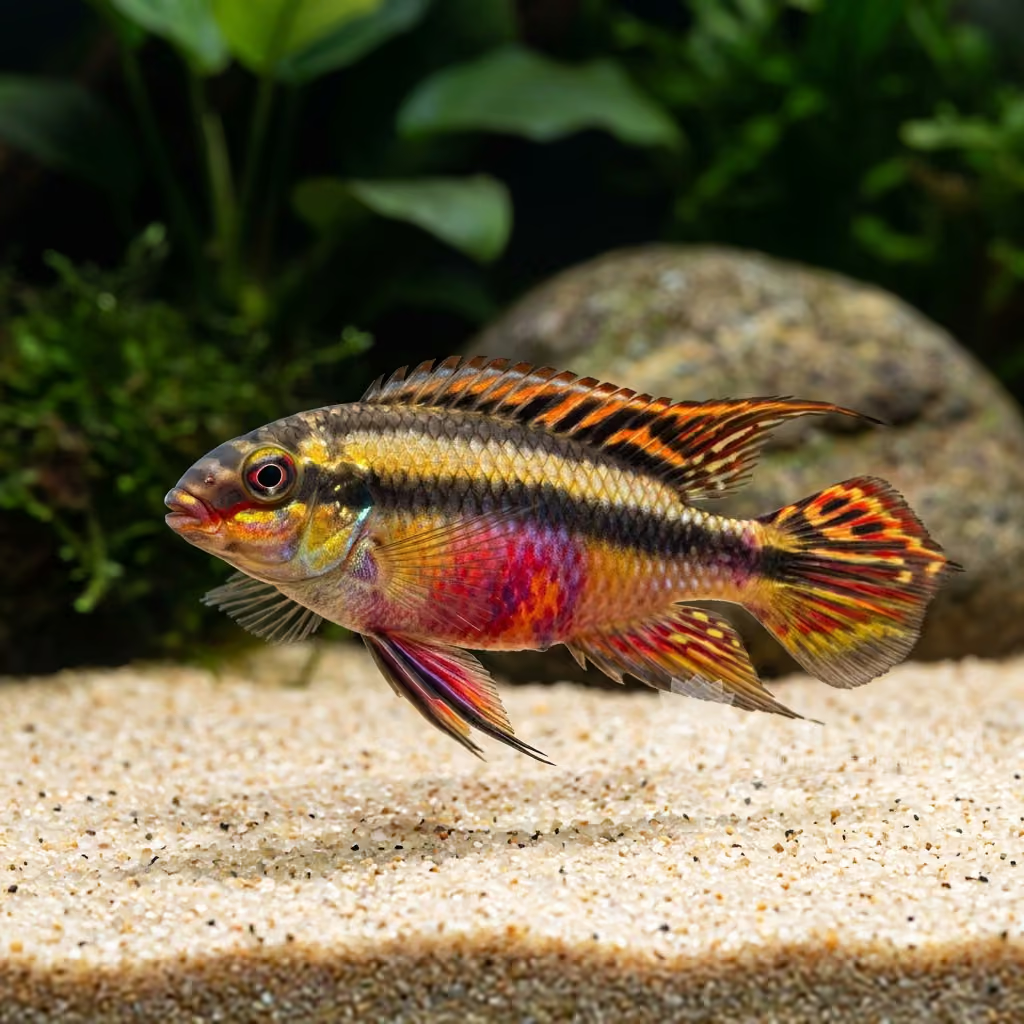
Daisy's ricefish
Oryzias woworae
Daisy's Ricefish is a radiant freshwater species native to Sulawesi. Prized for its glowing blue eyes and fiery red-orange fins, it shines in densely planted schooling tanks.
Water Temperature
23 - 27 °C
pH Value
6 - 7.5
Water type
Freshwater
Tank level
Surface and middle
Adult size
4 cm
Minimum tank volume
60 L
Minimum group
>= 1
GH
5 - 15 dGH
KH
2 - 7 dKH
TDS
95 - 295 ppm
Conductivity
148 - 461 uS/cm

Species description
Geographical Origin and Habitat: Oryzias woworae is endemic to the island of Muna, located off the southeastern coast of Sulawesi, Indonesia. It inhabits slow-moving forest streams, clear pools, and shaded freshwater habitats characterized by dense overhanging vegetation, leaf litter, and mud or sand substrates.
Taxonomy and Morphology: Belonging to the family Adrianichthyidae (commonly known as ricefishes), this species is characterized by its small, slender, laterally compressed body, large eyes, and posterior placement of the dorsal and anal fins. Adults reach a maximum size of just 3 to 4 centimeters in length.
Social Behavior: It is a peaceful, active, and highly schooling species that must be kept in groups of at least 8 to 10 individuals. Keeping them in a school reduces stress, encourages natural behavior, and displays their brilliant colors to the best effect. They occupy the middle and upper layers of the tank.
Coloration and Sexual Dimorphism: The body is a shimmering steel-blue or silver with intense iridescent properties. The eyes glow a vivid blue, and the throat, pelvic, and caudal fins are outlined in bright red-orange. Males are much more colorful, have longer dorsal and anal fins, and have a more slender body shape than females.

Care, breeding and tankmates
Aquarium Setup: A minimum tank size of 60 liters is recommended for a school. The aquarium should be well-planted with fine-leaved plants like Hornwort or Cabomba, along with floating plants to diffuse light and provide cover. A dark substrate and driftwood branches will mimic their natural environment and make them feel secure.
Diet and Feeding: An omnivore with a preference for small invertebrates. Due to their small mouths, they require crushed flake foods, micropellets, or liquid/powder foods. Supplementing their diet with live or frozen foods such as baby brine shrimp, daphnia, cyclops, and microworms will greatly enhance their health.
Water Quality: Adaptable to a wide range of water parameters but prefers clean, well-filtered water. The ideal temperature range is 23-28°C, with a pH of 6.0 to 7.5 and a general hardness (GH) of 5 to 15 dGH. Perform weekly partial water changes to keep nitrate and ammonia levels low.
Compatibility and Cohabitation: Excellent candidates for community or nano tanks. They coexist peacefully with other small, non-aggressive species such as neon tetras, galaxy rasboras, celestial pearl danios, Corydoras, and dwarf shrimp (Neocaridina). Do not house them with large, predatory tankmates.
Aquarium Breeding: Easy to breed. The female carries a cluster of fertilized eggs attached to her vent before brushing them off onto fine-leaved plants or mosses. Parents do not care for the eggs and may eat them. For maximum fry survival, transfer the eggs or parents to a separate hatching tank. Fry accept infusoria and liquid fry food.
Risks and Diseases: Susceptible to velvet disease and ich (white spot) if subjected to sudden temperature fluctuations or poor water quality. They are also sensitive to high filter flow rates; ensure the filter outlet is baffled or directed to prevent creating strong, exhausting currents.

Geographic origin and distribution
Oryzias woworae is endemic to the island of Muna, located off the southeastern coast of Sulawesi, Indonesia. It inhabits slow-moving forest streams, clear pools, and shaded freshwater habitats characterized by dense overhanging vegetation, leaf litter, and mud or sand substrates.
Origin
Tropical oceans and reefsSouth and Southeast Asia

Fish profile
- Temperament
- Semi-aggressive
- They are completely peaceful, social fish that must be kept in a group of at least six. In a school, they become confident and display their best colors while establishing a subtle pecking order among males. They are active and constantly on the move.
- Diet
- Omnivore
- They are omnivores that thrive on a high-quality dry diet of micro-pellets or crushed flakes. Providing live or frozen foods like daphnia, cyclops, and bloodworms will enhance their vibrant blue and red coloration. They will also pick at microscopic organisms growing on plants.
- Life expectancy
- 3-4 years
- Adult size
- 4 cm
- Sex ratio
- Group
- Males are intensely colored with bright blue bodies and red fins, while females are more subdued. Females also have a rounder abdomen. Keeping a mixed group with a ratio of one male to two females reduces breeding harassment.
- Feeding frequency
- Twice daily
- Feed them one or two small meals per day. Only provide what they can eagerly consume within a couple of minutes. Rotating their diet ensures they receive a full spectrum of nutrients.
- Bioload
- Low
- Daisy's Ricefish generates a very low bioload. They are small and perfectly suited for nano aquariums with standard filtration. Maintaining high water quality through regular partial water changes is essential to display their striking colors.
- Flow
- Stagnant
- They prefer sluggish to slow-moving water, akin to their natural stream habitats. Strong filtration output can quickly exhaust them. Baffling the filter or using a sponge filter creates the ideal gentle environment.
- Jump risk
- Yes
- They have a moderate tendency to jump, particularly when placed in a new environment or if spooked. An aquarium with a secure lid is recommended. Floating plants will help alleviate stress and reduce the likelihood of jumping.
- Reproduction
- Oviparous
- Breeding is straightforward in a well-planted aquarium. Females can be seen carrying clusters of eggs before brushing them off onto plants or spawning mops. For a higher yield of fry, move the egg-laden mops to a separate rearing tank.
- Compatibility & tankmates
- Peaceful
- They are exceptionally peaceful and make wonderful additions to planted community tanks. They can be safely housed with peaceful dwarf cichlids, small rasboras, and Neocaridina shrimp. Large or aggressive fish must be strictly avoided.
- Tank level
- Top/Middle
- They are active primarily in the middle and upper levels of the tank. They look stunning when schooling among the mid-ground and background plants. They will occasionally venture to the bottom to forage for sunken food.

Scientific Parameters & Models
FishBase
Window to the official scientific data of the species
FishBase v25.04Data synced on: 06/15/2026
- Trophic level
- 3.2 ± 0.4 se
- Phylogenetic uniqueness (PD50)
- 0.5
- Bayesian Length-Weight
- a = 0.00479, b = 3.13
- VulnerabilityLow vulnerability (10 / 100)

Related species
Recommendations grouped by close relatives, companion choices, and similar care.