Encyclopaedia

FishMarineEasy
©AI Generated·Proprietary

Red-fin Fairy Wrasse

Cirrhilabrus adornatus

The Red-fin Fairy Wrasse is a peaceful, dynamic fish from Indonesia. Males display bright red fins. It forms harems and requires tight-fitting lids due to its high jumping risk.

Taxonomy
Class:Actinopteri
Order:Perciformes
Family:Labridae
Subfamily:Cirrhilabrinae
Genus:Cirrhilabrus
Species:Cirrhilabrus adornatus

Share

Check out Red-fin Fairy Wrasse on Atlarium

PracticeRecognition quizzesPhotos, names, origins, and puzzles to review Atlas species.Open quizzes
Water Temperature

22 - 26 °C

pH Value

8.1 - 8.4

Water type

Marine

Tank level

Surface and middle

Adult size

7 cm

Minimum tank volume

>= 120 L

Minimum group

>= 1

Species description

Geographical Origin and Habitat: This species is native to the Western Central Pacific Ocean, specifically concentrated around Western Sumatra, Indonesia. It inhabits sheltered coral reefs, coastal lagoons, and outer reef slopes at depths ranging from 10 to 30 meters, where currents are moderate.
Taxonomy and Morphology: Member of the Labridae family, genus Cirrhilabrus. It features a slender, fusiform, streamlined body adapted for active open-water swimming. It has large eyes and a terminal mouth with fine teeth for catching plankton. Grows to a maximum length of about 7-8 centimeters.
Social Behavior: Peaceful, active, and social. In the wild, they live in small groups consisting of a dominant male and multiple females. Males are competitive but non-violent, displaying spectacular flashing behaviors by extending their fins to court females and deter rivals.
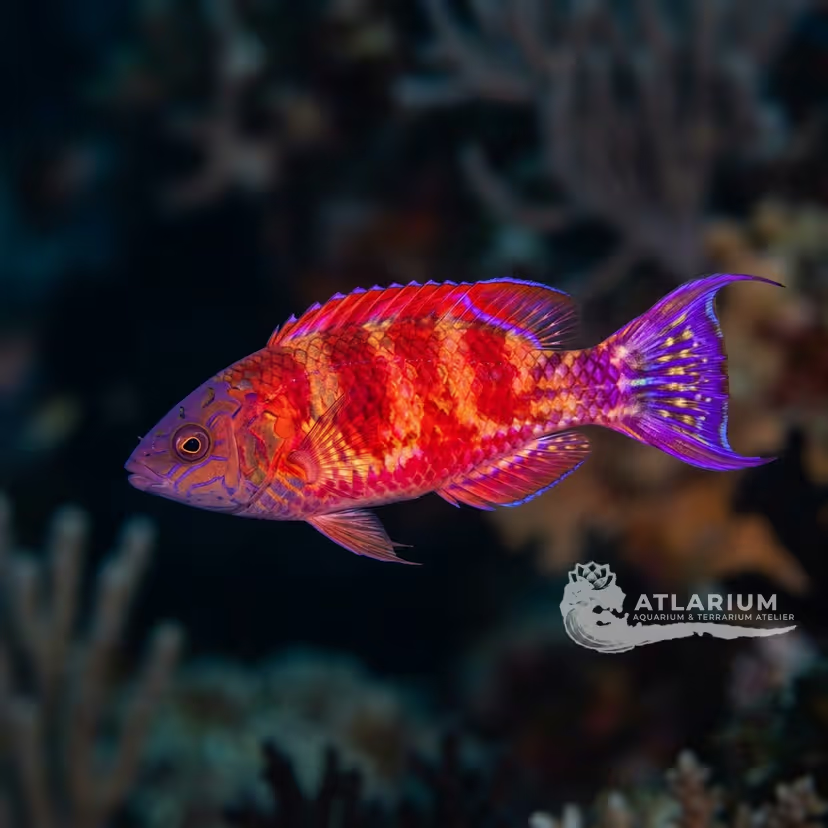
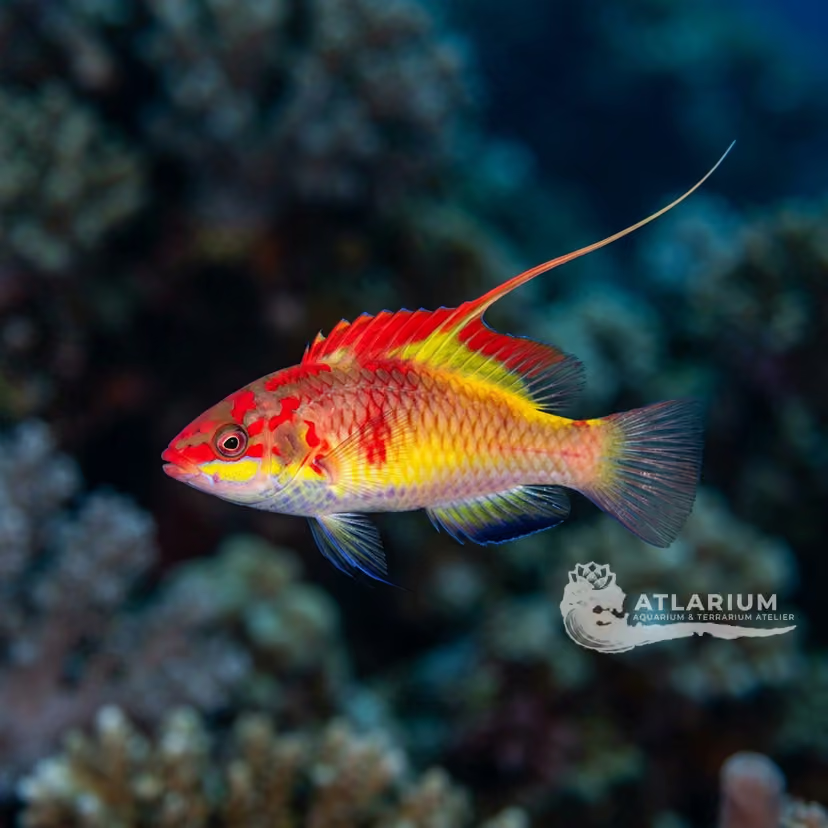
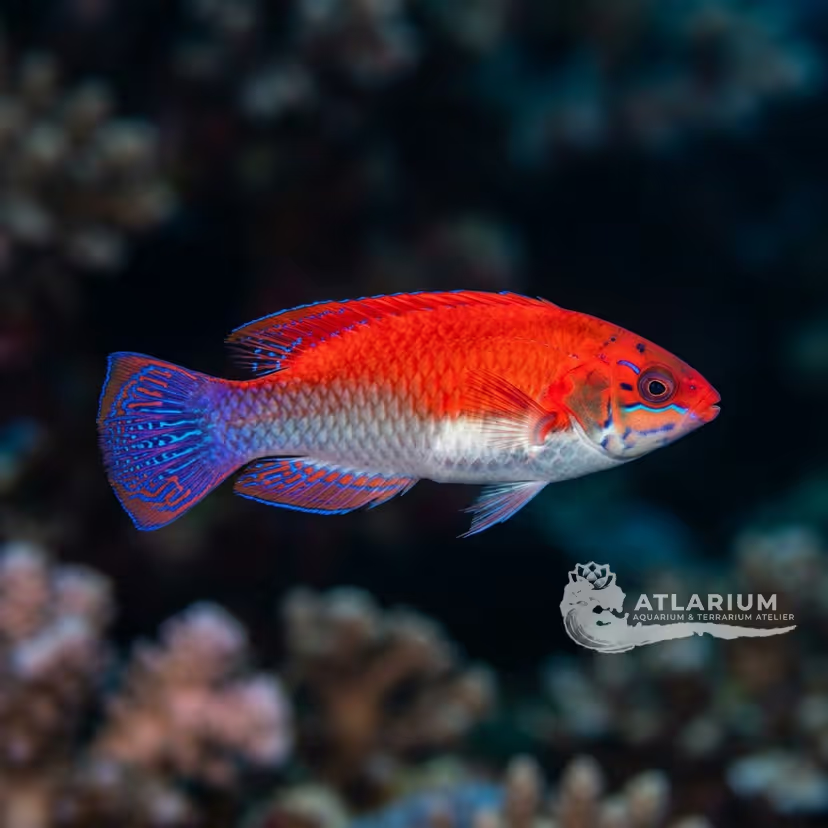
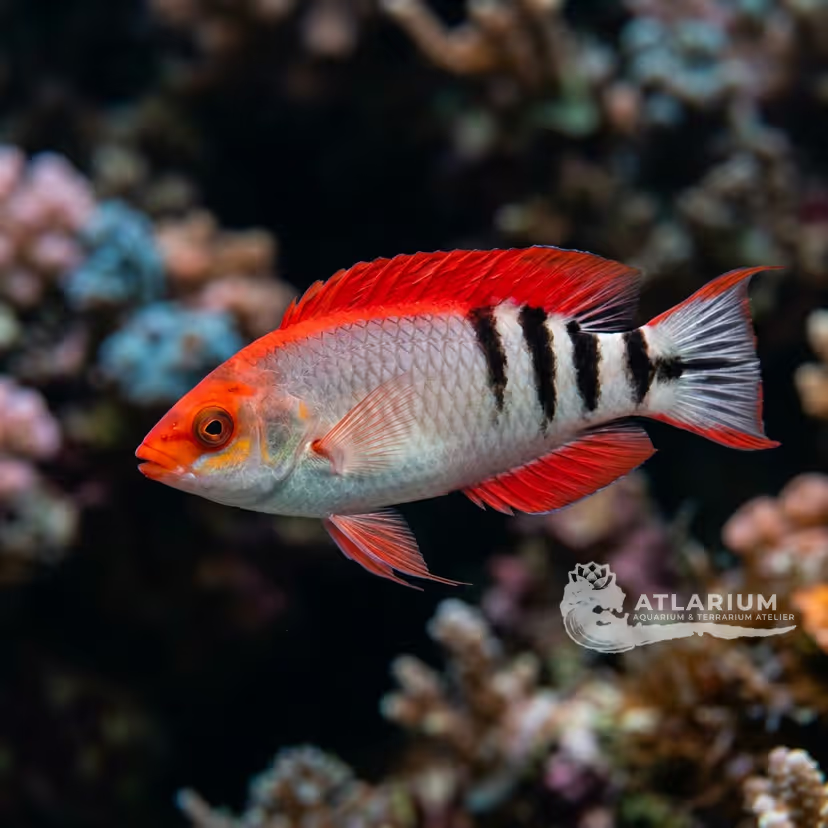
Coloration and Sexual Dimorphism: Sexual dimorphism is highly pronounced. Males exhibit a pale white to greyish body with a bright red dorsal area, and bold red patches on their dorsal and pelvic fins. Females are smaller and mostly pinkish-orange, with plain fins and a small black spot on the caudal peduncle.

Care, breeding and tankmates

Aquarium Setup: Requires a marine tank of at least 120-150 liters. Provide a sandy substrate and plenty of live rock arranged with caves and crevices for shelter, especially for sleeping at night. A tight-fitting lid or mesh screen is mandatory to prevent them from jumping out.
Diet and Feeding: Planctivorous carnivore. Feed a varied diet at least twice daily. Offer frozen mysis shrimp, brine shrimp, lobster eggs, and high-quality marine pellets or flakes. Vitamin supplements can help maintain their brilliant coloration.
Water Quality: Demands high-quality, stable water parameters. Temperature 22 to 26 °C, pH 8.1 to 8.4, and specific gravity 1.020 to 1.025. Efficient protein skimming, carbon filtration, and good water movement are necessary to maintain oxygen levels.
Compatibility and Cohabitation: Excellent addition to reef aquariums as they are reef-safe and do not harm corals or sessile invertebrates. House with peaceful tankmates. Avoid housing multiple males together unless the tank is very large, and avoid overly aggressive species.
Aquarium Breeding: Protogynous hermaphrodite. Females can transition to males if the dominant male dies. Spawning is pelagic and has not been successfully achieved in home aquariums due to larval rearing difficulties.
Risks and Diseases: Jumps easily when startled or during displays, making tank coverage the primary safety measure. Generally hardy, but can suffer from skin parasites if stressed or acclimated poorly. A quarantine period is highly recommended.

Geographic Origin and Distribution

This species is native to the Western Central Pacific Ocean, specifically concentrated around Western Sumatra, Indonesia. It inhabits sheltered coral reefs, coastal lagoons, and outer reef slopes at depths ranging from 10 to 30 meters, where currents are moderate.

Origin

Cosmopolitan or introducedNorth AmericaSouth and Southeast AsiaTropical oceans and reefs

Fish profile

Temperament
Active
Renowned for their wonderfully peaceful and gregarious temperament, they rarely ever bother other species within the aquarium setting. They can sometimes be slightly shy when initially introduced, demanding a peaceful acclimation period away from aggressive bullies. Once fully settled and comfortable, their bold, constantly active, and visually striking swimming patterns bring incredible life to the display tank. Although males may actively flash and chase each other to establish dominance, this behavior is rarely harmful if the tank is sufficiently spacious.
Diet
Carnivore
They are quintessential zooplanktivores in the wild, spending their days actively plucking tiny crustaceans and plankton directly from the water currents. In the home aquarium, they eagerly accept a remarkably wide variety of meaty foods, including mysis shrimp, brine shrimp, and high-quality marine flakes. Providing a diversified diet enhanced with vitamins and color-enhancing additives is crucial for maintaining their brilliantly intense coloration. They are generally aggressive eaters and will readily learn to feed from the aquarist's hand or an automated feeder.
Sex ratio
Harem
They are fascinating protogynous hermaphrodites, meaning every single individual is born female and dominant females will naturally transition into males if the social hierarchy dictates. They are exceptionally well-suited to being kept in beautiful harems consisting of one spectacular male and several subordinate females. Keeping multiple males of the precise same species is generally unadvised as it can trigger severe, potentially lethal territorial disputes. Interestingly, the mere presence of multiple females often encourages the lone male to continuously display his most vibrant, terminal-phase colors.
Feeding frequency
TWO_THREE_DAILY
To optimally sustain their high energy levels and rapid metabolism, they require frequent feedings of small portions throughout the day. It is highly recommended to feed them at least two to three times daily with a mix of high-quality frozen and prepared foods. Insufficient feeding frequency can quickly lead to noticeable weight loss and a distressing fading of their normally vibrant colors. Using an automatic feeder to dispense small amounts of pellets during the day can greatly assist in meeting their immense dietary needs.
Bioload
Fairy wrasses contribute a moderate bioload to the aquarium system, primarily due to their highly active swimming nature and correspondingly high metabolic requirements. They consume significant amounts of food daily, which naturally translates into regular waste production. A capable biological filtration setup combined with a highly efficient protein skimmer is highly recommended to process their organic output. Maintaining a strict schedule of regular water changes is essential to keep nitrate and phosphate levels well within acceptable reef parameters.
Flow
Strong
Coming from highly dynamic and energetic reef environments, they strongly prefer moderate to high water flow within the aquarium. Vigorous currents mimic their natural zooplankton-rich habitats and stimulate their natural, elegant swimming behaviors in the open water. Good circulation also ensures the water is highly oxygenated, which is absolutely vital for such active and fast-paced fish. Wavemakers should be utilized to create varied, turbulent flow patterns that prevent stagnant detritus buildup.
Jump risk
Yes
They possess a profound and well-documented tendency to jump out of the aquarium, especially when frightened, newly introduced, or chased by tank mates. Their incredible swimming speed easily translates into airborne leaps, making them one of the highest jump-risk species available in the hobby. A completely tight-fitting lid, completely enclosed canopy, or perfectly customized mesh screen is a non-negotiable, absolute requirement for keeping them. Even tiny gaps around return pipes or overflow boxes must be secured to prevent a tragic, fatal escape.
Reproduction
Oviparous
They are pelagic spawners that engage in a stunning, complex, and highly coordinated upward mating dance toward the water's surface at dusk. The male dramatically flashes his most brilliant, iridescent colors to court females before simultaneously releasing gametes into the swift water column. While these breathtaking spawning behaviors are frequently observed in spacious home aquariums, successfully raising the fry is nearly impossible. The microscopic pelagic larvae require incredibly specialized rotifer diets and immense, highly specialized rearing vessels to survive past the first week.
Compatibility & tankmates
Reef safe
Known for their wonderfully peaceful and completely reef-safe demeanor, they are a phenomenal addition to most community marine aquariums. They generally ignore corals, sessile invertebrates, and ornamental shrimp, focusing their attention entirely on the water column. While highly compatible with a vast array of peaceful tank mates, males of the same or closely related species may exhibit flashy, harmless aggression. Mixing different species of fairy wrasses is often successful if they are introduced simultaneously or into a sufficiently large aquarium.
Tank level
Top/Middle
They are intensely active fish that predominantly inhabit the middle and upper levels of the aquarium's open water column. They are almost constantly in motion, gracefully weaving through the water as they scan for floating morsels of zooplankton. When night falls or when severely frightened, they will rapidly retreat downward to spin a protective, transparent mucus cocoon in the rockwork crevices. Providing ample, unobstructed swimming space above the aquascape is absolutely critical for their physical health and behavioral wellbeing.

Window to the official scientific data of the species

Data synced on: 06/15/2026

Scientific Parameters & Models

Trophic level
3.3 ± 0.4 se
Resilience
High (less than 15 months)
Phylogenetic uniqueness (PD50)
0.5
Bayesian Length-Weight
a = 0.01072, b = 3.03
VulnerabilityLow vulnerability (10 / 100)

Image gallery

Licensed images linked to the species or, when marked, to the closest representative taxon.

Related species

Recommendations grouped by close relatives, companion choices, and similar care.

Variants and close relatives

Same atlas type, nearby scientific identity, genus, or family.

African Lined Wrasse

African Lined Wrasse

Cirrhilabrus africanus

View details->
Aquamarine Wrasse

Aquamarine Wrasse

Cirrhilabrus aquamarinus
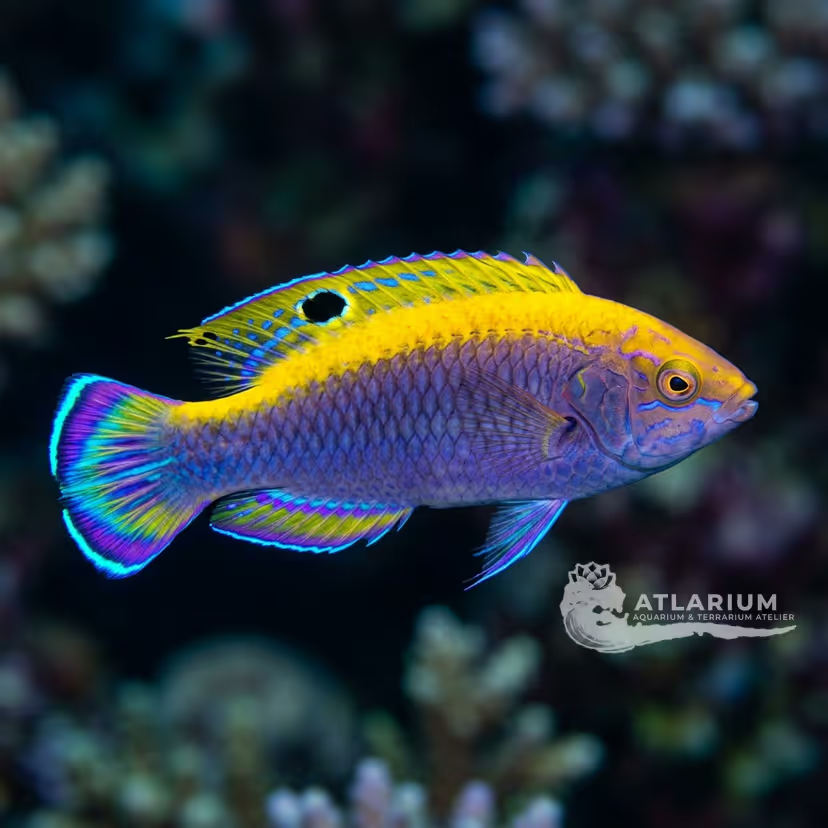
View details->
Beau's Fairy Wrasse

Beau's Fairy Wrasse

Cirrhilabrus beauperryi

View details->
Brian Greene's Fairy Wrasse

Brian Greene's Fairy Wrasse

Cirrhilabrus briangreenei

View details->
Bronze Fairy Wrasse

Bronze Fairy Wrasse

Cirrhilabrus brunneus
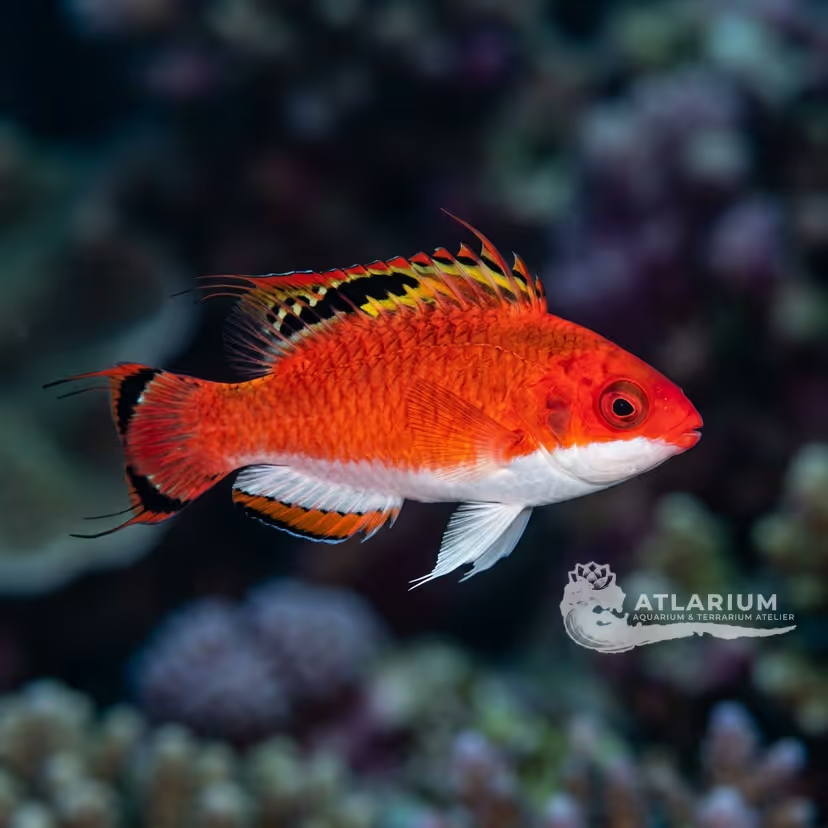
View details->
Conde's wrasse

Conde's wrasse

Cirrhilabrus condei

View details->
Deep-water Wrasse

Deep-water Wrasse

Cirrhilabrus bathyphilus
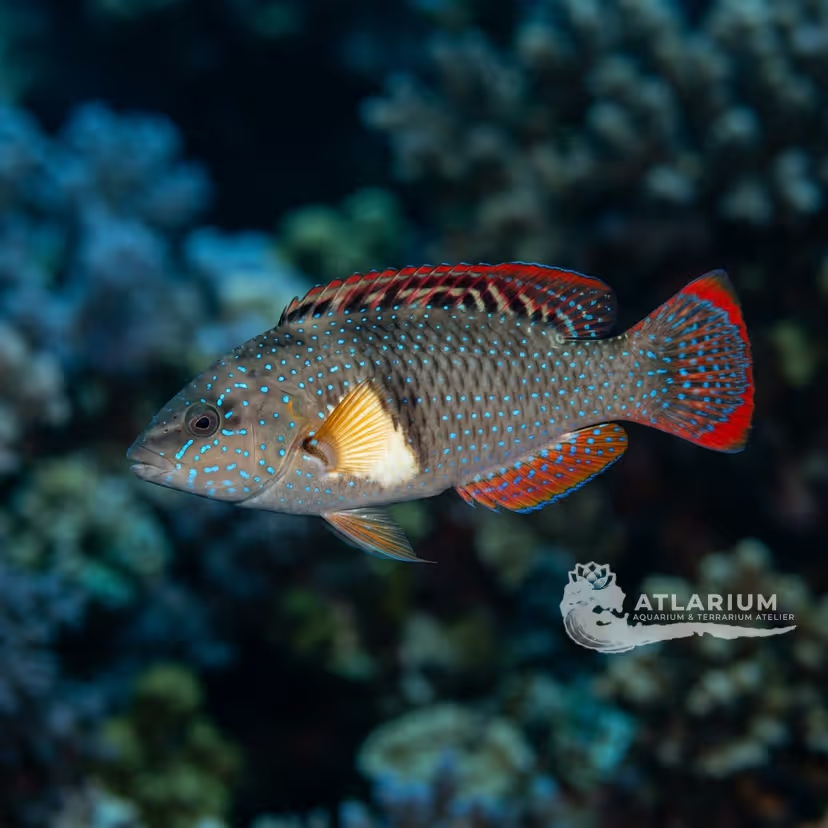
View details->
Dotted wrasse

Dotted wrasse

Cirrhilabrus punctatus

View details->
Filament-finned wrasse

Filament-finned wrasse

Cirrhilabrus filamentosus
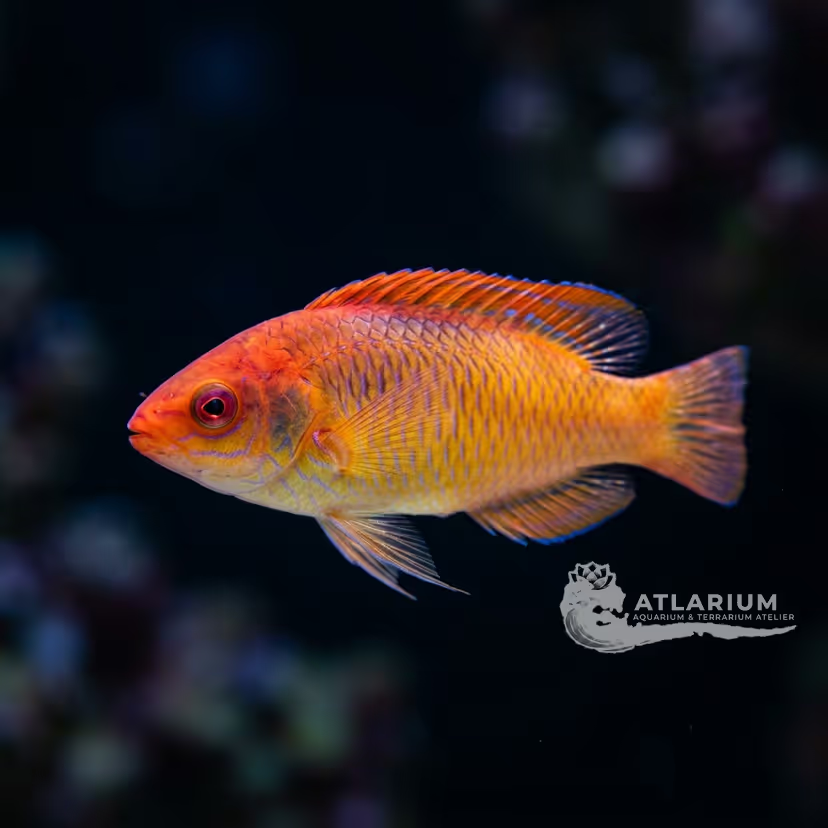
View details->
Flame wrasse

Flame wrasse

Cirrhilabrus jordani

View details->
Katherine's fairy wrasse

Katherine's fairy wrasse

Cirrhilabrus katherinae
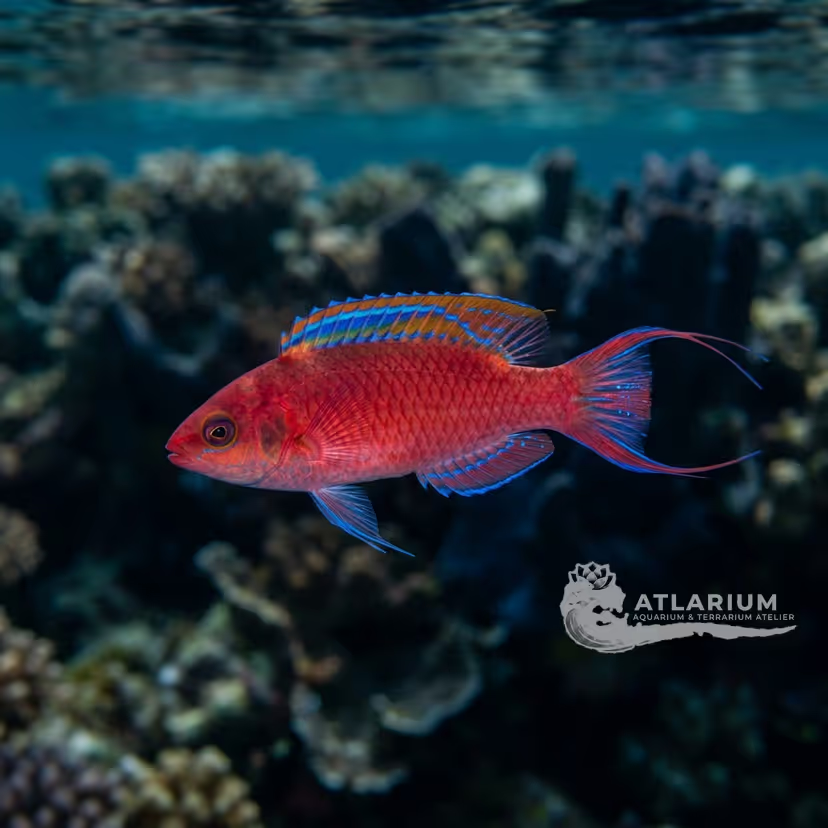
View details->
Kato's Fairy Wrasse

Kato's Fairy Wrasse

Cirrhilabrus katoi
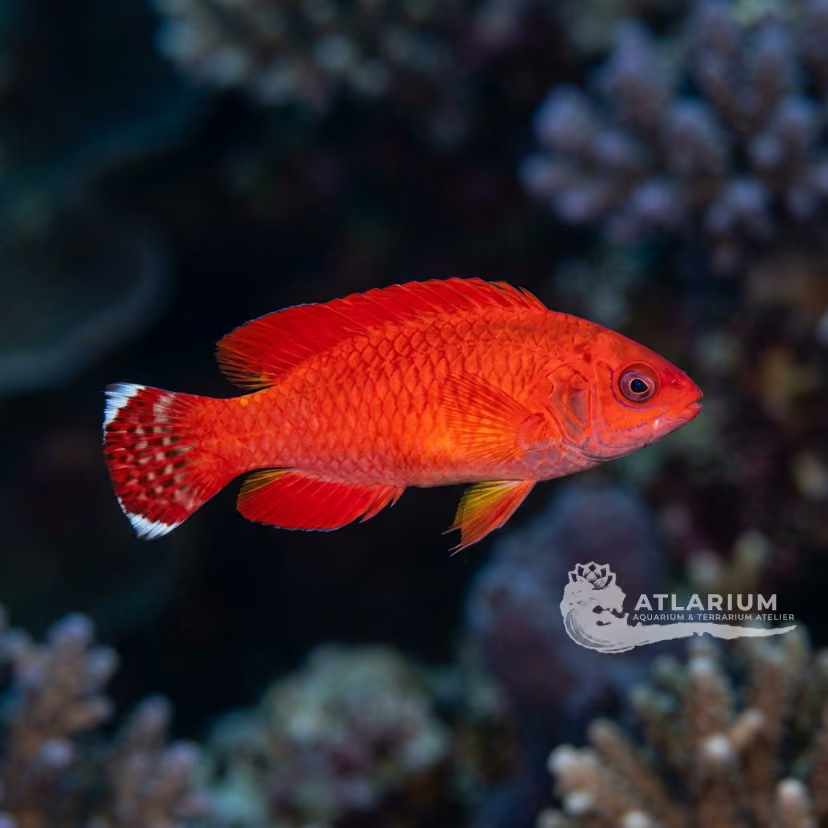
View details->
Magma Wrasse

Magma Wrasse

Cirrhilabrus shutmani

View details->
Marjorie's Wrasse

Marjorie's Wrasse

Cirrhilabrus marjorie
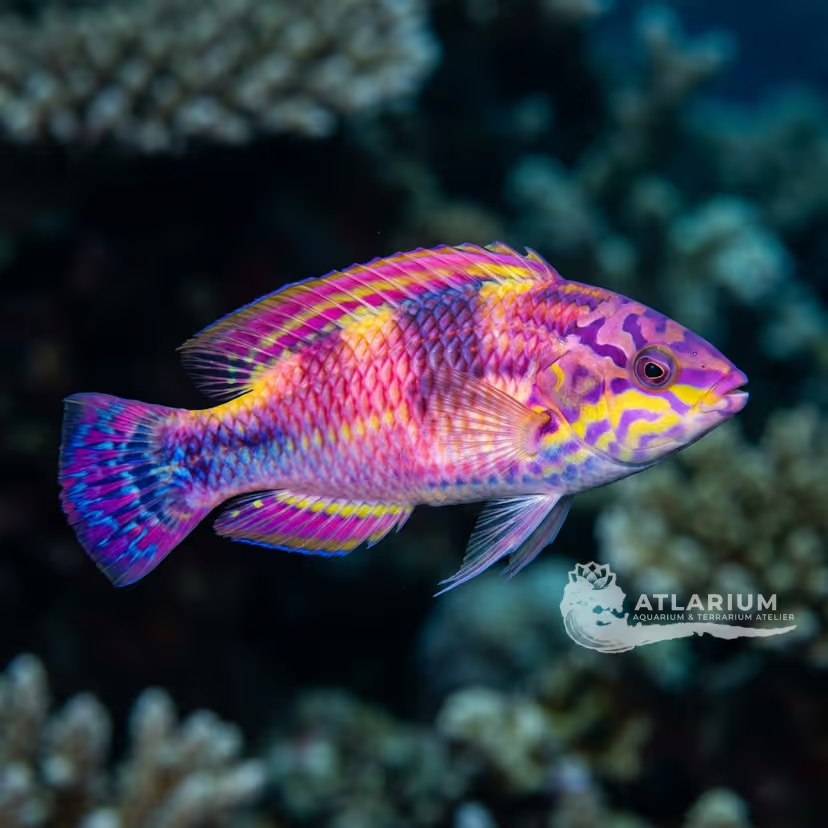
View details->
Mutant Wrasse

Mutant Wrasse

Cirrhilabrus apterygia
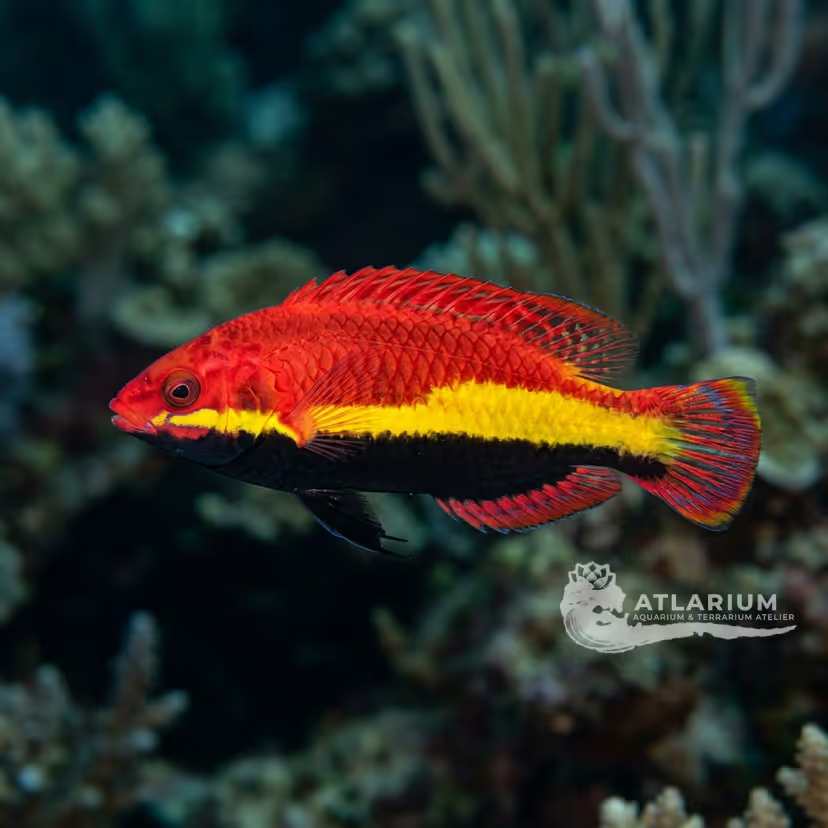
View details->
Naoko's Fairy Wrasse

Naoko's Fairy Wrasse

Cirrhilabrus naokoae

View details->

Recommended companions

Compatible cards from coherent ecosystems with matching parameters.
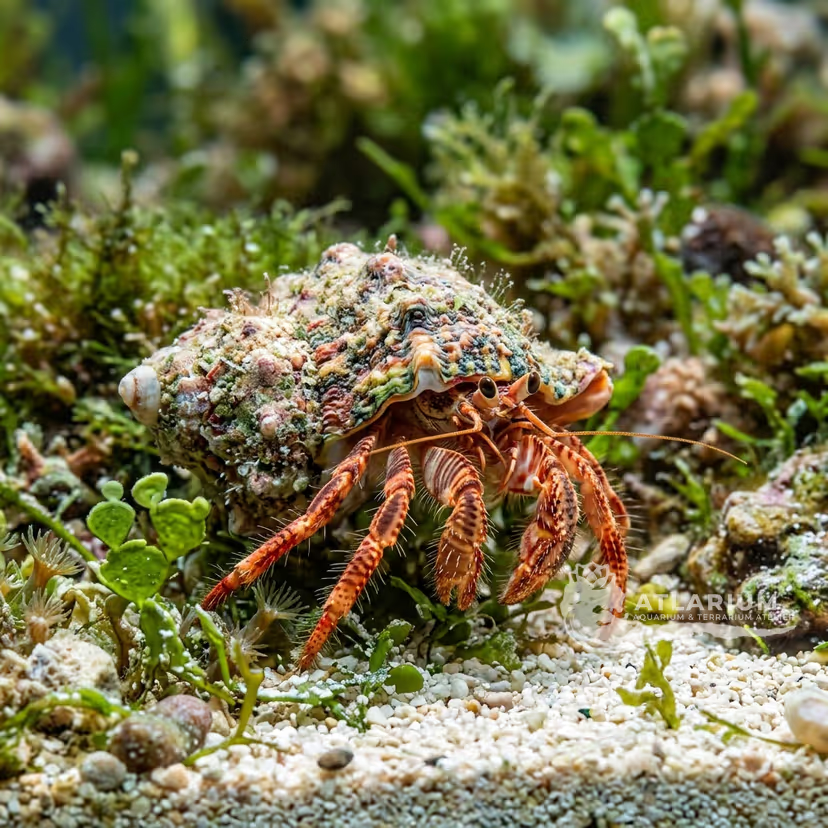
Antillean hermit crab
Invertebrate

Antillean hermit crab

Clibanarius brasiliensis

View details->
Arethusa Hermit Crab
Invertebrate

Arethusa Hermit Crab

Clibanarius arethusa

View details->
Bahia Cleaner Shrimp
Invertebrate

Bahia Cleaner Shrimp

Lysmata bahia

View details->
Boschma's hermit crab
Invertebrate

Boschma's hermit crab

Clibanarius boschmai

View details->
Cook's hermit crab
Invertebrate

Cook's hermit crab

Clibanarius cooki

View details->
Danai's hermit crab
Invertebrate

Danai's hermit crab

Clibanarius danai

View details->
De Man's Hermit Crab
Invertebrate

De Man's Hermit Crab

Clibanarius demani

View details->
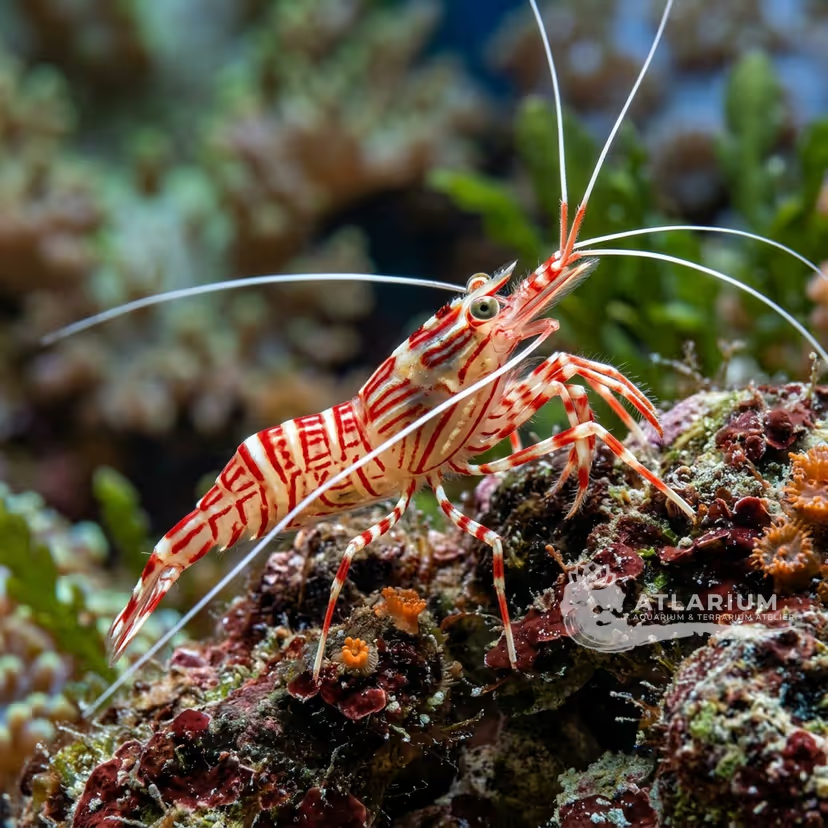
Feather Duster Worm
Invertebrate

Feather Duster Worm

Sabellastarte spectabilis
View details->
Lysmata prima shrimp
Invertebrate

Lysmata prima shrimp

Lysmata

View details->
Malagasy cleaner shrimp
Invertebrate

Malagasy cleaner shrimp

Lysmata malagasy

View details->
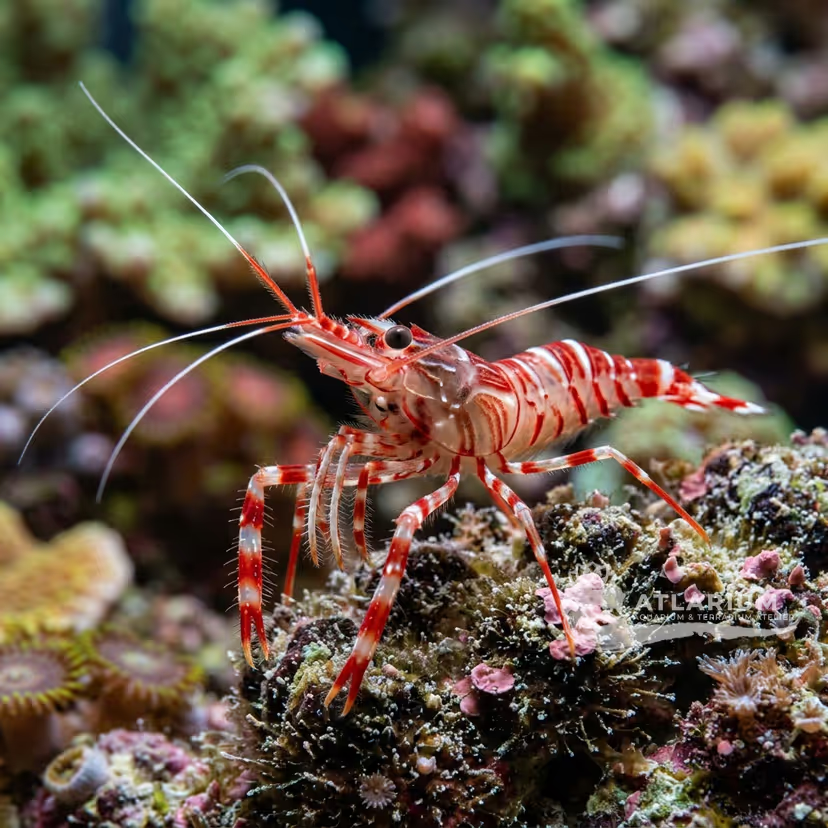
African snapping shrimp
Invertebrate

African snapping shrimp

Alpheus africanus
View details->
Anker's Cleaner Shrimp
Invertebrate

Anker's Cleaner Shrimp

Lysmata ankeri

View details->
Armed Snapping Shrimp
Invertebrate

Armed Snapping Shrimp

Alpheus armatus

View details->
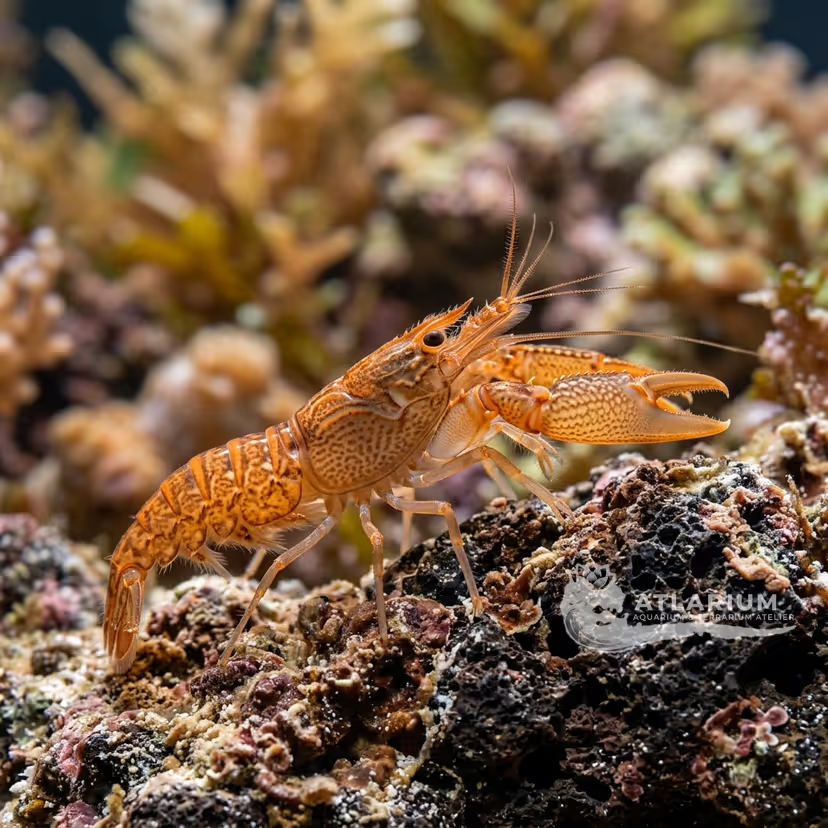
Blood-spotted Hermit Crab
Invertebrate

Blood-spotted Hermit Crab

Clibanarius cruentatus
View details->
Bouvier's snapping shrimp
Invertebrate

Bouvier's snapping shrimp

Alpheus bouvieri

View details->
Camel shrimp
Invertebrate

Camel shrimp

Rhynchocinetes durbanensis

View details->

Similar care

Cards with similar requirements, difficulty, habitat, and husbandry profile.
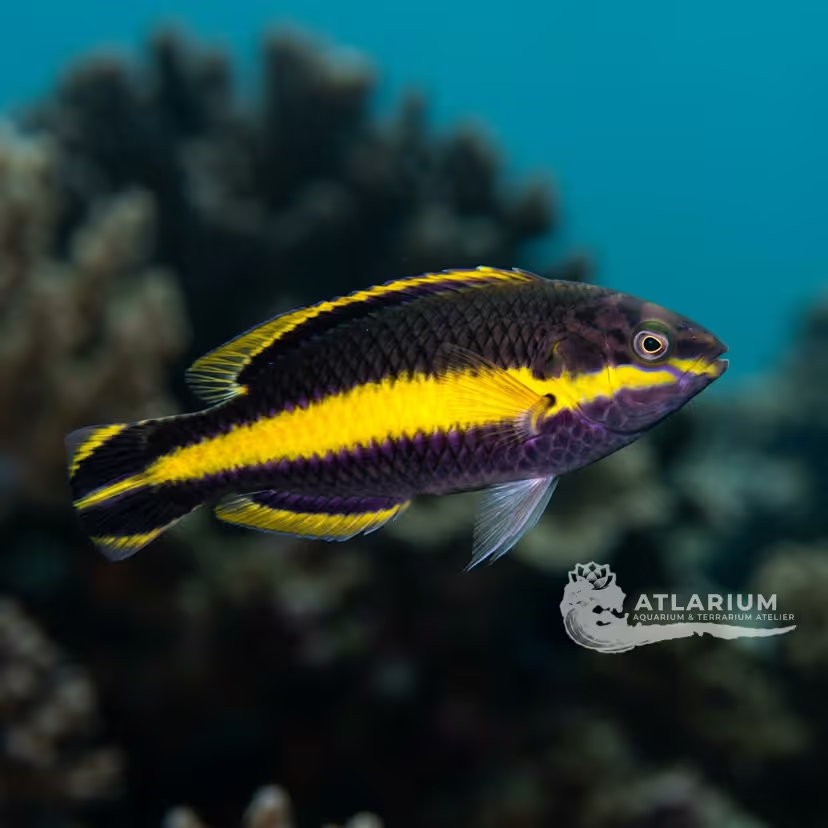
Yellowband Wrasse

Yellowband Wrasse

Cirrhilabrus luteovittatus
View details->
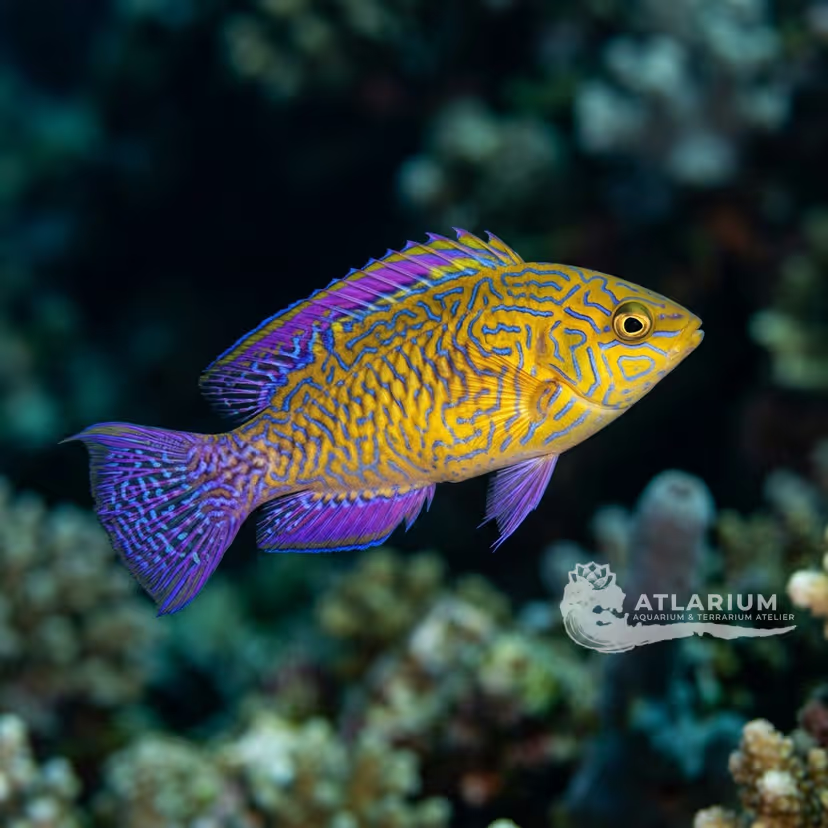
Rhomboid Fairy Wrasse

Rhomboid Fairy Wrasse

Cirrhilabrus rhomboidalis
View details->
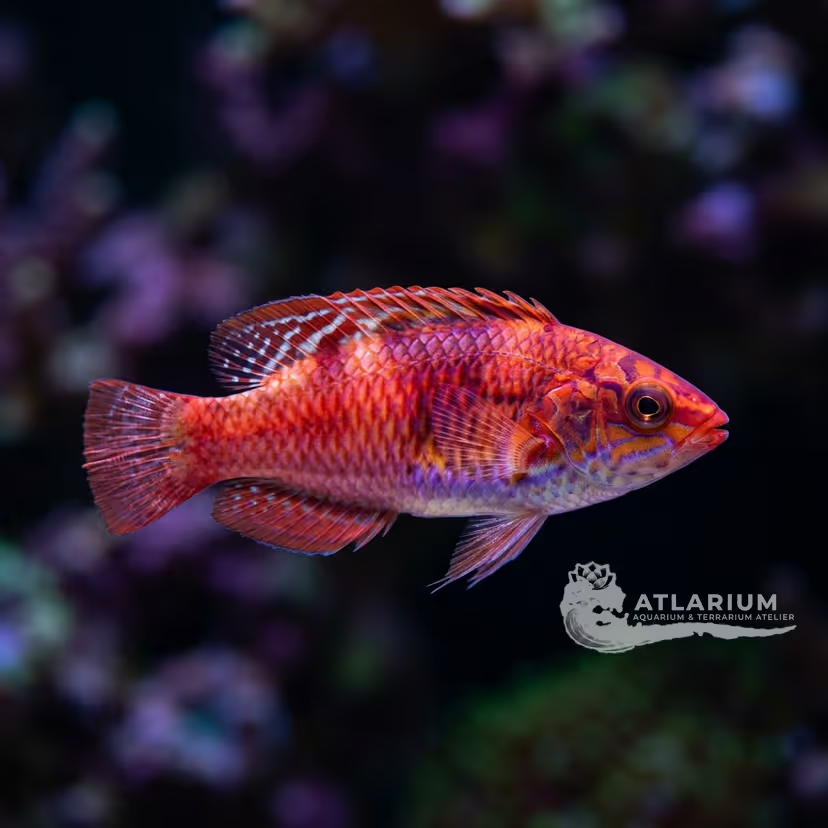
Ruby fairy wrasse

Ruby fairy wrasse

Cirrhilabrus rubeus
View details->
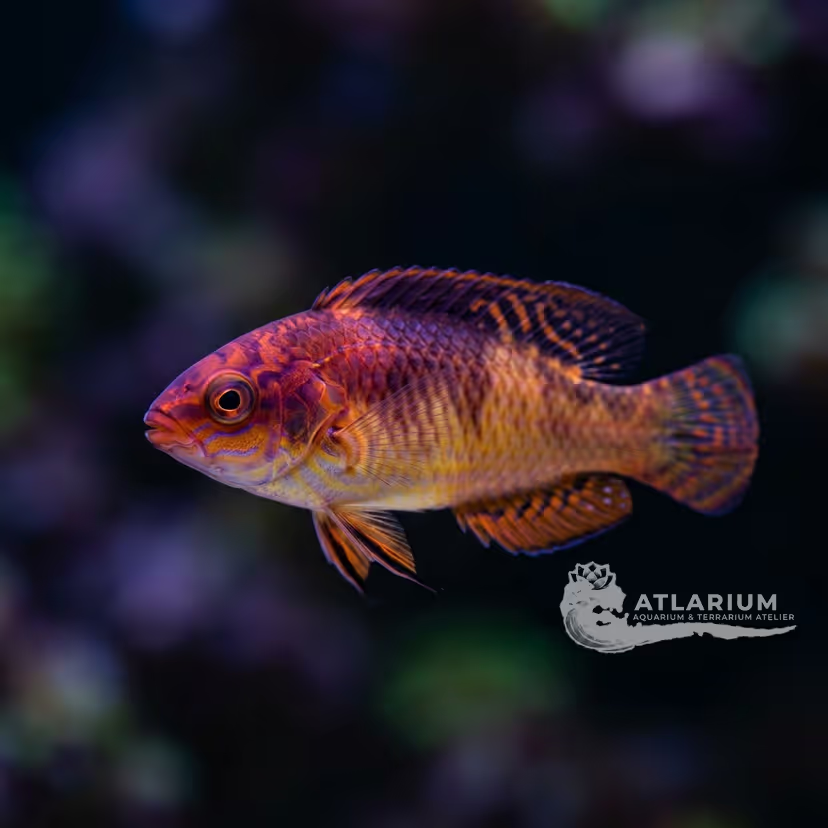
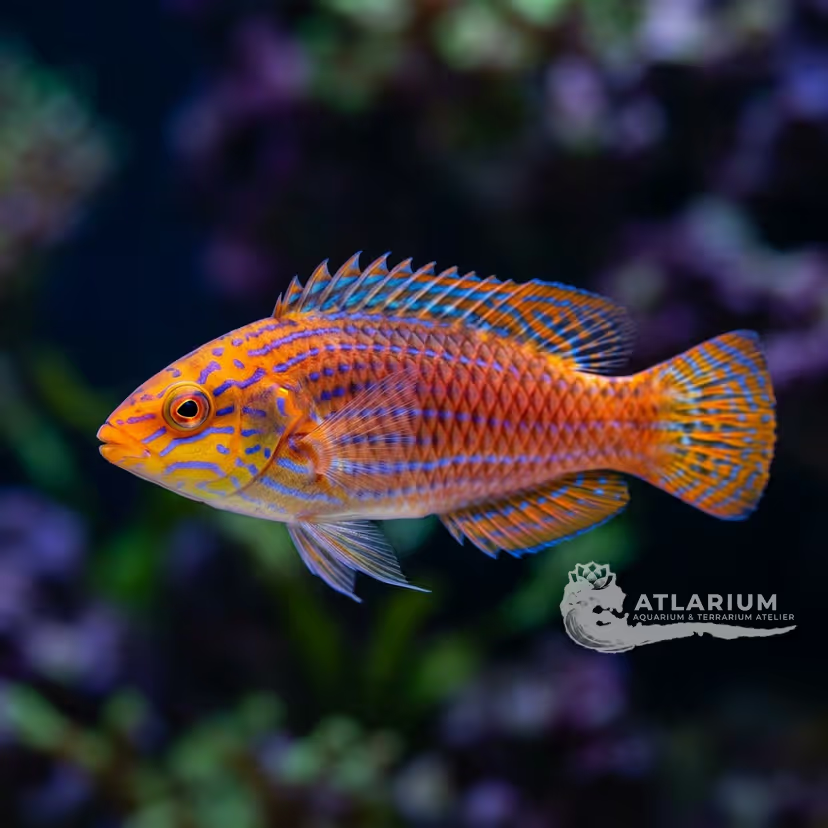
Pyle's fairy wrasse

Pyle's fairy wrasse

Cirrhilabrus pylei
View details->
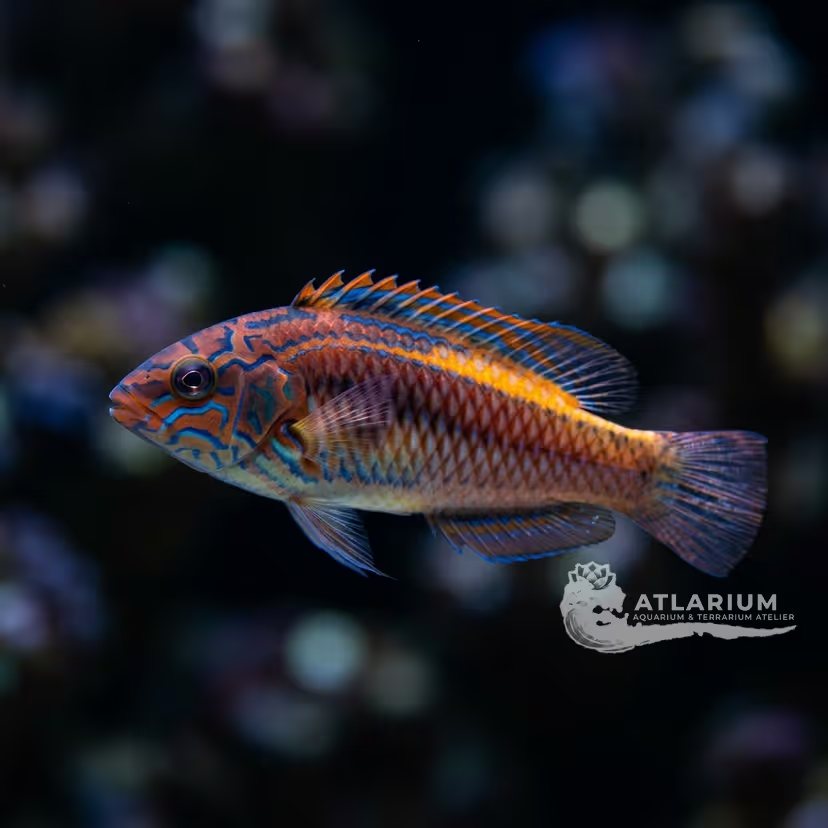
Lined fairy wrasse

Lined fairy wrasse

Cirrhilabrus lineatus
View details->
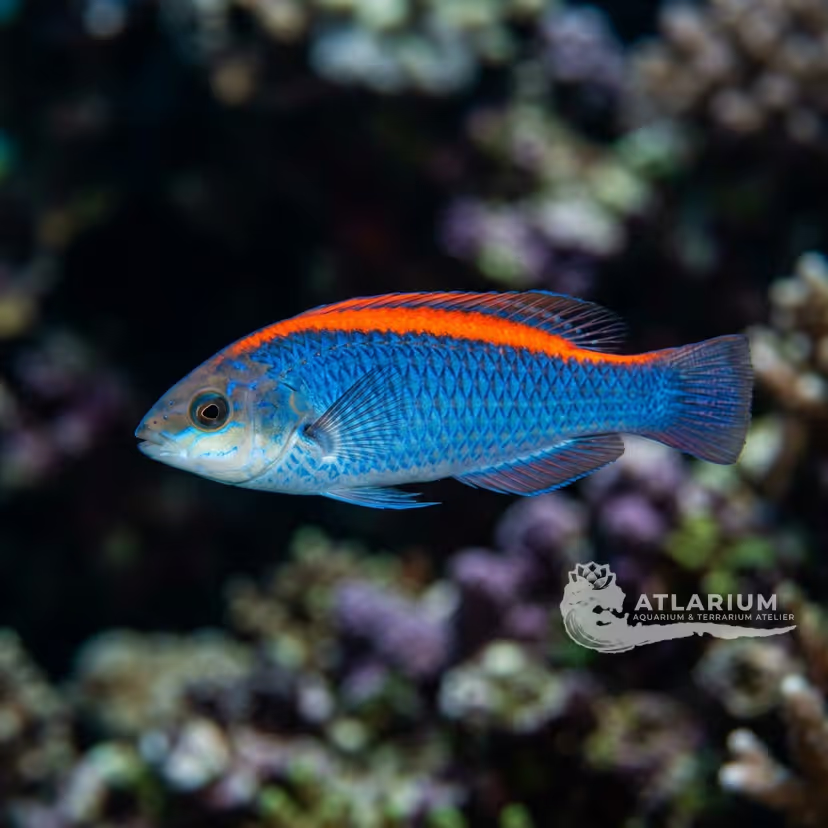
Labout's Fairy Wrasse

Labout's Fairy Wrasse

Cirrhilabrus laboutei
View details->
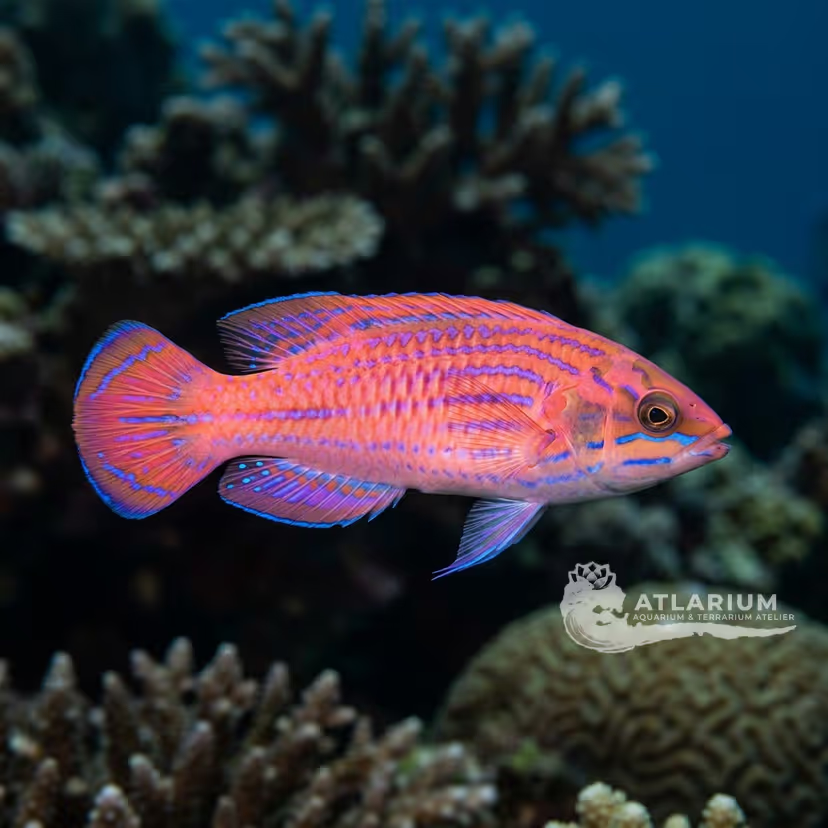
Orange-back Fairy Wrasse

Orange-back Fairy Wrasse

Cirrhilabrus aurantidorsalis
View details->
Earle's Fairy Wrasse

Earle's Fairy Wrasse

Cirrhilabrus earlei

View details->
Blueside wrasse

Blueside wrasse

Cirrhilabrus cyanopleura
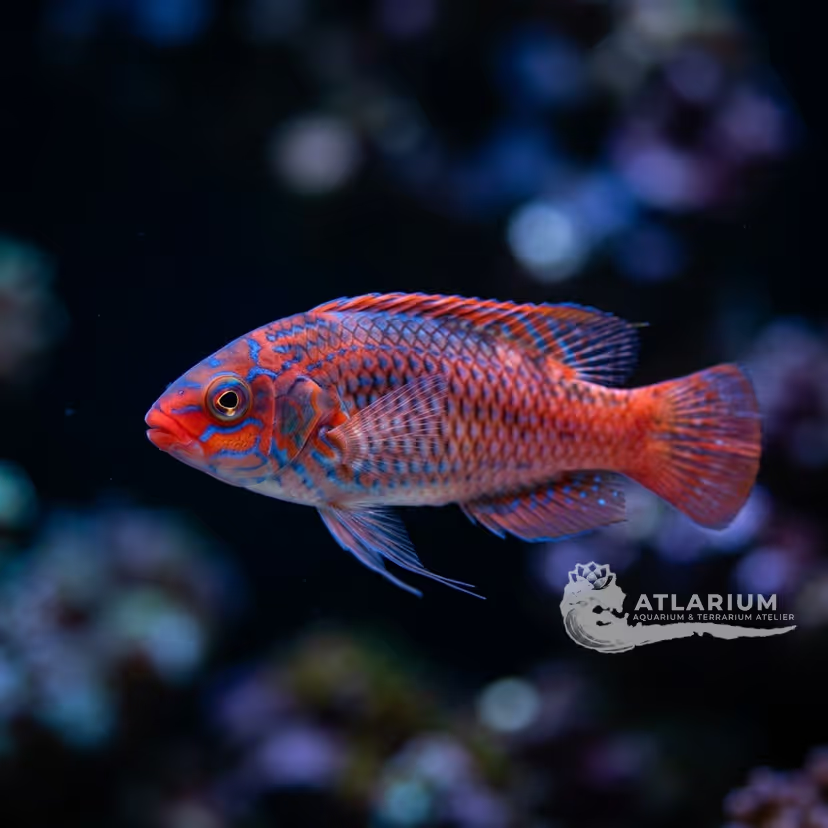
View details->
Scott's wrasse

Scott's wrasse

Cirrhilabrus scottorum
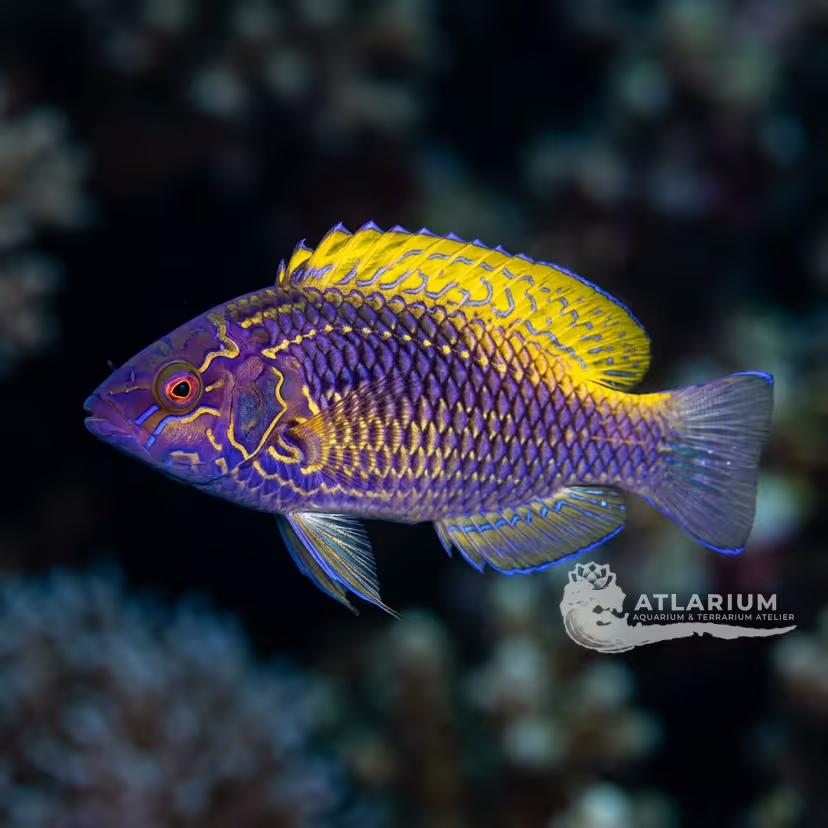
View details->
Vibranium fairy wrasse

Vibranium fairy wrasse

Cirrhilabrus wakanda
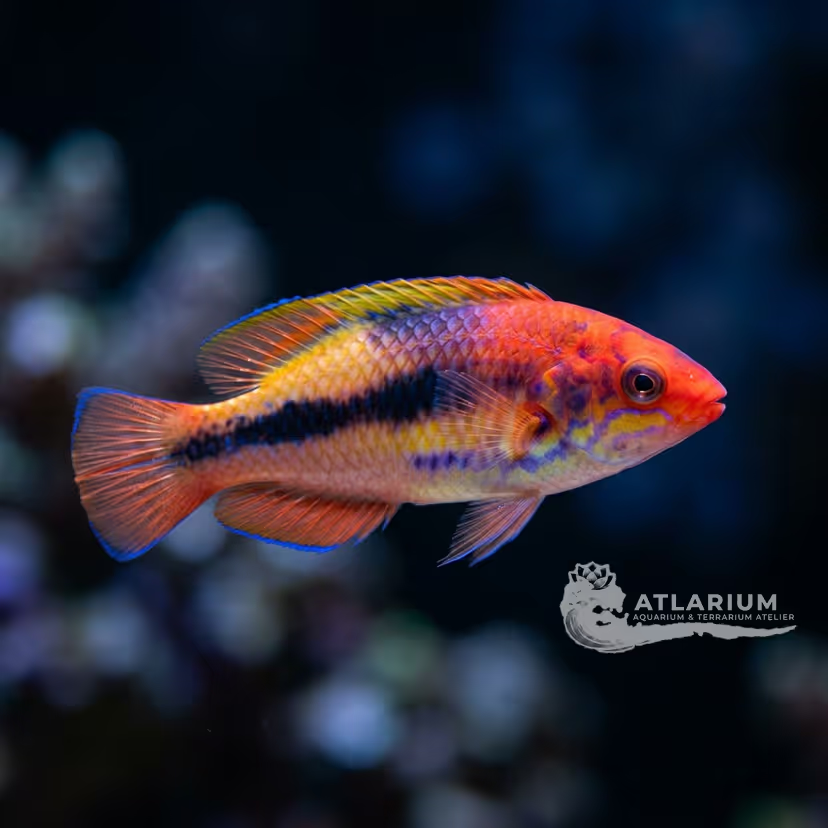
View details->
Lubbock's fairy wrasse

Lubbock's fairy wrasse

Cirrhilabrus lubbocki
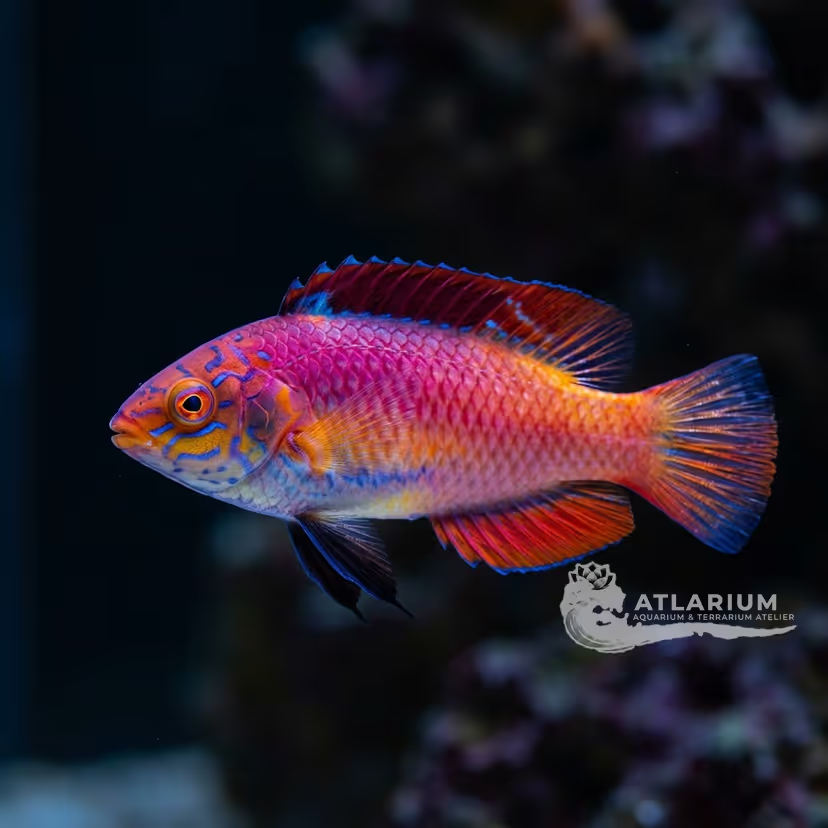
View details->
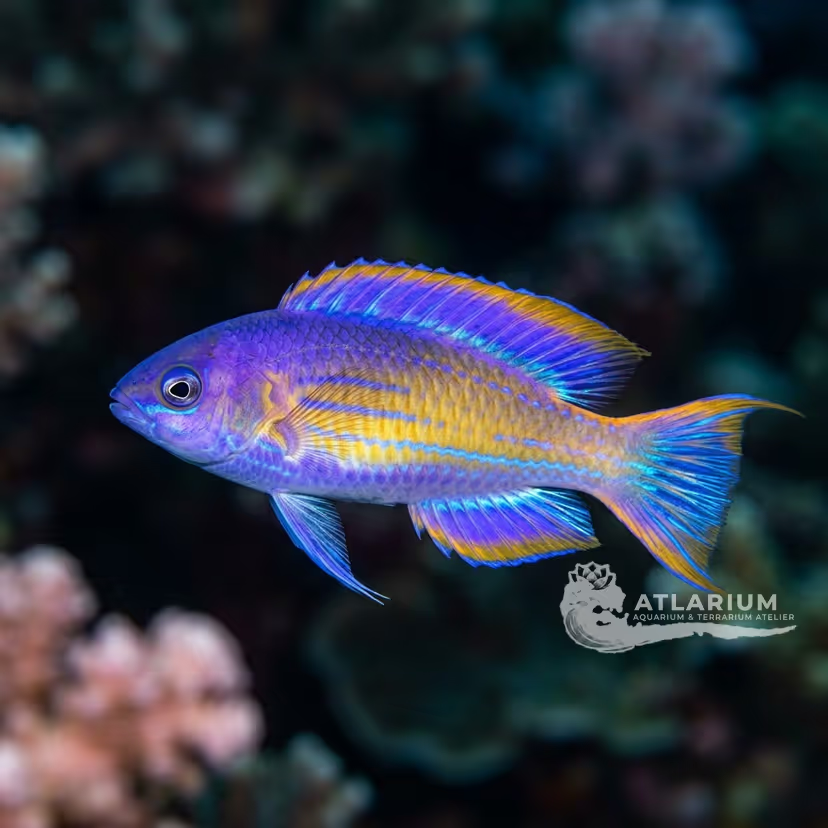
Redfin Fairy Wrasse

Redfin Fairy Wrasse

Cirrhilabrus rubripinnis
View details->
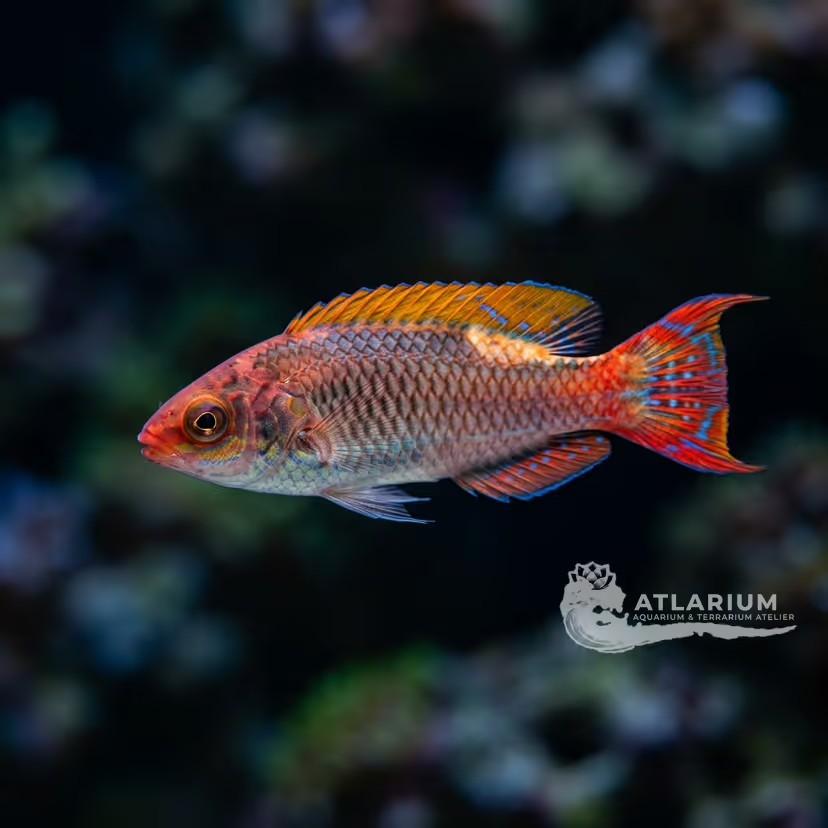
Claire's Fairy Wrasse

Claire's Fairy Wrasse

Cirrhilabrus claire
View details->
Temminck's Fairy Wrasse

Temminck's Fairy Wrasse

Cirrhilabrus temminckii

View details->
Gold-lined wrasse

Gold-lined wrasse

Coris aurilineata

View details->
Last updated: 06/30/2026
Red-fin Fairy Wrasse (Cirrhilabrus adornatus) Care Guide & Tank Setup | Atlarium