Samolus valerandi
Samolus valerandi
Samolus valerandi is an ideal foreground plant for aquariums, distinguished by its slow growth rate and compact rosette form. It contributes a vibrant, natural green aesthetic to any layout, requiring minimal maintenance once established.
Water Temperature
4 - 35 °C
pH Value
6 - 9
Water type
Freshwater
Light
Medium to High
CO2
Low - High
Expected height
15 cm
Expected width
20 cm
KH
7 - 30 dKH

Species description
Geographical Origin and Habitat: Samolus valerandi, often known as Seaside Pimpernel or Water Pimpernel, boasts a remarkable cosmopolitan distribution, thriving across nearly all continents including Europe, Asia, Africa, the Americas, and Australia. This adaptable species is typically found in moist, semi-aquatic environments such as freshwater stream banks, marshes, estuaries, and coastal areas with brackish or saline water. Its exceptional resilience allows it to flourish under a wide array of environmental conditions, demonstrating a remarkable tolerance to variations in salinity and soil moisture. This broad adaptability makes it a robust and intriguing species for aquascaping.
Taxonomy & Genetics: Belonging to the family Primulaceae, Samolus valerandi is the most commonly encountered species of the genus Samolus in aquascaping, although the genus comprises other lesser-known species. Its classification within this family highlights its close evolutionary ties to terrestrial flowering plants, underscoring its adaptability to a semi-aquatic existence. Genetically, its widespread global distribution suggests a significant genetic diversity, enabling it to colonize diverse habitats and withstand various environmental stressors, ensuring its resilience in an aquarium setting.
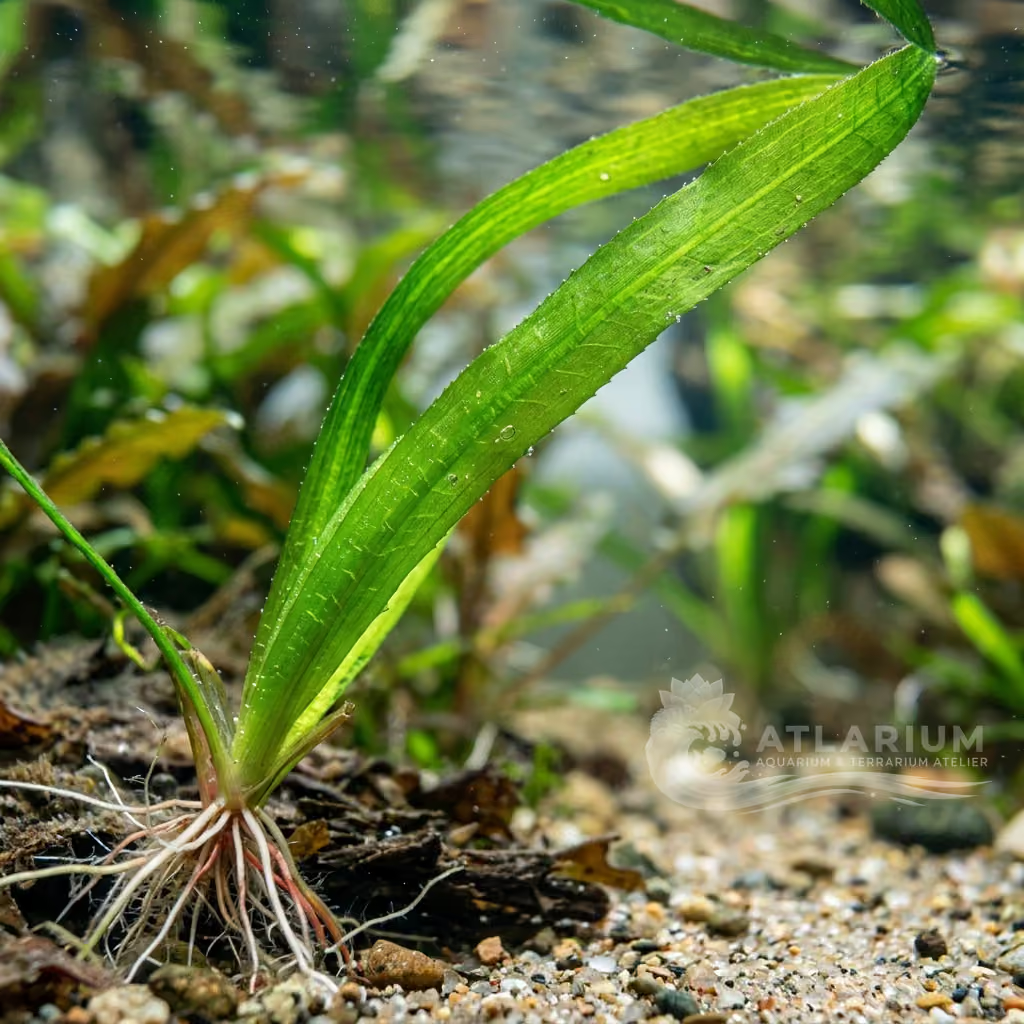
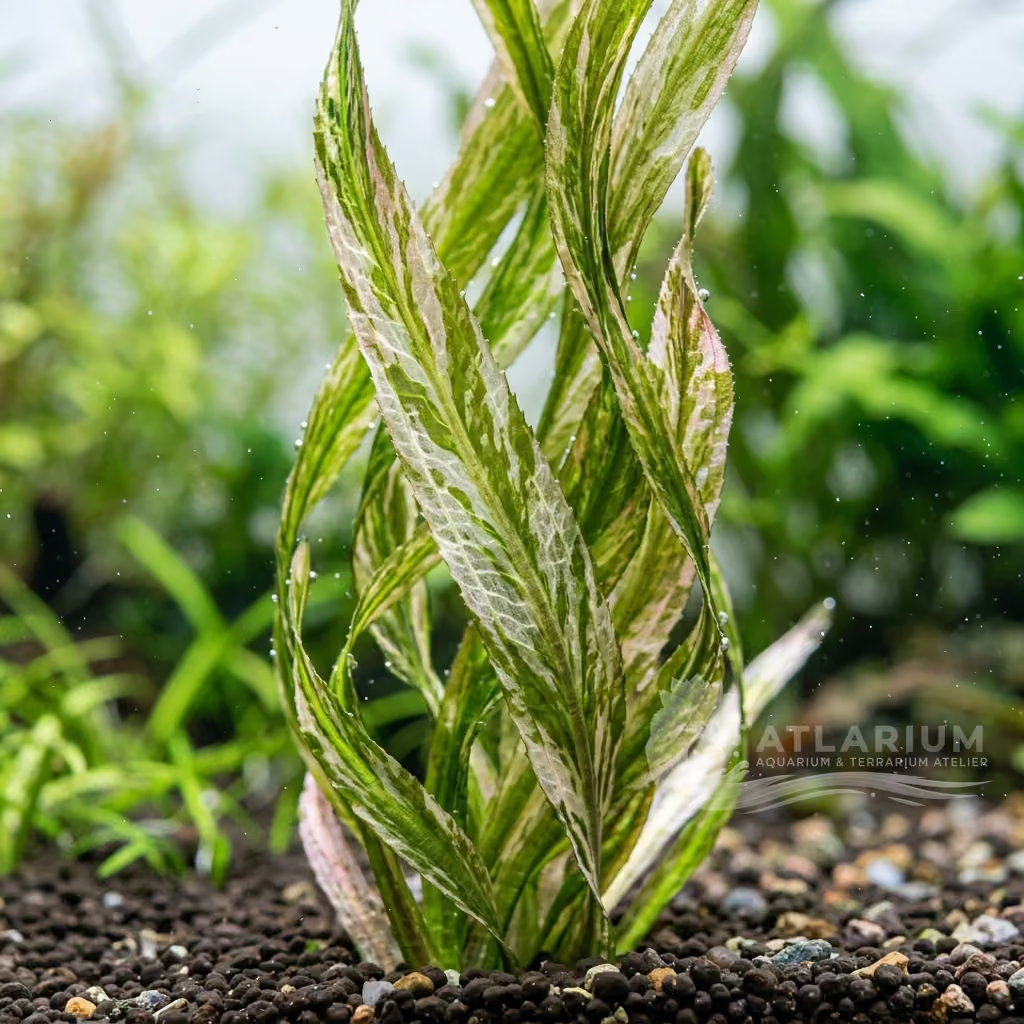
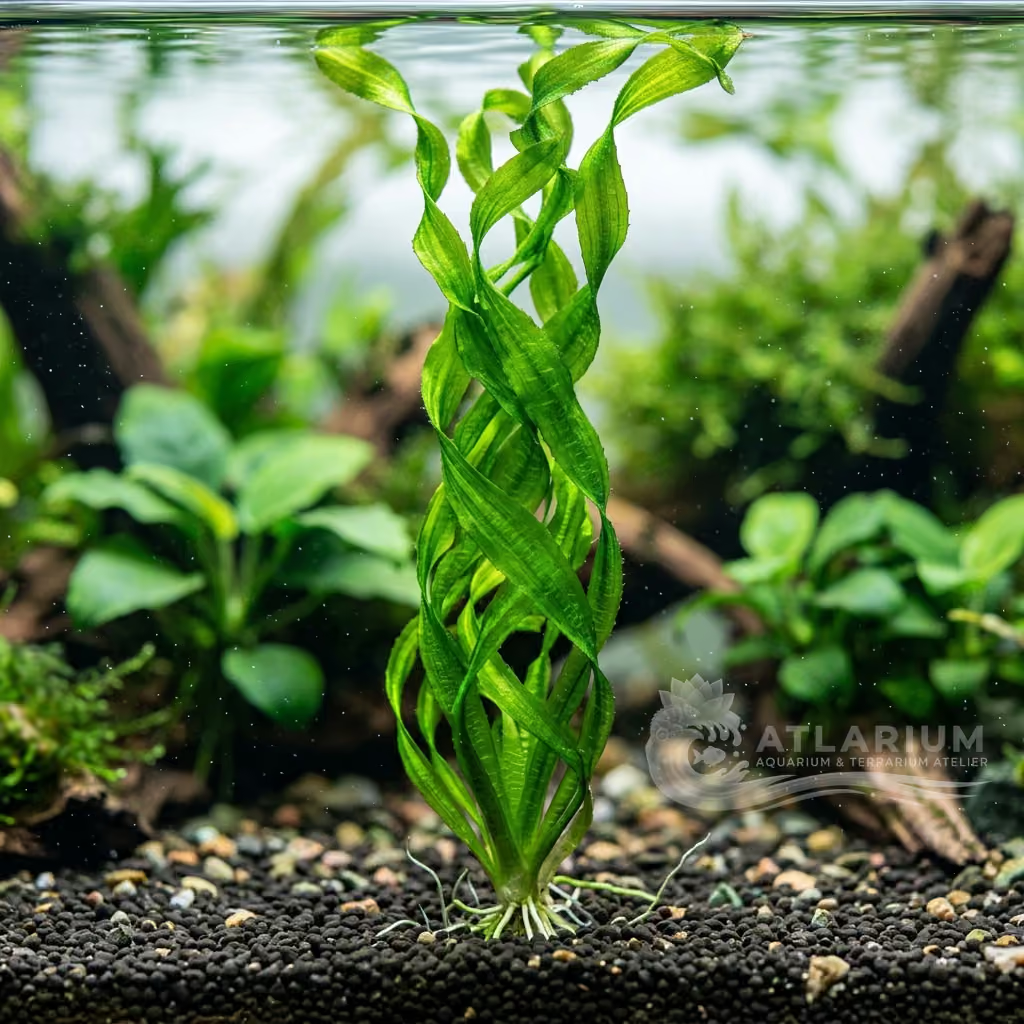
Physical Structure: This plant is characterized by a basal rosette of leaves that grow compactly and close to the substrate, making it an excellent choice for the aquarium foreground. The leaves are typically obovate or spatulate, featuring an entire margin and a smooth, somewhat fleshy surface, contributing to a tidy and dense appearance. Under optimal conditions, Samolus valerandi may produce an erect flower stalk that emerges above the waterline, bearing small, five-petaled white flowers, a testament to its amphibious nature and overall health. Its root system is modest but sufficiently robust to anchor it firmly and absorb nutrients from the substrate.
Color & Texture: The foliage of Samolus valerandi displays a vibrant, bright green hue, which can vary slightly in intensity depending on lighting conditions and nutrient availability within the aquarium. The leaf surface is generally smooth and exhibits a slightly succulent texture, imparting a fresh and healthy appearance to the entire rosette. This simple yet appealing texture contributes to a clean and natural aesthetic in the aquascape, providing a pleasant contrast to plants with different forms or colors. Its lack of intense red or variegated coloration makes it an elegant and understated choice, perfect for layouts seeking a classic, minimalist appeal.

Care, breeding and tankmates
Lighting & CO2: Samolus valerandi necessitates medium to high lighting to thrive and maintain its desirable compact and healthy growth. Insufficient light levels can lead to etiolation (stretching) of the leaves and stunted development, diminishing its visual appeal in the foreground. While it can survive in lower light, its full beauty and vitality are best realized under intense illumination, which promotes more vibrant coloration and a bushier, more appealing form. CO2 supplementation, though not strictly essential for survival, significantly accelerates its inherently slow growth rate and enhances overall robustness, ensuring efficient photosynthesis and deterring unsightly algal growth on its leaves.
Nutrition & Substrate: As a rosette plant that anchors itself into the substrate, Samolus valerandi greatly benefits from a nutrient-rich substrate fortified with essential micronutrients and macroelements, such as iron, potassium, and nitrogen. Clay, laterite, or specialized aquatic plant substrates are ideal for providing a consistent supply of nourishment directly to its root system, crucial for its slow but steady growth. While liquid fertilizers for the
Water Chemistry: This species exhibits remarkable tolerance to a broad spectrum of water chemistry parameters, flourishing in temperatures ranging from 4.0 to 35.0 C, pH between 6.0 and 9.0, and KH from 7.0 to 30.0. Despite this wide adaptability, maintaining stable parameters within the middle of these ranges is advisable to promote optimal growth and minimize stress on the plant. Slightly alkaline and hard water conditions are often well-tolerated, reflecting its origins in habitats with varied mineral content and its natural resilience. Stability in parameters is generally more critical than hitting exact values, provided they remain within its wide acceptable range, ensuring a favorable environment.
Space Management & Placement: Due to its slow growth rate and rosette-forming nature, Samolus valerandi is perfectly suited for the aquarium foreground. It should be planted individually or in small clusters, spaced adequately to allow each rosette to fully expand its leaves without overshadowing neighboring plants. Its contained stature makes it an excellent choice for creating a green carpet effect or for delineating specific areas within the underwater landscape, adding depth and structure. In larger aquariums or those with a specific design, it can also be effectively utilized in the midground to establish a lower focal point or fill intermediate spaces with its bright green foliage.
Pruning: Pruning of Samolus valerandi is infrequently required owing to its slow growth habit and compact rosette form. When the outer leaves begin to yellow, show signs of deterioration, or become damaged, they can be carefully removed with sharp scissors, cutting them at the base of the rosette. This cleaning operation prevents the accumulation of organic debris that could foster algal growth or water degradation, while also ensuring better water circulation and light penetration to younger leaves and the plant's core, thus maintaining its health and aesthetic appeal.
Risks & Diseases: Samolus valerandi is generally a robust plant and not particularly susceptible to specific diseases, provided that aquarium conditions are stable and appropriate for its needs. The primary risks stem from nutrient deficiencies, which can manifest as chlorotic or necrotic leaves, and algal infestations, especially when light or nutrient imbalances occur, creating a favorable environment for algae. Excessive algal growth on the leaves can inhibit the plant's photosynthesis; gentle cleaning of the leaves and correction of aquarium parameters are essential for its long-term health. Also, be mindful of herbivorous snails or fish that might damage its tender foliage.

Geographic origin and distribution
Samolus valerandi, often known as Seaside Pimpernel or Water Pimpernel, boasts a remarkable cosmopolitan distribution, thriving across nearly all continents including Europe, Asia, Africa, the Americas, and Australia. This adaptable species is typically found in moist, semi-aquatic environments such as freshwater stream banks, marshes, estuaries, and coastal areas with brackish or saline water. Its exceptional resilience allows it to flourish under a wide array of environmental conditions, demonstrating a remarkable tolerance to variations in salinity and soil moisture. This broad adaptability makes it a robust and intriguing species for aquascaping.
Origin
Europe, Mediterranean, and West AsiaExtra-Amazon South AmericaNorth AmericaAfrica and MadagascarSouth and Southeast AsiaEast AsiaAustralia, New Guinea, and Oceania

Plant profile
- Placement
- Foreground
- Place Samolus valerandi in the midground or background of the aquarium. It needs enough space to avoid shading neighboring species. Proper placement ensures steady light exposure and water flow.
- Botanical form
- Rosette
- Samolus valerandi features a distinct structural form with well-defined leaves. Its stem and root structures anchor firmly into the substrate. The overall appearance provides excellent visual texture underwater.
- Growth
- Slow
- The growth rate of Samolus valerandi is generally moderate under optimal conditions. Adding CO2 injection will significantly accelerate its development. However, it can adapt to slower growth in low-tech setups.
- Substrate
- High
- *Samolus valerandi*, also known as the water pimpernel, thrives best when planted in a nutrient-rich substrate like aqua soil to support its robust root system. This plant relies heavily on root feeding, absorbing essential macro and micronutrients directly from the substrate layer. A minimum substrate depth of 4-5 cm is recommended to allow adequate root expansion and secure anchoring. Providing a fertile bed will encourage vigorous growth and the development of healthy, vibrant green rosettes.
- Column fertilization
- Optional
- Liquid fertilization is very beneficial for Samolus valerandi. It absorbs dissolved minerals directly from the water column. Dosing a complete micronutrient fertilizer twice a week is recommended.
- Root fertilization
- Required
- A nutrient-rich substrate strongly supports the root system of Samolus valerandi. Adding root tabs near its base provides essential macronutrients. This promotes a stronger base and healthier overall growth.
- Trimming
- Occasional
- Regular trimming keeps Samolus valerandi looking neat and prevents overgrowth. Cut the stems just above a node to encourage branching. Remove any decaying or yellowing leaves to maintain water quality.
- Propagation
- Division
- Propagation of Samolus valerandi is straightforward by taking stem cuttings. Replant the healthy cut portions directly into the substrate. They will develop new roots within a week or two.
- Sensitivity
- Moderate
- Samolus valerandi is somewhat sensitive to sudden fluctuations in water parameters. It prefers stable temperatures and consistent CO2 levels. Algae can grow on its leaves if lighting is too intense.
- Layout role
- group, Foreground, Midground, Nano
- Samolus valerandi plays a crucial role in creating depth in an aquascape. Its unique texture contrasts beautifully with fine-leaved plants. It works well as a focal point or a transition plant.

Related species
Recommendations grouped by close relatives, companion choices, and similar care.