Lysimachia nummularia
Lysimachia nummularia
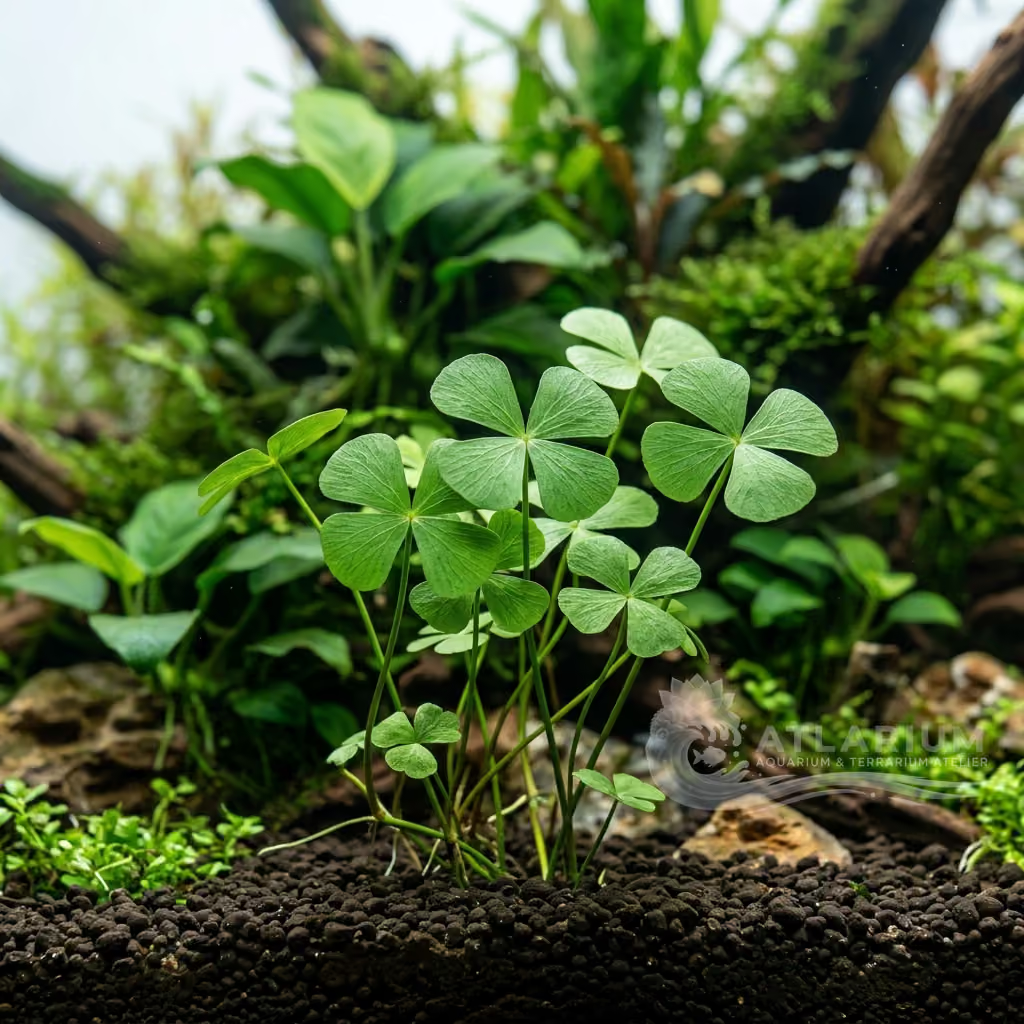
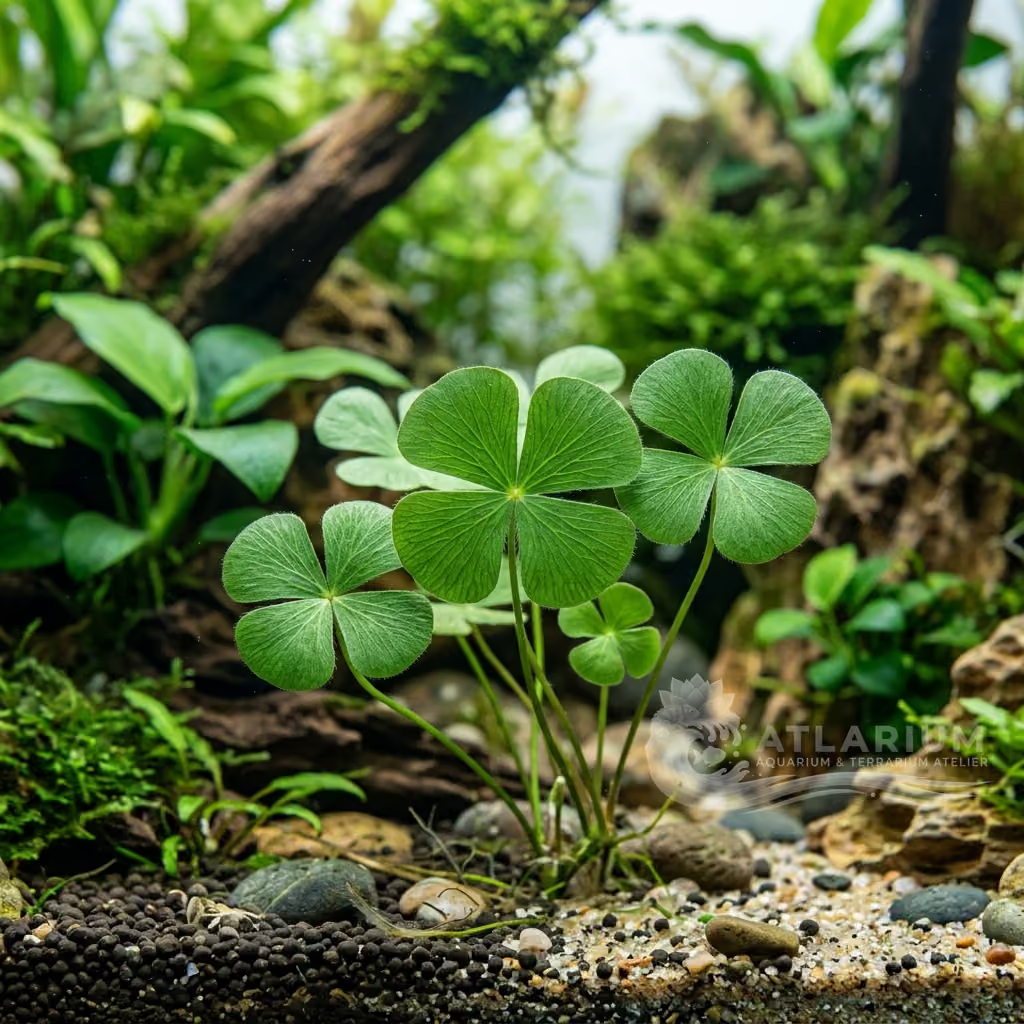
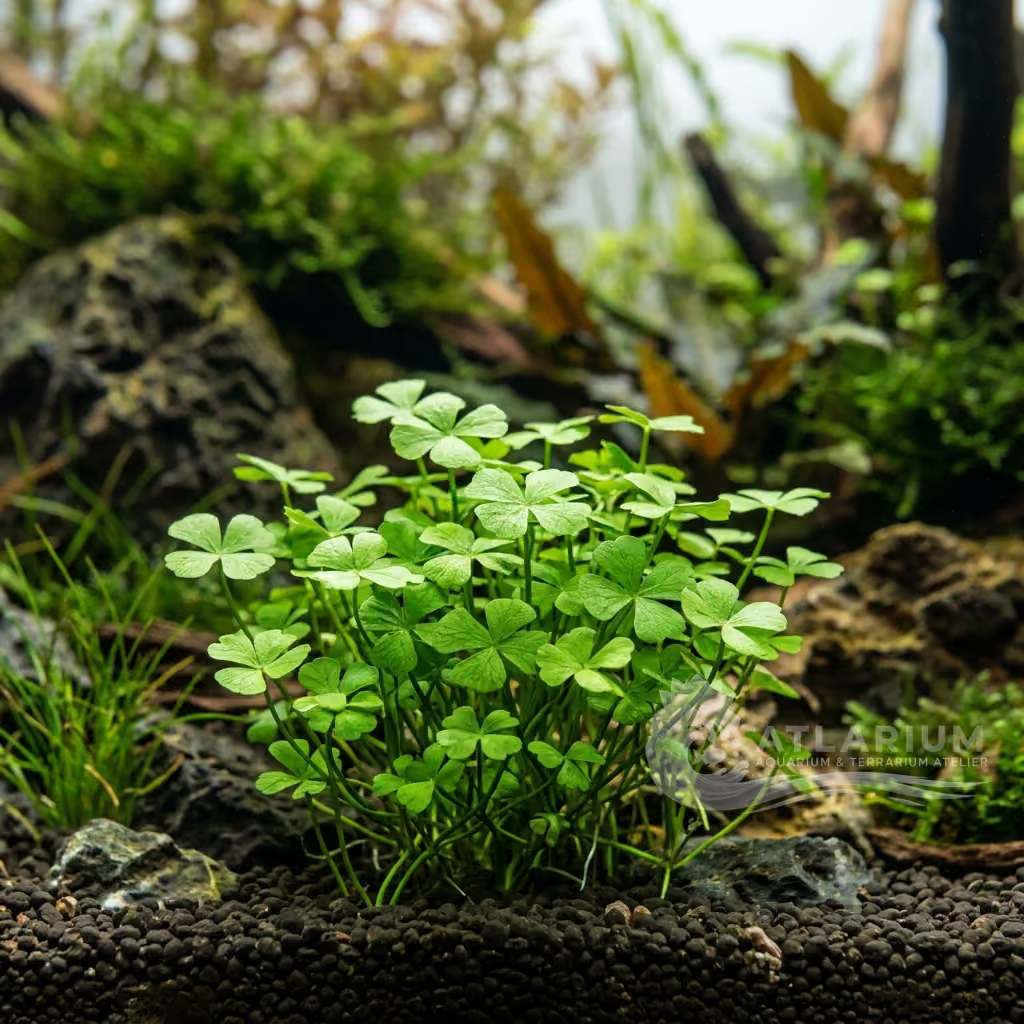
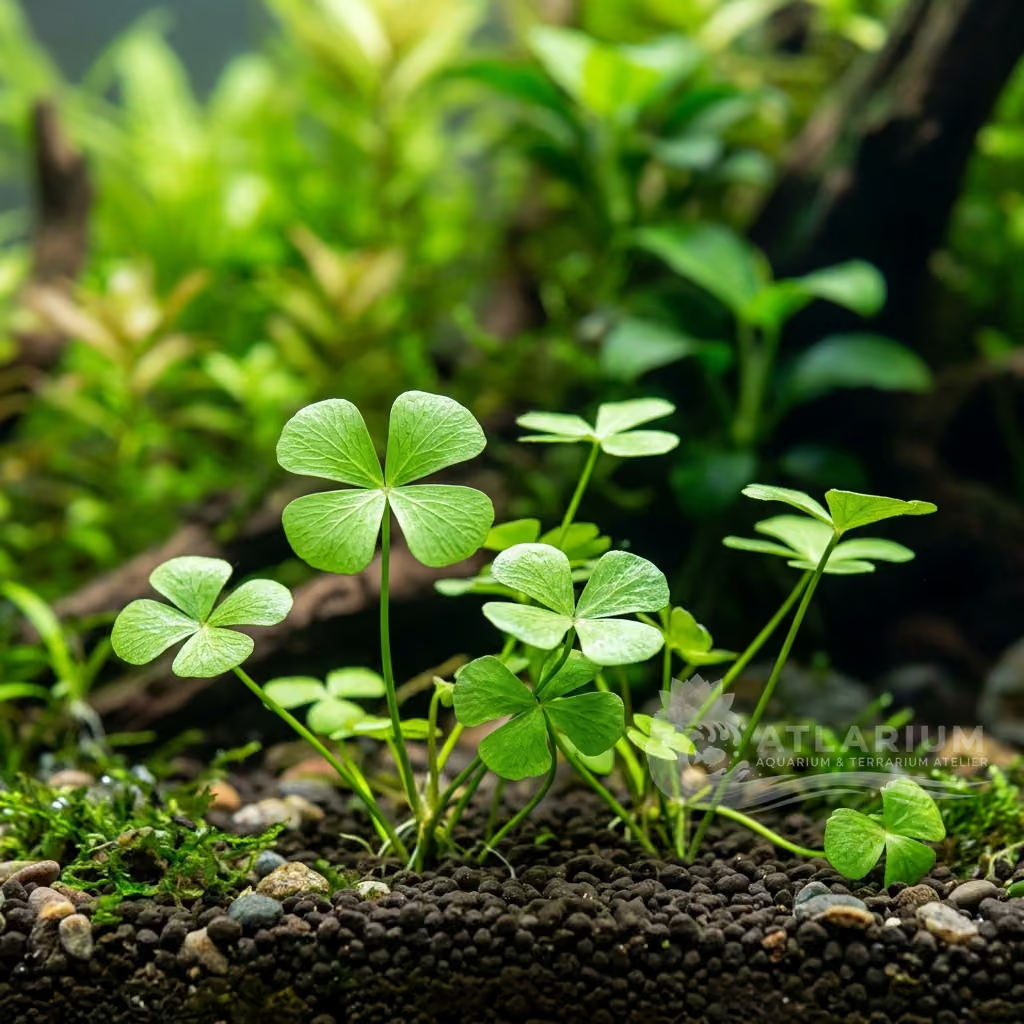
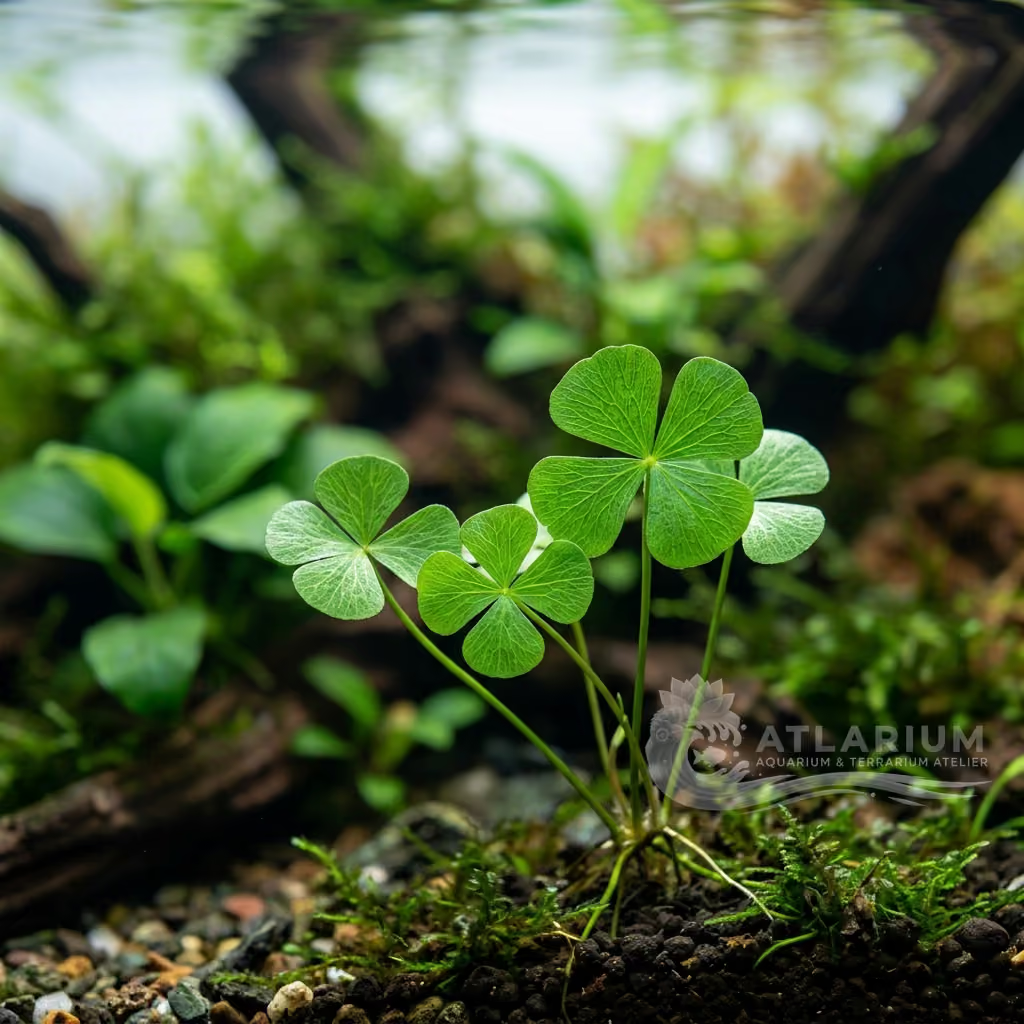
Lysimachia nummularia, commonly known as Moneywort or Creeping Jenny, is a popular aquatic plant noted for its bright green, round leaves and trailing growth habit. It serves as an excellent foreground or midground plant, forming dense carpets in well-lit aquariums.
Water Temperature
4 - 30 °C
pH Value
6 - 7.5
Water type
Freshwater
Light
Medium to High
CO2
Low - High
KH
2 - 10 dKH

Species description
Geographical Origin and Habitat: Lysimachia nummularia originates from widespread areas across Europe and Western Asia, where it thrives in moist and semi-aquatic environments. It is commonly found along the banks of rivers, streams, and ponds, often in marshy areas or on moist, well-drained soils. This species is remarkably adaptable, capable of growing both fully submerged and emergent, exhibiting significant phenotypic plasticity based on environmental conditions. Its robustness has allowed it to naturalize in other parts of the world, making it a cosmopolitan species in various habitats.
Taxonomy & Genetics: Belonging to the Primulaceae family, Lysimachia nummularia shares botanical ancestry with other flowering plants that often favor damp environments. The genus name, Lysimachia, is derived from the Greek botanist Lysimachos, while "nummularia" refers to the coin-like shape of its leaves. This classification places it within a grouping that includes several terrestrial and wetland species, all characterized by a relatively simple yet effective structure for their ecological niche. Its genetics grant it good tolerance to various conditions, though it prefers a stable and nutrient-rich environment.
Physical Structure: Lysimachia nummularia features a creeping stem that branches horizontally, producing adventitious roots at each node that touches the substrate. The leaves are arranged oppositely along the stem, characterized by a round or slightly oval shape that gives them a distinctive appearance. Under optimal conditions, the plant develops a dense mat, while insufficient light can cause it to become leggy and lose density. Its flowers, rarely observed in aquariums but common in the emersed form, are bright yellow and cup-shaped, emerging from the leaf axils.
Color & Texture: The distinctive color of Lysimachia nummularia is a brilliant, vibrant green, which can vary in intensity depending on lighting and nutrient availability. With intense light and good fertilization, the leaves acquire a richer, more compact hue, contributing to a lush appearance. The texture of the leaves is smooth and slightly fleshy, giving the plant a visually soft feel. Its round, glossy leaves contrast pleasingly with finer or elongated-leaf plants, adding depth and aesthetic interest to the aquarium layout.

Care, breeding and tankmates
Lighting & CO2: Lysimachia nummularia requires medium to high lighting to thrive and maintain its compact growth and vibrant color. Under insufficient light, the plant tends to stretch, losing density in its lower leaves and exhibiting stunted growth. CO2 injection is highly recommended, especially in aquariums with intense lighting, as it stimulates efficient photosynthesis and promotes rapid, robust growth. A good supply of carbon dioxide significantly helps prevent algae buildup on the plant and maintains a healthy, lush appearance.
Nutrition & Substrate: For optimal growth, Lysimachia nummularia needs a nutrient-rich substrate or regular supplementation with liquid fertilizers and, preferably, substrate root tabs. The availability of iron is particularly important, as it is essential for maintaining the bright green color of the leaves; a deficiency can manifest as yellowing or lightening of the coloration. A balanced supply of macro and micronutrients is crucial to support its vigorous growth and prevent deficiencies. If grown as a carpeting plant, applying fertilizers directly into the substrate beneath the roots can accelerate development and density.
Water Chemistry: Lysimachia nummularia adapts to a fairly wide range of water temperatures, from 4.0 to 30.0 C, but prefers a stable environment around 22-26 C for optimal growth. Regarding carbonate hardness (KH), it tolerates values from 2 to 12, indicating good flexibility, although it prefers soft to medium hard water. The ideal pH is between 6.0 and 7.5, a typical range for most tropical aquarium plants. Maintaining these parameters stable is more important than reaching specific values at the limits, as sudden fluctuations can stress the plant.
Space Management & Placement: Thanks to its creeping habit, Lysimachia nummularia is an excellent choice for the foreground or midground of the aquarium, where it can form a dense and attractive carpet. It can also be used to cover rocks or driftwood, or as a floating plant in open-top aquariums, showcasing its versatility. For a carpeting effect, it is advisable to plant multiple stems close together, allowing them to intertwine and root into the substrate. Careful planning of placement helps maximize light exposure and ensure uniform coverage.
Pruning: Regular pruning is essential to keep Lysimachia nummularia dense and compact, especially when used as a carpeting plant. Without trimming, the lower stems can be starved of light and die off, leading to "leggy" growth and reduced overall density. It is advisable to cut the upper stems and replant the cuttings into the substrate to further thicken the desired area. This practice not only maintains aesthetic shape but also stimulates the production of new lateral branching.
Risks & Diseases: Lysimachia nummularia is generally a robust plant, but it can be susceptible to common aquarium problems such as nutrient deficiency, which manifests as pale or yellowing leaves. Algae can colonize its leaves, especially under conditions of nutritional imbalance or excessive light without adequate CO2. Sudden changes in water parameters or CO2 levels can cause stress, leading to partial melting of leaves or loss of vitality. A stable and well-balanced environment is key to preventing most of these risks.

Geographic origin and distribution
Lysimachia nummularia originates from widespread areas across Europe and Western Asia, where it thrives in moist and semi-aquatic environments. It is commonly found along the banks of rivers, streams, and ponds, often in marshy areas or on moist, well-drained soils. This species is remarkably adaptable, capable of growing both fully submerged and emergent, exhibiting significant phenotypic plasticity based on environmental conditions. Its robustness has allowed it to naturalize in other parts of the world, making it a cosmopolitan species in various habitats.
Origin
Europe, Mediterranean, and West Asia

Plant profile
- Placement
- Foreground
- It is highly versatile and can be placed in the foreground, midground, or even allowed to trail over hardscape. In paludariums or terrariums, it is excellent for growing emersed along the water's edge. In the aquarium, it adds a distinct bright green contrast to darker plants.
- Botanical form
- Stem
- This plant features opposite, round to coin-shaped leaves along a trailing, creeping stem. Its bright, light green coloration is vibrant and refreshing. The stems are somewhat delicate but root easily at the nodes when touching the substrate or hardscape.
- Growth
- Medium
- Under moderate to high light, it exhibits a fast growth rate, especially when grown emersed or floating. Submerged growth is slightly slower but still robust. It can quickly overtake smaller plants if not kept in check through regular trimming.
- Substrate
- Medium
- Lysimachia nummularia, also known as Creeping Jenny, is a highly adaptable stem plant that can root easily in both inert gravels and fine nutrient-rich soils. A substrate depth of 1.5 to 2 inches allows its fine white roots to anchor securely as the plant grows upright or trails along the bottom. While it gathers significant nutrients from the water column, a fertilized substrate encourages thicker stems and larger, healthier leaves.
- Column fertilization
- Recommended
- Liquid fertilization with a standard all-in-one product is usually sufficient to meet its needs. It is not particularly fussy about column nutrients but will show slower growth in very lean setups. Regular water changes help provide trace minerals it appreciates.
- Root fertilization
- Recommended
- It grows well in plain gravel or sand, though a nutrient-rich substrate will accelerate its growth. It readily absorbs nutrients through both its roots and its leaves. Root tabs are not strictly necessary unless the substrate is completely inert.
- Trimming
- Occasional
- Trimming is very easy; simply cut the stems to the desired length to keep it tidy or to prevent it from overshadowing other plants. Regular pruning encourages bushier growth if you want a denser stand. Left unpruned, it will trail beautifully along the substrate or water surface.
- Propagation
- Cuttings
- Propagation is incredibly simple by taking stem cuttings. Any piece of the stem with a few leaves can be replanted and will quickly root. It also naturally propagates by sending out creeping runners.
- Sensitivity
- Moderate
- Creeping Jenny is very hardy and can tolerate a wide range of temperatures, including cold water setups. It prefers good light but can survive in moderate shading. It is highly adaptable and an excellent choice for beginners.
- Layout role
- Foreground, Midground, group, Background
- It is often used to create trailing effects over rocks or wood, providing a natural, overgrown look. Its bright green, round leaves offer excellent textural and color contrast against red plants or grassy species. It is also a staple in cold water aquariums and outdoor ponds.

Related species
Recommendations grouped by close relatives, companion choices, and similar care.