Encyclopaedia

FishFreshwaterEasy
©AI Generated·Proprietary

Belica

Leucaspius delineatus

The Sunbleak is a small schooling fish found in slow European freshwater ponds. It needs a spacious aquarium with dense margin planting to mimic its natural habitat, along with ample open swimming space.

Taxonomy
Class:Actinopteri
Order:Cypriniformes
Family:Cyprinidae
Genus:Leucaspius
Species:Leucaspius delineatus

Share

Check out Belica on Atlarium

PracticeRecognition quizzesPhotos, names, origins, and puzzles to review Atlas species.Open quizzes
Water Temperature

10 - 20 °C

pH Value

6.5 - 8

Water type

Freshwater

Tank level

Surface and middle

Adult size

9 cm

Minimum tank volume

100 L

Minimum group

>= 1

GH

10 - 20 dGH

KH

5 - 10 dKH

TDS

200 - 400 ppm

Conductivity

313 - 625 uS/cm

Species description

Geographical Origin and Habitat: Leucaspius delineatus, commonly known as the belica, moderlieschen, or sunbleak, is widely distributed across Central and Eastern Europe, extending eastwards into Western Asia. It primarily inhabits stagnant or slow-flowing freshwater bodies, including ponds, oxbow lakes, swamps, drainage ditches, and shallow lakes with dense aquatic vegetation. It is highly adaptable to low-oxygen environments and prefers shallow, shaded shoreline areas under overhanging reeds.
Taxonomy and Morphology: It belongs to the Cyprinidae family, genus Leucaspius, of which it is the only recognized species. It is a small cyprinid fish, reaching a maximum total length of 6 to 9 centimeters. Its body is slender, moderately compressed laterally, with an incomplete lateral line that extends across only the first 2 to 12 scales. Its upturned mouth is a specific evolutionary adaptation for feeding directly from the water surface.
Social Behavior: This is a highly gregarious, peaceful schooling species that must be kept in groups of at least 8 to 10 individuals to feel secure. It swims primarily in the upper and middle layers of the water column. In a school, it maintains a tight structure to deter predators; when isolated or kept in insufficient numbers, it becomes extremely shy, stressed, and is prone to jumping.
Coloration and Sexual Dimorphism: The body coloration features a greenish or brownish-olive back that fades into bright, reflective silvery sides with bluish metallic highlights. A distinct iridescent blue or violet longitudinal stripe is visible along the sides, especially toward the tail. The fins are transparent or slightly greyish. Sexual dimorphism is subtle: mature females are rounder, and males develop small nuptial tubercles on their heads during the breeding season.

Care, breeding and tankmates

Aquarium Setup: Requires an aquarium of at least 100 liters (approx. 25 gallons) to house a small school. The setup must include dense margin and background planting (using species like Ceratophyllum demersum or Vallisneria) to mimic its natural pond habitat and provide security. Ample open swimming space must be left in the center. A tight-fitting lid is mandatory, as they are agile jumpers. A sandy or dark fine gravel substrate is ideal.
Diet and Feeding: An omnivorous species that feeds primarily at the surface. In captivity, it readily accepts high-quality floating flakes or micro-granules. To encourage natural behaviors and prepare them for breeding, supplement their diet with live or frozen foods of appropriate size, such as daphnia, cyclops, brine shrimp, mosquito larvae, and small insects like fruit flies.
Water Quality: Being a temperate coldwater species, it prefers temperatures between 10 and 22°C, though it can tolerate temporary summer peaks up to 25°C. Water pH should be maintained between 6.5 and 7.8, with hardness ranging from soft to moderately hard (8-18 dGH). Efficient mechanical and biological filtration is necessary, but water flow should be kept gentle to mimic its native calm waters.
Compatibility and Cohabitation: Extremely peaceful, making it a perfect resident for temperate community aquariums or European native biotope setups. It coexists well with other peaceful coldwater species such as Rhodeus amarus (bitterling), Gasterosteus aculeatus (stickleback), or small loaches. Avoid housing with large predatory fish (such as perch or pike) or tropical fish that require high constant temperatures.
Aquarium Breeding: Breeding in captivity is relatively simple. They lay adhesive eggs arranged in ribbons or rings wrapped around plant stems or the undersides of leaves. The male cleans the spawning site and guards the eggs, fanning them with his fins until they hatch in a few days. Once hatched, the fry should be fed with infusoria and rotifers, followed by newly hatched brine shrimp.
Risks and Diseases: While robust, they suffer from weakened immune systems if kept constantly in warm water above 24-25°C, making them susceptible to fungal and bacterial infections. They can contract ich (white spot disease) if exposed to sudden temperature drops. Adequate filtration and regular partial water changes are key to prevention.

Geographic Origin and Distribution

Leucaspius delineatus, commonly known as the belica, moderlieschen, or sunbleak, is widely distributed across Central and Eastern Europe, extending eastwards into Western Asia. It primarily inhabits stagnant or slow-flowing freshwater bodies, including ponds, oxbow lakes, swamps, drainage ditches, and shallow lakes with dense aquatic vegetation. It is highly adaptable to low-oxygen environments and prefers shallow, shaded shoreline areas under overhanging reeds.

Origin

Europe, Mediterranean, and West Asia

Fish profile

Temperament
Semi-aggressive
They are exceedingly peaceful and timid. They rely on their school for safety. They will not bother any other fish.
Diet
Omnivore
Leucaspius delineatus is a micro-predator and omnivore. Feed them crushed flakes and micro-pellets. They also love small live foods.
Sex ratio
School
A balanced sex ratio is not strictly needed. Just keep them in a large school. Males may become slightly territorial during spawning.
Feeding frequency
Twice daily
Feed them small amounts twice a day. They are active and need regular energy. Do not overfeed the school.
Bioload
Leucaspius delineatus produces a very low bioload. They are small and relatively clean fish. Standard filtration is perfectly sufficient.
Flow
Stagnant
They prefer slow to moderate water flow. Avoid overly turbulent water conditions. A sponge filter works very well.
Reproduction
Oviparous
They lay sticky eggs on aquatic plants. The male actively guards the eggs. Dense planting is required for breeding.
Compatibility & tankmates
This is a highly peaceful schooling fish. Keep them with other small, gentle species. Avoid any large or predatory tank mates.
Tank level
Top/Middle
Leucaspius delineatus occupies the middle and upper levels. They are active swimmers in open water. They also like floating plants for cover.

Window to the official scientific data of the species

Data synced on: 06/15/2026

Scientific Parameters & Models

Trophic level
3.2 ± 0.4 se
Resilience
Medium (1.4 - 4.4 years)
Generation time
4.4 years
Phylogenetic uniqueness (PD50)
1
Bayesian Length-Weight
a = 0.00724, b = 3.13
VulnerabilityLow to moderate vulnerability (29 / 100)

Image gallery

Licensed images linked to the species or, when marked, to the closest representative taxon.

Related species

Recommendations grouped by close relatives, companion choices, and similar care.

Variants and close relatives

Same atlas type, nearby scientific identity, genus, or family.

Rosy Bitterling

Rosy Bitterling

Rhodeus ocellatus

View details->
Eurasian Minnow

Eurasian Minnow

Phoxinus phoxinus

View details->
Comet Goldfish

Comet Goldfish

Carassius auratus var. Comet
View details->
Common Goldfish

Common Goldfish

Carassius auratus

View details->
Rummy-nose Rasbora

Rummy-nose Rasbora

Sawbwa resplendens
View details->
White Cloud Mountain Minnow

White Cloud Mountain Minnow

Tanichthys albonubes

View details->
Rosy Barb

Rosy Barb

Pethia conchonius

View details->
Denison Barb / Roseline Shark

Denison Barb / Roseline Shark

Sahyadria denisonii

View details->
Emerald dwarf rasbora

Emerald dwarf rasbora

Danio erythromicron

View details->
Garra Rufa (Doctor Fish)

Garra Rufa (Doctor Fish)

Garra rufa

View details->
Java Barb

Java Barb

Systomus rubripinnis

View details->
Odessa Barb

Odessa Barb

Pethia padamya

View details->
Zebrafish

Zebrafish

Danio rerio

View details->
Gold Barb

Gold Barb

Barbodes semifasciolatus

View details->
Yoma Danio

Yoma Danio

Danio feegradei

View details->
Purple Rose Danio

Purple Rose Danio

Danio roseus

View details->

Recommended companions

Compatible cards from coherent ecosystems with matching parameters.

Amblystegium riparium
Plant

Amblystegium riparium

Amblystegium riparium

View details->
Azolla caroliniana
Plant

Azolla caroliniana

Azolla caroliniana

View details->
Azolla mexicana
Plant

Azolla mexicana

Azolla mexicana

View details->
Anubias afzelii
Plant

Anubias afzelii

Anubias afzelii

View details->
Acorus gramineus 'Pusillus'
Plant

Acorus gramineus 'Pusillus'

Acorus gramineus 'Pusillus'

View details->
Anubias "nangi"
Plant

Anubias "nangi"

Anubias "nangi"

View details->
Anubias barteri var. angustifolia
Plant

Anubias barteri var. angustifolia

Anubias barteri var. angustifolia

View details->
Anubias barteri var. barteri
Plant

Anubias barteri var. barteri

Anubias barteri var. barteri

View details->
Anubias barteri var. caladiifolia
Plant

Anubias barteri var. caladiifolia

Anubias barteri var. caladiifolia

View details->
Anubias barteri var. coffeifolia
Plant

Anubias barteri var. coffeifolia

Anubias barteri var. coffeifolia
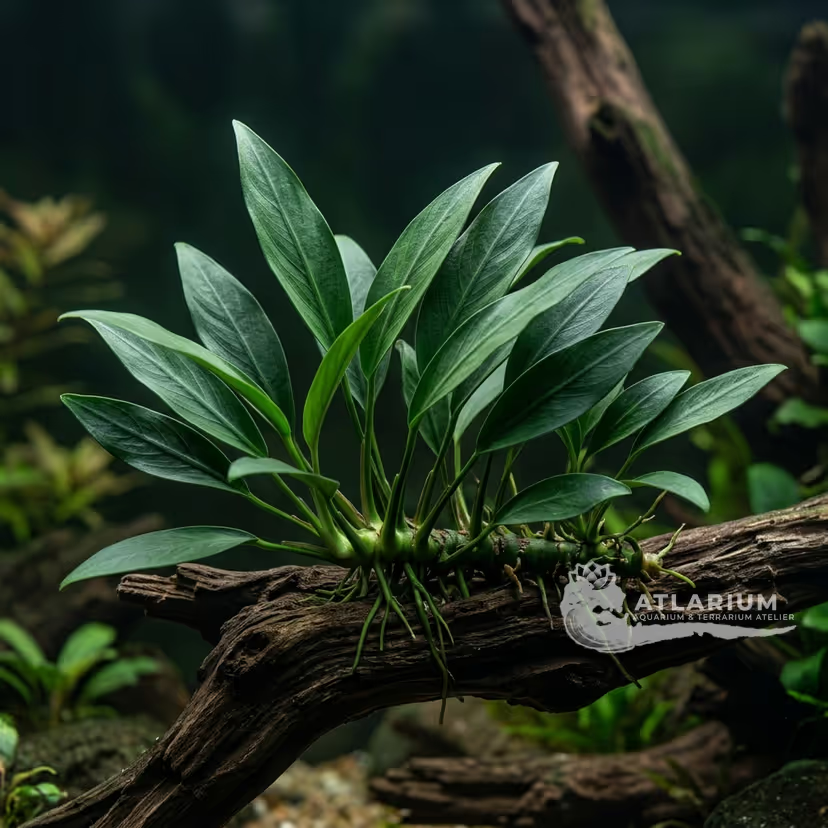
View details->
Anubias barteri var. glabra
Plant

Anubias barteri var. glabra

Anubias barteri var. glabra

View details->
Anubias gilletii
Plant

Anubias gilletii

Anubias gilletii

View details->
Anubias heterophylla
Plant

Anubias heterophylla

Anubias heterophylla

View details->
Aegagropila linnaei
Plant

Aegagropila linnaei

Aegagropila linnaei
View details->
Anubias barteri var. nana 'Golden Heart'
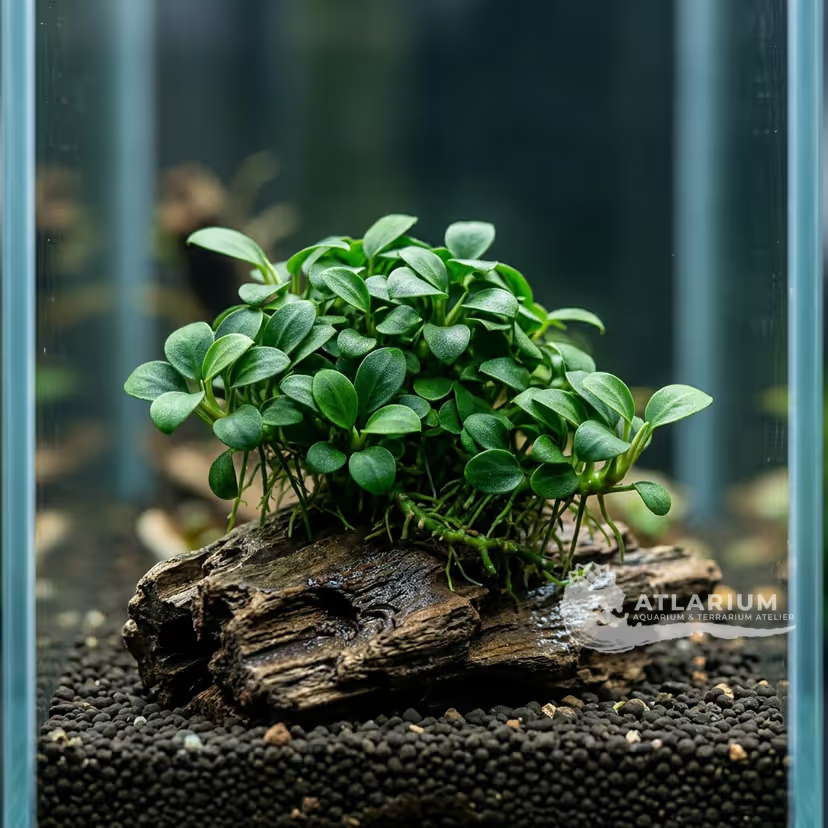
Plant

Anubias barteri var. nana 'Golden Heart'

Anubias barteri var. nana 'Golden Heart'

View details->
Anubias barteri var. nana 'Petite' ('Bonsai')
Plant

Anubias barteri var. nana 'Petite' ('Bonsai')

Anubias barteri var. nana 'Petite'

View details->

Similar care

Cards with similar requirements, difficulty, habitat, and husbandry profile.

Vietnamese White Cloud

Vietnamese White Cloud

Tanichthys micagemmae

View details->
Orange-finned Danio

Orange-finned Danio

Danio kyathit

View details->
Giant Danio

Giant Danio

Devario malabaricus

View details->
Glowlight Danio

Glowlight Danio

Celestichthys

View details->
Pearl Danio

Pearl Danio

Danio albolineatus

View details->
T-Bar Cichlid (Sajica)

T-Bar Cichlid (Sajica)

Amatitlania sajica
View details->
Emerald Eye Rasbora

Emerald Eye Rasbora

Brevibora dorsiocellata
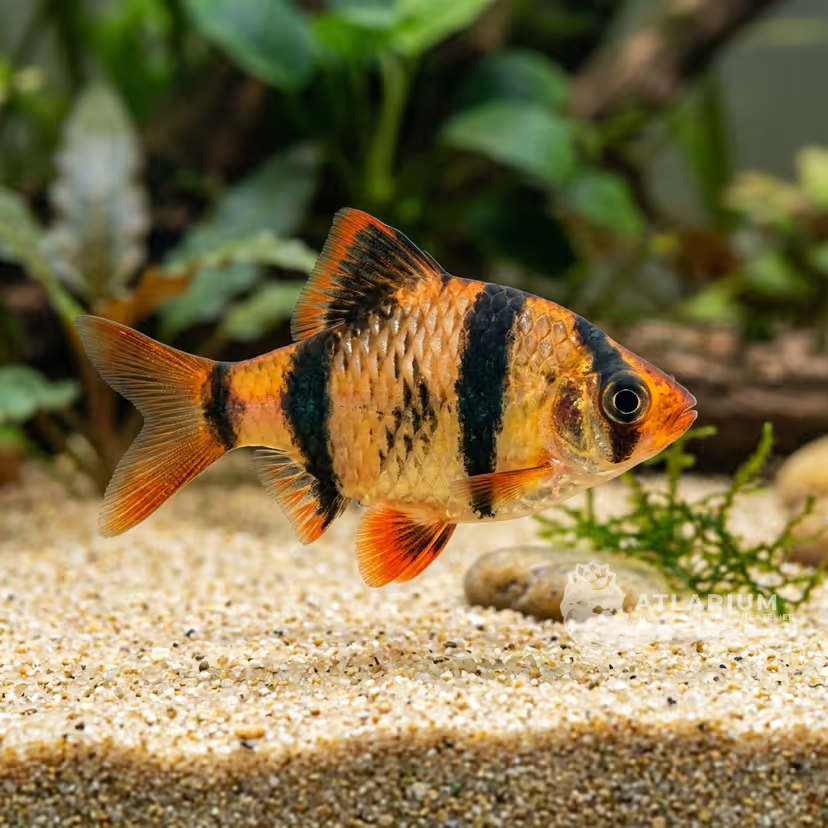
View details->
Tiger Barb

Tiger Barb

Puntigrus tetrazona

View details->
Bala Shark / Silver Shark

Bala Shark / Silver Shark

Balantiocheilos melanopterus

View details->
Nicaragua Cichlid (Macaw Cichlid)

Nicaragua Cichlid (Macaw Cichlid)

Hypsophrys nicaraguensis

View details->
Brilliant Rasbora

Brilliant Rasbora

Rasbora einthovenii
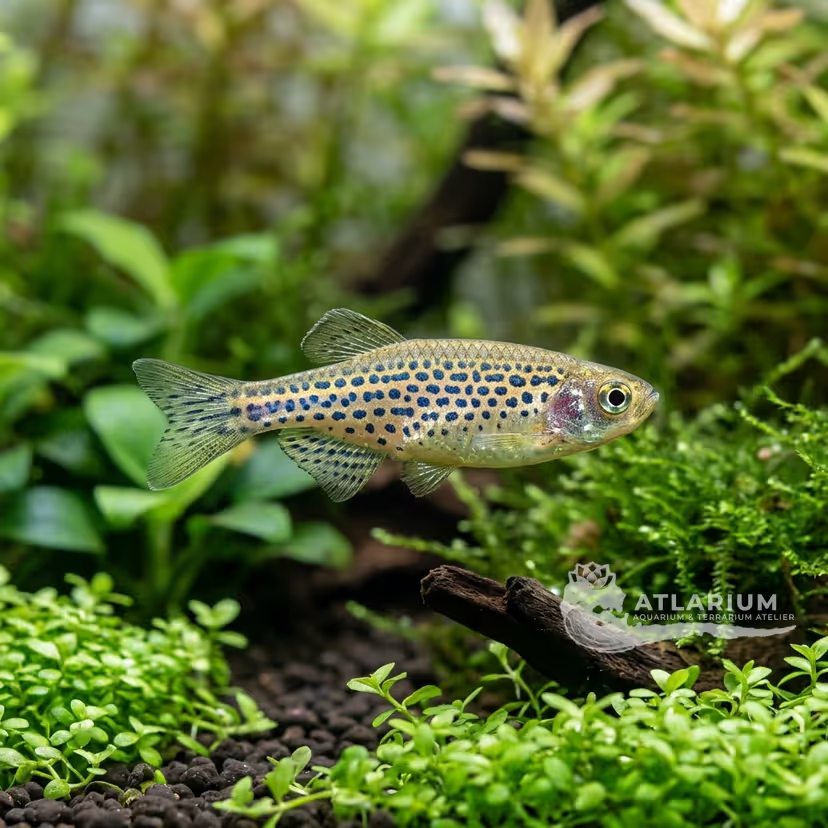
View details->
Gold Ring Danio

Gold Ring Danio

Danio tinwini

View details->
Giant Danio

Giant Danio

Devario aequipinnatus

View details->
Blackline Rasbora

Blackline Rasbora

Rasbora borapetensis

View details->
Golden Dwarf Barb

Golden Dwarf Barb

Pethia gelius

View details->
Yellow Dwarf Cichlid (Yellow Convict)

Yellow Dwarf Cichlid (Yellow Convict)

Amatitlania nanolutea

View details->
Last updated: 06/30/2026