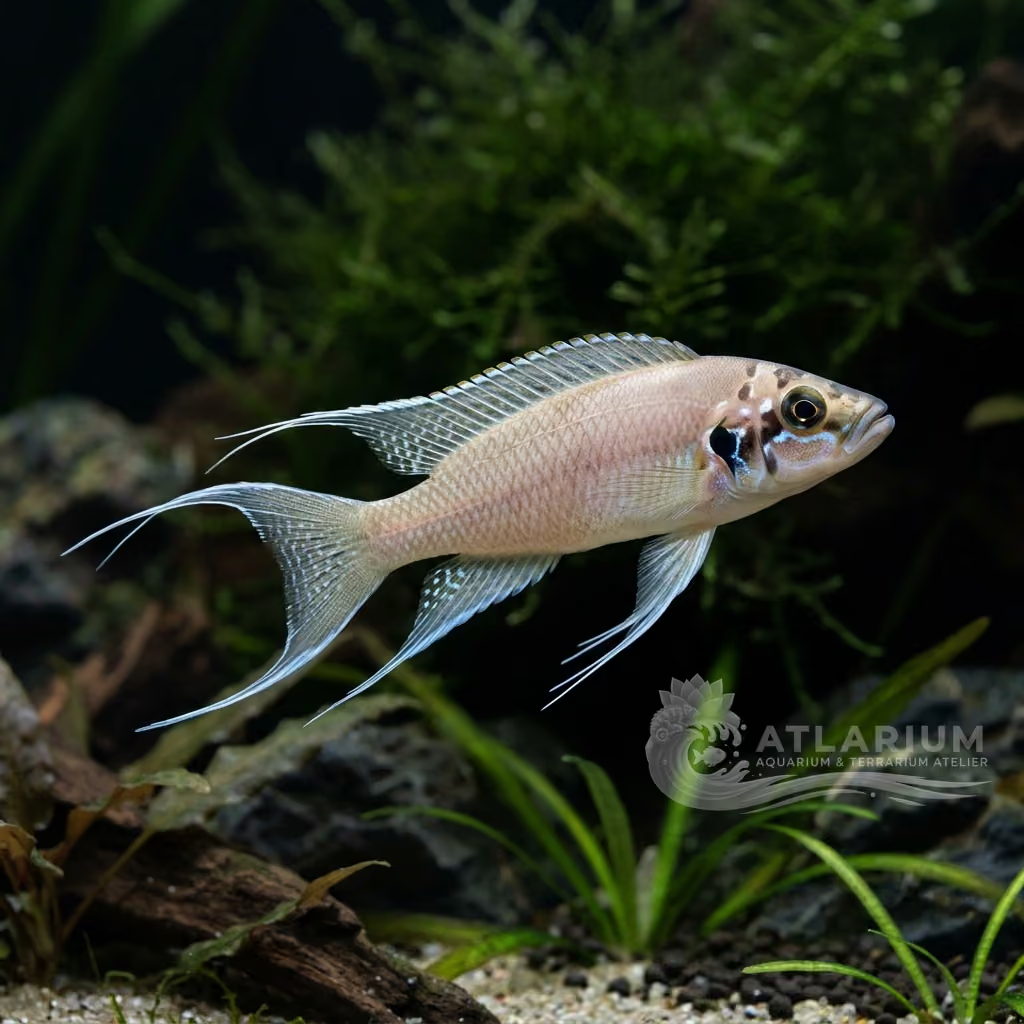
American flagfish
Jordanella floridae
A North American cyprinodont with a livery resembling the American flag: red and blue horizontal stripes with a yellow shoulder spot in the male. Native to Florida's marshes and streams. Invaluable in fishkeeping: it is one of the very few fish that actively eats black beard algae (BBA) and hair algae — an 'anti-algae army' in a 5 cm fish. However, the diet must include a significant vegetable component, not just meat, or longevity suffers. Males are territorial during breeding: ratio of 1M:2–3F recommended.
18 - 28 °C
7 - 8
Freshwater
Bottom and middle
6 cm
>= 60 L
>= 3
10 - 20 dGH
5 - 10 dKH
200 - 400 ppm
313 - 625 uS/cm

Species description

Care, breeding and tankmates

Geographic origin and distribution
Origin

Fish profile
- Temperament
- Semi-aggressive
- They have a feisty, bold, and territorial temperament. Males will aggressively posture and defend their chosen patch of the aquarium. They are industrious algae-eaters but require careful observation in community settings due to their attitude.
- Diet
- Omnivore
- They are omnivores with a massive appetite for algae, particularly excelling at eating hair algae. Their diet must include a high percentage of vegetable matter, such as spirulina flakes and blanched vegetables. They will also readily consume small insects, bloodworms, and standard flakes.
- Life expectancy
- 3-5 years
- Adult size
- 6 cm
- Sex ratio
- Harem
- Males are vibrantly colored with a pattern resembling the American flag, and feature a dark spot on their dorsal fin. Females are much drabber, olive-colored, and typically possess a distinct dark spot on their flanks. Keeping a harem of one male to several females reduces aggression.
- Feeding frequency
- Twice daily
- Feed them one to two times daily with an amount they can quickly consume. Because they constantly graze on algae within the tank, they do not require heavy supplemental feeding. Overfeeding protein will lead to health and aggression issues.
- Bioload
- Low to Medium
- The Florida Flagfish produces a moderate bioload that is easily managed. They are robust fish, but still require standard filtration to process their waste. Routine partial water changes will keep the aquarium environment healthy.
- Flow
- Strong
- They tolerate a wide variety of flow conditions, from stagnant ponds to moderate streams. In the aquarium, a gentle to moderate flow is perfectly acceptable. They are extremely adaptable and hardy regarding water movement.
- Jump risk
- Yes
- They possess a moderate risk of jumping, especially when chasing tank mates or being chased themselves. A fitted lid is necessary to prevent them from landing on the floor. Keeping the water level slightly lowered can also help.
- Reproduction
- Substrate spawner
- They are prolific substrate spawners, laying eggs in shallow depressions in the sand or on fine-leaved plants. Unusually for killifish, the male will fiercely guard the nest and the eggs until they hatch. They breed very readily in the home aquarium.
- Compatibility & tankmates
- Community
- They have a semi-aggressive and unpredictable nature, known to nip fins of slow-moving or long-finned fish. They are best kept with robust, fast-moving tetras or barbs. It is often wise to keep them in a species-only setup if their aggression becomes problematic.
- Tank level
- Middle/Bottom
- They are highly active and will utilize all levels of the aquarium. The tank should be heavily planted to provide broken lines of sight and plenty of grazing surfaces. Provide a soft sandy substrate for the males to dig their breeding pits.

Scientific Parameters & Models
Window to the official scientific data of the species
- Trophic level
- 2.9 ± 0.32 se
- Resilience
- Low (4.5 - 14 years)
- Phylogenetic uniqueness (PD50)
- 1
- Bayesian Length-Weight
- a = 0.01995, b = 3.13
- VulnerabilityLow vulnerability (10 / 100)

Image gallery
Licensed images linked to the species or, when marked, to the closest representative taxon.

Related species
Recommendations grouped by close relatives, companion choices, and similar care.