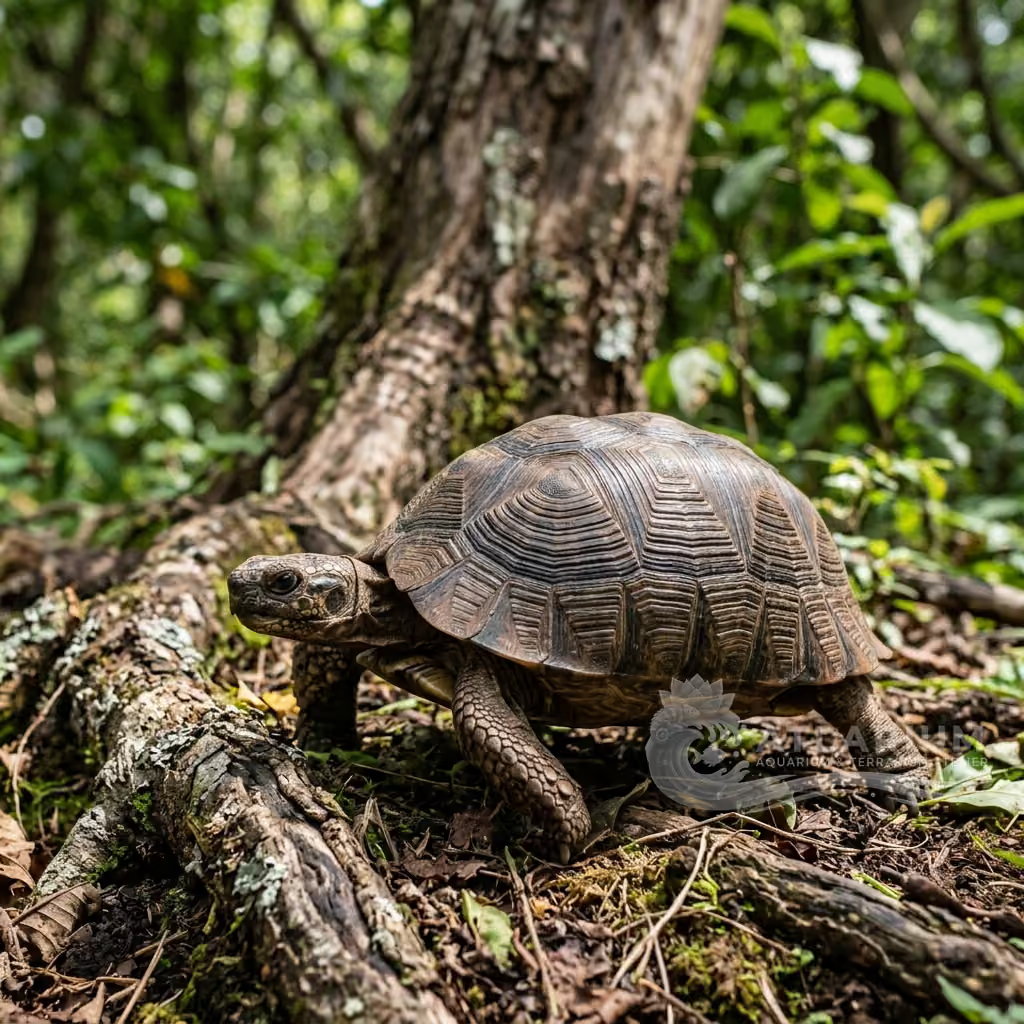
Marginated tortoise
Testudo marginata
The largest European land tortoise, characterized by distinct flared posterior scutes. Thrives in arid, sunny Mediterranean environments and needs a spacious outdoor pen.
Ambiente
Terrestre
Umidade
40 - 60 %
Temperatura diurna
10 - 32 °C
Temperatura ambiente
10 - 32 °C
Temperatura noturna
19 - 21 °C
Local para se aquecer
32 °C
Tamanho adulto
30 cm
Gabinete mínimo
>= 600 L
Temperatura de brumação
4 - 8 °C
UVB
Ferguson 4
UVI
2,6 - 3,5 UVI

Descrição da espécie
Geographical Origin and Habitat: The marginated tortoise (Testudo marginata) is native to southern Greece, including various Aegean islands, and southern Albania. It was also introduced in historical times to Italy, notably Sardinia, Tuscany, and Apulia. It thrives in arid, sunny Mediterranean habitats, including rocky hillsides, scrublands, pastures, olive groves, and dry woodlands, where it finds abundant wild plants and natural shelters.
Taxonomy and Genetics: First described by the naturalist Johann Schoepff in 1792, it belongs to the family Testudinidae. Genetically, it shares close evolutionary ties with Testudo graeca, yet is morphological distinct. While regional variations exist, such as the Sardinian population, modern genetic studies generally classify them as a single species without distinct subspecies.
Behavior and Habits: A diurnal and ectothermic reptile, it spends mornings basking in the sun to raise its body temperature before foraging. It is largely solitary but tolerant during non-breeding periods. During winter, it undergoes a deep hibernation (brumation) from November to March, burrowing into the soil or utilizing deep natural crevices to survive freezing temperatures.
Morphology: This is the largest representative of the genus Testudo. Adult males can reach a carapace length of 35-40 centimeters and weigh over 5 kg. The carapace is elongated and predominantly black with yellow accents. Its most defining physical characteristic is the distinct flaring and elongation of the posterior marginal scutes, resembling a bell or skirt.

Cuidado, criação e companheiros de tanque
Terrarium Setup: While young tortoises can be kept indoors in a large enclosure of at least 120x60x50 cm, adults strictly require a spacious outdoor pen of at least 10 square meters. The substrate should be a 70/30 mix of organic topsoil and play sand, at least 15 cm deep, allowing for natural burrowing. Provide large hides like half-logs, wooden boxes, or low shrubs.
Lighting and Heating: Indoors, establish a basking spot of 32 °C using a dome heat lamp and a cool area of 22-24 °C. High-output 10.0% UVB lighting is mandatory, active for 10-12 hours per day to prevent Metabolic Bone Disease. For outdoor pens, natural sunlight provides all necessary heat and UVB rays, making artificial sources unnecessary.
Humidity and Hydration: Maintain average humidity around 50-60%. Young tortoises need a slightly damp microclimate to prevent carapace pyramiding. A very shallow, wide water dish must always be present, allowing the tortoise to drink and soak safely. The water depth should never exceed the tortoise's chin level to prevent drowning.
Feeding and Supplementation: A strict herbivore requiring a diet high in fiber and calcium, and low in protein and phosphorus. Feed wild weeds (dandelion, clover, plantain, mallow), chicory, endive, and romaine lettuce. Avoid fruits, vegetables like spinach, and commercial dog/cat food. Dust food with calcium carbonate twice a week and provide a cuttlebone.
Compatibility: Adult males are highly territorial and aggressive, often harassing females or fighting other males. It is best to house them individually or keep one male with multiple females in a large enclosure. Avoid mixing them with other tortoise species (e.g., Testudo hermanni) to prevent cross-contamination of pathogens.
Health and Common Diseases: Susceptible to Metabolic Bone Disease (MBD) from poor lighting, respiratory infections due to damp/cold conditions, and internal parasites. An annual fecal check is highly recommended before hibernation. Brumation should only be allowed for healthy tortoises with adequate fat reserves and clean health checks.

Origem e distribuição geográfica
The marginated tortoise (Testudo marginata) is native to southern Greece, including various Aegean islands, and southern Albania. It was also introduced in historical times to Italy, notably Sardinia, Tuscany, and Apulia. It thrives in arid, sunny Mediterranean habitats, including rocky hillsides, scrublands, pastures, olive groves, and dry woodlands, where it finds abundant wild plants and natural shelters.
Origem
Cosmopolita ou apresentadoEuropa, Mediterrâneo e Ásia Ocidental

Perfil de réptil
- Dieta
- Herbivore
- Marginated tortoises are predominantly herbivorous, grazing on a massive variety of broadleaf weeds, wild grasses, and native scrub found in the Mediterranean region. Their natural diet is low in protein but high in fiber, calcium, and roughage, which is vital for smooth shell development. They will opportunistically consume fallen blossoms and small amounts of fruit if available. Providing a varied, calcium-rich botanical diet without commercial pellets is highly recommended in captivity.
- Tamanho adulto
- 30 cm
- Estilo de vida/Microhabitat
- Terrestrial
- A terrestrial tortoise that prefers rocky hillsides and Mediterranean scrub. They are excellent climbers for tortoises and will utilize burrows or dense bushes for shelter.
- Ciclo de atividades
- Diurnal
- This Mediterranean native is highly diurnal, spending its mornings basking to absorb heat before foraging, and often taking refuge during the peak heat of the day.
- Socialidade
- Solitary
- This tortoise is famous for the pronounced flare at the rear of its shell, which is especially prominent in adult males. They are mostly active during the milder hours of the morning and late afternoon, avoiding the peak midday sun by resting under shrubs or in shallow scrapes. During the harsh winter months, they undergo a mandatory brumation period hidden deep within burrows to survive freezing temperatures. They possess a calm and docile temperament but require substantial roaming space.
- Reprodução
- Oviparous
- Courtship involves persistent male pursuit, characterized by head-bobbing and repeated shell-ramming to immobilize the female. After successful mating, the female seeks a sun-exposed, well-drained spot to dig a flask-shaped nest with her hind legs. She typically deposits between 3 and 10 spherical eggs, which are then carefully covered and left to incubate naturally in the warm soil. The hatchlings emerge in late summer, fully equipped to forage before their first winter hibernation.
- Tolerância de tratamento
- Tolerant
- They are generally docile and calm when approached correctly. However, excessive handling causes stress, so interactions should be brief and the tortoise should always feel fully supported from beneath.
- Brumação
- Obrigatório
- A winter brumation period is crucial. In the wild, they bury themselves in loose soil or retreat to deep burrows to survive the cold Mediterranean winters.
- Muda
- Regular
- They shed their skin continuously in fine flakes. Moderate humidity is required; providing a damp hide or occasional soaking prevents dehydration and assists in shedding.

Espécies relacionadas
Recomendações agrupadas por parentes próximos, escolhas de acompanhantes e cuidados semelhantes.