Burmese Star Tortoise
Geochelone platynota
Endemic to central Myanmar's dry zones, the critically endangered Burmese star tortoise needs a dry, warm environment with a mix of deciduous forest elements and strong UVB.
Ambiente
Terrestre
Umidade
50 - 75 %
Temperatura diurna
20 - 32 °C
Temperatura ambiente
20 - 32 °C
Temperatura noturna
21 - 23 °C
Local para se aquecer
32 - 35 °C
Tamanho adulto
28 cm
Gabinete mínimo
>= 600 L

Descrição da espécie
Geographical Origin and Habitat: This species is endemic to the dry zone of central Myanmar (Burma). It primarily inhabits dry deciduous forests, scrublands, and thorn forests. The species is highly adapted to subtropical dry climates that feature long periods of drought followed by heavy monsoon rains.
Taxonomy and Genetics: Classified in the family Testudinidae, scientific name Geochelone platynota. It is closely related to the Indian Star Tortoise (Geochelone elegans) but represents a genetically distinct evolutionary lineage. Conservation genetics programs are highly active due to its critically endangered status.
Behavior and Habits: Diurnal and terrestrial. It exhibits bimodal activity patterns, being most active in the early morning and late afternoon when temperatures are moderate. During the dry season, it becomes highly inactive, aestivating under leaf litter or thick scrub to conserve moisture and avoid dehydration.
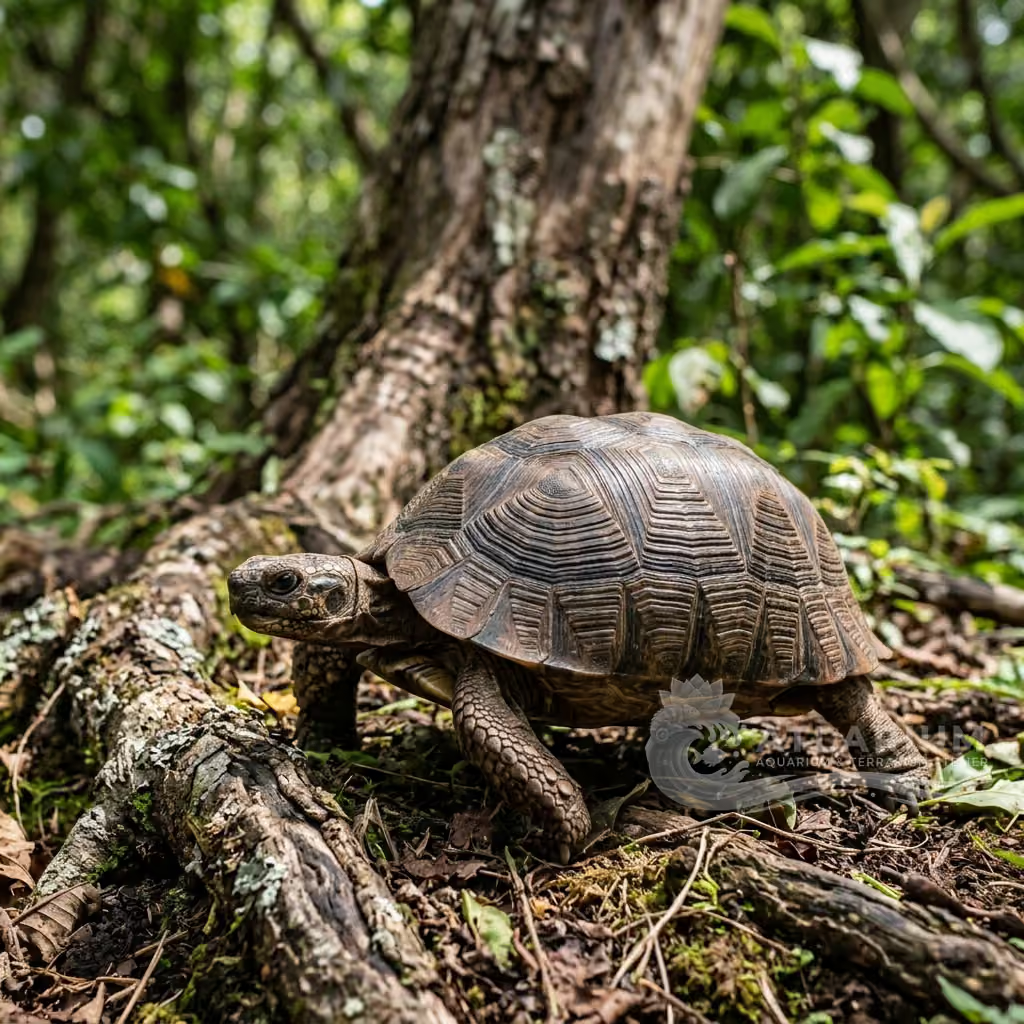
Morphology: Features a highly domed, dark brown to black carapace decorated with radiating yellow or cream-colored lines forming a star-like pattern. The shell can grow up to 25-30 cm in length. The plastron (bottom shell) is yellow with distinct triangular black blotches. Males are smaller with longer tails.

Cuidado, criação e companheiros de tanque
Terrarium Setup: Requires a very spacious indoor enclosure of at least 200x100 cm for adults, or large secure outdoor pens in warm climates. Substrate should be a deep, well-draining mix of organic soil and cypress mulch. Provide multiple humid hiding boxes filled with damp moss.
Lighting and Heating: High-intensity lighting with a strong (10-12%) UVB source is essential for shell development. Maintain a thermal gradient: daytime cool end at 26-28°C (79-82°F) and a localized basking spot at 32-35°C (90-95°F). Nighttime temperatures should not fall below 20°C (68°F).
Humidity and Hydration: Relative humidity should be maintained at 60-70%, especially for juveniles to prevent shell pyramiding. Provide a shallow, heavy water dish for drinking and soaking. Soak the tortoise in shallow, lukewarm water for 15-20 minutes two to three times a week.
Feeding and Supplementation: Strictly herbivorous, requiring a high-fiber, low-protein, and high-calcium diet. Feed primarily grasses, weeds, dandelion, clover, and calcium-rich leafy greens. Dust the food with pure calcium carbonate at most feedings and calcium with D3 weekly.
Compatibility: Can be kept individually or in small breeding groups (one male and multiple females). Avoid housing multiple adult males together in the same enclosure, as they will fight, ram each other, and cause severe stress or physical injuries during the breeding season.
Health and Common Diseases: Highly susceptible to upper respiratory tract infections (URTI) if kept too cold and wet. Shell pyramiding is a permanent deformity caused by dry environments and diets high in protein. Regular fecal checks are advised to monitor for internal parasites.

Origem e distribuição geográfica
This species is endemic to the dry zone of central Myanmar (Burma). It primarily inhabits dry deciduous forests, scrublands, and thorn forests. The species is highly adapted to subtropical dry climates that feature long periods of drought followed by heavy monsoon rains.
Origem
Sul e Sudeste Asiático

Perfil de réptil
- Dieta
- Herbivore
- The Burmese Star Tortoise is a dedicated herbivore, grazing mostly on a variety of fibrous grasses, fallen leaves, and weeds found in dry deciduous forests. They occasionally supplement their diet with available fruit and fleshy succulents during the monsoon season. High calcium levels and strict avoidance of high-protein items are required to maintain their stunningly patterned shell. In human care, they thrive on a broad mixture of dark leafy greens, hay, and edible flowers.
- Tamanho adulto
- 28 cm
- Estilo de vida/Microhabitat
- Terrestrial
- A large terrestrial tortoise native to dry deciduous forests and scrublands of Myanmar. It utilizes its star-patterned shell to blend perfectly into dappled sunlight and dry grass.
- Ciclo de atividades
- Diurnal
- This tortoise is highly diurnal, venturing out during the morning and late afternoon to graze and forage, actively avoiding the intense midday sun by retreating into thick vegetation.
- Socialidade
- Solitary
- This tortoise is primarily active during the early mornings and late afternoons, utilizing the cooler parts of the day to forage. Its striking, star-patterned carapace serves as a remarkable form of disruptive camouflage, allowing it to blend perfectly into clumps of dry grass and dappled sunlight. While they are not overly aggressive, they are known to be quite active and require substantial space to roam. During prolonged dry spells, they may remain inactive in sheltered thickets to prevent moisture loss.
- Reprodução
- Oviparous
- Nesting occurs around the end of the rainy season, when the soil is still soft enough for females to excavate effectively. A female may lay multiple clutches per year, each generally consisting of 4 to 12 eggs hidden carefully beneath vegetation. Incubation parameters are highly dependent on the dry season's warmth, taking anywhere from 90 to over 150 days. The vividly marked hatchlings emerge completely independent, spending their early lives concealed in thick brush.
- Tolerância de tratamento
- Tolerant
- They are quite docile, curious, and outgoing. While they tolerate handling better than smaller species, they are heavy and must always be supported from below to prevent feeling insecure.
- Brumação
- Não obrigatório
- Originating from tropical zones, this species does not experience true winter and therefore does not brumate, requiring consistently warm temperatures year-round.
- Muda
- Regular
- As the tortoise grows, the skin on its limbs and neck sheds in a flaky, continuous manner. Maintaining moderate humidity, especially for juveniles, ensures healthy growth without shell pyramiding.

Espécies relacionadas
Recomendações agrupadas por parentes próximos, escolhas de acompanhantes e cuidados semelhantes.