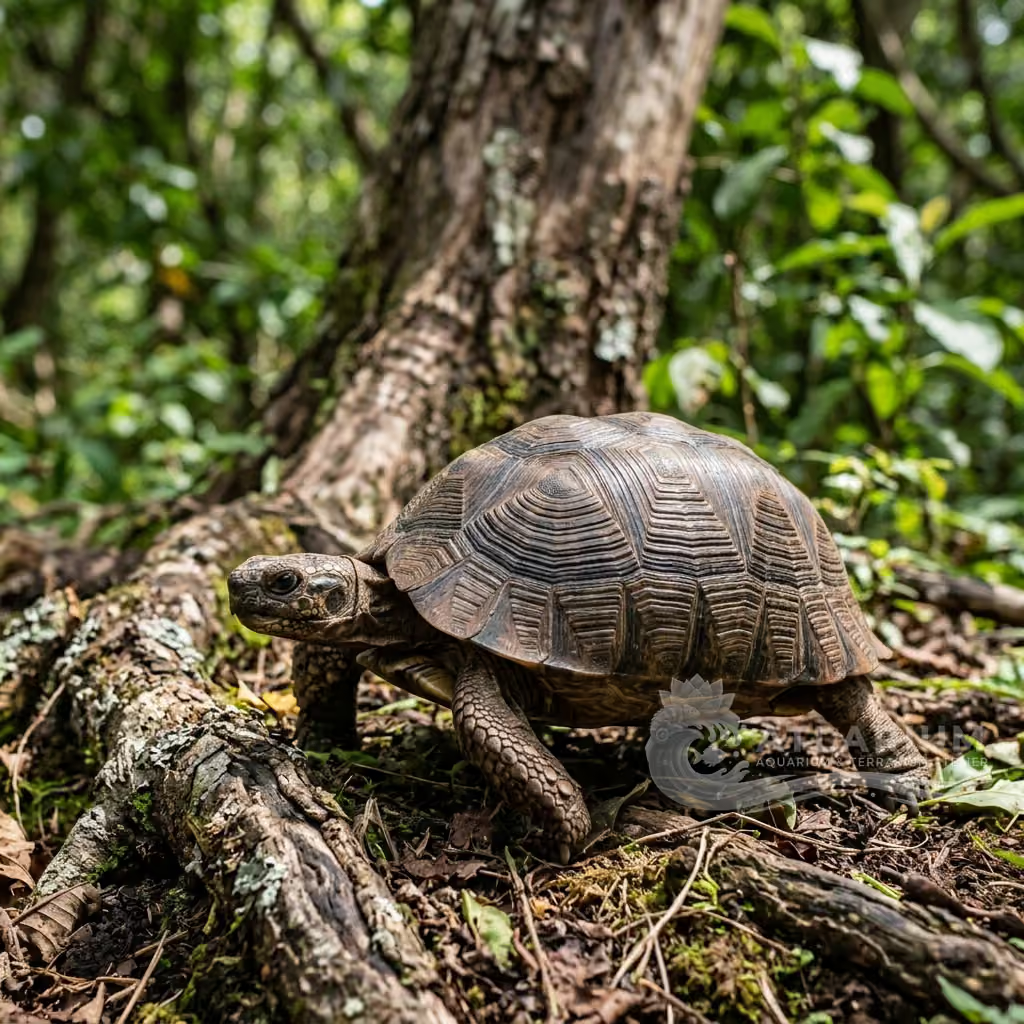
Forsten's Tortoise
Indotestudo forstenii
An endangered forest tortoise native to Indonesia, possessing a shy temperament and requiring a very humid, warm forest terrarium and omnivorous food.
Ambiente
Terrestre
Umidade
70 - 85 %
Temperatura diurna
20 - 32 °C
Temperatura ambiente
20 - 32 °C
Temperatura noturna
21,5 - 23,5 °C
Local para se aquecer
31 - 32 °C
Tamanho adulto
28 cm
Gabinete mínimo
>= 500 L

Descrição da espécie
Geographical Origin and Habitat: Forsten's tortoise (Indotestudo forstenii) is a terrestrial species endemic to Indonesia, found primarily on the island of Sulawesi (formerly Celebes) and the Moluccas (including Halmahera). It inhabits warm, wet primary tropical rainforests, forested hillsides, and humid valleys, where it lives concealed beneath deep leaf litter, rotting logs, and limestone crevices.
Taxonomy and Genetics: Described by Schlegel and Müller in 1844, it belongs to the Testudinidae family and Indotestudo genus. It is closely related genetically to Indotestudo travancorica and Indotestudo elongata. It is currently classified as a critically endangered species due to deforestation and illegal collection for the pet trade.
Behavior and Habits: Primarily a crepuscular and nocturnal species, showing maximum activity during twilight hours when temperatures decrease and relative humidity rises. It spends the daytime resting in mud wallows, under thick layers of leaves, or inside hollow trunks. It has solitary habits and males display territorial behavior.
Morphology: Features an elongated, moderately domed carapace that is somewhat flattened dorsally, typically measuring 20 to 25 cm in adult length. The carapace color varies from light olive-yellow to golden-brown, with large, irregular black spots on each shield. The head is cream or pale yellow, and mature males may develop pink skin around the snout during breeding.

Cuidado, criação e companheiros de tanque
Terrarium Setup: Requires a spacious indoor enclosure with minimum dimensions of 180x90 cm for a single adult. The substrate must be deep and moisture-retentive, consisting of a mix of cypress mulch, peat moss, and coconut fiber, topped with dry leaves. Provide multiple hiding spots, cork bark tubes, and live or artificial foliage to mimic the forest floor and offer secure shade.
Lighting and Heating: Maintain ambient daytime temperatures of 25-28°C, with a localized basking spot of 31-32°C using an overhead ceramic heater or spot bulb. Night temperatures should drop to 20-21°C. Because it is a forest species that avoids direct sun, provide low-intensity lighting and a linear 5% UVB lamp on a 10-12 hour cycle.
Humidity and Hydration: High humidity is critical, requiring stable levels between 75% and 90%. Mist the enclosure daily and keep the substrate damp but not swampy. Always provide a shallow, heavy water dish large enough for the tortoise to soak in completely to aid hydration and prevent dehydration. Warm water baths are highly recommended.
Feeding and Supplementation: Offers a varied omnivorous diet. The bulk of the diet should consist of leafy greens (dandelion, escarole, hibiscus leaves), mushrooms, and vegetables. Unlike arid-land tortoises, it regularly eats fruits (papaya, figs, mango) and requires animal protein (earthworms, snails, or commercial diet) twice a month. Dust food with calcium and D3.
Compatibility: Strictly solitary. Adult males are territorial and must not be housed together to prevent physical combat. Keeping a male and female together requires a very large, complex enclosure to allow the female to escape constant mating attempts and avoid chronic stress.
Health and Common Diseases: Highly susceptible to respiratory infections if exposed to cold drafts or low humidity. Poor calcium intake and lack of UVB lead to metabolic bone disease (MBD) and severe shell pyramiding. Parasitic infestations are common in newly acquired imports, necessitating veterinary screening.

Origem e distribuição geográfica
Forsten's tortoise (Indotestudo forstenii) is a terrestrial species endemic to Indonesia, found primarily on the island of Sulawesi (formerly Celebes) and the Moluccas (including Halmahera). It inhabits warm, wet primary tropical rainforests, forested hillsides, and humid valleys, where it lives concealed beneath deep leaf litter, rotting logs, and limestone crevices.
Origem
Sul e Sudeste Asiático

Perfil de réptil
- Dieta
- Herbivore
- Forsten's Tortoise is an omnivorous reptile that largely consumes vegetation, fallen fruits, and flowers on the forest floor. During the rainy season, mushrooms and fleshy broad leaves make up a significant portion of its intake. It also supplements its diet with small invertebrates, such as slugs, snails, and earthworms, providing necessary protein and calcium. Captive individuals exhibit a robust appetite for various greens, vegetables, and occasional protein sources.
- Tamanho adulto
- 28 cm
- Estilo de vida/Microhabitat
- Terrestrial
- Exclusively terrestrial, it is a damp forest dweller that thrives on the leaf-littered floors of Southeast Asian forests, requiring substantial cover and a highly humid environment.
- Ciclo de atividades
- Crepuscular
- This tortoise tends to avoid the brightest, hottest parts of the day, showing the most activity during the crepuscular hours of early morning and late afternoon, often sheltering in underbrush mid-day.
- Socialidade
- Solitary
- Native to damp forest environments, Forsten's Tortoise prefers twilight and the cool, humid conditions right after rainfall. It is generally a shy and retiring species that spends most of the hot daylight hours half-buried in deep leaf litter or hidden under fallen logs. Unlike arid-dwelling tortoises, it actively seeks out moisture and will readily soak in shallow puddles. When frightened, it quickly withdraws its head and limbs completely into its shell.
- Reprodução
- Oviparous
- This tortoise reproduces by laying small clutches of hard-shelled eggs. Mating is often characterized by the male ramming the female's shell and producing loud vocalizations. A female will typically lay 1 to 4 eggs in a shallow nest dug into damp soil or leaf litter. The eggs require a lengthy incubation period of several months, heavily dependent on optimal temperature and high humidity to successfully hatch.
- Tolerância de tratamento
- Tolerant
- While fundamentally docile and non-aggressive, they stress easily. Handling should be kept to a necessary minimum to avoid provoking severe anxiety or disrupting their routine.
- Brumação
- Não obrigatório
- Native to warm, tropical climates, this species does not require brumation and should be maintained at warm, stable temperatures year-round to prevent respiratory illnesses.
- Muda
- Periodic
- As a tortoise, it periodically sheds skin from its neck and legs. High ambient humidity (70-80%) is strictly required to prevent dry skin, shell pyramiding, and to facilitate normal shedding.

Espécies relacionadas
Recomendações agrupadas por parentes próximos, escolhas de acompanhantes e cuidados semelhantes.