Forest Hinge-back Tortoise
Kinixys erosa
Inhabiting deep African rainforests, this hinge-back tortoise avoids sunlight. It requires a humid, shaded enclosure with damp leaf litter and slow-moving water sources.
Ambiente
Terrestre
Umidade
75 - 95 %
Temperatura diurna
20 - 30 °C
Temperatura ambiente
20 - 30 °C
Temperatura noturna
20 - 22 °C
Local para se aquecer
28 - 29 °C
Tamanho adulto
28 cm
Gabinete mínimo
>= 500 L

Descrição da espécie
Geographical Origin and Habitat: This species is native to the primary and secondary tropical rainforests of West and Central Africa, ranging from Senegal eastward to Uganda and south to the Democratic Republic of the Congo. It inhabits the humid, deeply shaded forest floor, often near slow-moving streams, swamps, and flooded forest floors. It has a low tolerance for direct sunlight and dry conditions, seeking shelter under damp leaf litter, hollow fallen logs, and subterranean crevices.
Taxonomy and Genetics: Kinixys erosa belongs to the family Testudinidae, genus Kinixys. This genus is famous for possessing a cartilaginous hinge on the rear portion of the carapace. Genetically, it represents an evolutionary adaptation to warm, humid tropical forests, setting it apart from desert-dwelling tortoises. Wild populations are currently in decline due to widespread deforestation, habitat fragmentation, and local hunting for bushmeat.
Behavior and Habits: A terrestrial tortoise with predominantly crepuscular and nocturnal habits, exhibiting peak activity during heavy rainstorms or foggy days. During the daytime, it remains buried under wet leaf litter. Unlike most land tortoises, it is a capable swimmer and will readily enter shallow forest pools to hydrate or forage. When threatened, it uses its unique hinge to pull down the rear of its shell, enclosing its hindquarters.
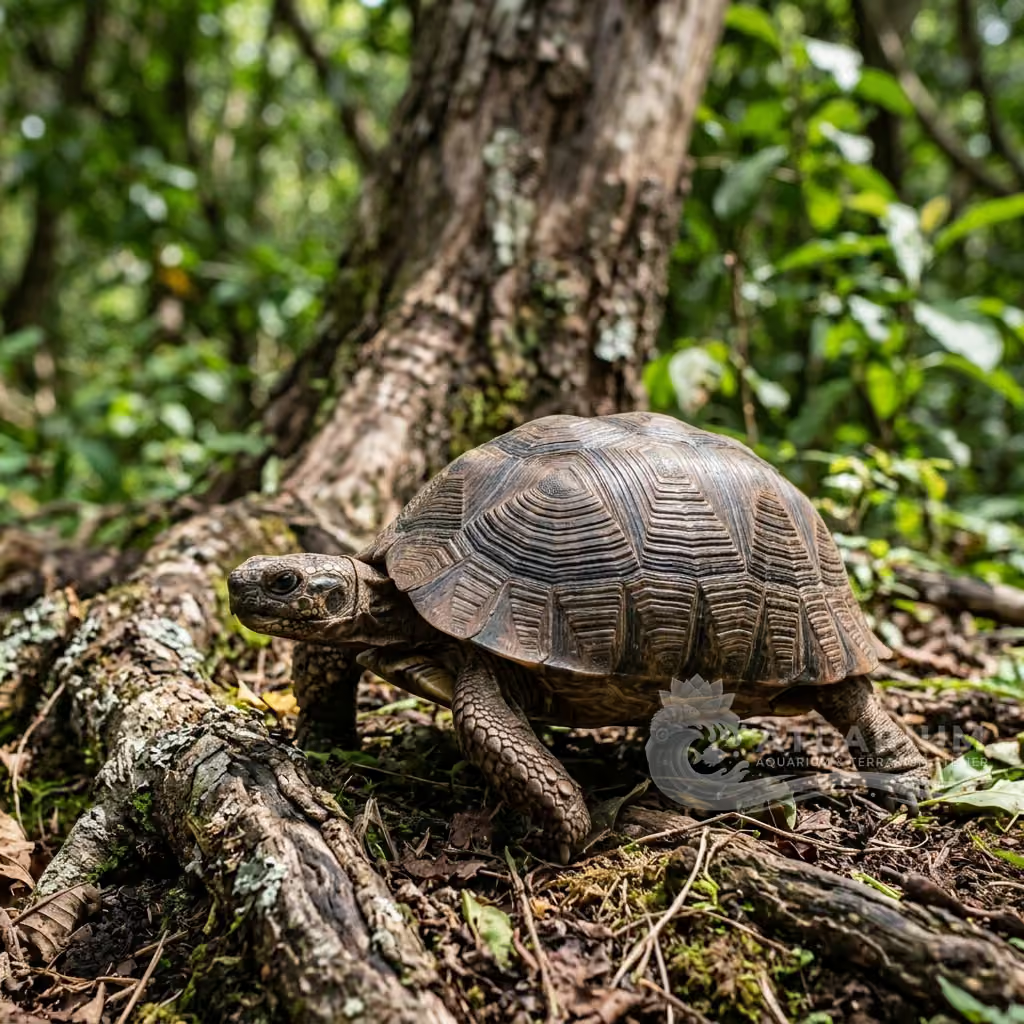
Morphology: The carapace is elongated, flattened, and dark brown or black, often featuring yellow or orange shading along the margins. The rear edge of the shell is strongly serrated, jagged, and flared upward (hence the name erosa). The hinge is located between the 4th and 5th costal scutes. Adults reach a medium-to-large size, with carapace lengths of 25-30 cm. Males are distinguished by longer tails and a concave plastron.

Cuidado, criação e companheiros de tanque
Terrarium Setup: Requires a large horizontal enclosure measuring at least 150x80 cm for an adult, or ideally a dedicated indoor heated room. Substrate is critical: it must be at least 15 cm deep and hold moisture without rotting. A mix of peat moss, coco coir, and orchid bark, topped with a thick layer of oak leaves and damp sphagnum moss, is recommended. Provide numerous large, dark hides throughout the enclosure to reduce stress.
Lighting and Heating: As a forest floor dweller, it does not tolerate bright light. Use low-output linear UVB bulbs (5% or 8% maximum) shaded by artificial or live plants. Maintain a daytime ambient temperature of 24-26°C (75-79°F) with a localized basking spot of no more than 28-29°C (82-84°F). Nighttime temperatures should hover around 20-22°C (68-72°F). Avoid intense basking lamps that dry out the enclosure.
Humidity and Hydration: Relative humidity must be kept exceptionally high, between 80% and 95% year-round. An automatic misting system or heavy twice-daily manual spraying is essential. A large, shallow water area (a low tray) with a depth of 3-4 cm must be provided for soaking, drinking, and defecation. Water must be replaced daily, as they often defecate in it.
Feeding and Supplementation: Unlike most tortoises, this species is omnivorous. The diet should consist of 60% leafy greens and mushrooms (highly favored, such as button mushrooms, dandelion, and chicory); 20% ripe fruits (figs, melon, papaya, and berries); and 20% animal protein (earthworms, snails with shells for calcium, waxworms, and quality box turtle pellets). Dust food with calcium carbonate twice a week.
Compatibility: Primarily solitary and shy. Males are territorial and can fight; thus, do not house multiple males together. A male can be kept with one or two females only in a very large, heavily planted enclosure with plenty of visual barriers. They easily stress in the presence of hyperactive or loud enclosure mates.
Health and Common Diseases: Highly susceptible to dehydration and low humidity, which quickly lead to chronic renal failure and shedding issues (dysecdysis). Upper respiratory tract infections are common if drafts or cold temperatures occur. Stagnant, dirty substrate causes shell rot (SCUD) and bacterial skin infections. Regular fecal screenings are required to monitor nematode loads.

Origem e distribuição geográfica
This species is native to the primary and secondary tropical rainforests of West and Central Africa, ranging from Senegal eastward to Uganda and south to the Democratic Republic of the Congo. It inhabits the humid, deeply shaded forest floor, often near slow-moving streams, swamps, and flooded forest floors. It has a low tolerance for direct sunlight and dry conditions, seeking shelter under damp leaf litter, hollow fallen logs, and subterranean crevices.
Origem
América do NorteÁfrica e Madagascar

Perfil de réptil
- Dieta
- Herbivore
- The Forest Hinge-back Tortoise is a heavily omnivorous species reliant on the bounties of the African rainforest floor. A massive portion of their diet consists of mushrooms, fungi, and rotting fruit that falls from the canopy. They actively forage for protein-rich sources, readily consuming millipedes, slugs, earthworms, and even carrion. For successful captive care, they require a diverse diet balancing soft fruits, commercial tortoise pellets, and frequent offerings of worms or insects.
- Tamanho adulto
- 28 cm
- Estilo de vida/Microhabitat
- Terrestrial
- This species is deeply tied to West and Central African rainforests, with strong semi-aquatic tendencies. It is an excellent swimmer and frequently spends time partially submerged in forest streams or marshes. Its enclosure must feature both deep leaf litter and a substantial aquatic area.
- Ciclo de atividades
- Crepuscular
- A largely crepuscular species that avoids bright, direct sunlight. It is most active during twilight, foraging along the forest floor for fallen fruits, fungi, and invertebrates. Heavy rain often stimulates activity regardless of the time of day.
- Socialidade
- Solitary
- Preferring the humid, dim environment of dense tropical rainforests, they are excellent swimmers and are frequently found wading in shallow streams. Their carapace is distinctly flattened and jagged at the edges, aiding in camouflage among dead leaves and forest debris. The trademark hinge on their posterior carapace closes off their vulnerable rear when threatened by forest predators. They are intensely shy, mostly active at dawn and dusk, and easily stressed by brightly lit, dry environments.
- Reprodução
- Oviparous
- Because they reside in a tropical climate with little temperature fluctuation, mating can happen year-round. A female lays highly restricted clutches, typically depositing only 1 to 4 eggs at a time in damp, decaying vegetation or loose soil. The eggs demand exceptionally high humidity to incubate and can take over 150 days to hatch. Hatchlings are very secretive and possess a slightly softer shell, mandating strict humidity control to prevent dehydration and shell deformities.
- Tolerância de tratamento
- Expert only
- Highly sensitive and easily stressed by a captive environment and handling. They are notoriously difficult to acclimate and often refuse food if conditions are not perfect. Handling should be avoided entirely unless necessary for medical reasons.
- Brumação
- Não obrigatório
- As an equatorial rainforest inhabitant, it does not experience a true winter and does not brumate. Year-round temperatures should remain warm and stable, with minor fluctuations only to replicate day and night cycles.
- Muda
- Periodic
- Requires consistently high humidity (80%+) and very damp substrate to prevent dehydration and ensure proper skin shedding. Inadequate humidity will quickly lead to health deterioration. Daily heavy misting and a constant water source are mandatory.

Espécies relacionadas
Recomendações agrupadas por parentes próximos, escolhas de acompanhantes e cuidados semelhantes.