Blessed poison frog
Ranitomeya benedicta
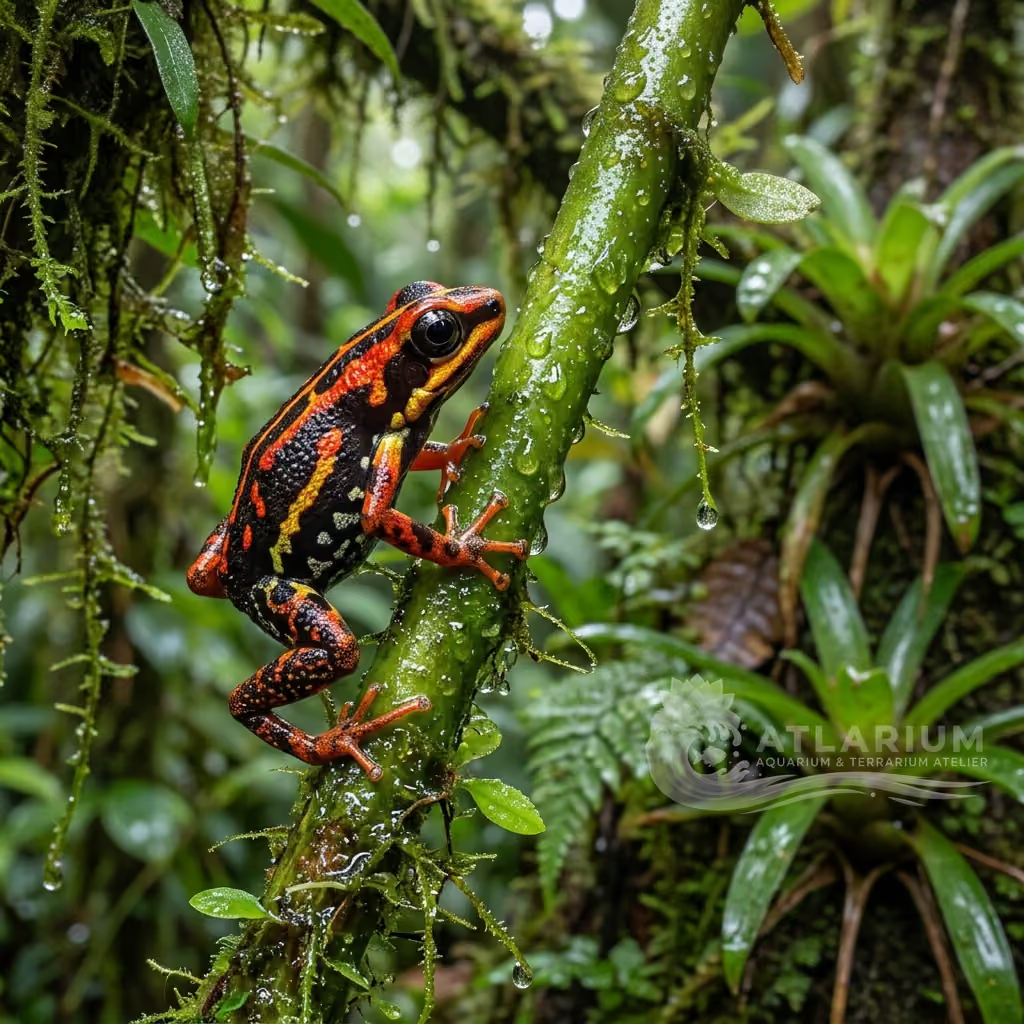
The blessed poison frog is a stunning, small dendrobatid native to Peru, instantly recognizable by its bright red head and black body with blue reticulations.
Ambiente
Terrestre
Umidade
80 - 100 %
Temperatura diurna
22 - 26 °C
Temperatura noturna
20 - 22 °C

Descrição da espécie
Geographical Origin and Habitat: Ranitomeya benedicta is native to northeastern Peru, specifically localized in the lowland rainforests between the Huallaga and Ucayali river basins. It inhabits pristine tropical wet forests, living primarily in the understory where it is closely associated with large terrestrial and epiphytic bromeliads at elevations between 150 and 400 meters.
Taxonomy and Genetics: Belonging to the family Dendrobatidae, this species is part of the genus Ranitomeya (thumbnail poison frogs). Formally described in 2008, it is genetically distinct from other members of the Ranitomeya fantastica species complex, separated by geographic barriers and distinct vocalization parameters.
Behavior and Habits: Extremely active, fast-moving, and diurnal. It spends the day climbing among forest vegetation and hunting for micro-invertebrates. Males defend territories using a rapid, buzzing trill call, which they emit from elevated perches like bromeliad leaves to ward off rivals and attract females.
Morphology: This is a small species, with adults reaching a snout-to-vent length of only 15 to 20 millimeters. It features a high-contrast color pattern: the head and throat are bright carmine red, while the body and limbs are black, overlayed with a brilliant neon-blue or turquoise reticulated pattern.

Cuidado, criação e companheiros de tanque
Terrarium Setup: A vertically oriented, humid tropical terrarium of at least 40x40x50 cm is required for a pair. It must be heavily planted with live Neoregelia bromeliads, mosses, and climbing plants like Marcgravia or Pothos. The substrate should have a drainage layer, covered by soil-coir mix and a top layer of leaf litter.
Lighting and Heating: Daytime temperatures should be kept between 24°C and 27°C, dropping to 20°C-22°C at night. Temperatures exceeding 29°C can be fatal. Use LED lights designed for plant growth and a low-level (2%) UVB light. If heating is required, use a thermostat-controlled heating cable beneath the drainage layer.
Humidity and Hydration: Relative humidity must remain between 80% and 95%. Mist the enclosure two to three times daily with reverse osmosis water. The axils of the bromeliads must remain filled with water, as the frogs use them for hydration and tadpole deposition. A bottom drainage bulkhead is essential to prevent waterlogging.
Feeding and Supplementation: Strictly micro-insectivorous. Offer live prey such as wingless fruit flies (Drosophila melanogaster), springtails, pea aphids, and pinhead crickets. Dust feeder insects at every feeding with a high-quality supplement containing calcium, vitamin D3, and preformed vitamin A (retinol).
Compatibility: Can be housed in pairs or small groups (e.g., one male and two females). Males are territorial but rarely cause physical harm. Never house them with other Ranitomeya species or other dendrobatids to prevent interspecific competition, stress, and potential hybridization.
Health and Common Diseases: Vulnerable to dehydration, which can cause death within hours. Ensure consistent humidity. Poor sanitation can lead to bacterial infections (red leg) or fungal pathogens. Regularly clean waste and ensure there is a constant supply of clean water in the bromeliad axils.

Origem e distribuição geográfica
Ranitomeya benedicta is native to northeastern Peru, specifically localized in the lowland rainforests between the Huallaga and Ucayali river basins. It inhabits pristine tropical wet forests, living primarily in the understory where it is closely associated with large terrestrial and epiphytic bromeliads at elevations between 150 and 400 meters.
Origem
Extra-Amazônica América do Sul

Perfil anfíbio
- Dieta
- Insectivore
- Eat bugs. Feed daily. Add vitamins.
- Expectativa de vida
- 8-10 years
- Tamanho adulto
- 1.8 cm
- Estilo de vida/Microhabitat
- Arboreal
- Need high humidity. Forage constantly. Stable temps.
- Ciclo de atividades
- Diurnal
- Strictly diurnal. Morning peaks. 12h cycle.
- Socialidade
- Solitary
- Very active. Males defend. Add barriers.
- Reprodução
- Oviparous
- Breed in rain. Males call. Tads swim.
- Toxicidade
- Harmless
- They derive their natural toxicity from an exotic wild diet consisting of specific alkaloid-rich mites and ants. Specimens raised in captivity are denied these toxic food sources and are therefore entirely non-toxic. Their vibrant red heads and intricate blue-patterned bodies function merely as a bluff in captive environments.
- Estágio de vida
- Metamorphosis
- Tadpoles require individual water compartments, like bromeliad axils or artificial cups, as they are prone to cannibalism. Froglets are extremely small and delicate, demanding constant access to springtails and high ambient humidity to survive the critical first weeks. Adult frogs are incredibly fast, displaying complex social hierarchies as they age.
- Tolerância de tratamento
- Display only
- Direct physical contact must be strictly avoided to protect their fragile, highly permeable skin. The oils and natural chemicals on human skin can quickly cause distress or fatal toxicity to the frog. Any necessary relocation should be performed by trapping them safely in a small plastic container.
- Brumação
- Não obrigatório
- This lowland Amazonian species does not hibernate or brumate and requires consistently warm, humid conditions year-round. Exposure to cold temperatures or significantly dry air will quickly compromise their immune system. Modest adjustments in misting frequency can be used by experts to simulate wet and dry seasons for breeding purposes.
- Muda
- Periodic
- Shedding is a rapid, frequent process necessary for growth and maintaining their skin's critical moisture-absorbing properties. The frog will stretch and rub its body to peel the skin forward before consuming it entirely. This behavior is rarely seen by keepers as it typically occurs in secluded hiding spots.

Espécies relacionadas
Recomendações agrupadas por parentes próximos, escolhas de acompanhantes e cuidados semelhantes.