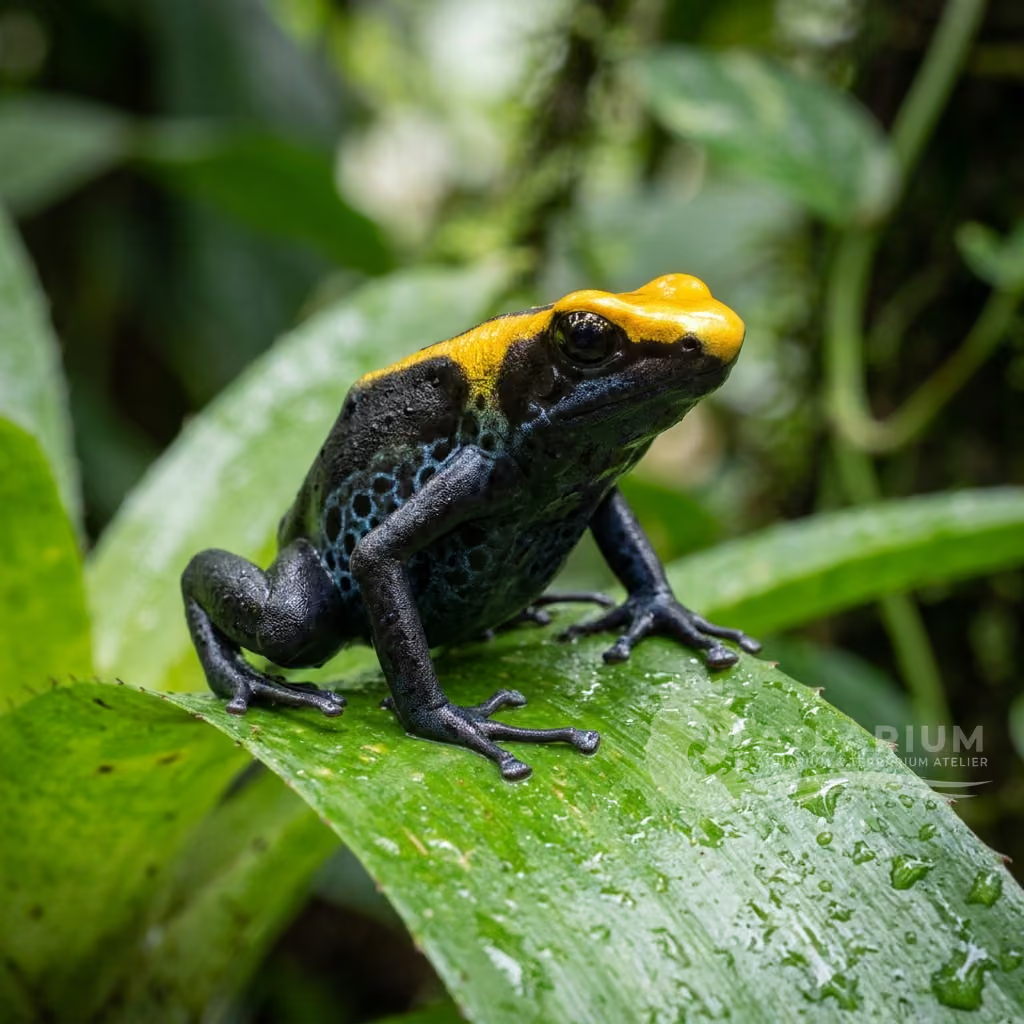
Dyeing Dart Frog "Cobalt"
Dendrobates tinctorius
This striking tinctorius morph features a dark background with bright yellow head markings and solid cobalt blue limbs. It is highly active, terrestrial, and requires high humidity.
Ambiente
Terrestre
Umidade
80 - 100 %
Temperatura diurna
22 - 26 °C
Temperatura noturna
19 - 21 °C
UVB
Ferguson 1-2
UVI
0 - 1 UVI

Descrição da espécie
Geographical Origin and Habitat: Endemic to the dense primary rainforests of the Guiana Shield (Guyana, Suriname, French Guiana, and northern Brazil). They live strictly on the forest floor, moving through thick leaf litter, ferns, and rocks near streams where humidity is near saturation and light barely penetrates the canopy.
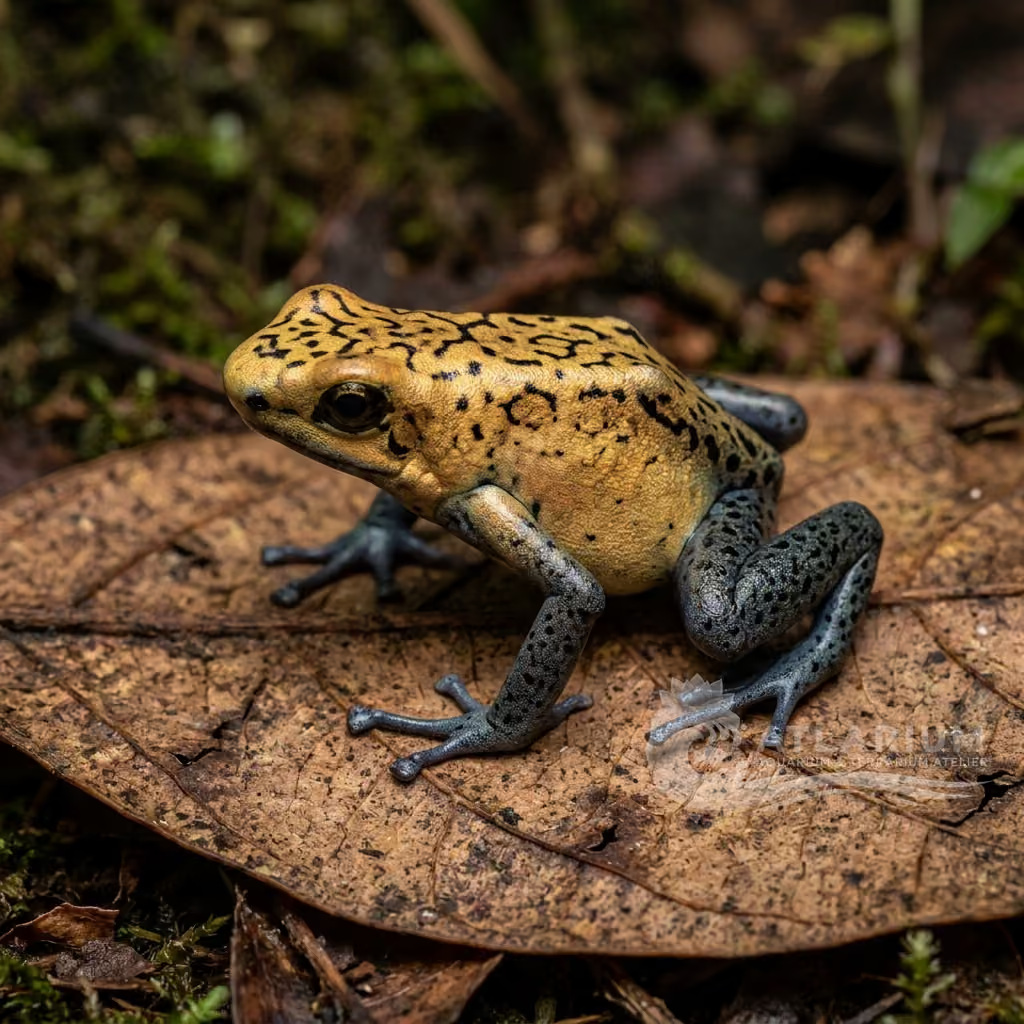
Taxonomy and Genetics: A large member of the Dendrobatidae family, reaching 5-6 cm in size. The 'Cobalt' morph is highly sought after for its striking contrast of bright yellow markings on the head and back, transitioning into solid cobalt blue on the limbs and lower flanks over a dark background.
Behavior and Habits: Diurnal, terrestrial, and highly active. Despite their bright warning coloration, they are shy and spend the day foraging in the leaf litter. Males defend small territories with a soft buzzing call. Females can be aggressive toward each other, competing for breeding rights.
Morphology: Females are significantly larger and rounder when mature, while males are slimmer and have wider toe pads on their front feet to grip the female during mating.

Cuidado, criação e companheiros de tanque
Terrarium Setup: Requires a horizontal or cubic bioactive terrarium (e.g. 60x45x45 cm for a pair). A thick layer of leaf litter (such as oak or magnolia) is mandatory to provide hiding spots and support micro-fauna like springtails. Provide coconut huts and ground-level wood pieces for shelter.
Lighting and Heating: Prefers cool temperatures: 22-26°C during the day with a slight drop to 20-22°C at night. Temperatures above 28°C can be fatal. Low-intensity LED plant lighting and a weak UVB source (e.g. 2-5% UVB) are recommended for skeletal health.
Humidity and Hydration: Requires constant high humidity of 80-100%. The substrate must remain damp but not swampy. Mist daily, preferably in the morning. They do not use water dishes, absorbing moisture through their skin and drinking from water droplets.
Feeding and Supplementation: Insectivorous. Feed daily or every other day with flightless fruit flies (Drosophila hydei or melanogaster), springtails, and dwarf isopods. Supplement every feeding with pure calcium, and use a complete vitamin/mineral supplement with D3 once or twice a week.
Compatibility: Best kept individually or in a sexed pair. Housing multiple females is not recommended due to high female-female aggression. Do not mix with other species to avoid pathogen transmission, hybridization, and stress.
Health and Common Diseases: Never handle with bare hands, as skin oils and salts can damage their sensitive skin. Prone to nutritional deficiencies (such as spindly leg syndrome in tadpoles and MBD in adults) and chytridiomycosis. Quarantine all new animals.

Origem e distribuição geográfica
Endemic to the dense primary rainforests of the Guiana Shield (Guyana, Suriname, French Guiana, and northern Brazil). They live strictly on the forest floor, moving through thick leaf litter, ferns, and rocks near streams where humidity is near saturation and light barely penetrates the canopy.
Origem
Melhoramento seletivo e cultivaresAmazônia, Orinoco e Guianas

Perfil anfíbio
- Dieta
- Insectivore
- They consume small invertebrates like ants and mites in the wild. Captive diets consist primarily of flightless fruit flies dusted with calcium. They actively forage using their keen vision to spot prey.
- Expectativa de vida
- 10-15 years
- Tamanho adulto
- 5 cm
- Estilo de vida/Microhabitat
- Terrestrial
- They are predominantly terrestrial amphibians living in the dense leaf litter of tropical rainforests. They occasionally climb lower vegetation to transport tadpoles or seek mates. An extremely high humidity environment between 80% and 100% is required.
- Ciclo de atividades
- Diurnal
- These frogs are strictly diurnal and actively forage during the daylight hours. Bright aposematic colors allow them to move boldly without fearing predators. They retreat to leaf litter shelters during the hottest parts of the day.
- Socialidade
- Gregarious
- They are bold and active frogs that make excellent display animals in planted terrariums. Males are quite territorial and will wrestle others to establish dominance over calling sites. Females are notoriously aggressive and will fiercely fight competing females over resources.
- Reprodução
- Oviparous
- Males attract females using soft buzzing calls from hidden locations under leaves. The female lays a small clutch of gelatinous eggs on a smooth surface after courtship. Males tend to the moist eggs and carry hatched tadpoles to tiny water pools.
- Toxicidade
- Toxic
- In their native habitat, they sequester potent lipophilic alkaloid toxins from specialized ants. These toxins are secreted through skin glands as a powerful defense mechanism. In captivity, a fruit fly diet causes them to gradually lose all their toxicity completely.
- Estágio de vida
- Neotenic
- Their life cycle begins as an egg hatching into an aquatic tadpole with gills. Over 8 to 12 weeks, the tadpole undergoes profound metamorphosis by developing legs. The miniature froglet eventually leaves the water to begin its fully terrestrial life.
- Tolerância de tratamento
- Display only
- They possess highly permeable skin that easily absorbs toxins and oils from human hands. Handling must be strictly avoided unless absolutely necessary for health checks. When handling is required, caretakers must use moistened powder-free nitrile gloves.
- Brumação
- Não obrigatório
- This tropical species originates from warm rainforests and does not undergo true brumation. They require consistently warm temperatures maintained between 72°F and 80°F year-round. Any significant temperature drop below 65°F can quickly compromise their immune system.
- Muda
- Yes
- These frogs shed their skin regularly to remain clean and completely free of pathogens. The rapid molting process involves stretching and yawning motions to loosen dead skin. They immediately consume the shed skin to recycle valuable nutrients like calcium.

Espécies relacionadas
Recomendações agrupadas por parentes próximos, escolhas de acompanhantes e cuidados semelhantes.