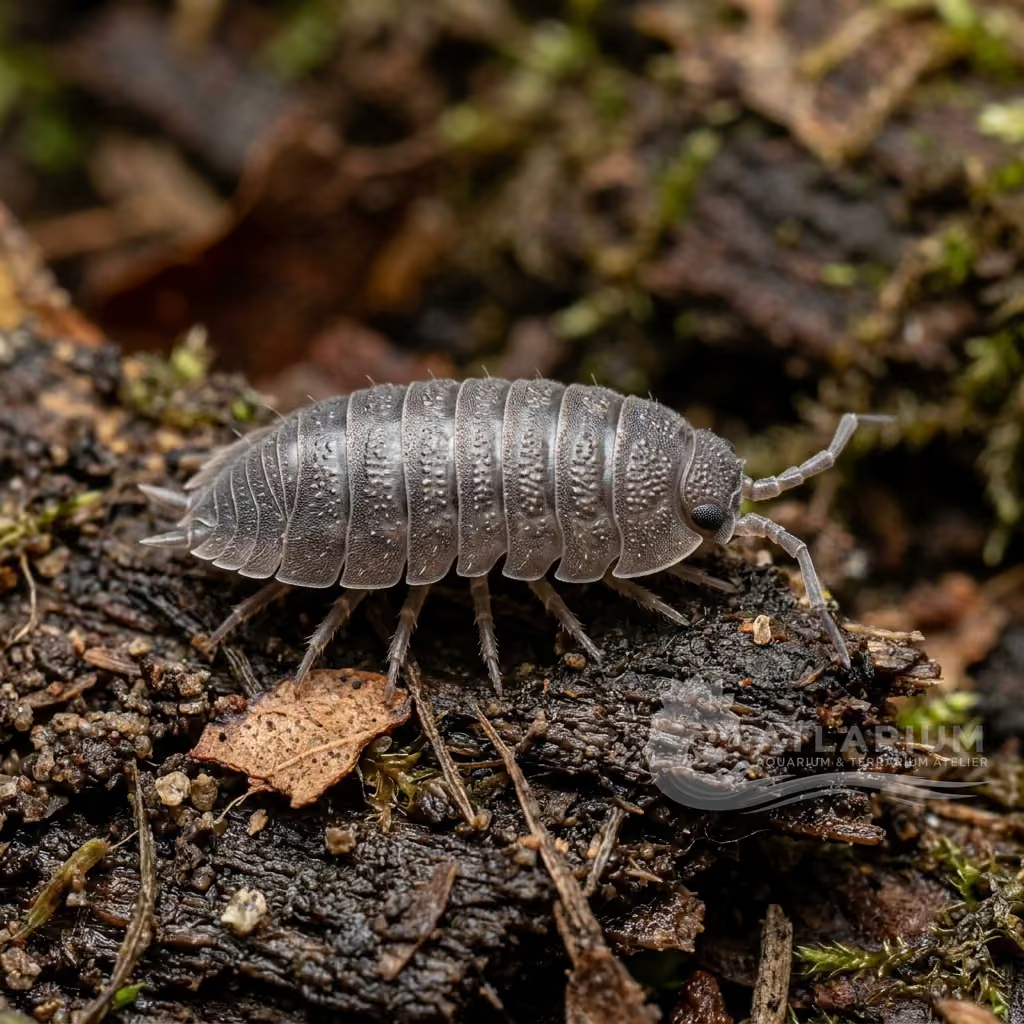
Dwarf Purple Isopod
Trichorhina sp.
The Trichorhina sp. Purple, or 'Dwarf Purple Isopod'. Even more microscopic (0.06-0.08 inches) and stealthy than its white cousin, it is a formidable underground detritivore. Recognizable by the slight purplish/pinkish pigment that makes it opaque in the soil, this asphyxiating crustacean tolerates extreme rotting tropical environments. Like the white variant, it forms titanic parthenogenetic colonies, but tends to hide even more radically in the asphyctic areas of the mud, cleaning humid terrariums from lethal fungi and microscopic debris invisible to the naked eye.
Ambiente
Terrestre
Umidade
65 - 95 %
Temperatura ambiente
26 °C
Temperatura diurna
22 - 26 °C
Temperatura noturna
18 - 20 °C
Profundidade do substrato
>= 5 cm

Descrição da espécie
Geographical Origin and Habitat: Commercial pantropical diffusion, probable origin in the hot fetid humid faults of Central America (Costa Rica), rooted in global biotope terrariums.
Taxonomy and Genetics: Family Platyarthridae. (The Purple Dust Demon). It is an unclassified species, close cousin to the Tomentosa. The name 'Purple' derives from the purplish-gray or cloudy fuchsia pigments that distinguish it, giving it a camouflage advantage in the dark of the fetid clayey soil that the white variant does not possess.
Behavior and Habits: Blindly ravenous underground mud mites. Shyer than the Dwarf White, if possible. Dwarf Purples are true specters of the subsoil. If you turn over a piece of moss, you will see dark micro-dots scatter in the mud with desperate asphyxiating speed. They flee light and human contact, living their entire life swallowing mold and rotting in the most asphyxiating and lowest area of the bioactive terrarium.
Morphology: Microscopic elongated soft asphyxiating (Under 0.08 inches max / 2 mm). Incredibly slender and lacking leathery armor (does not conglobate into a sphere). The translucent body is tinted a Faded Plum, Powder Purple or dark Pinkish-Gray asphyxiating color. The naked eye struggles to distinguish the frantic legs as it flees under rotten wood.

Cuidado, criação e companheiros de tanque
Terrarium Setup: Guidance about terrarium setup for Trichorhina sp. must rely exclusively on the parameters and sources listed on this record.
Lighting and Heating: Guidance about lighting and heating for Trichorhina sp. must rely exclusively on the parameters and sources listed on this record.
Humidity and Hydration: Guidance about humidity and hydration for Trichorhina sp. must rely exclusively on the parameters and sources listed on this record.
Feeding and Supplementation: Guidance about feeding and supplementation for Trichorhina sp. must rely exclusively on the parameters and sources listed on this record.
Compatibility and Coexistence: Guidance about compatibility and coexistence for Trichorhina sp. must rely exclusively on the parameters and sources listed on this record.
Health and Common Diseases: Guidance about health and common diseases for Trichorhina sp. must rely exclusively on the parameters and sources listed on this record.

Origem e distribuição geográfica
Commercial pantropical diffusion, probable origin in the hot fetid humid faults of Central America (Costa Rica), rooted in global biotope terrariums.
Origem
Cosmopolita ou apresentadoAmérica Central e CaribeSul e Sudeste Asiático

Perfil de invertebrados terrestres
- Dieta
- Detritivore
- This species thrives on a varied diet rich in decaying organic matter. They primarily consume high-quality leaf litter and soft rotting wood. Supplemental calcium and occasional vegetable scraps are essential for maintaining proper health and a strong exoskeleton.
- Tamanho adulto
- 0.5 cm
- Estilo de vida/Microhabitat
- Fossorial
- They are robust terrestrial invertebrates that thrive in a well-maintained terrarium environment. A distinct moisture gradient is crucial to prevent both fatal dehydration and harmful fungal infections. They spend the vast majority of their time navigating the complex microhabitats of the damp forest floor.
- Ciclo de atividades
- Nocturnal
- This species is primarily active during the night and the dimmer crepuscular hours. They typically remain hidden during the peak daylight hours to conserve vital moisture and avoid predators. Providing a natural day-night light cycle helps regulate their natural foraging and resting behaviors.
- Socialidade
- Gregarious
- This species is notably shy and highly fossorial, preferring to burrow deep into the substrate layer where moisture is abundant. They form large, peaceful colonies and are rarely seen on the surface unless the terrarium is severely overcrowded or lacks food. Their small size allows them to navigate through tiny crevices in the soil, effectively aerating the substrate. As social creatures, they aggregate tightly in areas with optimal humidity and food availability.
- Reprodução
- Marsupial
- Reproduction occurs consistently throughout the year when kept under optimal terrarium conditions. Females incubate their developing eggs within a specialized ventral brood pouch known as a marsupium. The young emerge as fully formed miniatures and require stable moisture to survive their initial delicate molts.
- Venenoso
- No
- Tolerância de tratamento
- Display only
- Handling should be kept to an absolute minimum to avoid causing unnecessary stress. Their incredibly delicate bodies and limbs can be easily injured by improper or forceful grasping. If relocation is absolutely necessary, gently move them by scooping up the bark or leaf they are resting on.
- Brumação
- They generally do not require any brumation period when kept in a controlled captive environment. Maintaining stable and appropriately warm temperatures ensures continuous year-round activity and breeding success. It is important to avoid extreme cold to prevent potential and sudden colony crashes.
- Muda
- Periodic
- Molting occurs in two very distinct phases to allow the isopod continuous mobility during the process. Adequate environmental humidity is absolutely essential for them to successfully shed their old exoskeleton without complications. They will usually consume their freshly shed skin in order to rapidly reclaim lost calcium.

Espécies relacionadas
Recomendações agrupadas por parentes próximos, escolhas de acompanhantes e cuidados semelhantes.