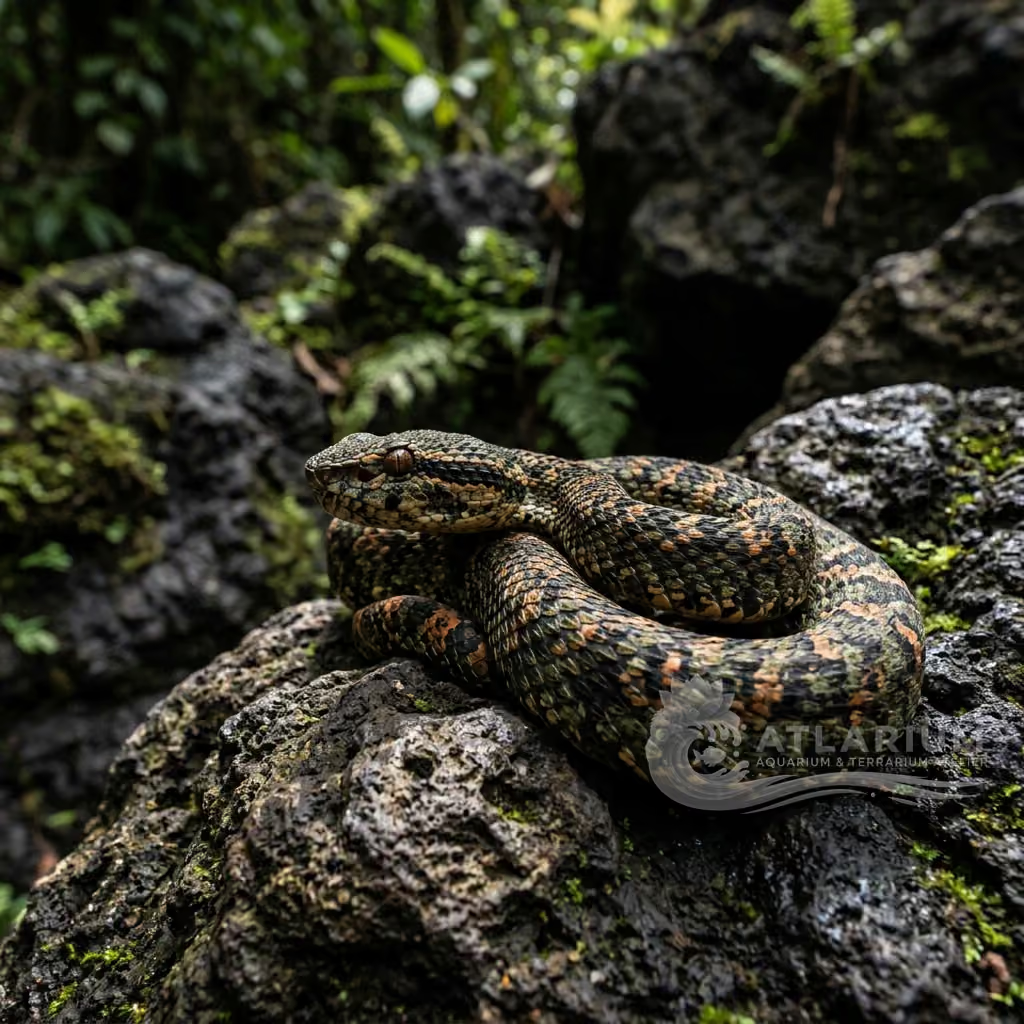
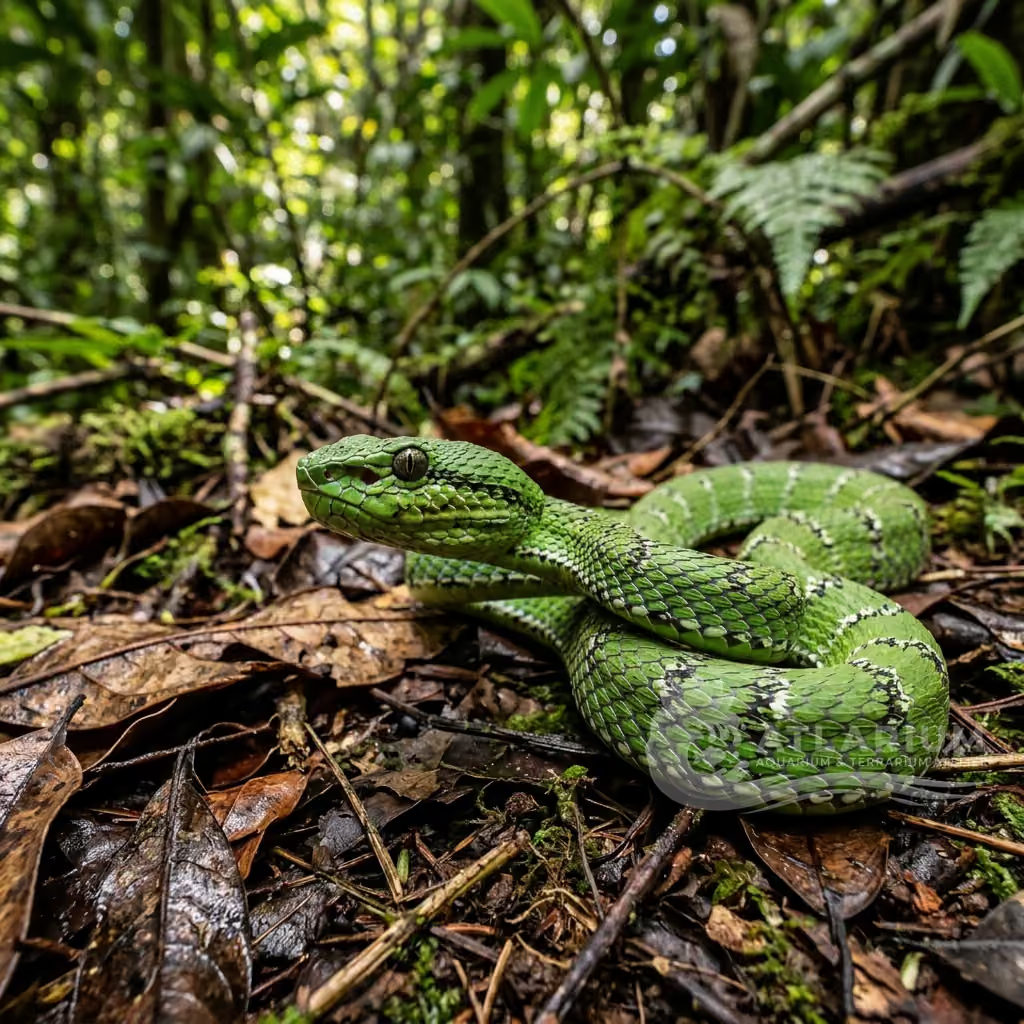
Malagasy bright-eyed frog
Boophis madagascariensis
A large and fascinating tree frog endemic to Madagascan rainforests, known for its distinctive textured skin and large golden eyes.
Ambiente
Terrestre
Umidade
80 - 95 %
Temperatura diurna
22 - 26 °C
Temperatura noturna
18 - 20 °C
Temperatura ambiente
22 - 26 °C
Gabinete mínimo
>= 45 L

Descrição da espécie
Geographical Origin and Habitat: Boophis madagascariensis is endemic to Madagascar, widely distributed across the primary and secondary rainforests along the eastern coast of the island. It can be found at altitudes ranging from sea level up to 1,200 meters. It inhabits dense tree canopies near fast-flowing rivers, streams, and forest swamps, which are vital for its breeding cycle.
Taxonomy and Genetics: Belongs to the family Mantellidae and the subfamily Boophinae, which contains the majority of Madagascan tree frogs. Genetically, it belongs to a species complex with several closely related taxa. It represents a unique evolutionary line that adapted to arboreal life on Madagascar, showing convergent evolution with tree frogs worldwide (Hylidae).
Behavior and Habits: Strictly nocturnal and arboreal. During the day, it remains completely motionless on leaves or tree trunks, using its cryptic coloration for camouflage. At dusk, it emerges to hunt insects among the branches. During the breeding season, males produce loud, melodious calls near streams to attract females.
Morphology: This is one of the larger species within the Boophis genus, with adult females reaching lengths of 8 to 10 centimeters, while males are significantly smaller (around 6 centimeters). The skin is rough and tubercular. The head is broad, dominated by large, expressive eyes with a gold or bronze iris. Large adhesive discs are present on the toes for climbing.

Cuidado, criação e companheiros de tanque
Terrarium Setup: Requires a vertically oriented terrarium (arboreal setup) of at least 60x45x90 cm for a pair. Decorate with robust climbing branches, cork bark tubes, and large-leafed live plants (such as Philodendron or Pothos) to provide hiding spots and climbing structures. The substrate should consist of coconut fiber topped with a layer of moist sphagnum moss.
Lighting and Heating: Maintain daytime temperatures between 22 and 26 °C, with a nighttime drop to 18-20 °C. Heating can be provided by a low-wattage heat mat attached to the outside of one side of the enclosure. A 2.0% or 5.0% UVB light source is recommended to support calcium metabolism and prevent skeletal deformities in growing frogs.
Humidity and Hydration: Humidity must be kept high, ranging between 80% and 90%. Mist the enclosure thoroughly with dechlorinated or reverse osmosis water at least twice daily. A shallow water bowl with fresh, clean water must always be available at the bottom for soaking; ensure the water is changed daily to prevent bacterial growth.
Feeding and Supplementation: A strictly insectivorous diet. Offer a variety of live insects, including gut-loaded crickets, roaches, silkworms, and occasional mealworms. Dust food items with a high-quality calcium and vitamin D3 supplement twice a week for adults, and at every feeding for rapidly growing juveniles.
Compatibility: Can be housed in small, single-species groups if space is sufficient. Avoid housing multiple males in smaller enclosures, as vocal competition can cause stress. Do not house with other amphibian species to prevent the transmission of diseases and avoid aggressive interactions.
Health and Common Diseases: Highly susceptible to bacterial skin infections (red leg disease) and fungal pathogens like chytridiomycosis if enclosure hygiene is neglected. Calcium deficiency leads to Metabolic Bone Disease. Ensure the terrarium has adequate ventilation (screen top and front vents) to prevent stagnant air and mold issues.

Origem e distribuição geográfica
Boophis madagascariensis is endemic to Madagascar, widely distributed across the primary and secondary rainforests along the eastern coast of the island. It can be found at altitudes ranging from sea level up to 1,200 meters. It inhabits dense tree canopies near fast-flowing rivers, streams, and forest swamps, which are vital for its breeding cycle.
Origem
América do NorteÁfrica e MadagascarLeste Asiático

Perfil anfíbio
- Dieta
- Insectivore
- This species is primarily insectivorous, consuming a wide variety of small invertebrates like crickets, flies, and roaches in the wild. In captivity, a similar varied diet should be provided, dusted regularly with calcium and multivitamin supplements. Appropriately sized live food is essential to trigger their natural feeding response.
- Expectativa de vida
- 3-9 years
- Tamanho adulto
- 8 cm
- Estilo de vida/Microhabitat
- Arboreal
- Depending on their morphology, they may live exclusively in trees, on the forest floor, or near bodies of water. A properly designed vivarium must provide the correct balance of humidity, temperature, and specific microhabitats. Ample vertical climbing space or deep substrate should be provided accordingly.
- Ciclo de atividades
- Nocturnal
- Most are strictly nocturnal, becoming active at dusk to hunt and vocalize under the cover of darkness. This pattern helps them avoid diurnal predators and prevents desiccation from the heat of the sun. During daylight hours, they remain motionless in hidden spots to conserve energy and retain moisture.
- Socialidade
- Solitary
- They exhibit fascinating behaviors that vary depending on their exact habitat, often relying on camouflage to avoid predators. Many display remarkable agility and jumping prowess when startled or while hunting. Social interactions are generally limited to breeding seasons when males become highly territorial.
- Reprodução
- Oviparous
- Breeding typically occurs following heavy rainfall or during the wet season. Males attract females with distinctive vocalizations from specific calling sites near water. Depending on the exact species, eggs may be laid in water, on foliage overhanging water, or in specialized foam nests.
- Toxicidade
- Toxic
- The Malagasy bright-eyed frog is not considered toxic to humans or other large predators. Unlike poison dart frogs, it lacks the specialized skin glands required to secrete potent defensive alkaloids. However, like all amphibians, it may produce mild skin secretions to deter opportunistic pathogens and small predators, so hand-washing is advised after handling.
- Estágio de vida
- Metamorphosis
- This frog undergoes a classic biphasic life cycle, beginning as a fully aquatic tadpole before metamorphosing into a terrestrial froglet. As it matures into a juvenile and then an adult, its vibrant coloration and characteristic large, bright eyes become more pronounced. Adults are relatively small to medium-sized frogs that will spend the rest of their lives dwelling in the humid arboreal strata of Madagascar.
- Tolerância de tratamento
- Display only
- Display only. As with all small tree frogs, human handling causes profound stress and their highly permeable skin is vulnerable to our natural oils. Observation from outside the glass is the safest practice.
- Brumação
- Não obrigatório
- Native to the tropical rainforests of Madagascar, they thrive in consistently warm and humid conditions year-round and do not require a winter brumation or significant temperature drops.
- Muda
- Periodic
- Shedding happens routinely and rapidly overnight. They twist their bodies and use their feet to remove the old skin layer before consuming it. Proper high humidity prevents the shed from drying out and sticking to their eyes or toes.

Espécies relacionadas
Recomendações agrupadas por parentes próximos, escolhas de acompanhantes e cuidados semelhantes.