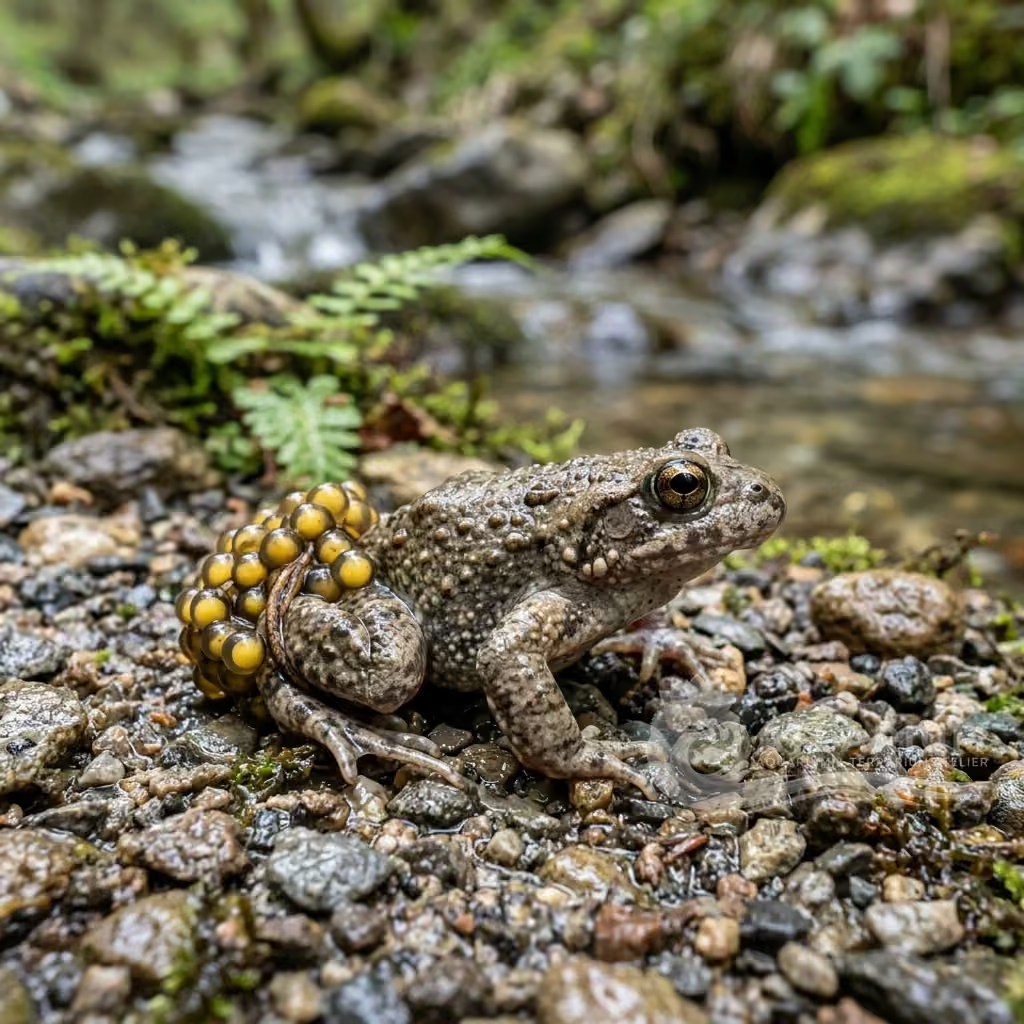
Ebenau's Mantella
Mantella ebenaui
A copper-brown Malagasy frog with black flanks and a blue-speckled belly. Shy and hardy, it thrives in well-planted terrariums with moderate temperatures.
Ambiente
Terrestre
Umidade
70 - 80 %
Temperatura diurna
24 - 26 °C
Temperatura noturna
20 °C
Temperatura ambiente
24 - 26 °C
Gabinete mínimo
>= 45 L

Descrição da espécie
Geographical Origin and Habitat: Endemic to the seasonal dry deciduous forests and moist lowlands of northern and northwestern Madagascar, including Nosy Be. They inhabit the leaf litter of the forest floor, retreating to damp crevices during the dry season.
Taxonomy and Genetics: Belonging to the family Mantellidae. Morphologically very similar to Mantella betsileo, but genetically distinct and isolated in northern Madagascar.
Behavior and Habits: Diurnal and terrestrial. They are highly active yet shy, preferring to remain hidden under dried leaves. During the breeding season, males call with short, metallic clicks to attract females.
Morphology: A very small frog, reaching 2.0–2.5 cm in adult length. Females are larger and more round-bodied. Males are smaller, more slender, and have a dark throat area where the vocal sac is located.

Cuidado, criação e companheiros de tanque
Terrarium Setup: A horizontal forest terrarium (minimum 60x45x45 cm) is recommended. Provide a bioactive substrate covered with a thick layer of dry leaf litter and cork bark pieces. Include a shallow, clean water dish.
Lighting and Heating: Maintain daytime temperatures at 24–26°C, dropping to 20°C at night. Avoid temperatures above 28°C. Low-level UVB (5%) is highly recommended to prevent metabolic bone disease.
Humidity and Hydration: Require relative humidity of 70–80%. Spray the terrarium daily with clean, dechlorinated water. Good ventilation is necessary to prevent skin pathogens.
Feeding and Supplementation: Strictly insectivorous. Feed small insects such as fruit flies, springtails, and micro-crickets. Dust food with calcium and vitamins containing D3 three times a week.
Compatibility: Highly peaceful and gregarious. Best kept in small groups of their own species. Do not house with larger, predatory species.
Health and Common Diseases: Vulnerable to heat exhaustion and bacterial infections from waterlogged substrate. Handle only when strictly necessary, using wet, clean gloves.

Origem e distribuição geográfica
Endemic to the seasonal dry deciduous forests and moist lowlands of northern and northwestern Madagascar, including Nosy Be. They inhabit the leaf litter of the forest floor, retreating to damp crevices during the dry season.
Origem
Extra-Amazônica América do SulÁfrica e MadagascarEuropa, Mediterrâneo e Ásia Ocidental

Perfil anfíbio
- Dieta
- Insectivore
- The diet of Mantella ebenaui consists primarily of micro-invertebrates that they actively hunt in the leaf litter. In the wild, they consume massive quantities of ants, mites, collembolans, and small flies. In a captive setting, they should be offered a diverse menu of flightless fruit flies, springtails, and very small crickets. All feeder insects must be gut-loaded and lightly dusted with vitamin and mineral supplements to mimic the nutritional density of their natural prey.
- Expectativa de vida
- 5-10 years
- Tamanho adulto
- 2.6 cm
- Estilo de vida/Microhabitat
- Terrestrial
- Mantella ebenaui is a terrestrial species endemic to the humid coastal and lowland forests of northern and eastern Madagascar. They are leaf-litter specialists, perfectly adapted to navigating the complex terrain of the forest floor rather than climbing trees. Their habitat requires a constant supply of moisture and a rich substrate teeming with microfauna. A bioactive enclosure with a thick layer of magnolia or oak leaves is the ideal captive environment for this species.
- Ciclo de atividades
- Diurnal
- These frogs are strictly diurnal and carry out their hunting and social behaviors exclusively during the daytime. Their activity is heavily influenced by moisture, with peaks of movement occurring after misting or rain. During the midday heat, they often seek shaded, humid microclimates to regulate their body temperature and prevent water loss. Keepers must provide a well-lit enclosure with a regular day-night cycle to support their natural behavior.
- Socialidade
- Gregarious
- Mantella ebenaui is an energetic and inquisitive frog that spends much of its time foraging on the forest floor. They utilize their bright coloration as a defense mechanism to warn potential predators of their unpalatable or toxic skin secretions. Males are vocal and territorial, often engaging in calling disputes to defend their chosen patch of leaf litter. They are relatively bold and will often remain visible in terrariums that offer adequate cover and security.
- Reprodução
- Oviparous
- Reproduction in Ebenau's mantella is triggered by the heavy rains of the Malagasy wet season. Females lay clutches of roughly 20 to 60 eggs in concealed, damp terrestrial locations, such as under fallen leaves or inside rotting wood. The eggs develop on land until torrential rains wash the emerging tadpoles into adjacent slow-moving streams or temporary puddles. The tadpoles then complete their metamorphosis in the water before returning to a fully terrestrial lifestyle.
- Toxicidade
- Harmless
- Like its relatives, wild Ebenau's Mantellas synthesize lipophilic alkaloids from their specialized diet of toxic arthropods, exuding them through their skin. Their variable, often brightly colored patterns serve as a classic aposematic warning to predators. In captivity, without access to this toxic diet, they are entirely harmless to humans and other pets.
- Estágio de vida
- Metamorphosis
- The eggs undergo terrestrial incubation for roughly 10 to 14 days before the rains facilitate their transition to water. The tadpoles are primarily herbivorous scavengers that grow rapidly in small, temporary pools. Following metamorphosis, which takes about two months, the newly terrestrial froglets require immediate access to very small prey items.
- Tolerância de tratamento
- Display only
- The Ebenau's Mantella is considered a display-only species. Their delicate skin is highly permeable and easily damaged by the natural oils, salts, and chemicals on human hands. Handling induces severe stress and should be strictly avoided except during essential health checks or enclosure transfers.
- Brumação
- The Ebenau's Mantella originates from relatively stable tropical or subtropical environments and does not undergo a true brumation. They require consistently warm and stable temperatures year-round to maintain proper digestion, metabolic activity, and overall immune health.
- Muda
- Periodic
- High ambient humidity (typically 70-90%) is critical for the Ebenau's Mantella. Like most amphibians, they routinely shed their outer layer of skin and rely on moisture to prevent it from sticking or restricting movement. They often consume the shed skin for nutrient recycling.

Espécies relacionadas
Recomendações agrupadas por parentes próximos, escolhas de acompanhantes e cuidados semelhantes.