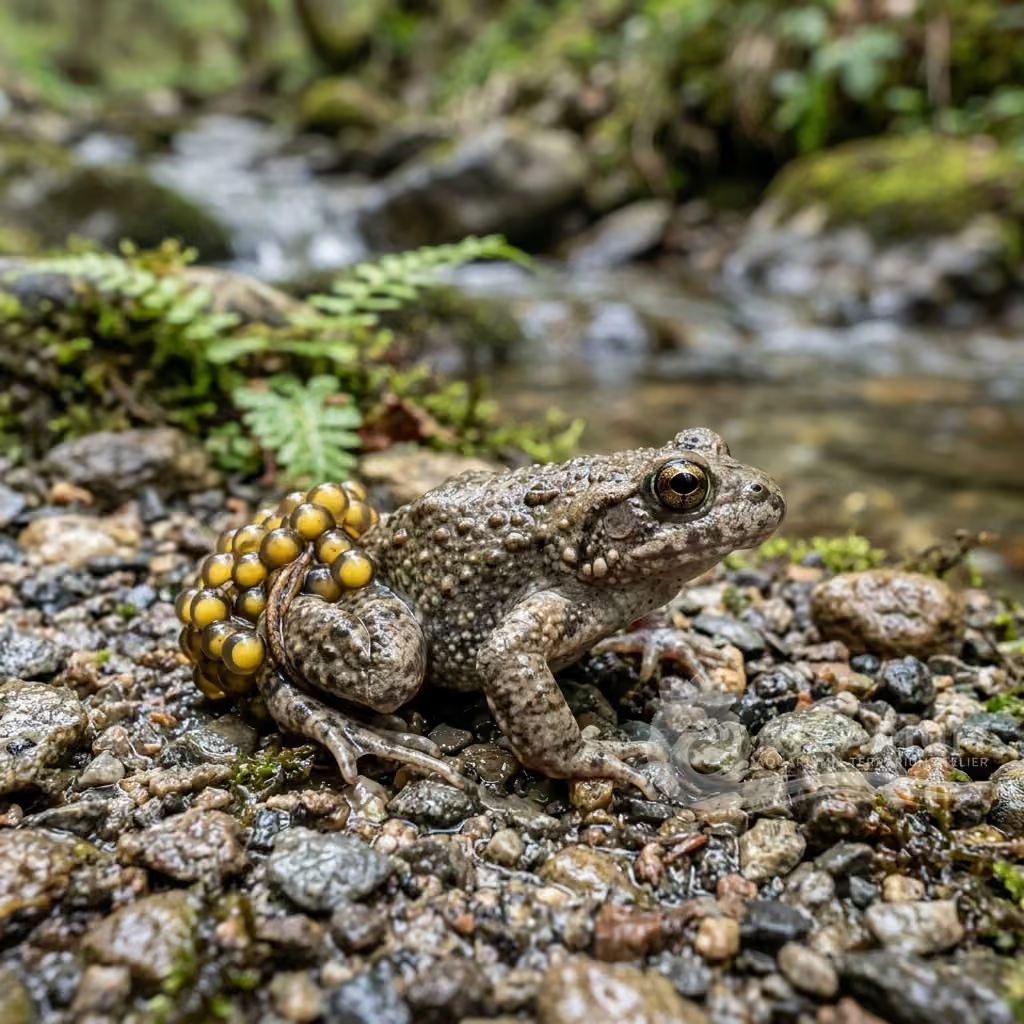
European Fire-bellied Toad
Bombina bombina
The European Fire-bellied Toad (Bombina bombina) is a small, semi-aquatic primitive toad native to central and eastern Europe. It features a dark olive back with flat warts and a striking, red-and-black warning pattern on its belly.
Temperatura da água
15 - 24 °C
Valor de pH
6.5 - 7.5
Ambiente
Água doce / Semiaquático
Umidade
60 - 80 %
Temperatura diurna
20 - 25 °C
Temperatura noturna
16 - 18 °C
Temperatura ambiente
20 - 25 °C
Gabinete mínimo
>= 45 L

Descrição da espécie
Geographical Origin and Habitat: Native to the plains, river valleys, and floodplains of Central and Eastern Europe, extending into western Asia. They inhabit slow-flowing streams, marshy wetlands, and sunny, vegetated ponds, spending most of their time floating or hiding in shallow waters.
Taxonomy and Genetics: A member of the family Bombinatoridae. It has a flattened, warty body (4.5-5.5 cm) with slightly webbed feet. The dorsal skin is olive-green or dark gray, camouflaging it in mud, while the ventral skin features a brilliant, aposematic warning coloration of orange-red and black.
Behavior and Habits: Diurnal and semi-aquatic. They spend much of their time floating in shallow water among duckweed. If threatened on land, they perform the "Unkenreflex," arching their back and limbs upward to expose their bright red bellies as a toxic warning. Males make a soft, melodic, repetitive "poop. poop" call during spring.
Morphology: Sexual dimorphism is subtle. Females are slightly larger and rounder. During the breeding season, males develop black nuptial pads on their forelimbs and inner fingers.

Cuidado, criação e companheiros de tanque
Terrarium Setup: Requires a horizontal aquaterrarium or paludarium (minimum 60x45x30 cm) with a ratio of 70-80% water and 20-30% land. The water depth should be 10-15 cm, filled with aquatic plants (duckweed, Elodea) and floating cork bark islands. Use gentle filtration to avoid strong water currents.
Lighting and Heating: Prefers temperate conditions. Maintain temperatures between 20 and 25°C. They are sensitive to high heat; temperatures above 28°C can cause fatal heat stress. Provide low-intensity lighting with a 5% UVB source to assist with calcium synthesis.
Humidity and Hydration: High humidity levels (80-90%) are required. Stagnant water and waste can lead to lethal bacterial infections like red leg syndrome. Regular partial water changes and proper filtration are necessary to keep the water clean.
Feeding and Supplementation: Voracious insectivores. Feed on crickets, earthworms, small roaches, and insect larvae. Food should be dusted with a calcium and vitamin D3 supplement twice a week for adults.
Compatibility: Peaceful and social with members of their own species, and can be kept in small groups. Do not house them with significantly smaller frogs, which they will eat, or different species to prevent toxic skin secretions from causing harm.
Health and Common Diseases: Their skin secretes a defense chemical (bombesin) that is highly irritating to human eyes and mucous membranes. Wash hands thoroughly after maintenance. Prone to red leg syndrome and fungal infections in unhygienic conditions.

Origem e distribuição geográfica
Native to the plains, river valleys, and floodplains of Central and Eastern Europe, extending into western Asia. They inhabit slow-flowing streams, marshy wetlands, and sunny, vegetated ponds, spending most of their time floating or hiding in shallow waters.
Origem
Europa, Mediterrâneo e Ásia Ocidental

Perfil anfíbio
- Dieta
- Insectivore
- The European Fire-bellied Toad feeds on a diverse array of terrestrial and aquatic invertebrates found in its marshy habitat. Its diet includes insects, spiders, small snails, and worms, which it typically catches by snapping them up with its agile tongue. In captivity, they are voracious eaters that enthusiastically pursue crickets, waxworms, and earthworms across both land and shallow water.
- Expectativa de vida
- 10-20 years
- Tamanho adulto
- 5 cm
- Estilo de vida/Microhabitat
- Semi-aquatic
- Highly semi-aquatic, they require enclosures that are mostly shallow, still water, with floating vegetation and accessible land platforms.
- Ciclo de atividades
- Diurnal
- European Fire-bellied Toads are predominantly diurnal, spending daylight hours actively foraging for insects both in the water and on nearby shores.
- Socialidade
- Solitary
- These toads are highly aquatic and diurnal, spending much of their time floating lazily near the edges of weed-choked ponds. When faced with danger, they exhibit a fascinating behavior called the Unkenreflex, arching their backs to display their brightly colored underbellies. This dramatic posture serves to startle predators and warn them of the toad's toxic skin secretions.
- Reprodução
- Oviparous
- Mating typically takes place in the shallow, stagnant waters of ponds and temporary pools during the spring and summer months. Males emit a melodious, hooting call while floating on the water's surface to attract receptive females. The female lays small clusters of eggs attached to aquatic plants, which hatch into fast-growing tadpoles within just a few days.
- Toxicidade
- Toxic
- The bright orange or red patterns on their bellies are a classic example of aposematism, warning predators of their foul taste. Their skin glands secrete a cocktail of toxic peptides that irritate the mucous membranes of any animal attempting to consume them. While these toxins can cause minor skin irritation in humans, they are highly effective at deterring larger predators in the wild.
- Estágio de vida
- Metamorphosis
- Development starts with heavily pigmented aquatic eggs that quickly give rise to small, dark-colored tadpoles. The tadpole stage lasts several weeks, during which they graze heavily on algae and decaying organic matter in the pond. Following a successful metamorphosis, the juveniles emerge as fully formed toads, gradually developing their signature fiery bellies as they mature.
- Tolerância de tratamento
- Display only
- They are best kept as display animals. Handling can cause stress, and they produce toxic skin secretions as a defense mechanism.
- Brumação
- A winter cooling period (brumation) of 2-3 months is standard practice to replicate their natural temperate lifecycle and promote health.
- Muda
- Regular
- Because they live largely in water, humidity requirements for shedding are inherently met. They ingest their shed skin quickly.

Espécies relacionadas
Recomendações agrupadas por parentes próximos, escolhas de acompanhantes e cuidados semelhantes.