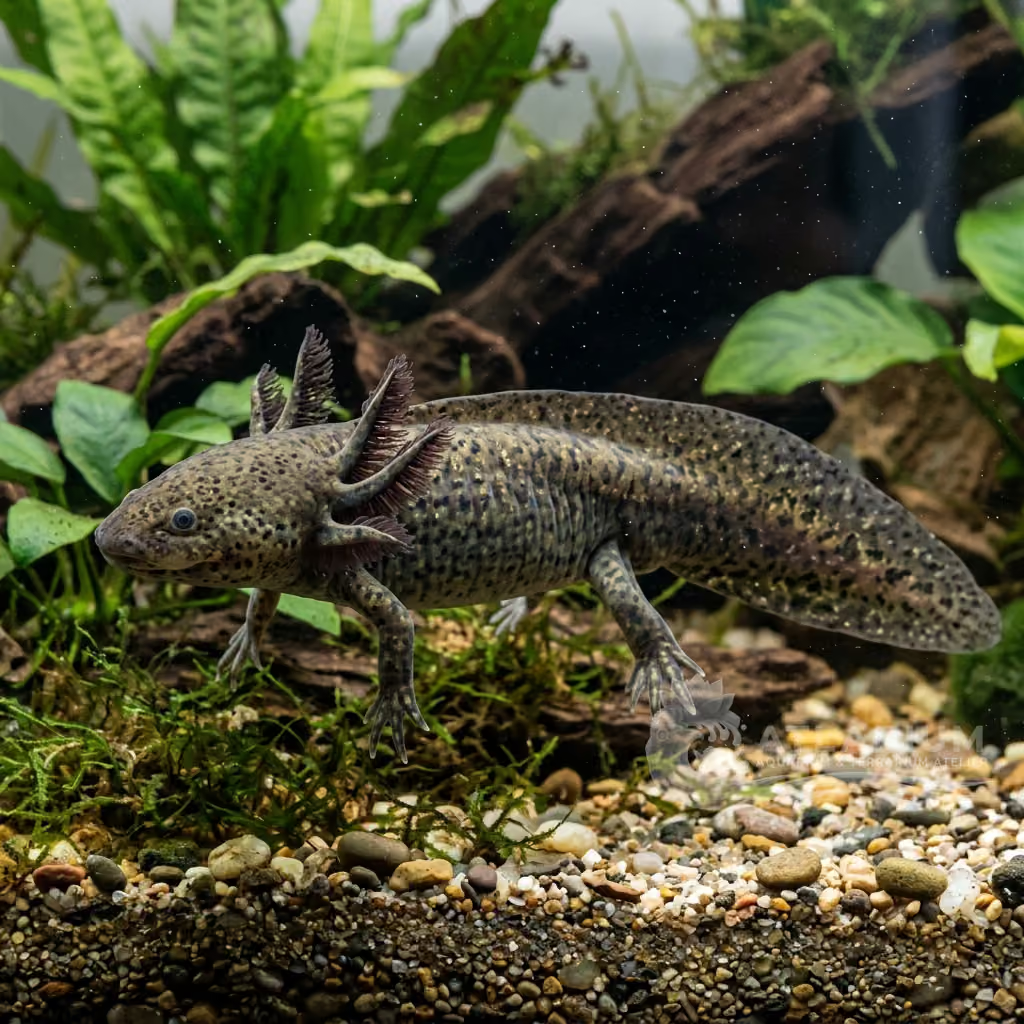
Arboreal Salamander
Aneides lugubris
The arboreal salamander is a unique, climbing plethodontid with a prehensile tail and strong jaws. Nocturnal and lungless, it needs a 75L vertical woodland terrarium with high humidity and plenty of climbing branches.
Temperatura da água
10 - 18 °C
Valor de pH
6.5 - 7.5
Ambiente
Água doce / Semiaquático
Umidade
70 - 90 %
Temperatura diurna
15 - 20 °C
Temperatura noturna
10 - 14 °C
Temperatura ambiente
15 - 20 °C
Gabinete mínimo
>= 45 L

Descrição da espécie
Geographical Origin and Habitat: Native to the coastal forests and oak woodlands of California and Baja California (western North America). It is a semi-arboreal and rupicolous species, sheltering in tree cavities, under bark high off the ground, or in rock crevices near streams.
Taxonomy and Genetics: A robust salamander reaching 12–18 cm in length. The body is dark brown, chocolate, or rusty-brown, speckled with small yellow or gold spots. The head is large and triangular with powerful jaw muscles. It possesses small toe claws and a fully prehensile tail.
Behavior and Habits: Diurnal and nocturnal. It spends much of the day resting in damp tree hollows or under logs. Unlike most salamanders, it is an excellent climber. It is lungless and breathes entirely through its skin and mouth. It has sharp teeth and strong jaws, which it uses to defend itself.
Morphology: Sexual dimorphism is visible in head shape: adult males have broader, more triangular heads and larger jaw muscles than females, and mature males possess a mental gland on the chin.

Cuidado, criação e companheiros de tanque
Terrarium Setup: Require a vertically-oriented forest terrarium of at least 45x45x60 cm. Provide a moist substrate of organic soil, covered in damp moss. Include vertical cork bark tubes, thick branches, and live climbing plants. A large water dish is not needed as they cannot swim.
Lighting and Heating: Prefer cool, damp conditions representing their temperate origin. Maintain temperatures of 15–20°C during the day; temperatures above 24°C are lethal due to their lungless respiration. A night drop to 10–14°C is essential. Low-level UVB (2–5%) is recommended.
Humidity and Hydration: Maintain high humidity of 80–100% via daily misting. Efficient ventilation is absolutely critical to prevent stagnant, stale air, which can cause skin necrosis and bacterial infections. Use dechlorinated water.
Feeding and Supplementation: Strictly carnivorous. Offer live crickets, roaches (Dubia), and small snails. They are active hunters that crush prey with their powerful jaws. Dust prey with calcium and vitamin supplements regularly.
Compatibility: Highly territorial and aggressive, especially males, which can fight and inflict serious bite wounds. Keep them individually or in single male-female pairs in spacious enclosures. Avoid mixing with other species.
Health and Common Diseases: Heat stress is the most critical hazard. Fungal skin infections and ammonia toxicity can occur in poorly maintained terrariums. Never handle them with bare hands; human skin residues and body temperature can burn their delicate skin.

Origem e distribuição geográfica
Native to the coastal forests and oak woodlands of California and Baja California (western North America). It is a semi-arboreal and rupicolous species, sheltering in tree cavities, under bark high off the ground, or in rock crevices near streams.
Origem
América do Norte

Perfil anfíbio
- Dieta
- Carnivore
- The diet of Aneides lugubris consists primarily of appropriately sized prey items found in its natural habitat. In captivity, they should be offered a varied selection of live insects, worms, or small invertebrates to ensure nutritional balance. It is important to gut-load the feeder insects and occasionally dust them with high-quality calcium and vitamin supplements. Monitoring their food intake helps prevent obesity and maintains optimal health. Fresh water must always be available to aid in digestion.
- Expectativa de vida
- 3-15 years
- Tamanho adulto
- 18 cm
- Estilo de vida/Microhabitat
- Arboreal
- Aneides lugubris leads a specialized lifestyle adapted to the specific niches of its ecosystem, whether that involves climbing, burrowing, or swimming. Its daily routine is a delicate balance of thermoregulation, seeking out hydration, and avoiding predators. In a captive environment, replicating these microhabitats—such as providing ample climbing branches or deep substrate—is crucial for their well-being. They generally thrive when left undisturbed to carry out their natural routines. A proper setup dramatically improves their lifespan and overall vitality.
- Ciclo de atividades
- Nocturnal
- The activity pattern of Aneides lugubris is heavily influenced by the specific light cycle and ambient temperatures of its native range. It may be primarily diurnal, nocturnal, or crepuscular, meaning its peak activity times align with the safest and most optimal conditions for survival. During these active periods, they can be seen exploring, hunting, or patrolling their territory. Careful regulation of the enclosure's lighting and heating schedules will help maintain these natural circadian rhythms. Disruptions to this pattern can cause significant stress or lethargy.
- Socialidade
- Solitary
- Aneides lugubris is known for its fascinating and unique behavioral traits that reflect its evolutionary adaptations. Observers may notice periods of active foraging interspersed with long spells of resting or hiding. They interact with their environment carefully, using their specialized senses to navigate and detect both prey and potential threats. While some individuals can be quite shy and reclusive, others may exhibit bold and curious behavior when comfortable in their enclosure. Providing a complex habitat with plenty of enrichment is essential for expressing natural behaviors.
- Reprodução
- Oviparous
- Reproduction for Aneides lugubris typically follows a seasonal pattern, often triggered by specific environmental changes such as temperature or humidity fluctuations. Mating behaviors can include complex courtship displays or specific vocalizations to attract a partner. After successful mating, the female will carefully deposit eggs or give birth, depending on the reproductive strategy of the species. Incubation or gestation periods require stable, precise conditions to ensure the healthy development of the offspring. Breeders must pay close attention to providing the right nesting environment.
- Toxicidade
- Harmless
- While they do not possess highly potent toxins, they can secrete a sticky, milky substance from their skin when distressed. This secretion acts as a mild deterrent to predators, making them unappealing to eat. More notably, they possess surprisingly strong jaws and sharp teeth, and will aggressively bite if handled roughly.
- Estágio de vida
- Adult only
- They exhibit direct development, entirely bypassing an aquatic larval stage. The eggs hatch into fully formed, miniature terrestrial salamanders equipped to navigate the forest environment immediately. They grow steadily over the course of several years, continuing their terrestrial and arboreal lifestyle into adulthood.
- Tolerância de tratamento
- Display only
- Should not be handled unless necessary. They can deliver a surprisingly strong, painful bite with well-developed jaw muscles if threatened.
- Brumação
- Aestivates during hot, dry Californian summers and can undergo a mild brumation or reduced activity during the coldest winter weeks.
- Muda
- Periodic
- Requires ambient high humidity to shed successfully. They often rub against rough bark to pull the skin off before eating it.

Espécies relacionadas
Recomendações agrupadas por parentes próximos, escolhas de acompanhantes e cuidados semelhantes.