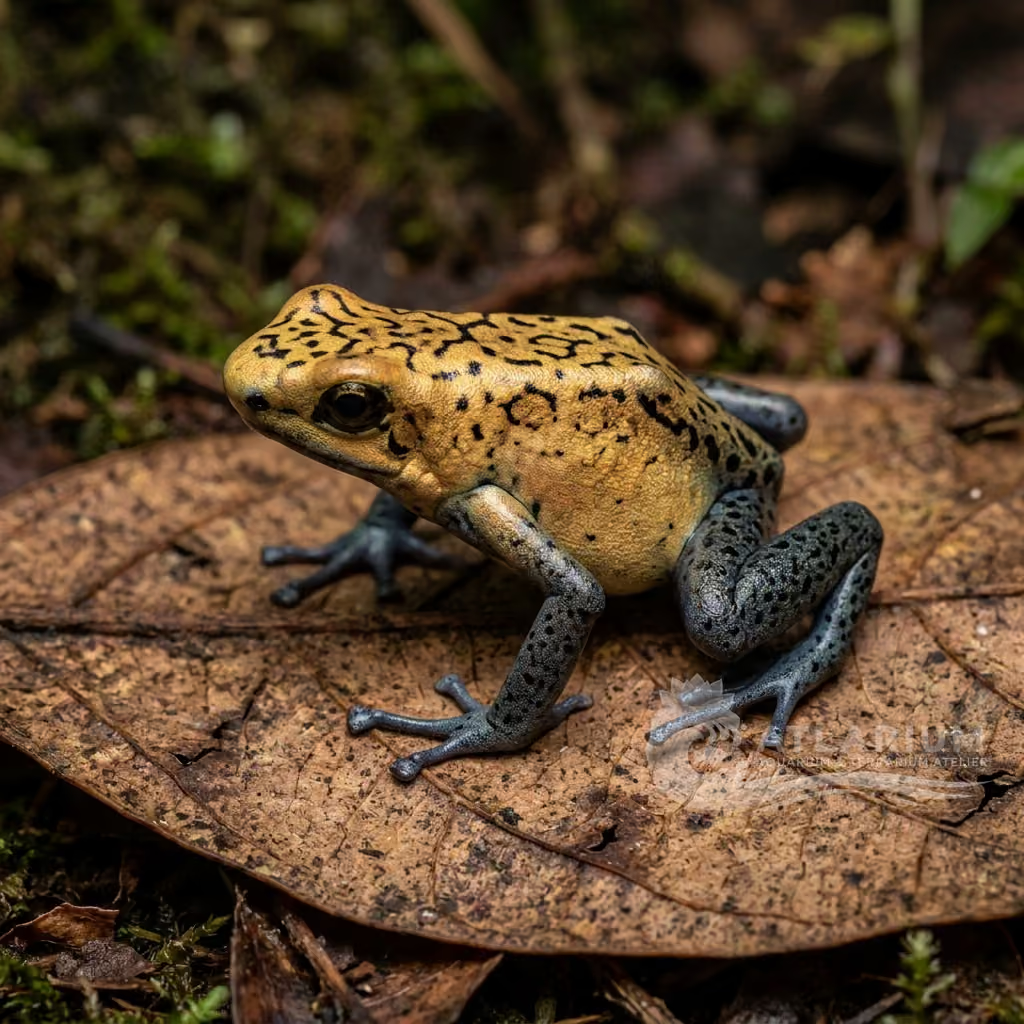
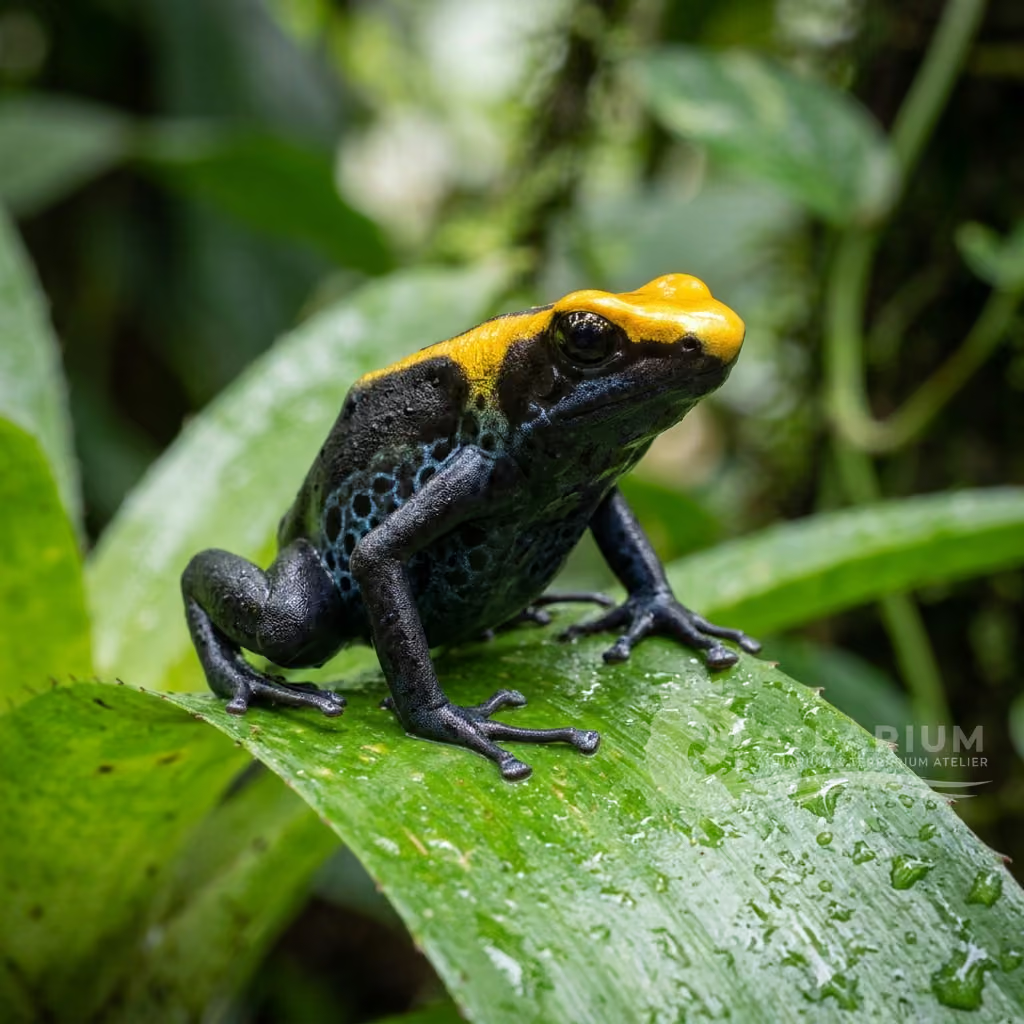
South American Common Toad (Mitred Toad)
Rhinella margaritifera
The Mitred Toad is a remarkable leaf-litter mimic from the Amazon floor, featuring crest-like ridges over its head. Terrestrial and slow-moving, it thrives in wide, leaf-strewn forest enclosures.
Ambiente
Terrestre
Umidade
60 - 80 %
Temperatura diurna
24 - 28 °C
Temperatura noturna
20 - 23 °C

Descrição da espécie
Geographical Origin and Habitat: Native to the primary tropical rainforests of the Amazon basin (Brazil, Colombia, Peru, Ecuador, Suriname, Guyana). It inhabits the shady leaf litter of the forest floor, relying on its camouflage to hide from predators.
Taxonomy and Genetics: Characterized by prominent, bony cranial crests that extend backward like a crown, combined with a pointed snout that mimics a dead leaf. The dorsal color ranges from brown, mahogany, and rust to dry yellow, often with a light mid-dorsal stripe representing a leaf vein.
Behavior and Habits: A terrestrial, nocturnal predator. During the day, it remains highly static and camouflaged among dry leaves. At night, it walks and hops along the forest floor searching for small insects, using its tongue to catch prey.
Morphology: Females are larger and wider (6 to 9 cm) with more pronounced, dramatic cranial crests, while males are smaller, slender, and develop dark nuptial pads during the breeding season.

Cuidado, criação e companheiros de tanque
Terrarium Setup: Requires a horizontal terrestrial terrarium (minimum 60x45x30 cm). The substrate must consist of a humid forest mix (peat or coconut fiber) topped with a thick, dense layer of dry leaves (such as oak, magnolia, or catappa) for hiding. A very shallow water dish should be provided as they are poor swimmers.
Lighting and Heating: Keep temperatures between 25 and 28°C during the day, with a nighttime drop to 22–24°C. Avoid under-tank heating mats as they can cause overheating and dehydration; use weak overhead heat sources instead. A 5% UVB light is recommended to support bone structure and crest development.
Humidity and Hydration: Maintain high humidity (75–85%) with daily misting using RO or declorinated water. Stagnant humidity can cause fatal bacterial infections, so adequate ventilation is crucial. They do not tolerate dry conditions.
Feeding and Supplementation: Strictly insectivorous. Feed them a variety of small to medium insects like crickets, roaches, and worms. Dust prey with calcium and vitamin D3 supplements regularly to prevent metabolic bone disease.
Compatibility: Generally peaceful and gregarious with other individuals of the same species and size. They will consume any smaller animals that fit into their mouths, so they should be kept in a species-specific setup.
Health and Common Diseases: Sensitive to skin infections (red leg syndrome) and toxicoses caused by waste buildup in damp substrate. They possess parotoid glands behind the eyes that secrete toxic secretions if severely stressed, so minimize handling and wash hands thoroughly.

Origem e distribuição geográfica
Native to the primary tropical rainforests of the Amazon basin (Brazil, Colombia, Peru, Ecuador, Suriname, Guyana). It inhabits the shady leaf litter of the forest floor, relying on its camouflage to hide from predators.
Origem
Amazônia, Orinoco e Guianas

Perfil anfíbio
- Dieta
- Insectivore
- This species primarily feeds on a varied insectivorous diet consisting of ants, beetles, and small leaf-litter arthropods. They are ambush predators that rely on their camouflage to catch unsuspecting prey. In captivity, they readily consume appropriately sized crickets, roaches, and mealworms supplemented with essential vitamins.
- Expectativa de vida
- 10-15 years
- Tamanho adulto
- 8.1 cm
- Estilo de vida/Microhabitat
- Terrestrial
- This species is strictly terrestrial, spending its entire life on the floor of tropical and subtropical forests. They are not adept climbers and prefer environments with abundant leaf litter for concealment. Proper terrarium setups must include deep, moisture-retaining substrate to mimic their natural habitat.
- Ciclo de atividades
- Diurnal
- They are predominantly nocturnal and crepuscular, emerging under the cover of darkness to forage. During the heat of the day, they remain hidden in deep leaf litter or under logs to conserve moisture. Their activity significantly increases during and after heavy rain showers when humidity is highest.
- Socialidade
- Solitary
- These toads are incredibly cryptic, relying on their leaf-like camouflage to remain undetected on the forest floor. They typically sit motionless for long periods, waiting for prey to pass by. When threatened, they may puff up their bodies to appear larger or play dead to deter predators.
- Reprodução
- Oviparous
- Breeding activities are closely tied to the onset of the rainy season when adults migrate to shallow water bodies. Males call to attract females and grasp them in amplexus during egg deposition. Long strings of gelatinous eggs are laid among aquatic vegetation to keep them protected and oxygenated.
- Toxicidade
- Toxic
- Like many bufonids, this toad possesses parotoid glands that secrete toxic substances when threatened by predators. These secretions can cause irritation to mucous membranes and are harmful if ingested. Caretakers must wash their hands thoroughly after any contact to avoid accidental transfer to the eyes or mouth.
- Estágio de vida
- Metamorphosis
- The life cycle begins with aquatic eggs that hatch into free-swimming tadpoles in temporary pools. After a period of development, they undergo metamorphosis and emerge onto land as miniature toads. As they mature into adults, they develop their characteristic leaf-like appearance and prominent cranial crests.
- Tolerância de tratamento
- Display only
- Handling should be strictly minimized to prevent stressing the animal and damaging its sensitive, permeable skin. If handling is absolutely necessary, it should be done using moistened, powder-free nitrile gloves. Always ensure their body is fully supported to avoid any physical injury during relocation.
- Brumação
- Não obrigatório
- In their natural tropical environment, they do not undergo traditional brumation during the winter. Instead, they may enter a state of estivation during prolonged dry periods to prevent desiccation. In captivity, maintaining stable humidity and temperature year-round generally eliminates the need for any resting phase.
- Muda
- Regular
- Like all amphibians, they periodically shed their skin to allow for growth and to remove external parasites. The toad will perform stretching and contorting movements to loosen the old skin before pulling it off. They typically consume the shed skin immediately to recycle the valuable nutrients it contains.

Espécies relacionadas
Recomendações agrupadas por parentes próximos, escolhas de acompanhantes e cuidados semelhantes.