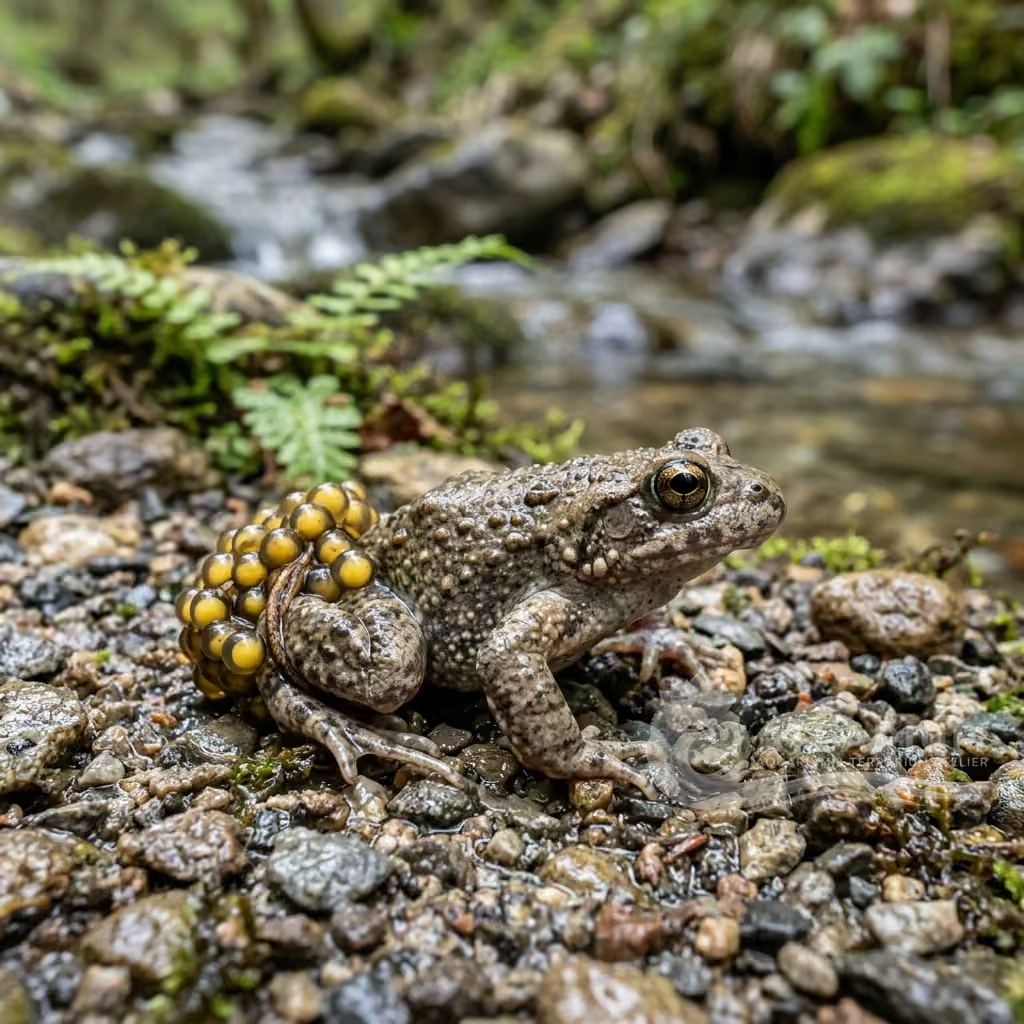
American Toad
Anaxyrus americanus
The iconic American Toad is a robust, cold-hardy amphibian perfectly suited for beginners. It features warty skin, requires loose soil for burrowing, and possesses a loud, musical trilling call.
Ambiente
Terrestre
Umidade
50 - 70 %
Temperatura diurna
20 - 25 °C
Temperatura noturna
15 - 18 °C
Temperatura ambiente
20 - 25 °C
Gabinete mínimo
>= 45 L

Descrição da espécie
Geographical Origin and Habitat: Widely distributed across eastern North America, from southern Canada to the central and eastern United States. It is a terrestrial species commonly found in gardens, deciduous forests, meadows, and agricultural areas.
Taxonomy and Genetics: Family Bufonidae. Formerly classified under the genus *Bufo*, it is now placed in *Anaxyrus*. It is a robust, hardy toad that is highly popular in the terrarium hobby.
Behavior and Habits: Mostly nocturnal, spending the daytime buried in loose soil, under leaf litter, or beneath logs. During spring evenings, males migrate to breeding pools and produce a loud, musical, high-pitched trill that can last up to 30 seconds.
Morphology: Stocky, warty body reaching 6-11 cm in length. Coloration varies from brown, grey, to reddish, with dark spots containing one or two warts. Features large, oval parotoid glands behind the eyes. Females are much larger than males.

Cuidado, criação e companheiros de tanque
Terrarium Setup: Requires a terrestrial terrarium of at least 60x45x30 cm. Provide a deep, loose substrate (such as coco-fiber and organic soil) to allow burrowing. Include a large, shallow water dish, cork bark hides, and hollow logs.
Lighting and Heating: Keep temperatures between 20-25°C during the day, dropping to 15-18°C at night. Avoid overheating above 28°C. In winter, they require a cool brumation period. Provide 5% UVB lighting.
Humidity and Hydration: Maintain moderate humidity (50-60%) with good ventilation. Keep the lower layers of the substrate moist, and mist the terrarium occasionally. Never use pure reverse osmosis water; dechlorinated tap water is preferred.
Feeding and Supplementation: Voracious insectivore. Feed a variety of insects, including crickets, earthworms, dubia roaches, and mealworms. Dust prey with calcium and vitamin D3 supplements twice a week.
Compatibility: Peaceful and gregarious. Can be kept in small groups of similar size. Avoid housing with smaller frogs or toads, as they will be eaten.
Health and Common Diseases: Possesses parotoid glands that secrete bufotoxins when stressed, which are toxic to domestic pets. Wash hands thoroughly after handling. Prone to skin infections if substrate is allowed to become waterlogged and dirty.

Origem e distribuição geográfica
Widely distributed across eastern North America, from southern Canada to the central and eastern United States. It is a terrestrial species commonly found in gardens, deciduous forests, meadows, and agricultural areas.
Origem
Melhoramento seletivo e cultivaresAmérica do Norte

Perfil anfíbio
- Dieta
- Insectivore
- The American Toad is an essential component of its ecosystem, acting as a natural pest controller by consuming vast numbers of insects and invertebrates. Its diet heavily features crickets, slugs, earthworms, beetles, and ants. They use their excellent vision to detect movement and quickly snap up prey with their long, sticky tongues. A single adult toad can consume up to a thousand insects in a single night.
- Expectativa de vida
- 5-15 years
- Tamanho adulto
- 11 cm
- Estilo de vida/Microhabitat
- Terrestrial
- They are highly terrestrial, favoring woodland edges and gardens where they can burrow into loose soil or hide under logs.
- Ciclo de atividades
- Crepuscular
- American Toads are most active during the twilight hours of dusk and dawn, though they may also forage on overcast, rainy days.
- Socialidade
- Solitary
- American Toads are primarily nocturnal, spending their days hidden beneath logs, stones, or buried in loose soil to conserve moisture and avoid the heat. They are highly terrestrial, venturing into water only during the breeding season. Their warty skin and mottled brown coloration provide excellent camouflage against dirt and leaf litter. When threatened, they often puff themselves up to appear larger to predators or simply sit completely still to avoid detection.
- Reprodução
- Oviparous
- Breeding begins in early spring, often just as the snow melts, when adults migrate to shallow ponds, ditches, and slow-moving streams. Males create a long, trilling chorus to attract females to the water. Females lay their eggs in long, spiraling, gelatinous strings that can contain thousands of individual eggs, usually tangled in aquatic vegetation. The eggs hatch quickly, and the tiny, black tadpoles form large schools for protection as they feed and grow.
- Toxicidade
- Toxic
- To protect themselves from predators, American Toads possess prominent parotoid glands behind their eyes that secrete a milky, toxic fluid called bufotoxin. This toxin can cause severe irritation to the eyes and mucous membranes of potential predators, and can be dangerous to domestic pets if ingested. Handling these toads is generally safe for humans, but it is crucial to wash hands thoroughly afterward to avoid accidental transfer of the toxin to the eyes or mouth. It is a myth that touching them causes human warts.
- Estágio de vida
- Metamorphosis
- The life cycle starts with eggs that hatch into small, black tadpoles. These tadpoles are herbivorous, feeding primarily on algae and plant matter in the water. Metamorphosis occurs after one to two months, transforming the aquatic tadpoles into minuscule terrestrial toadlets, often no larger than a raisin. These tiny toads disperse into the surrounding environment, growing steadily until they reach sexual maturity in two to three years.
- Tolerância de tratamento
- Display only
- While robust, they are best treated as display animals to protect their skin. They can excrete a defensive toxin from their parotoid glands.
- Brumação
- They require a winter cooling period (brumation) in captivity if breeding is intended, typically burrowing deep below the frost line in nature.
- Muda
- Regular
- Toads shed their skin every few weeks. They arch their backs, split the skin down the middle, and use their mouths to pull it off and consume it.

Espécies relacionadas
Recomendações agrupadas por parentes próximos, escolhas de acompanhantes e cuidados semelhantes.