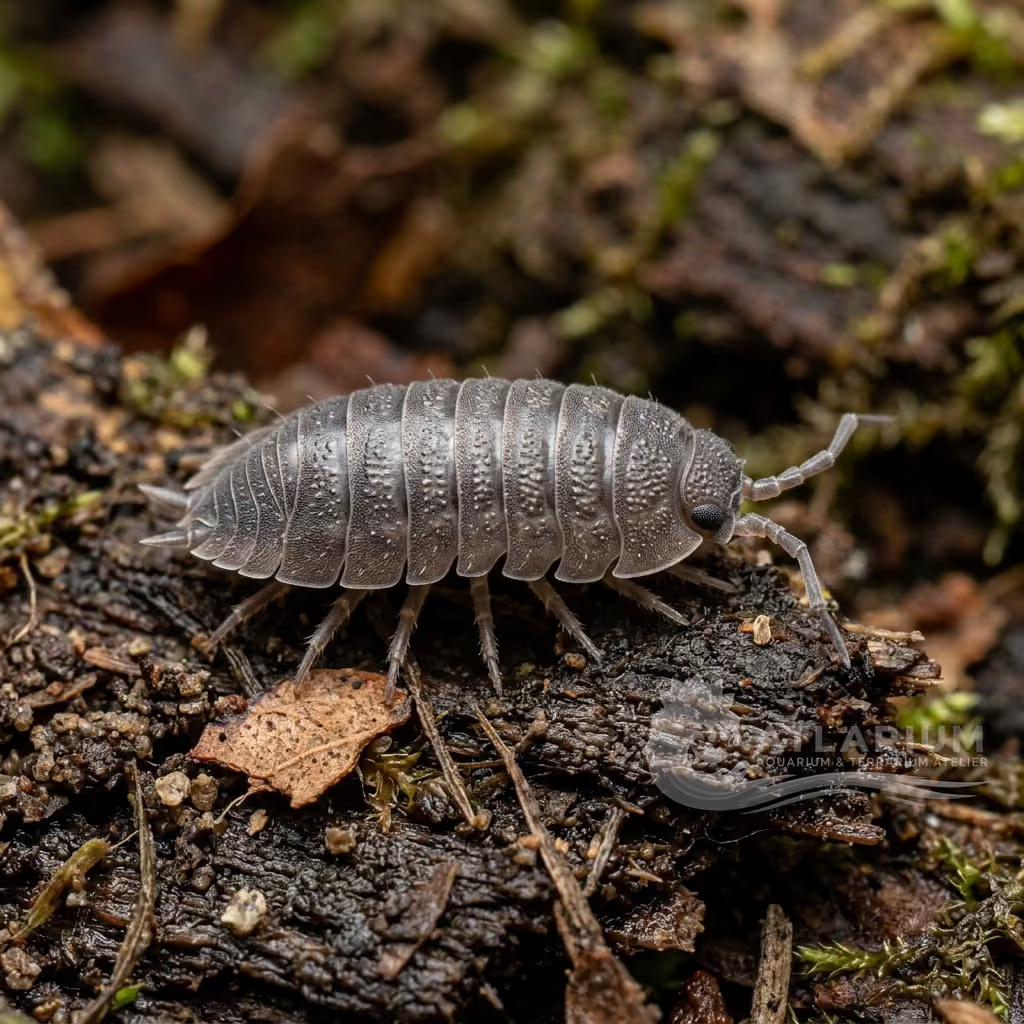
Nosy Pillbug (A. nasatum)
Armadillidium nasatum
The Nosy Pillbug Isopod (Armadillidium nasatum). A particular Armadillidium (0.6 inches) widespread throughout the northern world. Its unmistakable trait is the pronounced 'Nose': a frontal lobe of the shell highly protruding above the head. Unlike its cousin 'vulgare', it cannot close into a perfectly hermetic ball (leaves a gap). Very prolific, famous for the very well known 'Peach' morph (totally pastel orange/peach), excellent for cool terrariums.
Ambiente
Terrestre
Umidade
50 - 70 %
Temperatura diurna
20 - 26 °C
Temperatura noturna
18 - 22 °C

Descrição da espécie
Geographical Origin and Habitat: Widespread in Northern Europe, British Isles and introduced in North America. Inhabits lowland forests, damp gardens, greenhouses (famous scourge of Victorian English greenhouses) and woodpiles.
Taxonomy and Genetics: Family Armadillidiidae. (The Imperfect Conglobator). Although belonging to the family of pillbugs, its defensive closure is 'dirty': the presence of the frontal rostrum (the 'nose') prevents the head from fitting perfectly with the rear, leaving a visible slit if rolled up.
Behavior and Habits: Imperfect sprinters. The nasatum is slightly more slender, fast and bold than the vulgare, preferring to climb on barks and stems rather than spending life buried 4 inches in the dark. Very prolific: in a stable environment without sudden changes (they are damp greenhouse beasts) they explode demographically devouring moss and shoots.
Morphology: Total dome but elongated (0.6 inches / 1.5 cm). The head bears a pointed and upward turned 'nose' (scutellum), highly visible to the naked eye looking them in the face. The wild color is a pale gray/brown with spotted longitudinal bands. The 'Peach' morph transforms them into wonderful smooth bright tangerine orange candies without any dark spots.

Cuidado, criação e companheiros de tanque
Terrarium Setup: In Ganter's caged-population experiment, increased density reduced growth rate, survivorship, and size at first reproduction in the tested isopods, including Armadillidium nasatum. This is an experimental population result, not a prescriptive enclosure protocol; the source provides no enclosure-design, substrate, or space-allocation parameters.
Lighting and Heating: This source provides no lighting or heating guidance for Armadillidium nasatum.
Humidity and Hydration: This source provides no humidity or hydration guidance for Armadillidium nasatum.
Feeding and Supplementation: This source provides no feeding or supplementation protocol for Armadillidium nasatum.
Compatibility and Coexistence: This source provides no compatibility or cohabitation guidance for Armadillidium nasatum.
Health and Common Diseases: This source provides no health or disease guidance for Armadillidium nasatum.

Origem e distribuição geográfica
Widespread in Northern Europe, British Isles and introduced in North America. Inhabits lowland forests, damp gardens, greenhouses (famous scourge of Victorian English greenhouses) and woodpiles.
Origem
Melhoramento seletivo e cultivaresAmérica do NorteEuropa, Mediterrâneo e Ásia OcidentalCosmopolita ou apresentado

Perfil de invertebrados terrestres
- Dieta
- Detritivore
- The diet of Armadillidium nasatum consists of specific nutrients. It forages for a variety of food sources. A well-balanced feeding regimen is essential.
- Tamanho adulto
- 1.2 cm
- Estilo de vida/Microhabitat
- Terrestrial
- Armadillidium nasatum leads a lifestyle adapted to its niche. It utilizes various elements of its habitat. Providing a complex enclosure is crucial for its enrichment.
- Ciclo de atividades
- Nocturnal
- The activity pattern of Armadillidium nasatum dictates when it is most active. It exhibits periods of rest aligned with light cycles. Understanding these rhythms helps create a suitable schedule.
- Socialidade
- Gregarious
- Very social creatures that do exceptionally well in colony setups. They cluster together naturally and feed cooperatively without any signs of cannibalism or aggression.
- Reprodução
- Marsupial
- Reproduction for Armadillidium nasatum involves specific mating behaviors. Females seek out appropriate nesting sites. Successful breeding requires mimicking natural conditions.
- Venenoso
- No
- Tolerância de tratamento
- Tolerant
- Handling Armadillidium nasatum should be done with care. It is recommended to allow the animal to adjust first. Gentle movements are key when handling is necessary.
- Brumação
- Não obrigatório
- Brumation for Armadillidium nasatum is triggered by temperature changes. During this period, its metabolism slows down. Proper preparation is essential to ensure a healthy emergence.
- Muda
- Periodic
- The molting process of Armadillidium nasatum allows it to shed old layers. Adequate humidity is vital for facilitating a smooth shed. Caretakers must regularly check for retained pieces.

Espécies relacionadas
Recomendações agrupadas por parentes próximos, escolhas de acompanhantes e cuidados semelhantes.